
Why a Dark Tea Brick Opens Slowly in the First Infusions
A dark tea brick opens slowly in the first infusions because hot water reaches the outside of the compressed piece before it reaches the center. The outer leaves hydrate first; the inner leaves may still be pressed together, giving the water less surface area to work on. That is why a pale first infusion or thin first steep is not automatically a sign of weak tea, poor storage, or too little leaf.
In many everyday brewing setups, the second or third infusion becomes darker, fuller, and more aromatic once the piece loosens. The useful question is not only “Is this cup weak?” but “Has the brick actually opened yet?”
upward
Read the full overview first
Use the broader guide first if you need the full scope before this page.
What is happening in the vessel
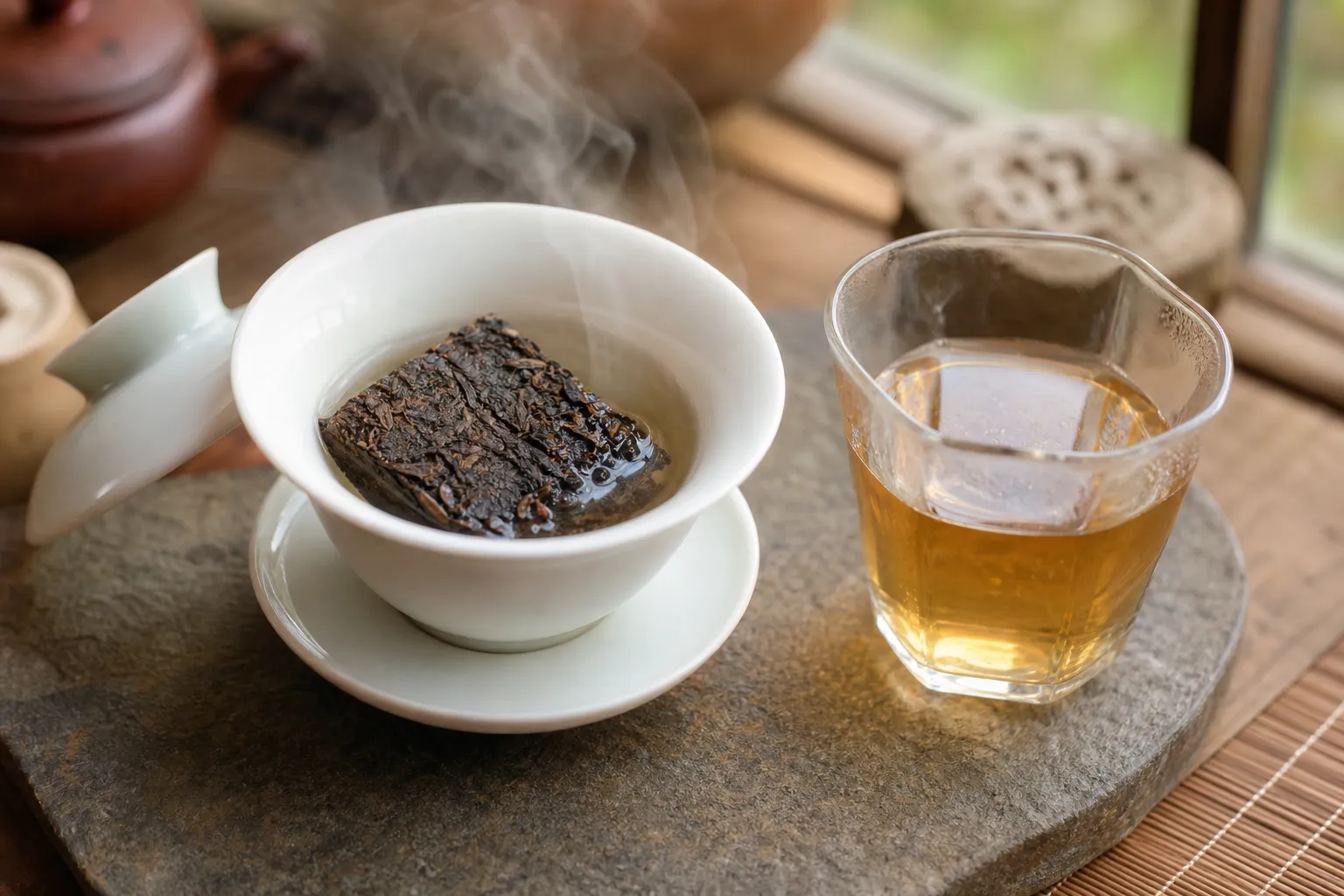
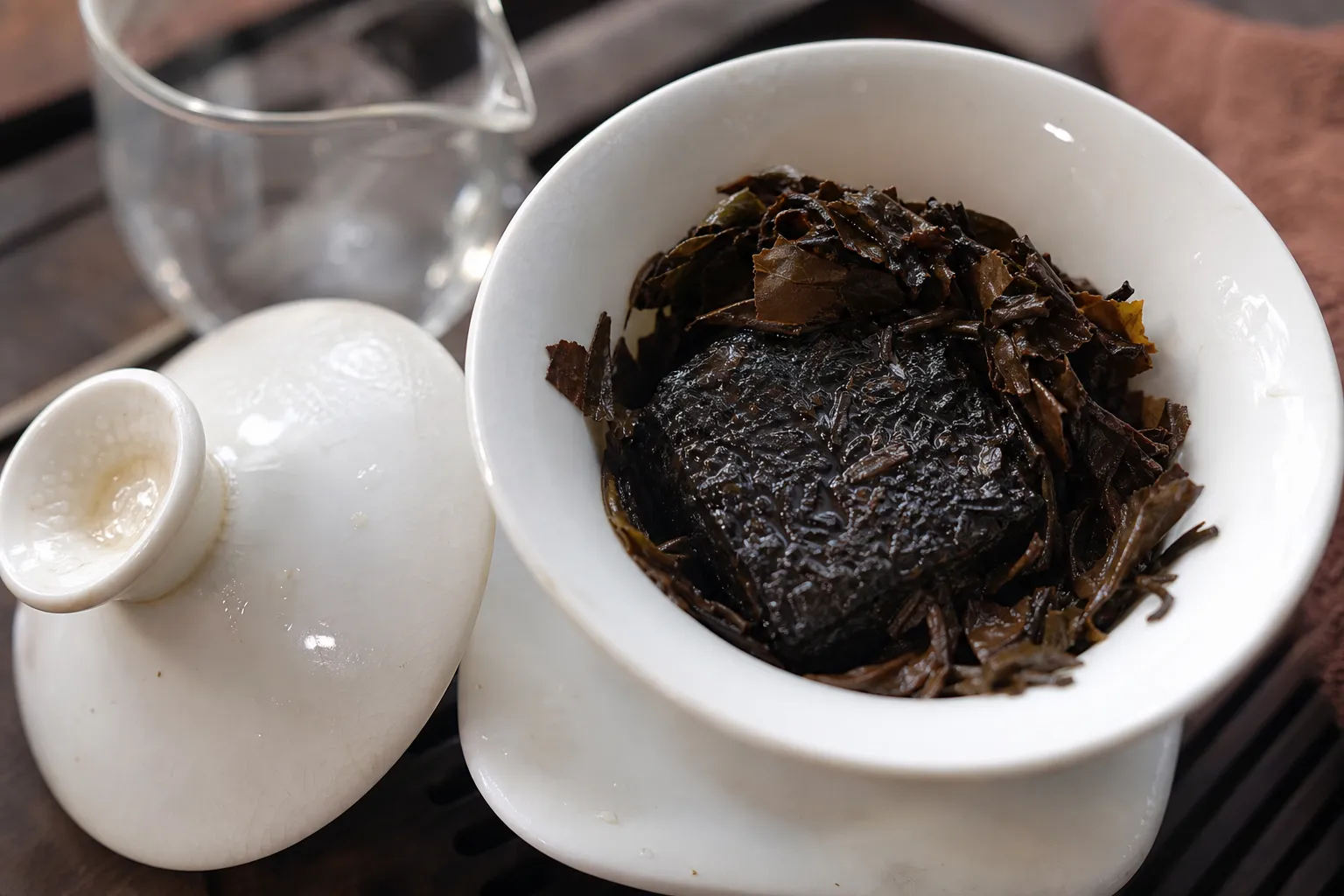
When a compressed tea brick goes into a gaiwan, pot, or mug as one tight lump, the first steep can look quiet. The liquor may be light amber, reddish-brown but thin, or less fragrant than expected. If you lift the lid, the piece may still look like a small stone: dark outside, firm inside, with only the edges starting to fray.
That first cup is often drawing mostly from the outer layers. Loose-leaf dark tea gives water many exposed edges at once. A compressed tea infusion starts with fewer open surfaces, then changes as the leaves separate.
A slow start is especially common when:
- The piece was broken off as one thick cube or wedge.
- The brick is tightly pressed and resists flaking.
- The vessel was not preheated and the water cooled quickly.
- The rinse was very brief.
- The first steep was judged before the center softened.
- The tea contains larger leaves, coarse material, or stems, as some dark tea bricks do.
Dark tea brick forms vary. Fu and Fuzhuan-style bricks, for example, are processed and pressed in ways that can affect aroma, texture, and extraction. Research on these teas supports the broader point that brick tea is a variable material, but it does not provide a household rule for exactly how fast a piece should open in your vessel. For brewing, the better evidence is in front of you: density, softening, leaf separation, liquor color, aroma, and how the first three cups change.
The four controls that matter most
You do not need a complicated method. You need to give the compressed tea enough heat, time, and exposed surface without crushing it into powder.
1. Break a flatter piece when you can
A thick lump opens slowly because the center is protected by the outer layers. A flatter flake, or several layered pieces, usually hydrates more evenly.
When breaking a compressed tea brick, look for a seam or grain. Pry slowly instead of smashing. If you use a tea knife or needle, keep your fingers away from the tool path and avoid stabbing straight down into a hard brick. The goal is to lift apart layers so water can enter, not to win a fight with the brick.
Too much dust creates the opposite problem. Fine fragments release quickly and can make the first cup cloudy, rough, or muddy. One dense chunk may brew too slowly; a pile of powder may brew too fast. A little dust is normal, but try not to crush the whole piece.
2. Keep enough heat around the tea
Dark tea brick steeping often benefits from very hot water, commonly near boiling as a starting point. Heat helps compact leaves soften and encourages extraction. If the vessel is cold, a small pour of water can lose heat before the center of the chunk begins to open.
Preheat the vessel, add the tea, then pour hot water. Keep the lid on during the rinse and early steeps if your vessel has one. This is not about making every dark tea taste heavy; it is about preventing the first infusion from cooling while it is still only working on the outside of the piece.
If the cup turns too heavy, earthy, harsh, or flat, ease back. Some bricks and some palates prefer slightly gentler water or shorter early steeps. Near boiling water is a useful starting point for many compressed dark teas, not a rule for every session.
3. Let the rinse wake the piece
A tea brick rinse can do more than wash the surface. For a dense piece, it starts hydration before the first drinking infusion.
Use the appearance of the chunk to guide the rinse:
Thin flake, already separating
Quick rinse, then short steeps
Firm layered piece
Slightly longer rinse, lid on
Thick dense cube
Longer wake step, then check the edges
Very dusty fragments
Short rinse; avoid over-extracting powder
After the rinse, look before you brew the first full cup. If the piece still looks sealed and hard, expect a quieter first infusion. If the edges have lifted and the center has started to swell, the next cup is more likely to show body.
4. Adjust by the cup, not by a fixed time
With compressed tea, the first steep is sometimes the least representative cup. If it is thin but clean, lengthen the next infusion slightly instead of adding more leaf right away. If the second infusion suddenly darkens and becomes strong, shorten the third.
A practical early sequence:
- Rinse or wake: hot water long enough to soften the outside.
- First infusion: expect a lighter cup if the piece is still compact.
- Second infusion: watch for leaf separation and deeper liquor.
- Third infusion: decide whether the tea is balanced, still slow, or becoming too heavy.
This first-three-cup comparison tells you more than the first pour alone.
How the first three infusions often change
A slow-opening brick usually gives visible clues.
In the first infusion, the cup may be pale, thin, or quiet. The aroma may sit more in the wet leaf than in the liquor. If the flavor is clean but light, the tea may simply be under-opened.
In the second infusion, the color often deepens if the leaves begin to separate. You may see edges fan out, stems shift, and small fragments loosen from the main piece. The taste can move from watery toward rounded, woody, mellow, mineral, lightly sweet, or earthy, depending on the tea.
In the third infusion, the tea may settle into balance or become too strong. If it becomes fuller and smoother, the first cup was probably just early. If it turns muddy, harsh, or overly heavy, the combination of leaf amount, heat, and steep length may now be too aggressive.
Liquor darkens and taste fills out
The brick is loosening normally
Continue with steady or slightly shorter steeps
Still pale and thin
The center may remain compact
Use a flatter piece next time; extend the wake step
Suddenly very dark or heavy
The tea opened quickly after a delay
Shorten steeps or use less leaf next session
Cloudy, dusty, rough
Too much powder is extracting early
Pry more gently; rinse briefly
Hard center remains after several steeps
The piece may be too thick for the vessel
Break smaller next time or lengthen early steeps
“Later infusions darken” is a common pattern, not a promise. A loosely compressed tea, a broken sample, or a piece with much fine material may brew strongly from the first cup.
When to change the leaf instead of the timing
If your dark tea brick opens slowly once, adjust the brew. If it happens every time with the same brick, look at the piece you are using.
A large dense lump is the usual cause. Break off a thinner flake next session. If the brick resists clean flaking, use several smaller pieces rather than one compact corner. The leaves do not need to be perfectly loose; they only need enough separation for water to move through the layers.
If the first cup is thin but later cups are pleasant, there may be no problem. You can treat the first infusion as a gentle opening cup, or use a longer wake rinse when you want the first drinking cup to be fuller.
If all cups remain weak, consider:
- Too little tea for the vessel.
- Water cooling too quickly.
- Very short steeps.
- A dense piece that never fully opened.
- A tea style that is naturally lighter than expected.
- Storage or age differences affecting aroma and body.
If all cups are heavy or rough, the answer is not simply more heat. Use less leaf, shorten steeps, reduce dust, break the piece more cleanly, or give the tea more room in the vessel. Boiling can suit some tightly compressed dark teas and some tastes, but it is not a universal fix.
Common confusion around slow-opening tea bricks
“The first infusion is pale, so the tea must be weak.”
Not necessarily. A pale first infusion can mean the water has not reached much of the inner leaf yet. Check whether the second and third cups deepen before judging the tea.
“The brick is hard, so I should use more force.”
More force can create too much dust. Dust extracts quickly and unevenly, while the remaining chunk may still open slowly. Work along seams and pry in layers when possible.
“Near boiling water will solve everything.”
Hot water helps many dense tea chunks, especially early, but it can also make some cups too heavy or rough. Heat is one control among several: piece shape, rinse length, vessel heat, leaf amount, and steep time all matter.
“All compressed dark teas behave the same.”
They do not. Compression, leaf material, processing style, storage, age, and vessel size can all change the first infusions. Even two pieces from the same brick can behave differently if one is a flat flake and the other is a compact corner.
A short troubleshooting path
If your dark tea brick opens slowly, try this before deciding the tea is flawed:
- Look after the rinse. If the chunk still looks sealed, expect a light first cup.
- Hold heat better. Preheat the vessel and keep the lid on during early steeps.
- Give the wake step a little more time. Dense pieces often need more hydration.
- Compare the first three cups. If later infusions darken and gain body, the tea is opening normally.
- Change the break next time. Pry a flatter piece or several smaller layers.
- Correct in both directions. If thin, add time, heat, or surface area. If harsh or muddy, reduce steep time, dust, leaf, or heat intensity.
The main point is simple: compressed tea needs time and contact. A dark tea brick that starts slowly may be behaving like a dense brick of tea, not failing in the cup. Watch the leaf separation, not only the first color. Once the piece loosens, the brew often begins to explain itself.
Sources
Sources and further reading
Reference links are limited to sources considered suitable for public citation in this page.