
Reader Help
How to Use Our Brewing Guides
Darktea Zen brewing guides are written as practical starting points, not fixed rules for every cake, brick, loose-leaf batch, kettle, or tasting cup. Use them to set a first steep, notice what changes in the liquor, and make one calm adjustment at a time.
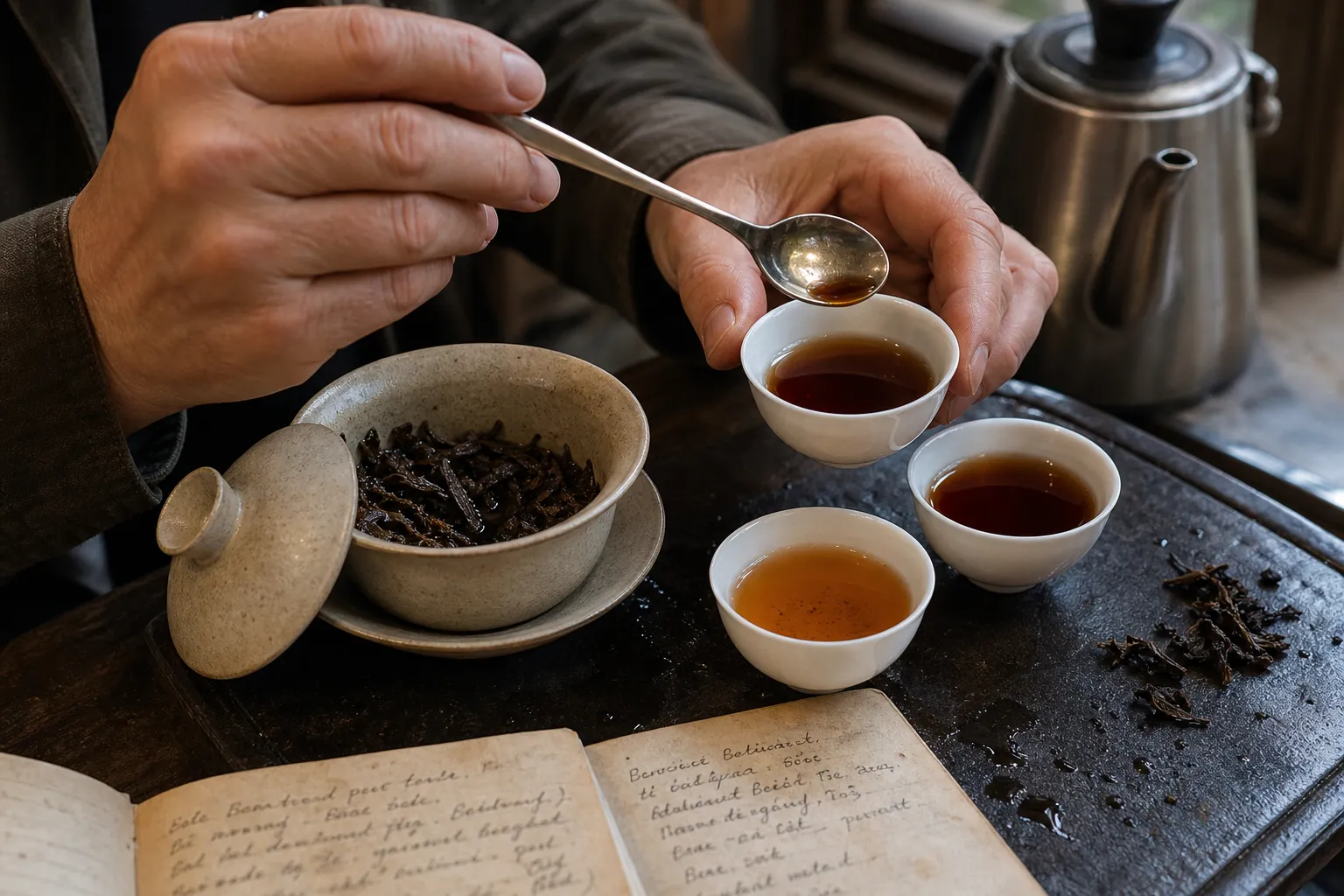
Begin with the tea form
Check whether the guide is talking about loose leaf, a compressed cake edge, a brick, or broken fragments. Compression and leaf size can change how quickly flavor enters the cup.
Treat ranges as first settings
Water temperature, leaf amount, vessel size, and steeping time are given as working ranges. Start near the middle, then shorten, lengthen, rinse, or reduce leaf if the cup feels too thin, heavy, harsh, or flat.
Read the sensory cues
Look for cues such as amber to deep brown liquor, earthy or woody aroma, rounded sweetness, drying texture, musty edges, or a clean aftertaste. These signs help you decide the next adjustment.
Keep storage in the background
Storage history can affect aroma, texture, and clarity. If a tea smells damp, dusty, unusually sharp, or muted, make a note before changing the whole brew method.
A simple way to test a guide
- 1. Brew once using the suggested range as written.
- 2. Name one result in plain language: thin, sweet, earthy, drying, heavy, clean, or flat.
- 3. Change only one variable on the next steep, such as time, leaf amount, water temperature, or rinse.
- 4. Keep the adjustment if the cup becomes clearer, smoother, or closer to the flavor you wanted.
For how pages are reviewed and kept within practical limits, read the Editorial Policy. If a guide is unclear or you need help finding the right page, use Reader Support. To understand the site’s broader purpose, visit About Darktea Zen.