
Brewing choice
Loose Leaf Dark Tea vs Tea Brick: Which Form Is Easier to Brew
For most everyday cups, loose leaf dark tea is easier to brew than a tea brick. In the practical choice of loose leaf dark tea vs tea brick, loose leaf usually wins because you can measure it, add hot water, and adjust the next steep without first breaking the tea apart.
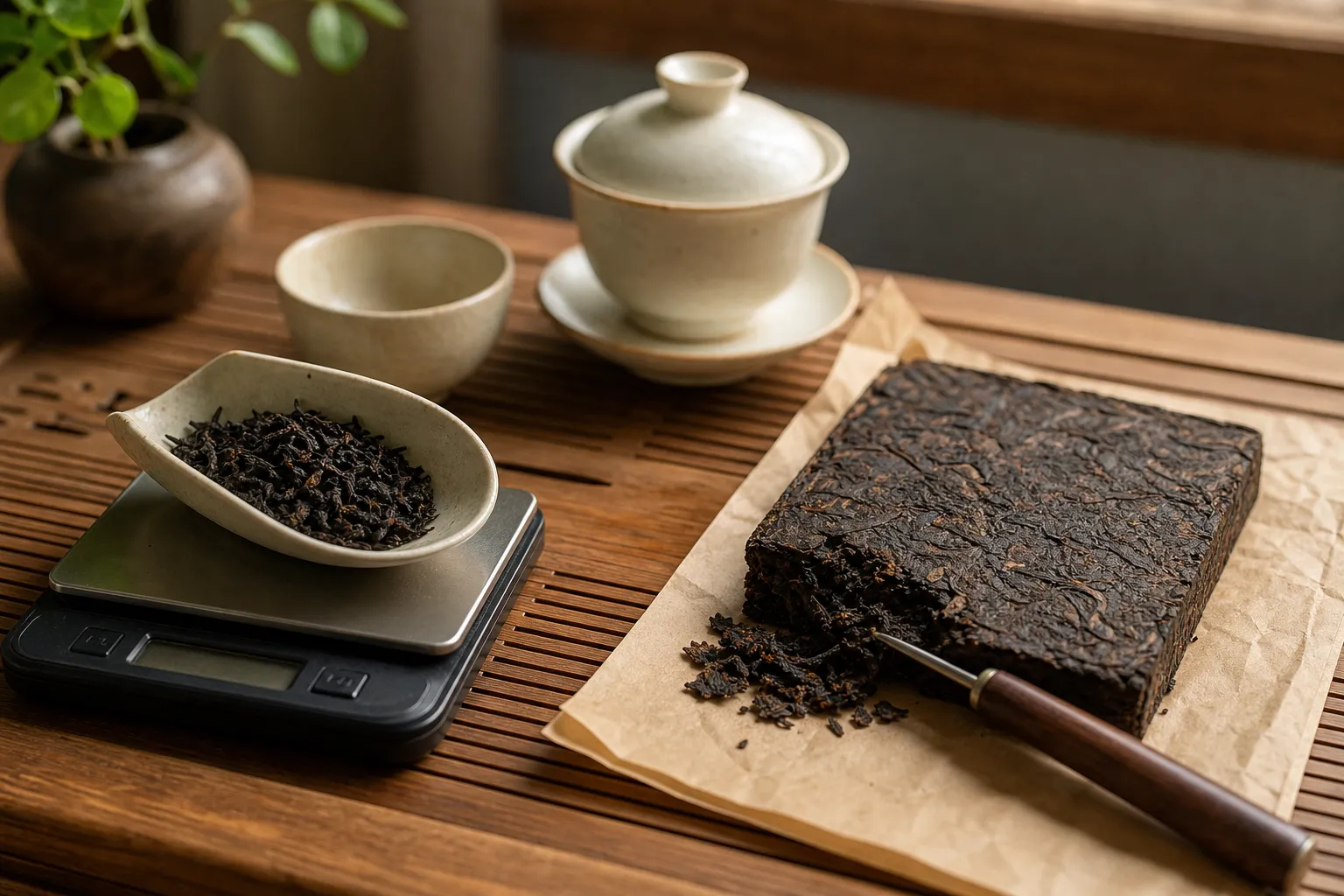
A tea brick can brew very well, but it often asks for one more step before the water reaches the leaf: prying, breaking, judging the piece size, and waiting for the compressed center to open. The main exception is a pre-broken tea brick. Once the brick is already separated into thin flakes or small layered pieces, the brewing gap becomes much smaller.
upward
Start with the broader guide
Use the broader guide first if you need the full scope before this page.
The everyday answer: loose leaf is usually easier
The difference starts with water contact. Loose leaf dark tea already has exposed surfaces. In a gaiwan, small pot, mug infuser, or thermos, hot water reaches the leaves quickly, so color, aroma, and body begin to show early.
A brick is different. The tea has been pressed into a compact block, so water reaches the outside first. The middle of a dense piece may stay tight during the rinse or first infusion. That does not mean the tea is poor; it means tea brick brewing needs more patience and more judgment.
Loose leaf dark tea
- Measuring: scoop or weigh directly.
- Tools: usually just a vessel or strainer.
- First water contact: leaves open quickly.
- Rinse or awakening: short rinse or none, depending on habit.
- First infusion: easier to read and adjust.
- Later infusions: strength usually fades more predictably.
Tea brick
- Measuring: break off a piece first, unless already pre-broken.
- Tools: may need a tea knife, pick, or careful hand-breaking.
- First water contact: outer layers open first; center may stay compact.
- Rinse or awakening: often benefits from a longer wetting step.
- First infusion: may taste pale if the piece has not opened.
- Later infusions: can become stronger as the piece loosens.
If you want a quick cup, loose leaf is the more forgiving form. You can use less tea, shorten the steep, or add more water with little fuss. With a brick, the cup changes not only with steeping time, but also with how much the compressed piece has opened.
What a tea brick adds before brewing starts
A tea brick is not difficult because dark tea is mysterious. It is less immediate because compression creates extra handling.
The key step is portioning. An intact brick usually needs to be separated into brewable pieces. A thin edge flake behaves very differently from a thick cube broken from the middle. If the piece is too large or too dense, the first infusion can taste light, woody, or watery because the center has not loosened yet.
For easier brewing, work from the side or edge, separate small layers, and keep your fingers out of the tool path. A stable surface matters more than force.
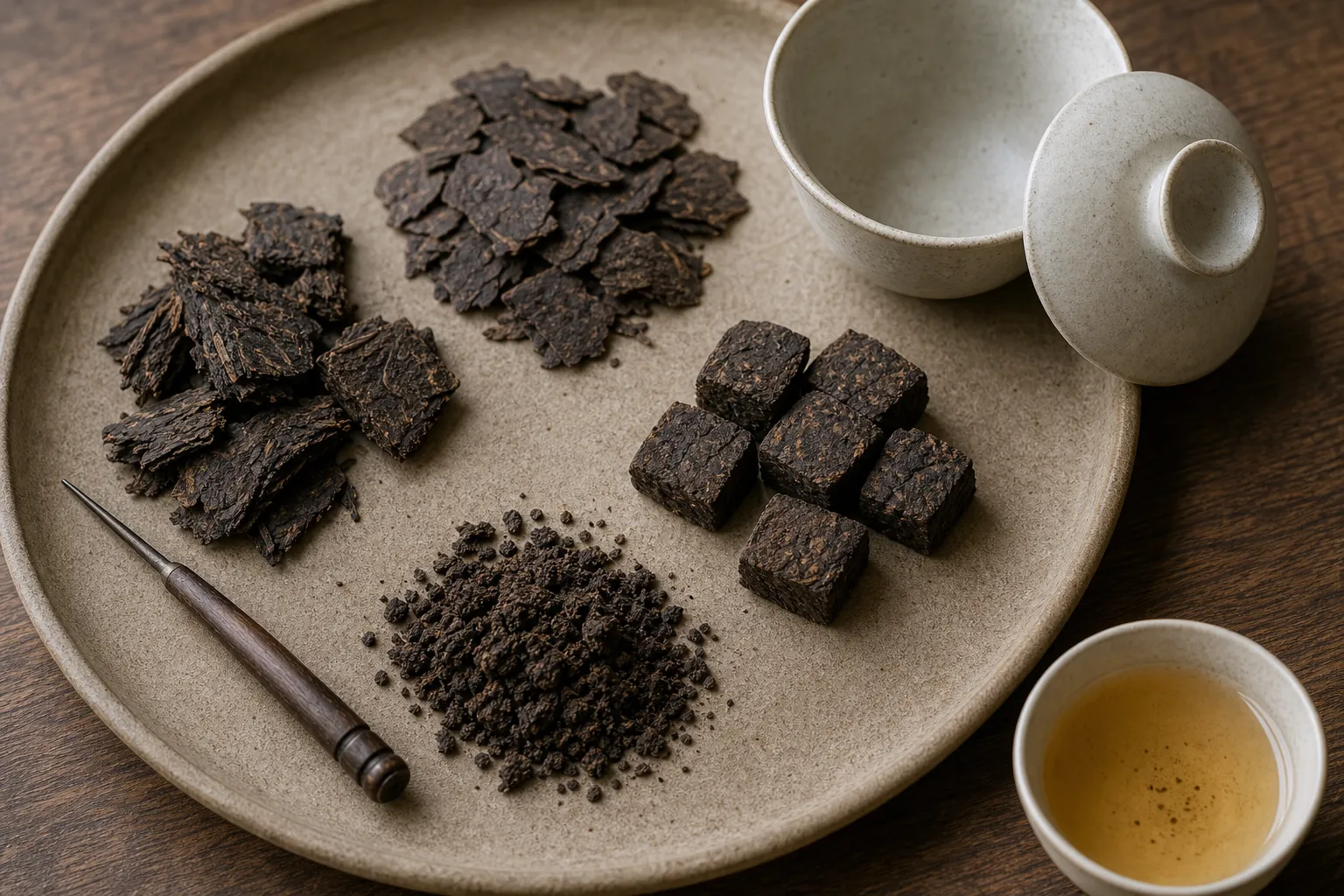
Chunk size often matters more than the word “brick” on the wrapper
- Thin flakes open faster and behave closer to loose leaf.
- Small layered chunks work well for repeated infusions.
- Dense cubes may need a longer awakening step and a longer early steep.
- Powdery broken bits extract quickly and can turn heavy fast.
This is where compression tightness and brewing are tied together. A loosely pressed piece may open with little effort. A tightly pressed brick may need smaller pieces, hotter water, or more time. “Compressed dark tea” tells you the form, not exactly how the cup will behave.
Why the first infusion from a brick can taste weak
Many dark tea drinkers use a rinse or awakening step, especially with compressed tea. It warms the vessel, wets the leaf, and helps a compact piece begin to loosen. It does not need to become a rigid ritual.
For loose leaf dark tea brewing, the rinse can be very short or skipped, depending on the tea, vessel, and your habit. Loose leaves meet water quickly.
For a dense brick piece, a longer wetting step is often more useful. In many everyday setups, giving the tea a little more time at the start helps water reach the inner layers.
Read the first infusion this way
- If the liquor is pale and the taste is thin, the piece may not have opened yet.
- If the aroma is present but the body is weak, try a longer early steep.
- If the outside extracts strongly while the center stays tight, use a smaller piece next time.
- If the second or third steep becomes much darker, the brick is probably loosening.
Loose leaf is easier because the adjustment is more direct. If the cup tastes too heavy, earthy, flat, or harsh, shorten the next steep or use less leaf. With a brick, you may also need to ask whether the piece size and compression are causing the problem.
When a tea brick becomes almost as easy
A tea brick becomes much easier once the hard work is done in advance. If you break a brick into practical pieces and store those pieces cleanly in a small container, the next session starts closer to loose leaf brewing.
A pre-broken tea brick can be convenient if
- the pieces fit your usual vessel;
- the chunks have layered surfaces rather than hard cube-like centers;
- you do not need to use a tool each time;
- you are willing to give the first steep a little patience;
- you enjoy later infusions that may deepen as the piece opens.
For office brewing, travel, or thermos tea, pre-broken brick pieces can be tidy and practical. They are still not quite as instantly adjustable as loose leaf, but they remove the most annoying step: breaking the brick at the moment you want tea.
Boiling is another option for some dark brick teas. It can help extract from dense pieces and may bring out heavier woody, earthy, nutty, or ripe-fruit-like notes, depending on the tea. It can also make the cup stronger than expected, so treat boiling as one route, not the default answer for every compressed tea.
Common misunderstanding: easier does not mean better
Sales language can make the choice sound like a hierarchy: compressed tea is often presented as traditional, compact, and storage-friendly, while loose leaf is presented as quick and convenient. That framing can be useful, but it can blur the real brewing question.
For ease, the important variables are
- how tightly the tea is pressed;
- whether the brick is intact or already broken;
- how large the piece is;
- whether you have a stable surface and a suitable tool;
- water temperature and vessel heat;
- steeping time;
- how strong, mellow, or earthy you like the cup.
Loose dark teas, including some Liubao-style products, can be excellent daily teas. Brick teas, including Fu brick and Anhua dark tea examples, can also be practical once you know how to portion them. The easier form is not automatically the better tea.
This question is also different from loose leaf tea versus tea bags. Tea bags involve cut size, bag material, convenience, and limited leaf expansion. Here, the main issue is loose leaf versus compressed tea within dark tea: how quickly water reaches the leaf and how easily the brew can be adjusted.
A simple choosing rule
Choose loose leaf dark tea if you want the easiest daily path
- you want to measure quickly;
- you do not want a prying tool;
- you want fast extraction;
- you prefer easy adjustment from one cup to the next;
- you often brew in a mug, small pot, or office setup.
Choose a tea brick if you accept one extra preparation step
- you do not mind breaking pieces in advance;
- you enjoy infusions that change as the chunk opens;
- you want a compact form for storage or carrying;
- you are willing to use a longer rinse or first steep;
- you may occasionally boil a stronger dark brick tea.
If you are new to compressed dark tea brewing, the easiest compromise is simple: buy or prepare a small amount of pre-broken brick. Brew the thin flakes first. Save dense center pieces for sessions where you have more time.
Evidence limit for this exact comparison
There is useful public research on Fu-brick and Fuzhuan dark tea showing that manufacturing, storage, aroma compounds, taste characteristics, and hot-water extraction can vary across materials and processes. Some boiling-water extraction research also supports the broader idea that aroma release can unfold over time rather than all at once.
There is not, however, a strong non-commercial study that directly tests household loose leaf dark tea vs tea brick brewing ease side by side. So the conclusion here is best read as a practical brewing judgment, not a lab ranking.
The modest point is enough for daily use: loose leaf usually gives faster measuring and faster water contact. A brick usually adds portioning and opening time. Compression, chunk size, vessel, water, and taste preference can change the result.
Short answer before you brew
If you want the easier cup tonight, use loose leaf dark tea.
If you already have a brick, make it easier by breaking off thin flakes or small layered chunks, giving the piece a patient awakening rinse, and judging the first infusion by whether the tea has opened. If the cup is pale and watery, do not assume the tea has failed. It may simply need smaller pieces, hotter water, or a longer early steep.
Sources
Sources and further reading
Reference links are limited to sources considered suitable for public citation in this page.