
Dark tea brick brewing dose
How Much Dark Tea Brick to Use for One Brewing Session
For most everyday brewing, the practical answer to how much dark tea brick to use is:
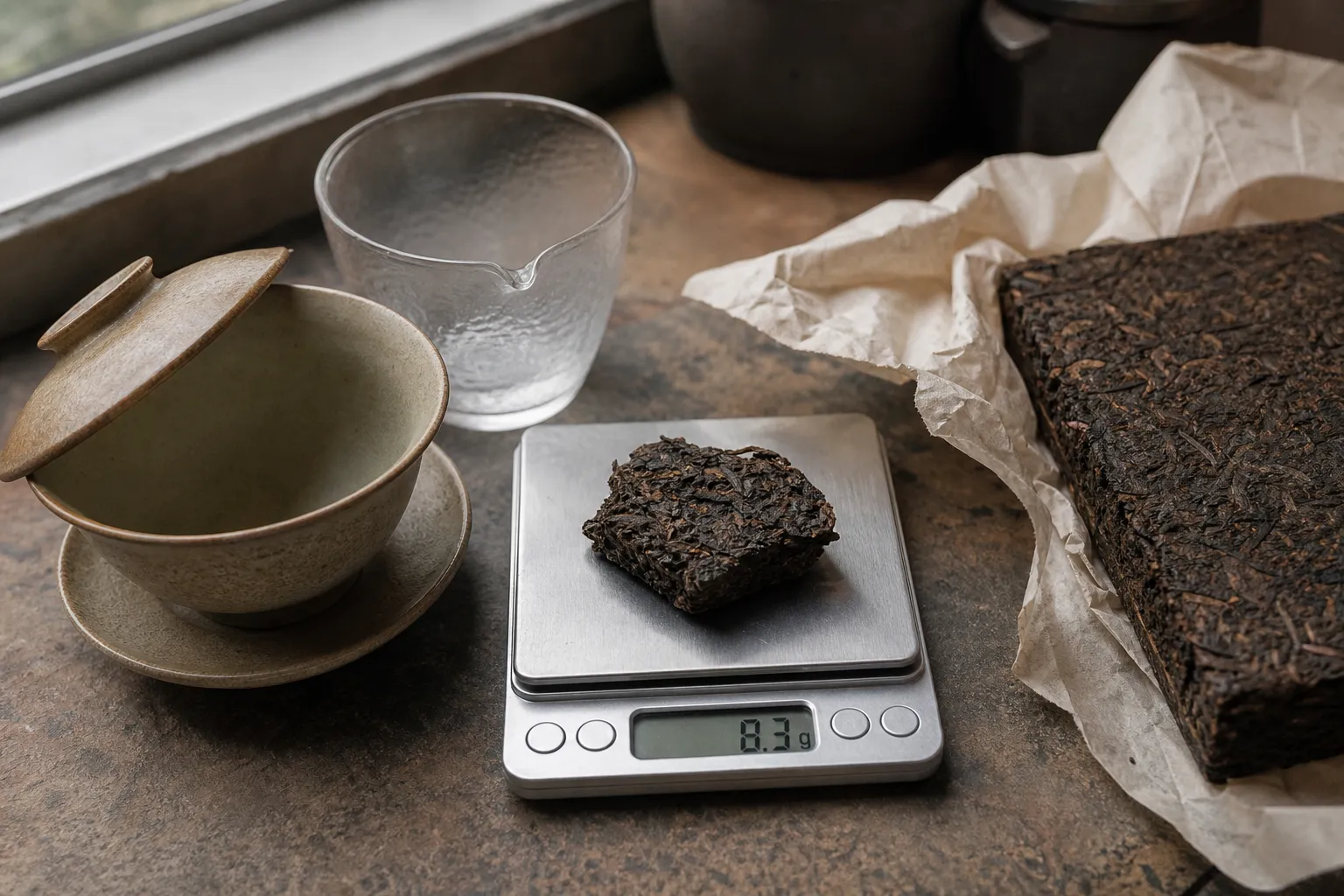
- 6–8 g for a 100–150 ml gongfu vessel
- 5–6 g for a 300 ml cup or small teapot
- 3–4 g for a 350 ml thermos or long continuous steep
- 5–7 g for 500–700 ml gentle boiling or simmering
Treat these as starting points, not rules. Dark tea brick grams change with vessel size, steep time, compression, fragment size, water temperature, and how strong you like the cup.
If you do not have a scale, start with a modest flake rather than a large chunk. With compressed tea, though, weight is more reliable than appearance: a small dense piece can weigh more than it looks.
upward
Read the full overview first
Use the broader guide first if you need the full scope before this page.
A simple dark tea brick brewing ratio to start with
The easiest way to set the dose is to match the amount of tea to the amount of contact time. Short repeated infusions can use more leaf. Long mug, pot, or thermos steeps usually need less.
Brewing style
Practical starting amount
Vessel size
Why this range works
Gongfu-style short infusions
6–8 g
100–150 ml
More leaf, but each steep is brief
Western-style cup or small pot
5–6 g
About 300 ml
Moderate strength for a few minutes of steeping
Thermos or continuous mug steep
3–4 g
About 350 ml
Long contact time extracts more from less tea
Gentle boiling or simmering
5–7 g
500–700 ml
More water, but heat and time increase extraction
These ranges are a first-session map. Brewing research supports the broader point that extraction changes with water volume, time, temperature, vessel, and leaf form. It does not give one neutral household standard for every Fu brick tea, every cup size, or every tea brick brewing ratio.
A useful first session is simple:
- Break off a small flake or cluster.
- Weigh it if you can.
- Brew it in the vessel you actually plan to use.
- Taste after the first or second infusion.
- Adjust the next session by 0.5–1 g, or change the steep time.
That small correction usually helps more than forcing every dark tea brick into one fixed ratio.
Why gongfu, cup brewing, and thermos steeping use different amounts
The same 6 g piece can taste balanced in one setup and heavy in another. The main reason is contact time.
In gongfu brewing, a small gaiwan or teapot uses a higher leaf-to-water ratio, but the infusions are short and separated. A 6–8 g piece in 100–150 ml may look like a lot, yet brief pours keep the cup from becoming one long extraction. Later steeps can lengthen as the compressed leaves open.
Western-style brewing works differently. If tea sits in a 300 ml cup or small pot for several minutes, a middle range around 5–6 g is usually a safer start. It gives the brick enough presence without making the liquor thick, harsh, or overly earthy before you finish drinking.
Thermos steeping is where people often use too much. A travel mug keeps the water hot, and the leaves may stay in contact for a long time. Gongfu dark tea dosage in a thermos can become much stronger than intended. For a 350 ml thermos, start closer to 3–4 g, especially if the tea is broken into chips or dust.
Boiling tea also changes the equation. Some compressed dark teas, including Fu brick and other post-fermented bricks, are often brewed with near-boiling or boiling water. Heat can help a tight piece open, but it also makes an excessive dose obvious. If you boil or simmer, use more water and watch the liquor color, aroma, and mouthfeel rather than assuming a larger pot needs a much larger chunk.
What changes the amount you need
Compression
A tightly pressed brick may open slowly. The first infusion can taste quiet, then the second or third may become fuller as the piece loosens. If your chunk is dense, do not add more tea just because the first steep is pale. Give it a brief rinse or opening steep, then judge the next infusion.
A looser brick or pre-broken cluster may release flavor faster. The same gram amount can taste stronger.
Fragment size
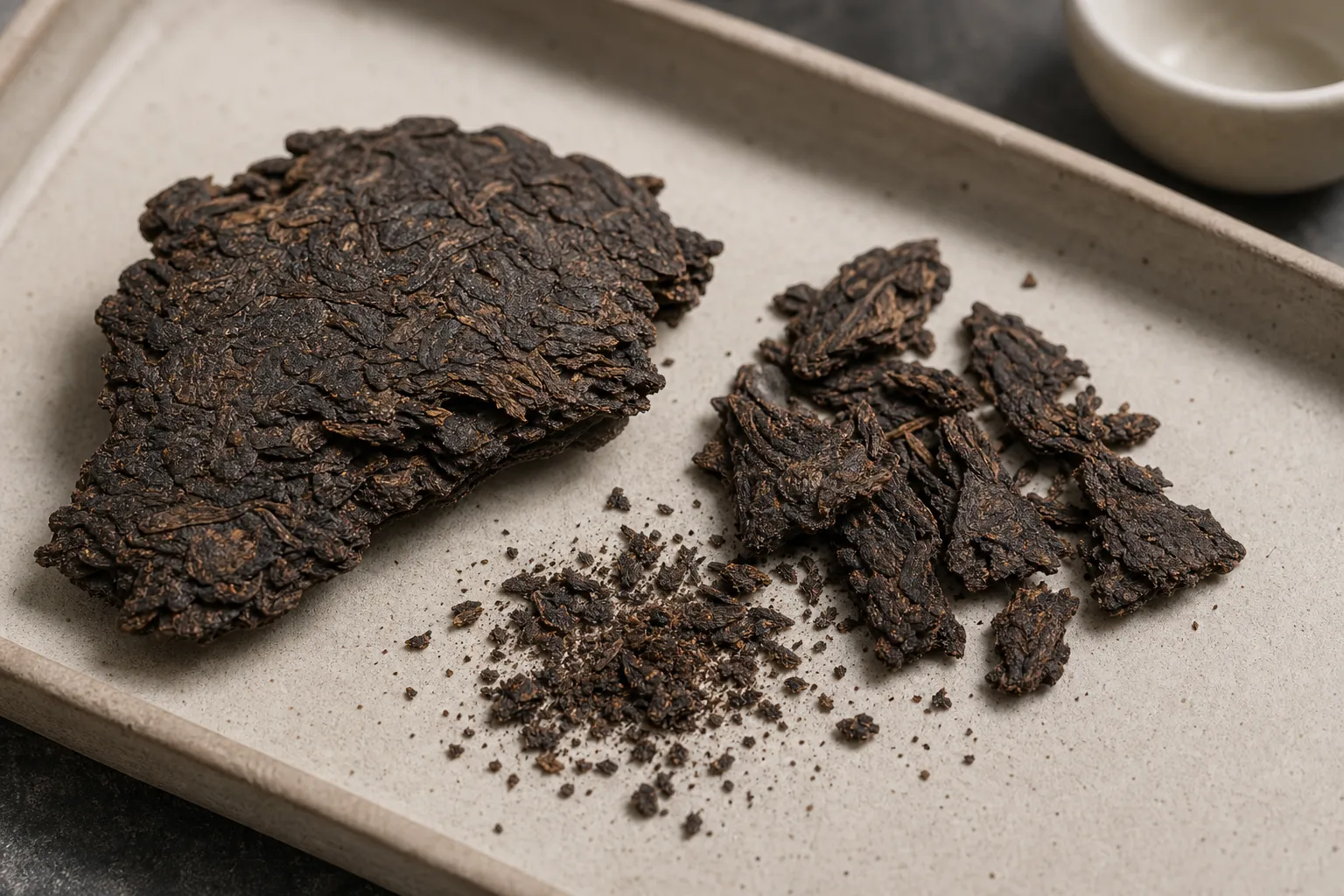
Tea brick fragment size matters. Large intact flakes extract more slowly. Small chips, crumbs, and dust expose more surface area to water and can release color and flavor quickly.
If you are brewing mostly crumbs from the bottom of a wrapper, reduce the dose slightly or shorten the first steep. A spoonful of fragments can behave stronger than a neat flake of similar visual size.
Water temperature
Many compressed dark teas are brewed with very hot water, often near boiling. This can help loosen compressed leaves and bring out deeper aroma, but it also increases extraction.
If the tea tastes too strong, bitter, harsh, or drying, try one of these first:
- use 0.5–1 g less next time;
- shorten the steep;
- pour the tea off the leaves sooner;
- use a larger vessel or more water;
- avoid leaving fine crumbs in continuous contact with hot water.
If the tea tastes thin, flat, or watery, move in the other direction: add 0.5–1 g, extend the steep, or use slightly hotter water if your tea and vessel allow it.
Vessel and separation
A cup with a basket infuser is different from a mug where the leaves stay in the water. A small pot that is fully poured out is different from a thermos that keeps extracting for an hour.
The more completely you separate tea from water, the more control you have over a higher dose. This is why “dark tea grams per cup” can mislead. A cup with a removable infuser may handle 5–6 g well. A cup where the tea sits loose at the bottom while you drink slowly may need less.
Breaking off tea brick without turning it into dust
Before choosing the exact compressed tea dosage, loosen a usable piece. Aim for a flake or small cluster rather than powder.
Work from the edge or side of the brick where you can see natural layers or seams. Insert a tea pick, tea needle, or suitable tea knife gently along the layers, then wiggle with small movements. Avoid stabbing straight down through the face of the brick. Hard prying creates dust and can make the tool slip.
Keep the pointed end away from your body, and keep your supporting hand out of the path the tool would travel if it slipped. Compressed tea can resist suddenly, then give way.
Once you have a piece, weigh it. If it is too large, separate a smaller flake. If it falls apart into many chips, brew a little more cautiously because small fragments often extract faster than an intact chunk.
A quick rinse or wake-up steep is common with compressed dark tea, especially when the piece is tight, dusty, or has been stored for a while. It does not need to become a ritual. Add hot water briefly, pour it off, then begin the first drinkable infusion. For a compact piece, the rinse may mainly help the leaves start to open.
How to correct the next session by taste
Change one thing at a time when possible. The best adjustment is small and specific.
If the dark tea tastes watery, pale, or flat
- add 0.5–1 g next time;
- steep a little longer;
- use hotter water if you started below near-boiling;
- break the piece into a slightly thinner flake;
- give a dense chunk one short opening steep before judging it.
If the dark tea is too strong, heavy, harsh, bitter, or drying
- reduce the amount by 0.5–1 g;
- shorten the steep;
- use fewer crumbs and more intact flakes;
- pour the liquor off the leaves completely;
- use less tea for thermos or continuous mug steeping.
If the aroma is pleasant but the body feels too thick, the dose may be high for your vessel. If the aroma is faint and the liquor looks pale after several minutes, the dose may be low, the piece may still be too tight, or the water may not be extracting enough.
Color helps, but it is not enough by itself. Some dark teas brew deep quickly; others open slowly. Read color together with aroma, mouthfeel, and aftertaste. A balanced cup does not need to be the darkest possible cup.
Common confusion about tea brick amount
Is Fu brick tea measured differently from other dark tea bricks?
Fu brick, Fuzhuan, and other compressed dark teas vary in density, leaf size, and processing. The same starting ranges can help, but adjust by the actual brick in front of you. A tightly compressed Fu brick piece and a loose dark tea brick fragment may not brew the same at the same weight.
Can I measure by teaspoons instead of grams?
You can in a pinch, but it is less reliable for compressed tea. Loose leaves, flakes, chips, and dust occupy space differently. A teaspoon of airy fragments and a teaspoon of dense broken brick may not weigh the same. If you brew tea bricks regularly, a small gram scale removes much of the guesswork.
Should I use more tea if the first infusion is weak?
Not immediately. A dense compressed piece may need a rinse or one short infusion before it opens. If the second and third infusions are still thin, then increase the dose slightly or lengthen the steep next time.
The practical answer
For one brewing session, start with 6–8 g for gongfu-style short infusions, 5–6 g for a 300 ml cup or small pot, or 3–4 g for a 350 ml thermos or long steep. Use less for crumbs, long contact, or very hot continuous steeping. Use a little more when the tea tastes thin after it has had time to open.
After the first cup, the better question is not whether you used the perfect amount. It is whether this dose matched this vessel, this steep time, and this piece of brick. If it was close, adjust by a gram or less and let the next session refine the brew.
Sources
Sources and further reading
Reference links are limited to sources considered suitable for public citation in this page.