
Editorial Policy
How Darktea Zen creates and maintains its guides
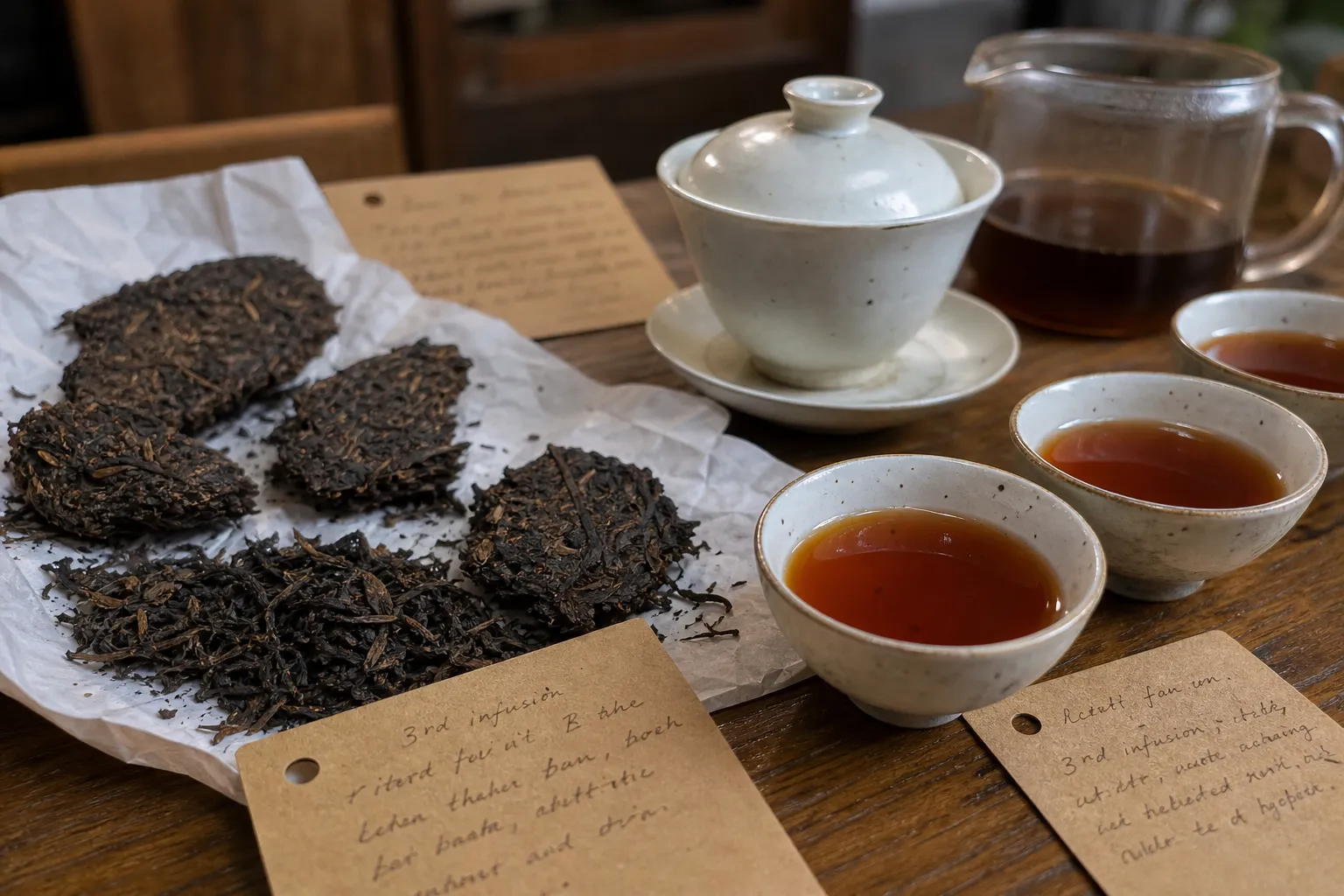
Darktea Zen is an independent editorial notebook for readers learning about fermented dark tea through practical selection, brewing, tasting, and storage decisions. Our pages are written to stay close to observable tea materials: leaf form, compression, water temperature, steeping time, liquor color, aroma, mouthfeel, wrapper condition, and storage setting.
Who creates the content
The site is maintained by Mara Lin, site editor. Topics are selected from everyday dark tea questions: how to start a steep, compare loose leaf and compressed forms, describe a flavor note, or keep a tea cake in a stable storage place.
The writing does not present a single universal method. When tea type, age, storage, water, vessel, or personal taste can change the result, the page should name that dependency.
How guides are organized
Each guide is shaped around a reader task rather than a decorative tea term. A brewing page should help with leaf amount, water, time, vessel, and sensory adjustment. A storage page should make humidity, airflow, light, wrapper condition, and off-aroma boundaries easier to notice.
We use ranges and cues such as “start with,” “look for,” and “adjust if” because fermented dark tea changes across form, handling, and storage history.
How pages are revised
Older pages may be revised when a brew range needs a clearer boundary, a tasting description feels too broad, a storage note needs a practical caution, or a comparison could better show the tradeoff between two tea forms.
Revisions aim to tighten usefulness, not to make claims stronger than the tea material supports. When a page is updated, the goal is clearer everyday guidance.
Disclosures and boundaries
Darktea Zen does not promise health outcomes, guaranteed aging results, or guaranteed tea value. Cultural context is included when it helps readers understand a tea practice, but preparation advice stays practical and non-medical.
If a page includes a material relationship, recommendation context, or other relevant disclosure, it should be stated near the place where it affects the reader’s judgment.
Corrections
If a reader spots an unclear instruction, a comparison that needs better limits, or a factual issue in a guide, we review the page against observable tea variables and revise when a correction would make the guidance more accurate or usable.