
Brewing foundation
Dark Tea Brewing Methods and Brewing Variables
Dark tea brewing methods work best as adjustable starting points, not fixed rules. Before you choose a recipe, look at the tea in front of you: loose leaf, a compressed brick, a cake piece, a small tuo, basket-packed tea, or broken fragments from a larger block. The form tells you how quickly water can reach the leaf and how carefully you need to manage extraction.
For most everyday brewing, the main controls are simple: vessel size, leaf amount, water temperature, steeping time, and whether you rinse or wake the leaf first. A small gaiwan or teapot with more leaf gives short, changing infusions. A mug or larger teapot with less leaf gives a steadier cup. If the tea tastes thin, heavy, earthy, sharp, or flat, change one variable at a time and let the next cup tell you what worked.
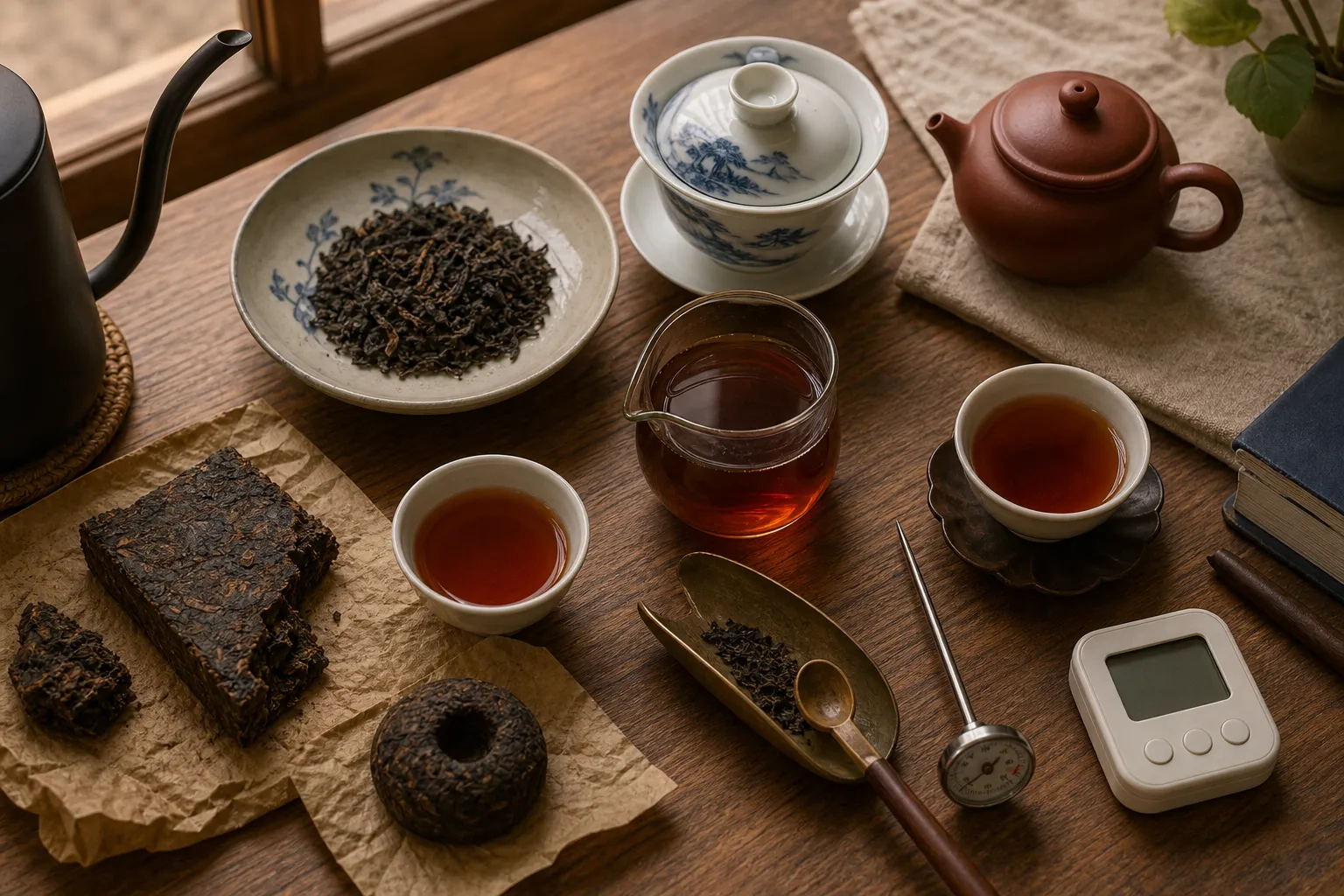
The Brewing Framework: Form, Water, Time, Vessel, Taste
Dark tea does not behave as one single category in the cup. Loose leaf may open quickly. A tight brick or cake may need time for water to reach the inner layers. Older, drier, or heavily compressed pieces can brew differently from looser tea stored in more humid conditions. The same tea can also feel different in a clay pot, porcelain gaiwan, glass mug, large teapot, travel bottle, or thermos.
Use this framework before worrying about exact numbers:
Brewing decision
What you control
What to watch in the cup
Tea form
Loose leaf, compressed chunks, flakes, broken pieces, fine fragments
How quickly flavor opens; whether the liquor becomes clear, cloudy, light, or heavy
Water temperature
How much extraction force the water brings
Aroma, sweetness, sharpness, thickness, and rough edges
Steeping time
How long leaf and water stay together
Strength, body, bitterness, earthiness, and aftertaste
Leaf ratio
How much tea you use for the vessel
Concentration, number of infusions, clarity, and heaviness
Vessel choice
Heat retention, volume, pour speed, and leaf movement
Whether the brew feels bright, rounded, strong, muted, or muddy
The goal is not to find one universal setting. The goal is to understand what each variable changes, so the next brew is easier to adjust.
Choose the Method by the Cup You Want
Before measuring leaf or setting a timer, decide what kind of drinking session you want. Dark tea can be brewed as a focused tasting, a casual mug, a long refillable cup, or a slow thermos infusion. Each method has a different rhythm.
Gongfu style dark tea
Best when you want several short infusions and clear changes across rounds.
Main advantage: high control over strength, aroma, and timing.
Main caution: needs attention and a suitable small vessel.
Western brewing dark tea
Best when you want one or two comfortable cups.
Main advantage: simple, steady, easy to share.
Main caution: a long steep can make the whole pot too strong.
Mug or bowl brewing
Best when you want a relaxed cup with refills.
Main advantage: minimal equipment.
Main caution: leaves keep extracting while you drink.
Thermos brewing
Best when you want long, slow extraction for travel or cold weather.
Main advantage: deep, sustained flavor.
Main caution: too much leaf can make the tea dense or heavy.
Gongfu Style for Repeated Infusions
Gongfu brewing uses a small vessel, a relatively high leaf amount, and short steeps. It is useful when you want to taste how a tea changes from one infusion to the next.
It often suits compressed pieces that loosen gradually, teas with layered aroma, and side-by-side comparisons. Early infusions may show storage aroma, leaf opening, or lighter body. Middle rounds often become fuller. Later rounds may turn softer, sweeter, thinner, more woody, or more mineral depending on the tea.
If the first infusion is too strong, shorten the next one. If the cup is pale and quiet, add a little time or use slightly more leaf next session. Use this method when you want detail and control, not when you need the easiest everyday cup.
Western Brewing for a Steady Cup
Western brewing uses a larger mug or teapot, less leaf relative to water, and a longer steep. It is practical for desk tea, shared tea, or one comfortable pot without managing many short rounds.
Because the water volume is larger, small changes in leaf amount matter. Too little leaf can taste watery. Too much leaf or too long a steep can make the tea heavy, rough, or overly earthy. Start moderate, taste before extending the steep, and adjust by what is in the cup rather than chasing a single perfect number.
Mug, Bowl, or Refillable Cup Brewing
In a direct mug or bowl method, leaves sit in the drinking vessel and you add more hot water as needed. This can be relaxed and satisfying, especially with forgiving tea and larger leaf pieces.
It works less well when the tea contains many fine fragments, because small particles keep extracting and can make the cup gritty or dense. If the brew becomes too strong, add water sooner. If fragments bother you, use a strainer or choose larger pieces.
Thermos Brewing for Slow Extraction
A thermos holds heat and keeps the leaves in contact with water for a long time. This can produce a deep cup, especially with compact pieces or sturdy tea. It can also become too heavy if the leaf amount is high or the tea contains many small particles.
Use a lighter hand at first. If the result is too dense, reduce leaf, shorten the holding time, or pour the tea into another vessel once it reaches the strength you like.
Starting Points for Time, Temperature, and Leaf Ratio
Exact numbers should be treated as entry points, because dark tea changes with form, compression, storage, vessel, water, and personal taste. The ranges below are practical starting places for everyday brewing, not strict standards.
Gongfu style
Vessel size: small gaiwan or pot, about 90–150 ml.
Leaf amount: about 5–8 g.
Water temperature: near-boiling to just off-boil water.
First steep direction: brief rinse, then short steeps from a few seconds to under a minute.
Best for: focused tasting and repeated infusions.
Western teapot
Vessel size: about 300–500 ml.
Leaf amount: about 3–6 g.
Water temperature: hot water, often near boiling for sturdy or compressed tea.
First steep direction: start around 2–5 minutes.
Best for: everyday cups and simple serving.
Mug with strainer
Vessel size: about 250–350 ml.
Leaf amount: about 2–4 g.
Water temperature: hot water.
First steep direction: start around 2–4 minutes.
Best for: desk brewing and quick preparation.
Leaves directly in mug
Vessel size: about 250–350 ml.
Leaf amount: light to moderate amount by volume.
Water temperature: hot water.
First steep direction: sip and refill before it becomes too strong.
Best for: casual drinking.
Thermos
Vessel size: about 400–750 ml.
Leaf amount: less than you think at first.
Water temperature: hot water.
First steep direction: long hold; adjust by leaf amount next time.
Best for: travel and slow extraction.
A tight chunk may need more time to open than loose leaf. Fine fragments release flavor quickly. A larger vessel dilutes the liquor. A small vessel concentrates it. Thick clay holds heat differently from thin porcelain or glass. Treat the table as a first brew, then let taste guide the second.
What Leaf Ratio Changes
Leaf ratio is the relationship between tea amount and water volume. It is one of the fastest ways to change strength.
More leaf can bring stronger aroma, thicker body, faster extraction, and more infusions in gongfu brewing. It can also increase heaviness, roughness, or muddy texture if the tea is pushed too far.
Less leaf can make the cup softer and clearer, with less risk of over-extraction. It can also make the tea seem thin if the vessel is large or the leaf has not opened.
If a cup tastes weak but clean, add a little more leaf next time. If it tastes strong but unpleasant, do not blame the tea immediately. Reduce leaf, shorten time, or change the rinse.
What Steeping Time Changes
Dark tea steeping time controls how much the water pulls from the leaf. Longer time usually gives more strength and body. It can also increase roughness, bitterness, murkiness, or a heavy earthy note when the tea is already intense.
Shorter time can keep the liquor clearer and livelier, but may leave the cup pale if the leaf has not opened. This is common with compressed dark tea. In that case, a rinse, a short rest after rinsing, or a slightly longer early steep may help the tea loosen before you judge it.
Use small changes:
- If the cup is thin, steep longer or use slightly more leaf.
- If the cup is sharp, shorten the steep first.
- If the cup is heavy and dull, reduce time and check for too many fine particles.
- If later infusions fade, lengthen each round gradually.
What Water Temperature Changes
Dark tea is often brewed with very hot water, especially when the leaf is compressed, aged, or sturdy. Hot water helps penetrate tight material and build body. Still, temperature is a tool, not a command.
Higher water temperature can open compressed pieces faster, deepen body and color, and bring out earthy, woody, or mineral impressions. It may also make roughness more noticeable in some teas.
Slightly cooler water can soften a sharp cup, slow extraction, and make a broken-leaf or delicate tea easier to drink. If you are unsure, start hot and watch the result. A tea that tastes clean but weak may need more heat or more time. A tea that tastes biting or muddy may need less time, less leaf, or gentler water.
Rinsing and Waking Compressed Dark Tea
Rinsing dark tea leaves means pouring hot water over the tea briefly, then discarding that first liquid. Some drinkers use a rinse to warm the vessel, loosen compressed leaves, and clear the first surface impression before the main infusions. It is not required for every cup, but it can be useful.
“Waking” compressed tea simply means giving a tight piece its first contact with hot water so the layers begin to soften. A brick, cake, or small tuo may look solid at first. After a rinse, the edges may separate and later infusions can become more even.
Use a rinse when the tea is tightly compressed, slow to open, dusty on the surface, storage-heavy in the first aroma, or being brewed gongfu style for comparison. Skip it or keep it very short when the tea is loose, aromatic right away, mild, clean, or brewed in a large mug for simplicity.
For a tight chunk, the useful cue is physical: look at whether the piece has begun to loosen. If it still looks compact after the rinse, let the wet leaf rest briefly before the first drinking infusion.
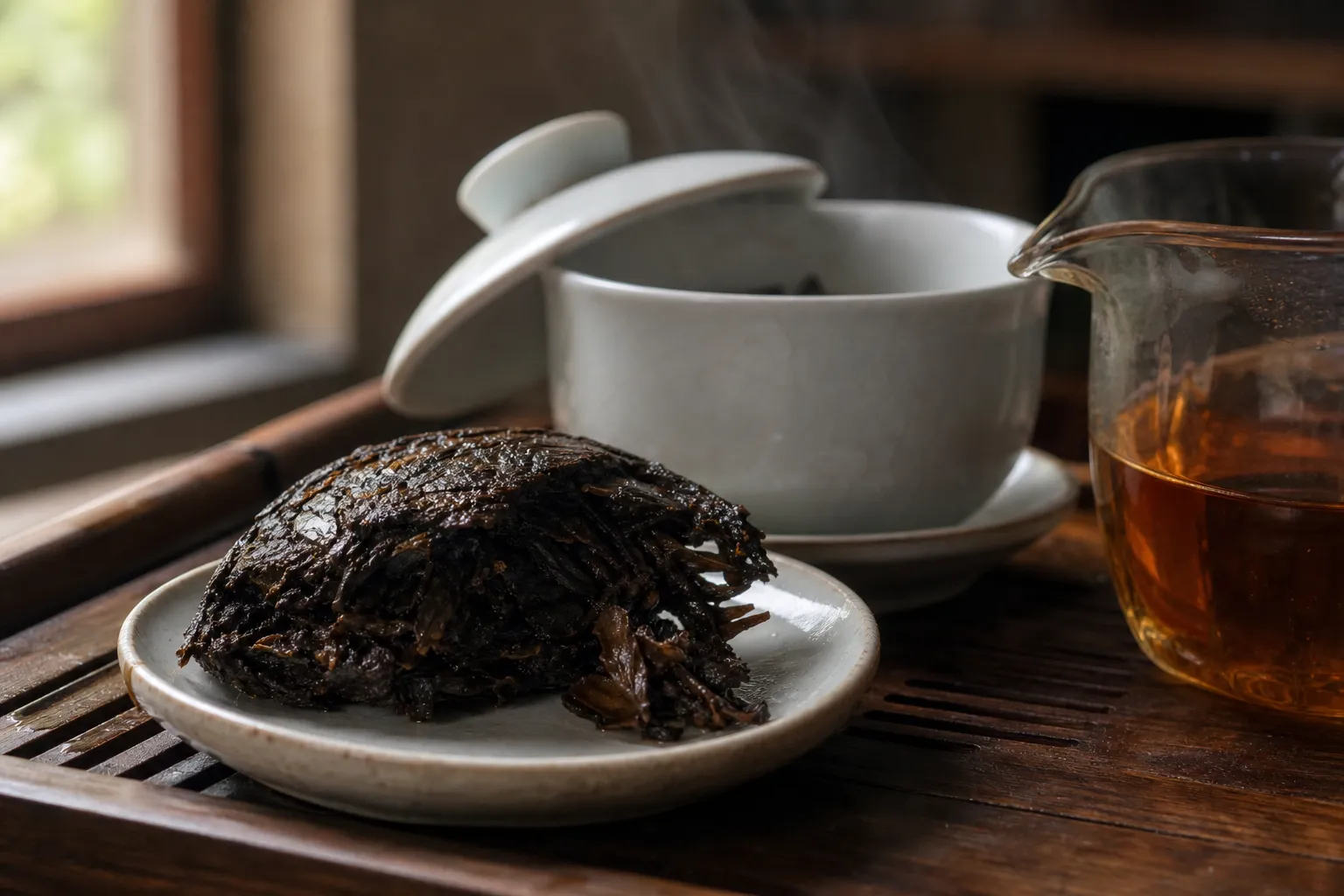
Brewing Compressed Bricks and Cakes Without Overdoing It
Compressed dark tea brewing begins before water touches the leaf. The way you break the piece affects how evenly it brews. A mix of intact flakes, layered chunks, and a few smaller pieces often gives a more balanced cup than only dense centers or only powder.
When preparing dark tea bricks and cakes, try to follow the natural layers of compression instead of crushing everything. Fine fragments extract quickly and can make the liquor cloudy or heavy, especially in a long steep.
A balanced portion may include:
- a few larger flakes for structure;
- medium pieces that open steadily;
- a small amount of fine material for quick body;
- as little loose powder as practical if you want a clearer cup.
Compressed tea can brew unevenly at first. The outside may release flavor while the center is still dry or only partly wet. This can create a first infusion that seems weak, followed by a later infusion that becomes suddenly strong.
A simple approach helps:
- Warm the vessel and leaf with hot water.
- Rinse briefly if the piece is tight.
- Let the wet leaf rest for a short moment if it still looks compact.
- Start with controlled steeps rather than a very long first infusion.
- Adjust after the tea has opened, not before.
If the first cup is pale but the wet leaf still looks folded and tight, the issue may be access, not the tea itself. Once water reaches the inner layers, the brew may deepen quickly.
Read the Cup Before You Change the Recipe
A useful adjustment starts with description. “Bad” is too vague. Try to name what the cup is doing: weak, heavy, earthy, sharp, flat, dusty, sweet, woody, smooth, drying, thick, thin, clear, cloudy, short, or lingering.
You do not need formal tasting language. You need language that tells you what to change.
What you notice
Likely causes
First adjustments
Thin, pale, weak
Too little leaf, short steep, water not hot enough, compressed leaf not open
Steep longer, use hotter water, add leaf next time, or wake compressed tea first
Good aroma but light body
Leaf ratio too low, vessel too large, early infusion too brief
Use a little more leaf, try a smaller vessel, or extend time slightly
Heavy and muddy
Too much leaf, long steep, many fine fragments, long thermos hold
Shorten time, reduce leaf, remove powdery bits, pour off fully
Too earthy
Strong extraction, storage-heavy first contact, high leaf amount
Rinse briefly, shorten steep, use less leaf, brew across lighter infusions
Sharp or rough
Long contact, too much leaf, high heat plus fine material
Shorten steep, reduce leaf, try slightly cooler water, avoid squeezing fragments
First infusion weak, second too strong
Compressed tea opened unevenly
Rinse and rest the leaf, break pieces more evenly, keep early steeps controlled
Later infusions hollow
Leaf may be fading, or time may not be increasing enough
Extend each round gradually, use hotter water, or accept that the leaf is spent
Weak Does Not Always Mean Too Little Tea
A weak dark tea taste can come from too little leaf, but it can also come from compressed pieces that have not opened, a vessel that is too large, water that is not hot enough, or later infusions that need more time.
If the cup is weak but pleasant, small changes are enough. If it is weak and flat, the issue may also involve storage condition, old fragments, or a tea style that is naturally gentle.
Heavy Is Not Always a Fault
A heavy cup can feel thick, dark, muddy, or tiring. This often comes from too much extraction for the vessel and tea, especially with many fine fragments or long contact in a thermos.
Some drinkers enjoy dense body. The better question is whether the cup still has clarity, aroma, and a comfortable finish. If not, shorten the steep, use less leaf, or pour the liquor off the leaves more completely.
Earthy Needs a More Specific Word
Earthy dark tea flavor can be part of the profile, especially in fermented teas. But “earthy” can mean clean damp wood, cellar-like depth, old books, wet soil, mushroom, mineral darkness, or a flat muddy taste.
If the earthiness is clean but too strong, use less leaf, shorten the steep, or try a rinse. If it seems flat or muddy, reduce fine particles, avoid long holding, and compare the aroma of dry leaf, wet leaf, and liquor. Brewing can adjust extraction, but it cannot make every stored tea suit every drinker.
Sharpness Usually Responds to Gentler Extraction
Sharpness can show as bitterness, astringency, prickly edges, harsh dryness, or an aggressive finish. If the aroma is good but the finish is rough, adjust time first. If the whole cup feels forceful from the first sip, reduce leaf ratio or try slightly cooler water.
Avoid squeezing leaves or pressing fine fragments through a strainer. That often makes roughness more obvious.
Vessel Choice: Why the Container Changes the Brew
A vessel is not only a container. It controls heat, water volume, pour speed, leaf movement, and how completely you separate the tea from the liquor.
Small vessels, such as a gaiwan or small teapot, give control. You can use short infusions and correct quickly. If one steep is too strong, the next can be shorter. If the tea is slow to open, the next can be longer. This is useful for learning a new tea, tasting compressed pieces across stages, or comparing two teas side by side.
Large vessels, such as mugs and teapots, give convenience. They are easier for daily drinking and shared cups, but mistakes are larger. A steep that runs too long affects the whole pot. Start with moderate leaf and taste before extending the steep.
Heat retention also matters. Thick clay, heavy ceramic, glass, thin porcelain, and stainless steel all hold heat differently. Strong heat retention can deepen extraction. Lower heat retention can make the cup softer and sometimes lighter. If a tea tastes too forceful in a heat-retentive vessel, shorten the steep or try a thinner vessel. If it tastes faint in a thin cup, pre-warm the vessel, use hotter water, or increase time.
Build a Repeatable Brewing Habit
Repeatability does not require lab equipment. It requires noticing enough details to make one useful change next time.
Track five things:
- Tea form — loose leaf, chunk, flake, brick piece, cake piece, or small fragments.
- Leaf amount — measured in grams if possible, or described consistently by spoon, pinch, or piece size.
- Vessel — type and approximate volume.
- Water and time — how hot the water was in practical terms, and how long the leaf steeped.
- Cup result — color, aroma, body, taste, finish, and what you would change.
A short note is enough:
“5 g compressed dark tea, small gaiwan, hot water, quick rinse. First cup light, second fuller, third a little heavy. Next time: break the chunk thinner and keep the second steep shorter.”
That kind of note is more useful than a perfect tasting description because it connects action to result.
Use liquor color as a cue, not a rule. Some dark teas brew reddish-brown, some deeper brown, some clearer amber-brown, and some nearly opaque if over-extracted or full of fine particles. Pale color plus weak aroma may need more extraction. Dark color plus clean taste may be fine. Dark color plus muddy texture usually asks for less leaf, less time, or fewer fragments.
Smell the dry leaf, wet leaf, and empty cup when you can. Dry leaf may show storage, wood, sweetness, herbs, mineral depth, or muted earthiness. Wet leaf often reveals more. The empty cup can show whether aroma lingers after drinking. If the liquor tastes flat but the wet leaf smells lively, your brewing may need adjustment. If both dry and wet leaf are quiet, the tea may simply be subtle, tired, or not to your preference.
A First Brew You Can Try Today
If you have dark tea in front of you and want a practical starting point, choose the version closest to your setup.
Small gongfu session
- Use a small gaiwan or teapot.
- Add a moderate amount of leaf for the vessel.
- If the tea is compressed, use flakes or a small chunk rather than only dust.
- Rinse briefly with hot water.
- Let a tight piece soften for a short moment if needed.
- Brew the first drinking infusion briefly.
- Taste, then adjust the next steep.
If the first cup is too light, steep the next one longer. If the second cup becomes too heavy, shorten the following round.
Western-style cup
- Use a mug or teapot with a strainer.
- Add a modest amount of leaf.
- Use hot water.
- Steep for a few minutes.
- Taste before letting it continue.
- Pour the liquor off the leaf when it reaches the strength you like.
If it tastes weak, extend time or use slightly more leaf next time. If it tastes heavy, reduce leaf or shorten the steep.
Compressed brick or cake piece
- Break off a layered piece instead of crushing it completely.
- Remove excess powder if there is a lot.
- Use hot water to rinse and warm the leaf.
- Watch whether the piece opens.
- Keep the early steeps controlled.
- Adjust after the leaves loosen.
A pale first infusion does not always mean the brew has failed. It may simply mean water has not reached the inner layers yet.
Common Misunderstandings About Brewing Dark Tea
Dark tea is forgiving in many everyday setups, but a few assumptions can make brewing harder than it needs to be.
Misunderstanding
Better way to think about it
One temperature works for every dark tea.
Hot water is a common starting point, especially for sturdy or compressed tea, but temperature should respond to the cup.
Longer steeping always makes better flavor.
Longer steeping makes stronger liquor. It may add body, but it can also make the cup heavy, dull, or sharp.
Compressed tea should be judged by the first infusion.
Tight pieces can open unevenly. Give them time to loosen before deciding they are weak or flat.
Earthy means something went wrong.
Earthy notes can be part of dark tea. The key distinction is clean and balanced versus muddy and overwhelming.
A darker cup is always better.
Color does not measure balance. A lighter cup with aroma and a clean finish may be better than a dark cup that feels muddy.
Where to Go Next
This root guide gives the map. The next step depends on the brewing problem or method you want to understand more deeply.
Choose your next brewing path:
If you want to…
Go deeper into…
What that narrower guide should help you decide
Taste dark tea through many short infusions
How to Brew Dark Tea Gongfu Style
Vessel size, leaf ratio, rinse, short steeps, and how flavor changes across rounds
Make a simple daily cup
Western Brewing Dark Tea for an Everyday Cup
Mug or teapot brewing, practical leaf amounts, longer steeps, and easy corrections
Understand the main variables
Dark Tea Steeping Time, Water Temperature, and Leaf Ratio
How time, heat, and leaf amount interact in strength, texture, bitterness, and depth
Work with tight bricks or cakes
How to Brew Compressed Dark Tea Bricks and Cakes
Breaking, loosening, rinsing, and managing early infusions from compressed tea
Fix a cup that tastes wrong
Why Dark Tea Tastes Weak, Heavy, Earthy, or Sharp
How to diagnose common brewing problems without blaming only the tea
If you are new to dark tea, begin with the method you actually use: gongfu, western, mug, or thermos. If you already brew often, begin with the variable that most often troubles your cup.
The Core Practice: Brew, Taste, Adjust
Learning how to brew dark tea is less about memorizing a single recipe and more about reading cause and effect. The tea form tells you how easily water can enter. The vessel controls concentration and heat. Water temperature sets extraction force. Steeping time shapes strength. Leaf ratio changes body. Rinsing can help compressed tea open. Sensory feedback tells you what to change.
A useful brewing habit is simple:
- Start with a reasonable method.
- Taste the cup honestly.
- Name the problem clearly.
- Change one variable.
- Notice whether the next cup improves.
Dark tea can be quiet, deep, earthy, sweet, woody, mineral, mellow, dense, or sharp depending on the leaf and the brew. No single method owns its best expression. Choose the method that fits your moment, then let the cup tell you what to adjust next.