
Dark tea guide
Tibetan Dark Tea: What Ya’an Tea Is and Why It Tastes Different
Tibetan dark tea is usually not tea grown high on the Tibetan Plateau. In English tea listings and dark-tea conversations, the phrase often points to compressed, post-fermented dark tea associated with Sichuan, especially Ya’an dark tea and Kang brick tea, made for transport, storage, and use in Tibetan-region markets.
It tastes different because several variables meet in the same brick: mature leaf material, pile fermentation, tight compression, age, and storage. In the cup, that can show up as woody, earthy, mineral, mellow, lightly sweet, or sometimes damp and flat notes, depending on the brick and how it has been kept.
upward
Read the full overview first
Use the broader guide first if you need the full scope before this page.
What “Tibetan dark tea” usually means
If you are trying to identify one on a tea table or product page, look for a compressed dark tea brick described with names such as Ya’an tea, Sichuan dark tea, Kang brick, Kangzhuan, or Tibetan brick tea. These names overlap in market language, but they do not always mean the same thing.
Term you may see
What it usually signals
What not to assume
Tibetan dark tea
Dark tea associated with Tibetan-region use or markets
Not automatically grown or processed in Tibet
Ya’an dark tea
A Sichuan-linked dark tea name often tied to Ya’an
Not every “Tibetan tea” listing is necessarily Ya’an-made
Kang brick tea / Kangzhuan
A compressed brick form associated with Tibetan-region trade language
Not the same as every brick tea in China
Sichuan dark tea
The broader regional dark-tea context
Not one fixed flavor profile
Tibetan black tea
A common English translation confusion
Usually not “black tea” in the Western breakfast-tea sense
The useful correction is this: “Tibetan” often describes the cultural or market destination as much as the field where the tea plant grew. Some teas sold as Tibetan dark brick tea are linked to Sichuan production and Tibetan-region consumption. Others may move through looser market naming. Without a reliable product note, the name alone does not prove exact origin, age, or grade.
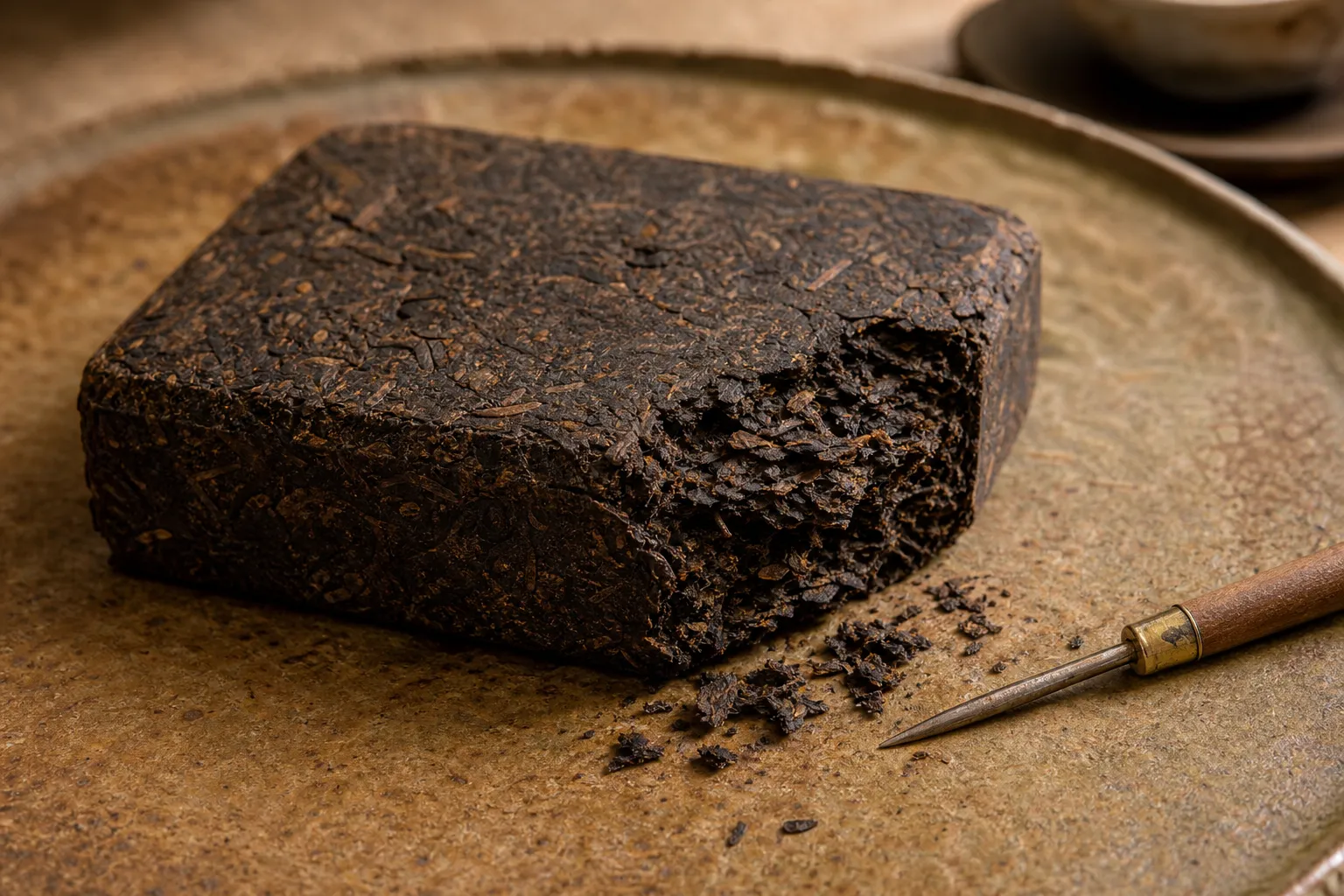
For brewing, the visible tea matters most: a compressed dark brick, usually darker than green or oolong tea, often with mature leaf, stems, broken fragments, and a dense structure that needs heat and time to open.
Why Ya’an Kang brick tastes different from loose tea
Ya’an Kang brick belongs to the dark-tea world, not the fresh, green, floral, high-aroma side of tea. Its difference comes from process and form, not just age.
Research on Sichuan dark tea and related Chinese dark teas describes dark tea as post-fermented: leaves are heated, rolled, piled under warm and humid conditions, then dried. During piling, moisture, heat, oxidation, enzyme activity, and microbial communities can transform the leaf. The studies do not create one fixed flavor rule for every Kang brick, but they do support the broad mechanism behind darker liquor, softened astringency, and woody, earthy, aged, or mellow qualities.
Compression changes the drinking experience again. A compressed dark tea brick does not behave like loose leaf. The outside of a chunk may rinse quickly while the center stays tight. A thin flake may open in one or two infusions; a dense cube may keep releasing slowly for many rounds. That is why the same Kang brick tea can taste thin in one session and heavy in another.
Storage is the third major variable. Clean storage can let woody, mineral, old-paper, dry-earth, or lightly sweet notes stay clear. Poor or odor-heavy storage can push the tea toward stale, sour, muddy, or unpleasantly damp impressions. Age by itself does not make a brick taste better; the conditions around that age matter.
Check the brick before brewing
Before water touches the leaf, notice four things:
- Compression: Is the piece dense and hard, or does it flake easily?
- Leaf mix: Do you see larger mature leaf, stems, and broken fragments?
- Dry aroma: Is it woody, dry-earthy, bark-like, mineral, or lightly sweet?
- Storage signs: Is there fuzzy growth, sharp sourness, heavy basement dampness, or a foreign odor?
Clean earthiness is not the same as visible growth or a harsh spoiled smell. If the brick looks or smells clearly wrong, longer rinses are not the answer.
Brewing Kang brick tea without making it too heavy
For a first session, treat Kang brick tea as a compressed dark tea that needs heat, not force.
Tea amount
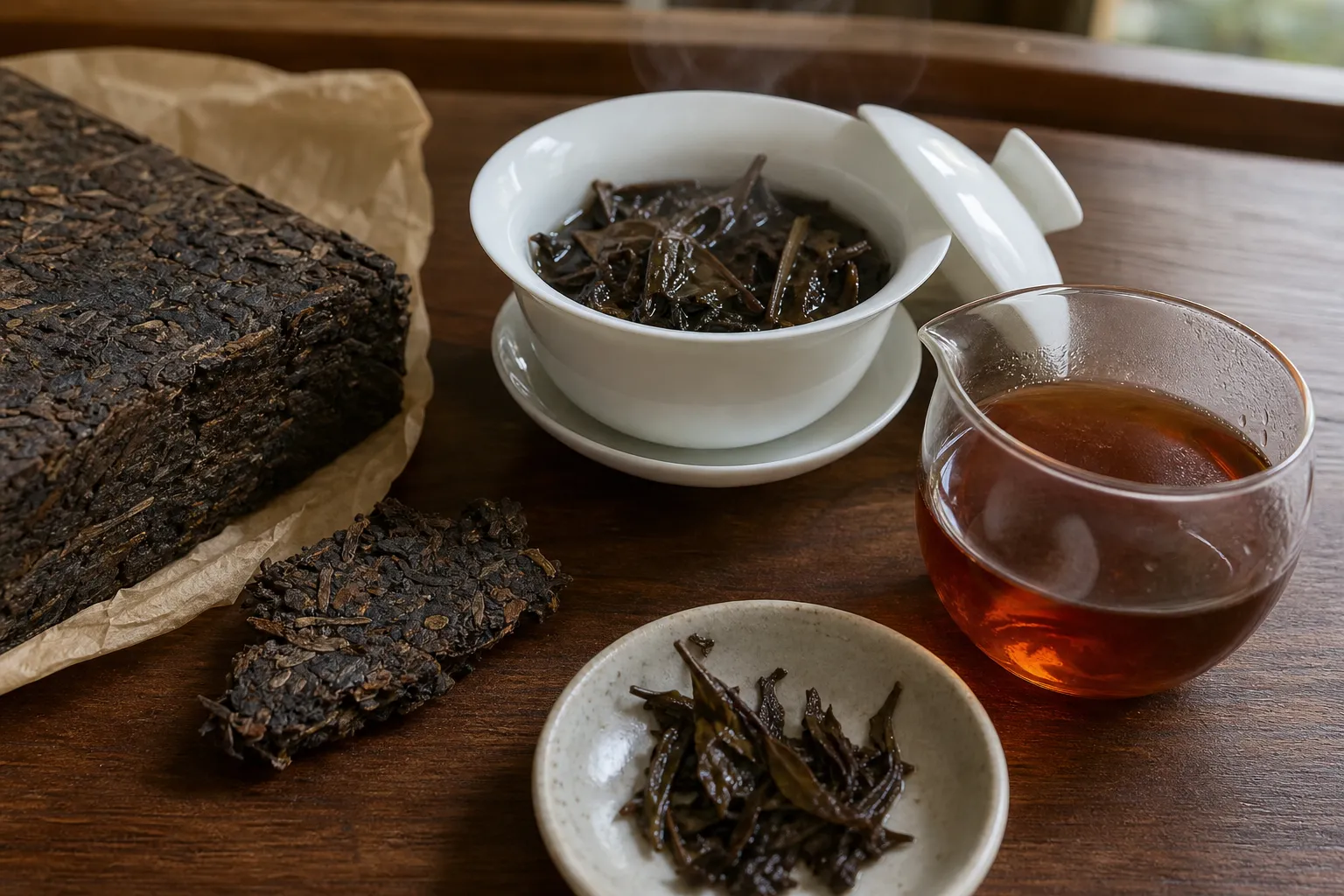
4–6 g for a 100–120 ml gaiwan or small pot
Water
Near boiling, or around 200°F / 93°C for a softer start
Rinse
1 quick rinse; 2 if the piece is very compact or dusty
First steep
10–20 seconds for gongfu brewing
Later steeps
Add time as the chunk opens
Western-style option
A small piece in a mug or pot, 2–4 minutes, then adjust
If the cup is too thin
The brick may not have opened yet. Use hotter water, extend the next steep, or gently loosen the softened piece after the rinse. If it tastes woody but watery, try more leaf or more time before judging the tea.
If the cup is harsh
If the cup is harsh, bitter, or scratchy, shorten the next infusion and avoid crushing the brick into too many small fragments. Fine dust extracts quickly and can make a compressed tea feel rougher than larger flakes.
If the cup is flat
Try a slightly stronger ratio and make sure your water is hot enough. Flatness can also come from tired storage, absorbed odors, or a brick with little aromatic lift left.
If the cup is too heavy or damp-tasting
Use a quick rinse, shorter early steeps, and less leaf. Brewing can adjust strength; it cannot fix a tea that remains unpleasantly sour, stale, or unclear.
The naming confusion around Tibetan tea
Most confusion comes from treating three different ideas as one.
1. Where the tea is made
Ya’an dark tea and Sichuan dark tea point toward a production context. Research sources discuss Sichuan dark tea and Ya’an-linked Tibetan tea within the Chinese dark-tea category, but the available material is not enough to define exact production boundaries for every product sold under these names.
2. Where the tea is consumed or sold
“Tibetan tea” may mean tea made for Tibetan-region use or sold into Tibetan areas. This is why “Tibetan tea not grown in Tibet” is a useful correction. The name can describe a market route or drinking culture rather than a farm location.
3. How the tea is prepared
Some Tibetan-region tea contexts include butter and salt preparations. That helps explain why dark brick tea traveled and mattered in daily use, but it is not the center of this page. A Kang brick can also be brewed plainly in a gaiwan, pot, thermos, or mug.
Another confusion is “Tibetan black tea.” In English, black tea usually means fully oxidized tea, such as breakfast-style black tea. Chinese dark tea follows a different processing path after heat treatment, so its flavor develops differently. If a shop uses “Tibet black tea” loosely, check whether the product is a dark tea brick, a loose black tea, or simply a translation shortcut.
Kang brick should also not be collapsed into Fu brick, Liu Bao, ripe Pu’er, or every other heicha. These teas may share broad dark-tea traits, such as darker liquor and earthy or woody notes, but their raw material, region, fermentation environment, compression, and storage histories can differ.
How to read the flavor: clean depth or storage trouble
A practical tasting approach is to separate flavor family from storage condition.
Clean dark-tea cues may include
- dry wood
- tree bark
- earth after rain
- wet stone or shale-like minerality
- old paper
- mild sweetness
- mellow body
- reddish-brown or dark amber liquor
- a finish that feels clearer than the aroma first suggests
Storage-sensitive warning cues may include
- fuzzy growth on the tea
- sharp sour or rotten odor
- heavy dampness that dominates every steep
- chemical, perfume, smoke, or kitchen odor absorbed from storage
- liquor that tastes stale and muddy with no clean finish
There is a middle zone. Some aged dark teas have a humid cellar or old-storage note that experienced drinkers may describe as traditional, damp, or earthy. For a home drinker, the better question is simple: does the tea open into clean wood, mineral, sweetness, or mellow depth, or does it stay unpleasantly damp, sour, and unclear?
If it remains unclear after a rinse and a few short steeps, stop the session. A compressed dark tea brick can be durable, but it is not immune to poor storage.
A first-session sequence for Ya’an Kang brick
Use this when you want to understand the tea rather than simply make a strong cup.
-
1. Break a thin flake, not a powdery pile.
Keep some leaf structure. Too much dust can make the first brews rough.
-
2. Smell the dry piece.
Look for wood, earth, mineral, paper, bark, or faint sweetness. Notice foreign odor before brewing.
-
3. Rinse quickly.
A rinse wakes the compressed leaf and lets you smell the wet material. Dense pieces may take a second rinse.
-
4. Keep the first real steep short.
Start with 10–20 seconds in a small vessel. You can always add time.
-
5. Watch when the chunk opens.
The strongest change may come after the second or third infusion, once water reaches the center.
-
6. Adjust by problem, not by rule.
Thin: hotter water, more time, or more leaf.
Harsh: shorter steep, fewer fragments, slightly less leaf.
Flat: stronger ratio or fresher hot water.
Too heavy: shorter steeps and a quick rinse.
Damp or spoiled: stop rather than trying to brew through it.
Tibetan dark tea is not mysterious because it has one hidden flavor. It tastes different because Ya’an/Kang-style dark bricks combine post-fermentation, compression, mature material, and storage in a way loose teas do not. Once you read those variables in the dry leaf, wet aroma, liquor color, and finish, the brick becomes easier to brew and easier to judge.
Sources
Sources and further reading
Reference links are limited to sources considered suitable for public citation in this page.