
Pu-erh cake weight
Why 357g Pu-erh Cakes Are So Common
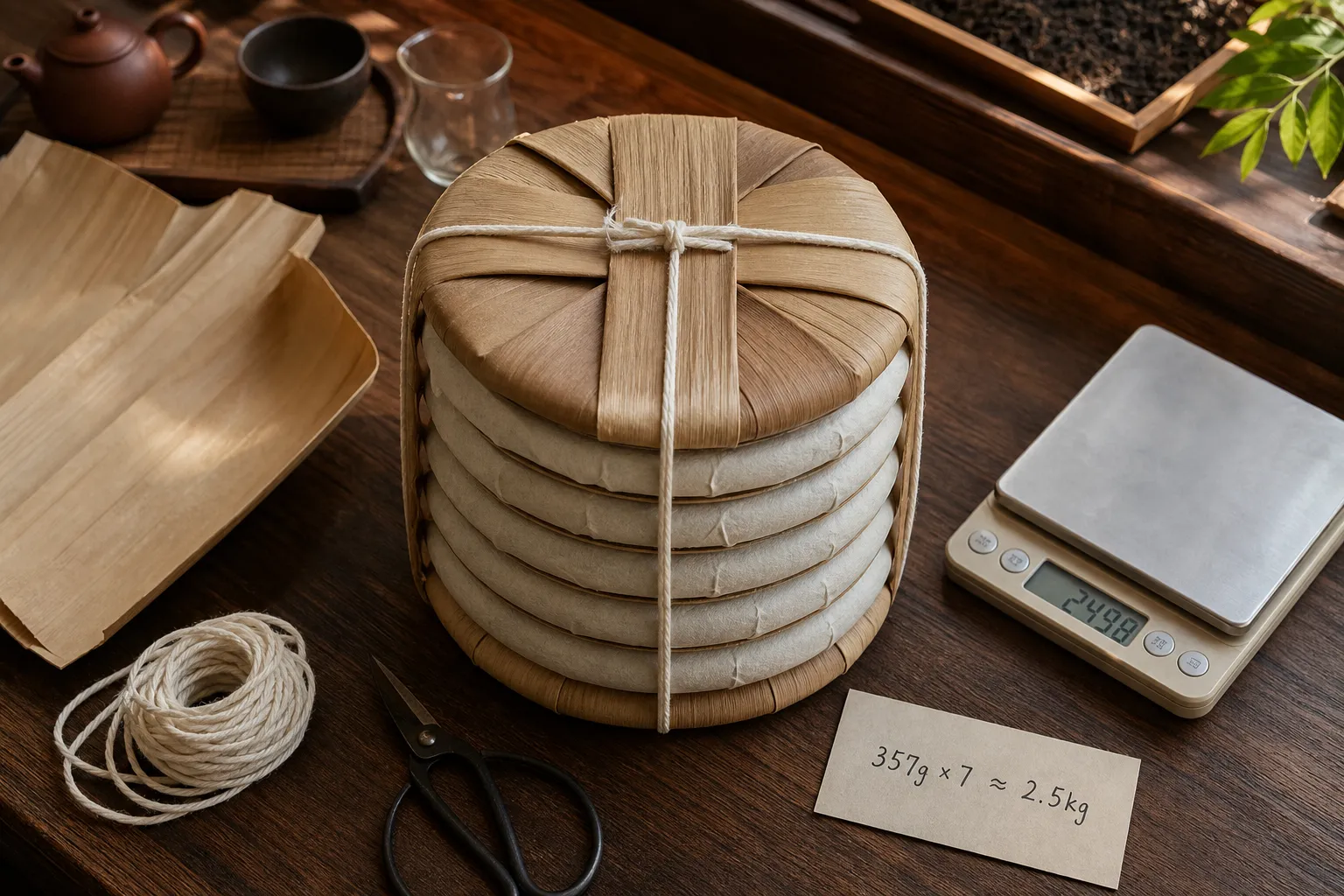
A 357g pu-erh cake is common because it fits neatly into the familiar seven-cake tong: 357g × 7 = 2499g, or almost exactly 2.5kg of tea. In the packing explanation most often used in tea-market language, twelve of those seven-cake bundles make a larger basket, or jian, of about 30kg.
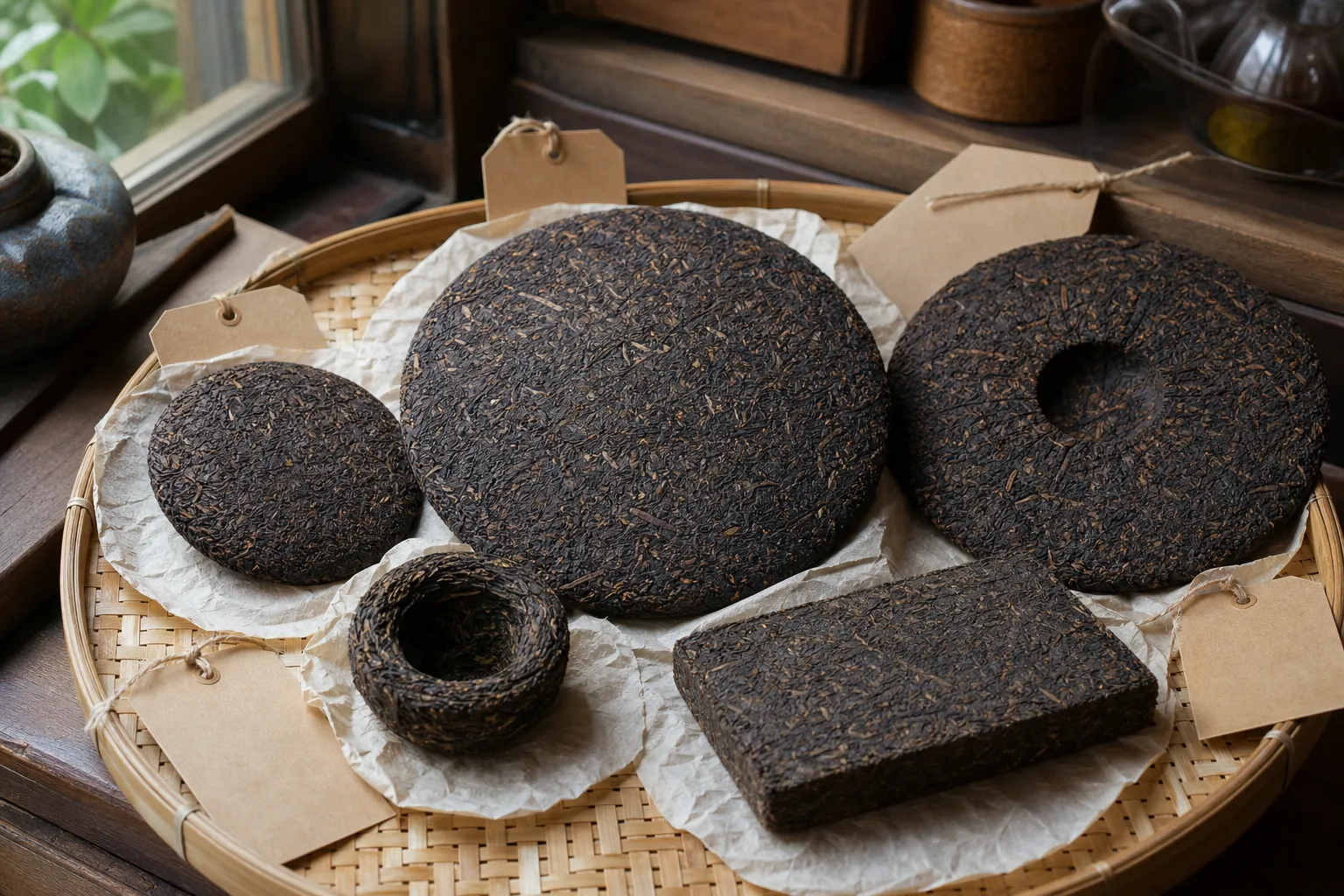
That does not make 357g a universal pu-erh rule. It is mainly associated with round pu-erh cakes — especially bing, Qizi bing, or “seven sons tea cake.” Bricks, tuocha, mini cakes, 100g cakes, 200g cakes, 250g cakes, 400g cakes, and other pressed dark tea forms can be completely normal at other weights.
upward
Start with the broader guide
Use the broader guide first if you need the full scope before this page.
The simple arithmetic behind the 357g pu-erh cake
The number makes more sense when you stop looking at one cake by itself and look at the bundle.
| Unit in a listing | What it usually means | Approximate tea weight |
|---|---|---|
| 1 cake / 1 bing | One round pressed cake | 357g |
| 1 tong | Seven cakes wrapped or bundled together | 357g × 7 = 2499g, about 2.5kg |
| 1 jian / basket | Often described as twelve tongs | 12 × 2.499kg = 29.988kg, about 30kg |
This is why the pu-erh cake weight looks oddly specific in grams. As a single metric number, 357g feels less natural than 350g or 400g. In a seven-cake tong, it becomes tidy.
A tong gives sellers, warehouses, and buyers a useful middle unit: larger than one cake, smaller than a full basket. A basket or jian then works out close to a round 30kg. That is the packing logic most readers need when they see “357g,” “7 cakes per tong,” or “one tong of pu-erh tea” in a listing.
The historical trail behind the exact convention is not as clean as the arithmetic. Public explanations often come from commercial tea writing and community discussion rather than primary trade records. So the careful version is: the 357g cake is commonly explained through tong and basket arithmetic, not as a single settled origin story.
Why 357g looks strange in grams
Pu-erh cake size developed in a trade setting where older Chinese weight units, bundle counts, and transport quantities mattered more than a neat modern gram label.
You may see explanations that mention liang and jin, sometimes translated through the word “catty.” Those older-unit explanations are part of how people talk about Qizi cakes, but they should be handled lightly. Grams were not the original cultural frame for older Chinese tea trade. The “357g” label is better understood as a modern metric expression of a packing convention.
That is the demystifying point: the cake is not 357g because the number itself improves the tea. It is a gram label sitting on top of a bundle system.
The name Qizi bing also points toward this context. Qi means seven, zi is often rendered as sons or children in the English name “seven sons tea cake,” and bing means cake. In everyday tea listings, Qizi cake, Qizibing tea cake, seven sons tea cake, and round pu-erh cake may appear close together. The name reinforces the seven-cake idea, though it does not settle every story attached to the number.
What a tong means when you are reading a listing
For a buyer, tong is more useful than the romance around the number. A tong is usually a bundle of seven cakes. If those cakes are the common 357g size, one tong is about 2.5kg of tea.
That changes how you read a product page:
- “357g cake” usually means one round pressed pu-erh cake.
- “One tong” usually means seven cakes, not one larger cake.
- “Full tong, original wrapper” usually points to a bundled quantity and packaging condition.
- “Mini tong” may borrow the traditional word for a smaller modern bundle, so check the cake count and gram weight.
- “Jian” or “basket” usually refers to a larger packing unit, often described around twelve tongs, though modern listings may use the term loosely.
If you are buying for daily drinking, one 357g tea cake is already a substantial amount. At 5g per session, a full cake gives roughly seventy brewing sessions, depending on how much leaf you use and how cleanly the cake breaks. A seven-cake tong is not a casual sample; it is a storage and long-term drinking quantity.
For storage, the weight matters less than the conditions around the tea. A single cake, a tong, and a larger basket all need stable surroundings: no strong odors, no direct sun, moderate airflow, and humidity that suits your storage goals. A tong can protect cakes from handling and light better than loose single cakes, but it does not make aging predictable by itself. Tea condition, wrapper condition, room aroma, temperature stability, and humidity still matter.
Common formats that are not 357g
The 357g convention is common for round pu-erh cakes, but pu-erh is not sold only as 357g bing. If you assume every “proper” pu-erh cake must be 357g, you will misread a large part of the market.
| Form | Common listing language | Weight pattern to expect |
|---|---|---|
| Round cake / bing | pu-erh cake, beeng, Qizi cake | 357g is common, but not the only size |
| Small round cake | mini cake, small bing | 100g, 200g, 250g, or other modern sizes |
| Larger round cake | big cake, display cake, storage cake | 400g and larger formats can appear |
| Tuocha | nest-shaped compressed tea | Often sold in different weights |
| Brick tea | rectangular pressed tea | Weight varies by producer and style |
| Other dark tea bricks | fu brick, heicha brick, compressed dark tea | Their own regional and product conventions |
Pressed pu-erh cake weight is not a quality grade. A 200g cake can be well made or poorly made. A 357g cake can be well stored or badly stored. A 400g cake can be practical for one drinker and inconvenient for another. The number tells you quantity and format first.
When comparing prices, divide by grams. A 200g cake that looks cheaper may cost more per gram than a 357g cake. A tong price should also be checked against the actual count and total weight. Do the arithmetic before reading too much into the headline price.
Stories you may hear about why pu-erh cakes are 357g
The seven-cake tong explanation is the cleanest practical explanation from the available material. Around it, you may hear other stories:
- older liang and jin weight-unit conversions;
- basket-load calculations for storage and trade;
- pack-animal transport stories involving mountain routes;
- tax or levy explanations;
- symbolic readings of the number seven.
These stories circulate in tea discussions, but they should not all be treated as settled history. Some may preserve pieces of trade memory; some may be later explanations added to make the number feel more meaningful.
For a practical reader, the takeaway is simple: the number seven matters in tong and Qizi cake vocabulary, and 357g works neatly when seven cakes are bundled together. Beyond that, be careful with any explanation that sounds too exact, too mystical, or too eager to turn a packing convention into a sign of value.
What 357g does and does not tell you
A 357g label tells you the approximate weight of the cake. It may also suggest that the tea is being sold in a familiar round pu-erh format. If the listing mentions a tong, it helps you calculate the bundle weight.
It does not tell you:
- whether the leaf material suits your taste;
- whether the cake was stored well;
- whether the compression is easy or difficult to pry;
- whether the tea will brew sweet, bitter, earthy, smoky, clean, or flat;
- whether the cake is a better buy than another size;
- whether it will age in the way you hope.
For the cup, you still need ordinary tea-reading cues: dry leaf aroma, wrapper condition, compression, visible leaf style, storage smell, rinse aroma, liquor color, mouthfeel, finish, and how the tea changes across steeps. For the shelf, you need to think about airflow, humidity, light, odor, and how often you will handle the cake.
The weight can help you plan. It cannot judge the tea for you.
A quick way to read a 357g listing
When a listing says “pu erh tea cake 357g,” read it in this order:
- Confirm the form. Is it a round cake, a tuocha, a brick, or another shape?
- Check the unit. Is the price for one cake, one tong, a sample, or a partial cake?
- Do the bundle math. Seven 357g cakes are about 2.5kg.
- Compare by gram. This helps when one cake is 200g and another is 357g.
- Look beyond weight. Storage notes, leaf style, raw or ripened type, age claims, and seller clarity matter more than the number alone.
If you are new to pressed pu-erh, a single cake is usually easier to learn from than a full tong. You can practice prying, adjust leaf amount, notice how the cake opens across sessions, and decide whether that tea is worth buying in a larger quantity. If you already know the tea and want a consistent storage batch, the tong becomes more relevant.
The bottom line
The 357g pu-erh cake is common because it fits a seven-cake packing convention: seven cakes make a tong of about 2.5kg, and twelve such tongs are commonly described as a basket or jian of about 30kg. The number looks odd only when you isolate one cake from the bundle system.
Treat 357g as a familiar format for round pu-erh cakes, especially Qizi bing or seven sons tea cake. Do not treat it as a universal pu-erh cake size, a quality promise, or a sign that the tea is automatically more traditional than other pressed formats. For buying and storage, the useful question is not “Is 357g special?” but: What quantity am I actually getting, and does this cake make sense for how I drink and store tea?