
Everyday brewing
What Is an Everyday Dark Tea Ritual at Home
An everyday dark tea ritual is a small, repeatable home tea session: choose a modest amount of dark tea, use a familiar vessel, add hot water, watch the liquor color and aroma, taste the mouthfeel and aftertaste, then adjust the next steep. It is not a formal ceremony. It is a simple way to make dark tea at home easier to return to tomorrow.
A good routine should feel steady rather than elaborate. It might be five quiet minutes with a mug and infuser, or a more attentive session with a small pot. What matters is that you can repeat it, notice what changes, and make one small adjustment at a time.
upward
Start with the broader guide
Use the broader guide first if you need the full scope before this page.
Start With the Tea and Vessel
Look at the tea before you brew. Dark tea may be loose, broken from a compressed cake, cut from a brick, or gathered from small pieces that have already separated. Leaf form and compression matter because they affect how quickly water reaches the tea.
For a daily tea practice, use a small amount you can brew without fuss. If the tea is tightly compressed, loosen a portion gently rather than crushing it into powder. If the pieces are already small, dusty, or crumbly, use a lighter hand because broken material often releases flavor quickly.
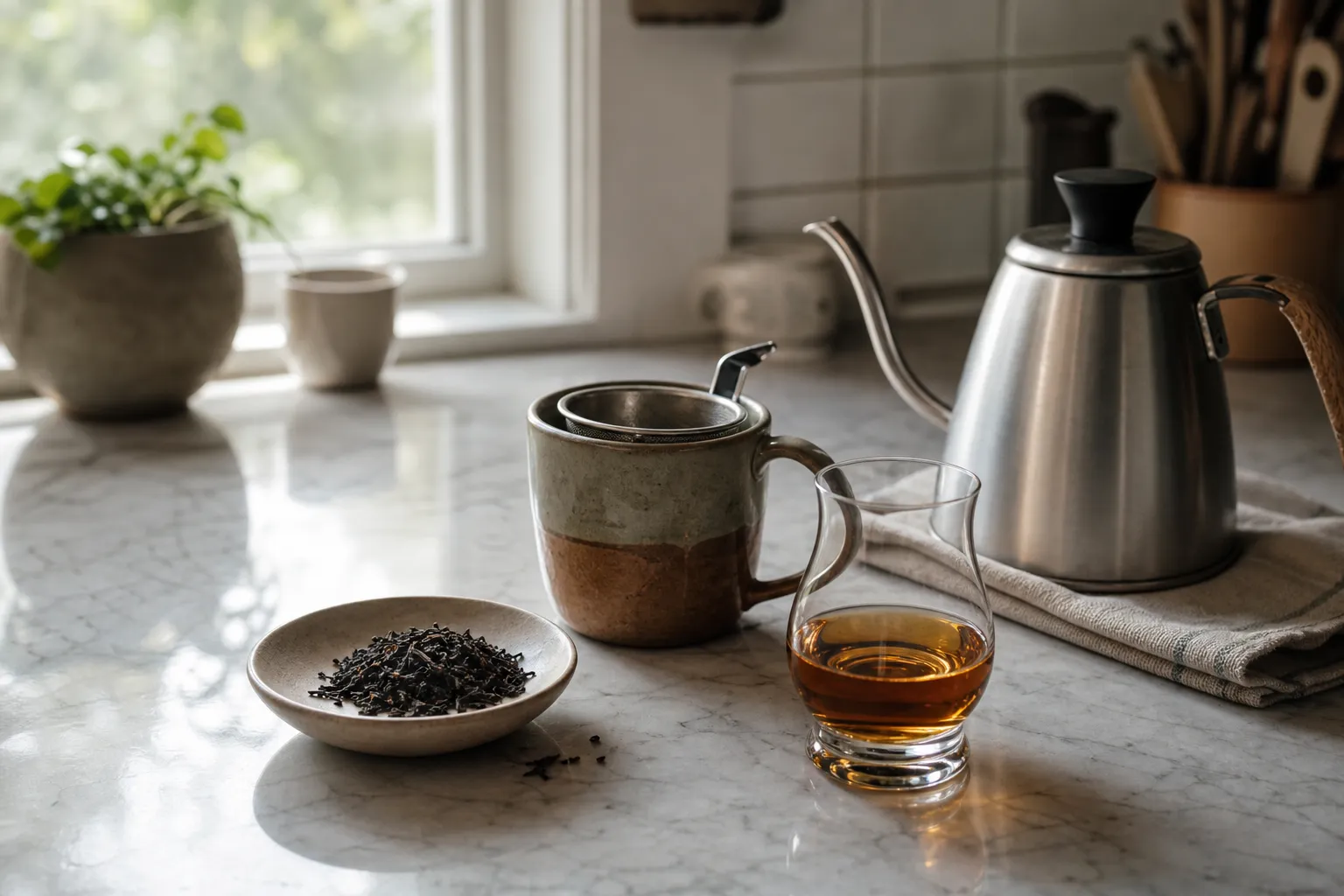
Then choose one vessel you know well. A mug with an infuser, a small teapot, or a lidded cup can all work. The vessel does not need to be special; it only needs to help you control water, leaf, and time. Using the same vessel for several sessions makes your adjustments easier to read.
A practical home tea rhythm
Set the tea
Use a modest portion of loose or compressed tea. Watch piece size, dust, tightness, and dry aroma.
Add hot water
Use water hot enough to draw flavor clearly. Watch how quickly the liquor darkens.
Steep briefly
Begin with a short infusion. Watch color, aroma, and first texture.
Taste slowly
Notice body, sweetness, earthiness, or roughness. Watch mouthfeel and aftertaste.
Adjust next round
Change time, leaf amount, or water volume. Notice whether the cup becomes clearer, softer, heavier, or sharper.
That is the ritual: not decoration, but a repeatable sequence that gives you useful information.
The Few Things You Control
The same tea can taste different when leaf amount, water, vessel, and steeping time change. A repeatable tea ritual works because it limits those changes. You do not need to control everything perfectly. You only need to know which levers you are moving.
Leaf amount
More tea often gives a stronger cup, but it can also make the liquor heavy, dry, or blunt if the steep runs long. Less tea can make the cup softer, but it may taste thin if the tea is compact or slow to open.
Water
In many home brewing setups, hot water helps dark tea open more clearly, especially when the tea is compressed or aged. If the cup tastes flat, water that is too cool may be one reason. If it tastes harsh or overbearing, the issue may be too much leaf, too long a steep, or too little water rather than temperature alone.
Vessel
A small vessel concentrates the session with short steeps, close aroma, and quick changes from round to round. A larger mug spreads the tea out and suits casual drinking, though it is less precise if you want to compare one steep with the next. Neither is better for every tea. The better choice is the one that matches your attention that day.
Steeping time
Steeping time is the easiest lever to adjust. Start shorter than you think you need, especially with broken or loosened tea. If the first cup is pale and quiet, extend the next steep. If the liquor turns very dark quickly and the taste feels heavy, shorten the next steep or use less tea next time.
A simple rule is enough: change one thing, then taste again.
Sensory Cues That Make the Routine Useful
Dark tea brewing becomes easier when you follow sensory cues instead of fixed numbers.
Liquor color
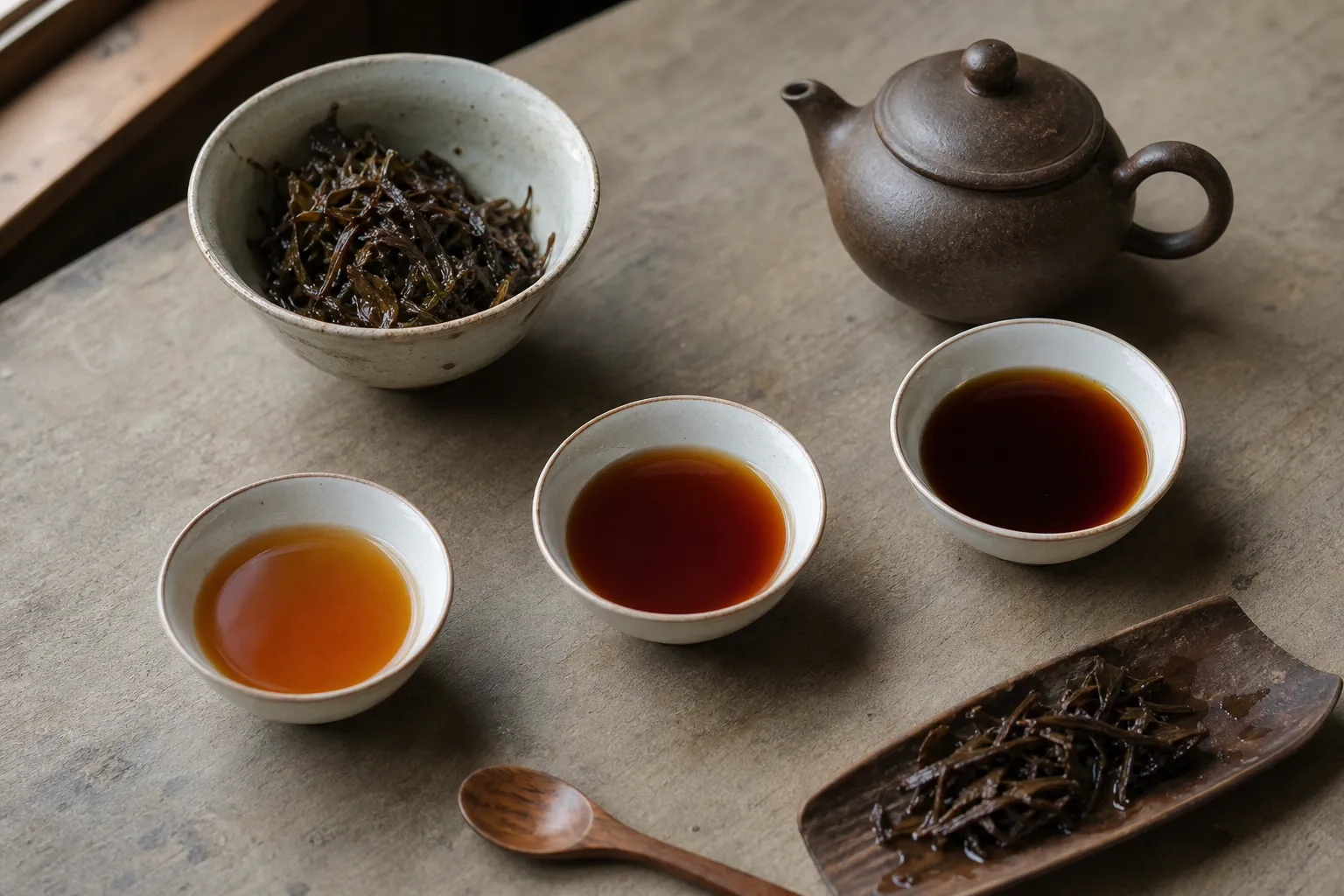
Liquor color gives an early clue. A pale amber-brown cup may be light, under-steeped, or simply from a gentler tea. A deep reddish-brown or dark brown cup may be fuller, longer-steeped, or made from more broken material. Color alone does not tell you quality, but it helps you decide whether to taste now or wait a little longer.
Aroma
Aroma gives the next clue. Before drinking, pause over the cup. Depending on the tea and storage, dark tea can show earthy, woody, grain-like, dried-fruit, mineral, or mellow roasted impressions. If the aroma feels muted, the tea may need more time, more leaf, or hotter water. If it feels muddy or too dense, try a shorter steep next round.
Mouthfeel
Mouthfeel matters because dark tea is often noticed through texture as much as flavor. Ask whether the cup feels thin, rounded, drying, smooth, heavy, or coating. A thin cup may need more extraction. A rough cup may need less time. A heavy cup may need more water or a smaller leaf portion.
Aftertaste
Aftertaste is the last cue. Some cups fade quickly. Others leave a soft sweetness, a dry edge, a woody note, or lingering earthiness. Do not force a grand tasting note. For daily use, one plain sentence is enough: “smooth but a little flat,” or “rich, but the finish was too heavy.”
That small note turns a simple tea routine into a learning loop.
A Flexible Starting Routine
Use this as a starting point, not a standard:
- Place a small portion of dark tea into your chosen vessel.
- Notice whether the tea is loose, tightly compressed, dusty, or in larger chunks.
- Add hot water and let the tea open briefly.
- Taste the first infusion before making it strong.
- If it tastes thin, steep the next round longer.
- If it tastes harsh, heavy, or overly dark, shorten the next round or use less leaf tomorrow.
- Keep the same vessel for several sessions so your adjustments are easier to compare.
For compressed tea, the first infusion may mainly wake the piece and begin separating the layers. Later infusions can become fuller as water reaches the interior. For loose or broken tea, flavor may arrive faster, so the first steep deserves closer attention.
If you drink from one mug while working or reading, keep the routine even simpler: use a small amount, add hot water, taste early, and top up as the cup changes. This is less precise than separate short infusions, but it can still be a repeatable home tea session if you notice when the cup becomes too strong or too diluted.
What Can Change the Answer
There is no single everyday dark tea ritual that fits every leaf. The right routine changes with the tea and the room around it.
- Compression changes timing. A tight piece may need more patience. Loose fragments may need less. If you use a chunk from a cake one day and dusty edge pieces the next, the same steeping time may behave differently.
- Storage setting changes aroma. Tea kept near strong odors, excess light, or unstable conditions can carry different smells into the cup. This page cannot judge storage history from a cup alone, but it is reasonable to notice whether the dry leaf smells clean, stale, sharp, musty, or unusually scented before brewing.
- Water volume changes strength. A small pot and a large mug do not extract in the same way. If you move between vessels, expect your routine to shift.
- Personal taste also matters. Some drinkers prefer a lighter, clearer cup. Others like a thicker brew with a deeper color. A daily ritual should help you find your preferred range, not force every tea into the same profile.
Common Confusion Around Daily Dark Tea Practice
A repeatable tea ritual does not have to be formal. A calm daily rhythm can be practical and plain: same shelf, same cup, same few minutes of attention.
Darker liquor is not the whole answer. It can mean stronger extraction, but it does not automatically mean a better cup. Taste the texture and finish before deciding whether the tea needs more time.
One method will not reveal every dark tea in the same way. A compressed piece, a loose sample, and a broken edge from a brick can behave differently. Age, storage, water, vessel size, and steep length can all change what you notice.
Also, keep the routine within brewing and tasting. Dark tea can be part of a pleasant daily habit, but this page is about preparation, sensory attention, and adjustment rather than health-outcome claims.
The Boundary of This Page
This article stays within ordinary observable brewing variables: tea form, water, vessel, time, color, aroma, mouthfeel, aftertaste, and adjustment. The available research set for this page did not provide usable external sources for cultural history, standardized preparation rules, safety claims, or third-party tasting reports, so the answer should remain practical and narrow.
That boundary is useful. It keeps the everyday dark tea ritual small enough to practice. Tomorrow, you can return to the same tea, the same vessel, and one clear question: should the next cup be lighter, fuller, softer, cleaner, or shorter?
If the answer is easier to taste than it was yesterday, the ritual is already doing its work.