
How to End a Home Dark Tea Session Cleanly
To end a dark tea session cleanly, clear the wet leaves first, check the pot or gaiwan for small compressed fragments, empty the fairness cup and drinking cups, drain or wipe the tray, then rinse and air-dry the vessels before storing them. Wipe tea residue from the tray, table, kettle area, and tools while it is still easy to see.
If an earthy or stale aroma remains, rinse again with plain warm water and leave lids, cups, strainers, and pots open to dry. In a home setup, a clean finish is not a formal performance. It simply means no wet leaves, standing tea, damp cloths, hidden puddles, or sealed-up wet vessels are left behind.
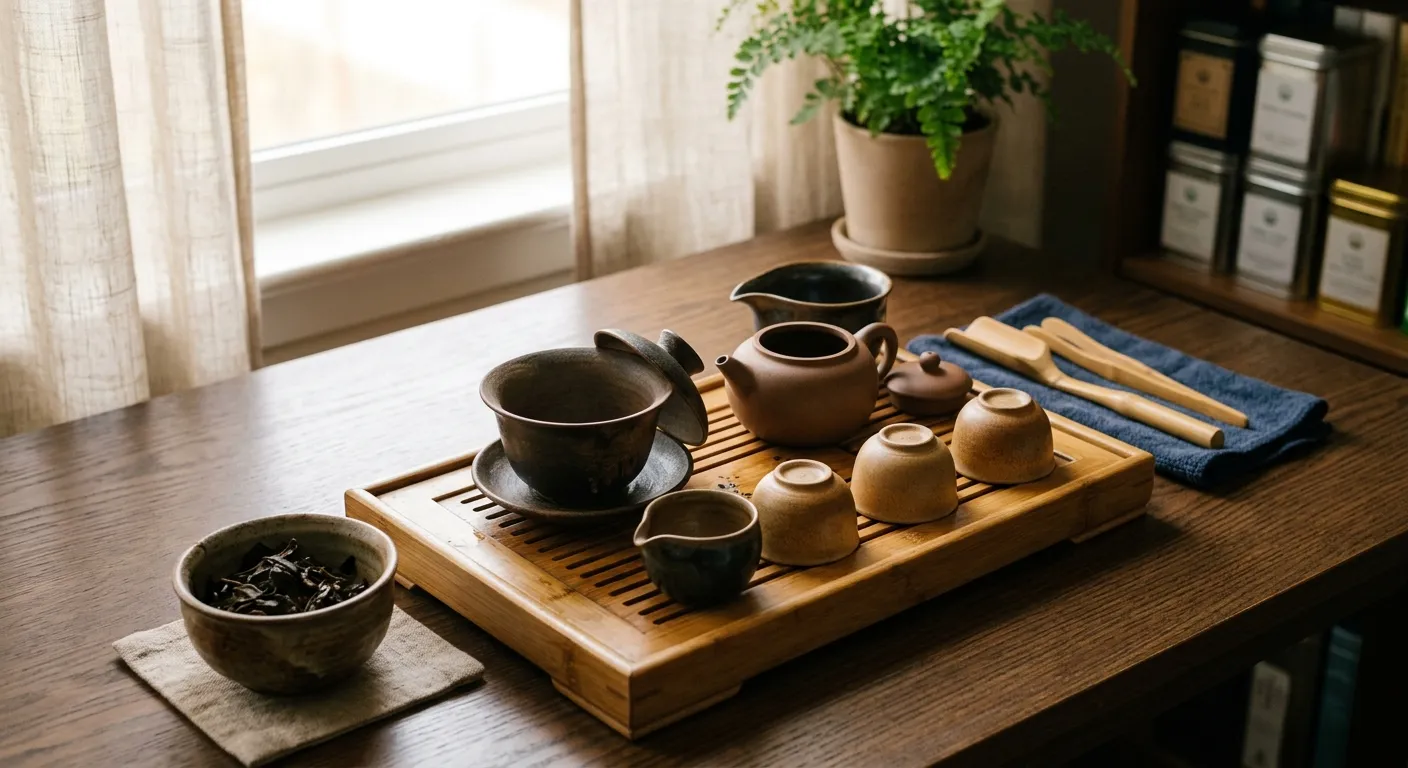
upward
Read the full overview first
Use the broader guide first if you need the full scope before this page.
A simple closing sequence for home dark tea
Dark tea can leave more behind than the last cup suggests. A compressed piece may loosen into fine fragments, heavier infusions can leave a ring in the fairness cup, and damp leaves may cling to the inner wall of a pot or gaiwan. The easiest order is: wet leaf material first, liquid second, vessels third, surfaces last.
A practical closing sequence looks like this:
-
1. Stop the brew clearly.
Pour out the last usable infusion, or decide that the leaves are finished. Do not leave partly brewed tea sitting in the pot, gaiwan, fairness cup, or cups while you tidy other things.
-
2. Remove the spent dark tea leaves.
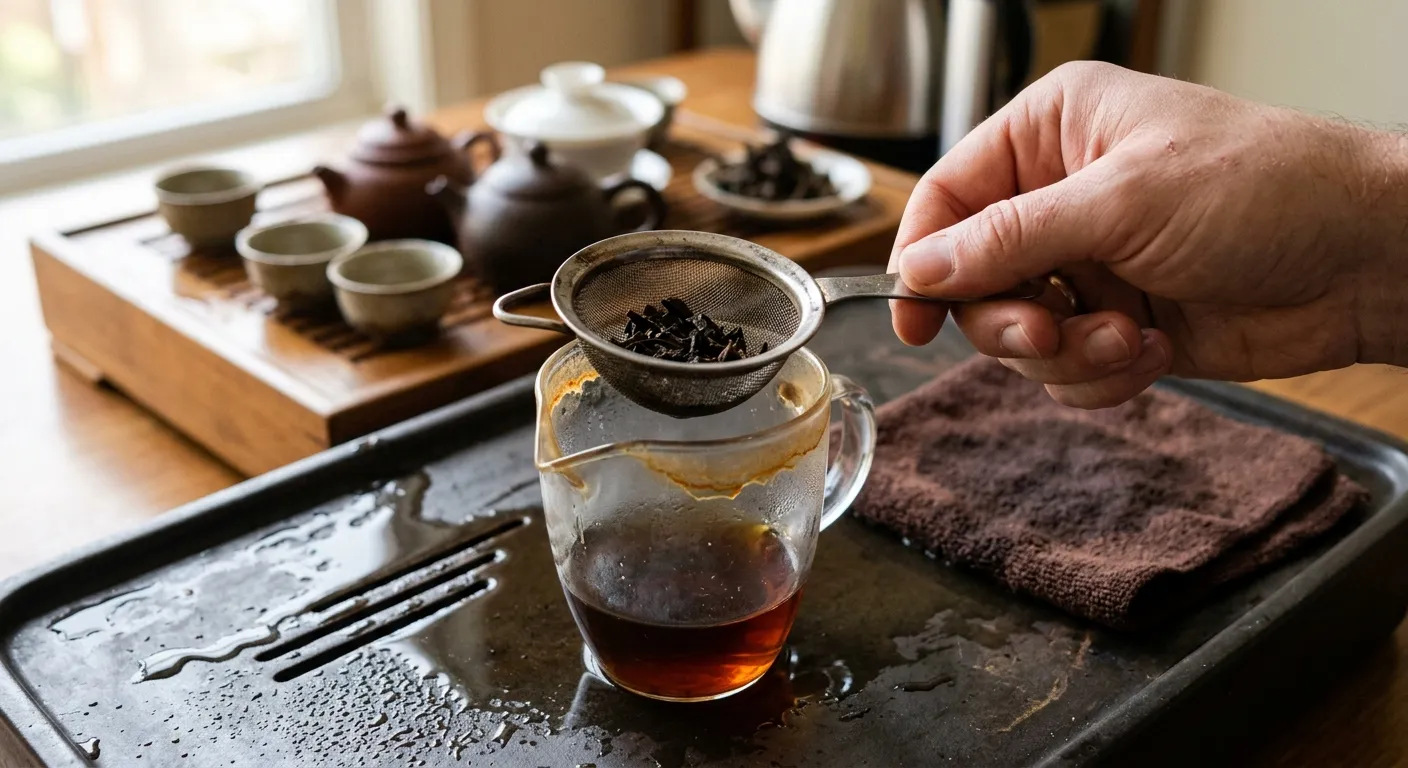
Open the brewing vessel and take out the wet leaf mass. If you brewed from a cake, brick, or tuo-shaped piece, look for compacted bits caught under the lid, near the spout, or along the bottom edge of the gaiwan.
-
3. Clear strainers and small tools.
A strainer can hold fine particles even after the main leaves are gone. A pick, scoop, tongs, or tea towel may also have damp leaf bits attached. Rinse or shake them before they dry in place.
-
4. Empty the fairness cup and drinking cups.
Dark tea liquor can leave a visible line or thin film, especially after longer steeps or thicker late-session pours. Empty leftover tea before rinsing.
-
5. Check the tray or waste bowl.
If you use a draining tea tray, check where the liquid collects. If you use a bowl, plate, or towel, clear pooled tea and rinse water before moving on.
-
6. Rinse the brewing pieces.
Use plain water for the gaiwan, pot, fairness cup, cups, strainer, and tools. Warm water often helps loosen fresh tea film. The exact touch depends on the material and how much residue you can still see.
-
7. Dry the visible area.
Wipe the tray, table, kettle base area, and nearby surfaces where tea has splashed. Hang or replace a damp cloth instead of folding it back into the tea area.
-
8. Leave vessels open until dry.
Set lids aside or slightly open. Let cups, pots, and the fairness cup air-dry before putting them into a closed cabinet, box, or pouch.
The point is not to add fuss to a quiet session. It is to avoid the common end-of-session drift: wet leaves forgotten in the pot, tea pooling in a tray, a fairness cup with a brown line at the bottom, or a towel that stays damp until the next brew.
What to check before you call the session finished
The best check is visual and sensory. You do not need a special standard. Look for what is still wet, sticky, aromatic, or hidden.
Damp leaves still in the pot or gaiwan
The session has not really been cleared.
Remove them and check for small fragments.
Leaf pieces under the lid or near the spout
Compressed tea broke apart unevenly.
Rinse corners and inspect before drying.
A ring in the fairness cup
Tea film is still present.
Rinse again; wipe gently if needed.
Standing water in the tray
Drainage or emptying is incomplete.
Empty, tilt, or wipe the tray.
A cloth that feels wet when folded
Moisture is still sitting in the tea area.
Hang it open or replace it.
Lingering earthy aroma after rinsing
Tea scent remains in a vessel or tray.
Rinse with warm water and air-dry open.
Tools feel slick or tacky
Tea film or leaf dust may remain.
Rinse and dry before storage.
Dark tea can smell earthy, woody, sweet, mineral, or cellar-like depending on the tea and its storage history. A faint tea smell after brewing is not automatically a problem. The useful question is whether the aroma feels like fresh spent tea or like trapped dampness. If it is simply the normal scent of the tea, leaving the vessel open to dry may be enough. If it feels heavy or sour in an empty cup, rinse again and let the piece air before closing it away.
Pay extra attention to small parts: the lid seat of a gaiwan, the spout of a small pot, the rim of a fairness cup, the mesh of a strainer, and the underside of a tray insert. These are the places where dark tea session cleanup can look finished from above while still holding wet residue underneath.
Handling spent leaves without making more mess
Spent dark tea leaves are easiest to clear while they are still gathered together. Once they dry, they can cling to vessel walls, strainers, and towel fibers. If the tea came from a compressed form, the leaf mass may include both open leaves and dense fragments that did not fully separate during brewing. Those fragments are worth checking because they can hide in corners and carry aroma into the next session.
For a gaiwan, tilt the leaves out gently, then rinse around the lid edge and foot ring. For a small pot, remove the larger mass first, then use water to loosen bits near the spout and base. If the opening is narrow, avoid forcing a tool into tight spaces unless it is made for that vessel. A careful rinse and patient tilt often do more than scraping.
A strainer deserves its own moment. Fine particles from fermented or compressed tea can lodge in the mesh. If they dry there, they may leave a dull smell or rough-looking film. Rinse from both sides, tap out the water, and leave it where air can reach it.
If you use a waste bowl, empty it before the leaves settle into a heavy wet pile. If you use a tray with drainage, check the reservoir or removable base. The visible surface may look clean while tea water is still sitting below.
Rinsing and drying vessels without overdoing it
For ordinary home dark tea cleanup, plain water is usually the first move. The goal is to remove leaves, liquor, and visible residue without adding a competing scent to the teaware. Strongly scented cleaners can linger, especially in small cups, lidded vessels, or porous-feeling pieces. If a particular material needs a separate cleaning approach, treat that as teaware care rather than part of the normal session closing, and make sure the piece is well rinsed and aired before brewing again.
Rinsing is not the same as soaking everything for a long time. A quick warm rinse can clear fresh tea film from many vessels. If residue remains in a fairness cup or on the inner wall of a cup, a soft wipe may help. If a pot or gaiwan still smells like the last tea after a plain rinse, leave it open and check again once dry. Trapped moisture can make an aroma seem stronger than it will be later.
Drying is where many rushed sessions become untidy. A vessel can look clean but still hold water under a lid, in a spout, around a foot ring, or inside a tray channel. Before putting pieces away, check for:
- a lid sealed onto a damp pot or gaiwan;
- cups stacked while still wet inside;
- a fairness cup stored upright with water at the bottom;
- a strainer placed flat against a wet tray;
- a towel folded while still holding tea water.
Leaving vessels open for a while is often the simplest reset. Set lids aside, turn cups so they can drain safely, and give tools enough air. Drying time depends on the room, the material, and the shape of the teaware, so use sight and touch rather than a fixed number of minutes.
Managing residue, aroma, and the tea space
A clean finish includes the area around the vessels. Dark tea liquor can splash under a cup, along the edge of a tray, near a kettle, or onto a towel without looking dramatic. By the next session, those small spots can feel sticky or smell stale. Wipe the area while the pattern of the session is still visible: where you poured, where the fairness cup sat, where rinse water collected, and where the leaves were handled.
Residue in a fairness cup is especially easy to miss. Because it often holds every infusion before serving, it can collect a thin film even when the drinking cups look clean. Look at the bottom and lower wall in good light. If there is a visible line, rinse again or wipe gently according to the material.
Lingering earthy aroma needs a light touch. Dark tea is expected to have a noticeable scent during brewing, and some aroma may remain in warm vessels. The cleanup question is whether that scent is pleasant and tea-like, or whether it feels trapped and stale. If it lingers in a closed pot, open the lid. If it remains in the tray, check pooled water, soaked wooden or bamboo parts if present, and the cloth. If it stays in a cup, rinse and air-dry before stacking.
The cloth is part of the tea space, not an afterthought. A towel used to catch drips can hold more tea than the cups do. If it is wet, hang it open. If it has visible tea marks and smells like old infusions, set it aside for washing rather than folding it back into the tea area.
What changes the cleanup
There is no single closing method for every dark tea session. The right amount of cleanup depends on what you brewed, how you brewed it, and what your setup includes.
Compressed tea needs a fragment check.
Tea broken from a cake, brick, or other compressed form can leave dense bits in the vessel. These fragments may not pour out with the main leaf mass. Check corners, spouts, and strainers.
Thicker brews leave more visible film.
Long steeps, high leaf amounts, or concentrated late-session pours can leave a stronger ring in the fairness cup and cups. A quick rinse may still be enough, but look before drying.
Tea trays vary.
A simple flat tray may only need wiping and drying. A draining tray may need its reservoir emptied. A towel-based setup may need the towel removed even if the vessels are clean.
Some vessels hold aroma more noticeably.
Small lidded pots, cups stored closed, and pieces that dry slowly can keep the scent of the last brew. Air-drying open is often the first adjustment before assuming anything more complicated is needed.
The next tea matters.
If your next session will be another earthy dark tea, a faint compatible aroma may not bother you. If you plan to brew a lighter tea in the same shared pieces, be more careful with the fairness cup, cups, and strainer.
Common confusion at the end of a session
One common misunderstanding is treating cleanup as formal etiquette. A neat closing can feel calm, but it does not need to imitate a ceremonial sequence. At home, the useful measure is whether the tea area is ready for the next brew: no forgotten leaves, no standing tea, no wet tools sealed away, and no stale smell from residue.
Another confusion is thinking that more force is always better. Scrubbing every piece aggressively after each session may be unnecessary and may not suit every material. Start with removing leaves, rinsing fresh residue, and drying properly. Adjust only when you can still see film, feel slickness, or smell old tea after the pieces have had time to air.
A third confusion is closing too quickly. Lids go back on, cups get stacked, tools return to a drawer, and the session appears finished. But if those pieces are still damp, the setup is not really reset. The final step is not putting everything away; it is making sure the things you put away are dry enough for storage.
This page stays with ordinary home-brewing signs: leaves, liquid, residue, aroma, cloths, and drying. It is not a formal rule system for every teaware material or every household setup.
A final one-minute reset
Before you leave the tea table, run through this short check:
- Are all spent leaves out of the pot, gaiwan, strainer, and tray?
- Is leftover tea emptied from the fairness cup and drinking cups?
- Is the tray drained, wiped, or cleared of standing water?
- Are the vessels rinsed where tea film was visible?
- Are lids, cups, strainers, and tools left open enough to dry?
- Is the cloth hanging or set aside instead of folded damp?
- Does the area smell like fresh tea rather than trapped old moisture?
If the answer is yes, you have finished the home dark tea cleanup. The next time you sit down to brew, the setup should feel neutral, dry, and ready—not like you are finishing yesterday’s tea before beginning today’s.