
Home brewing practice
Everyday Dark Tea Rituals for Simple Home Tea Sessions
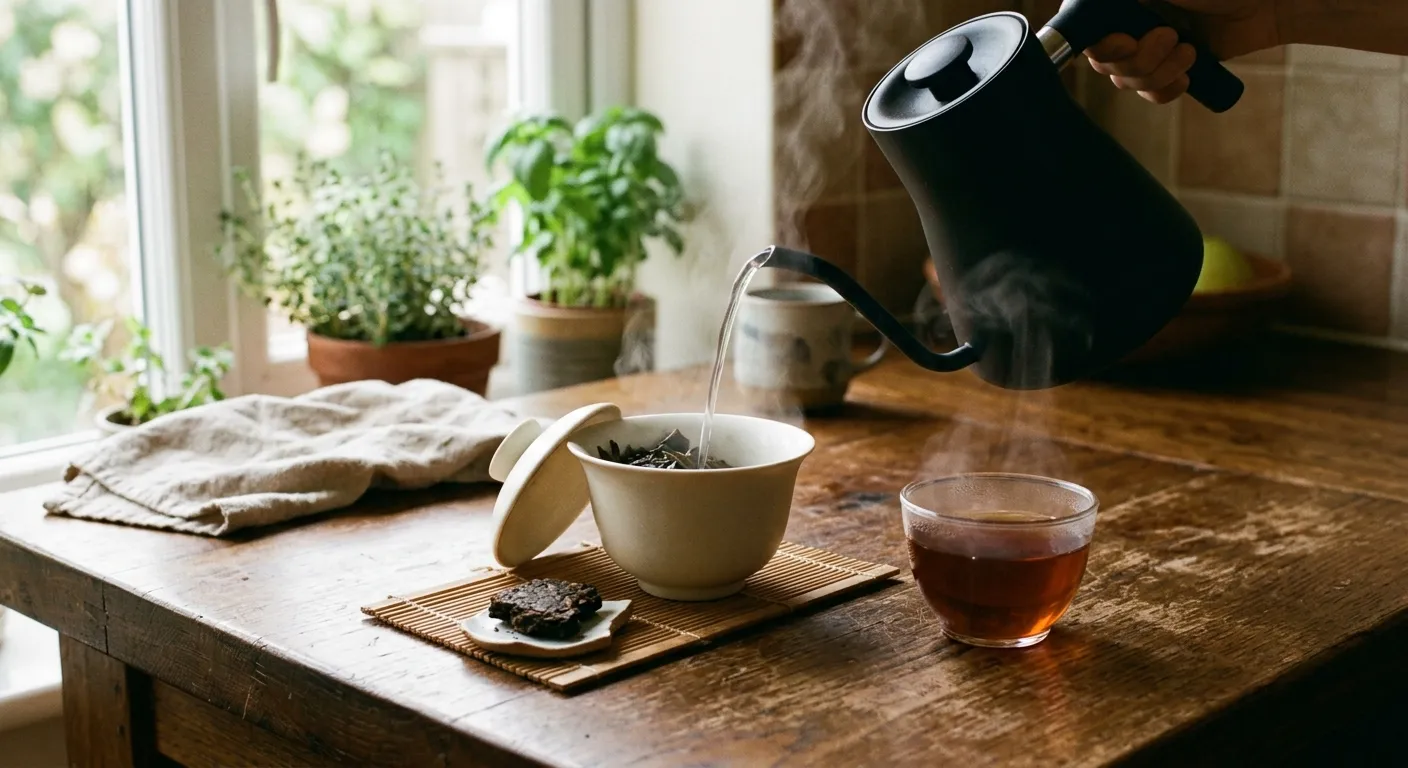
An everyday dark tea ritual does not need to be elaborate. For most home drinkers, the useful question is not “What is the correct method?” but “What small rhythm can I repeat, notice, and adjust?”
Dark tea can change with leaf form, compression, storage condition, water, vessel size, steeping time, and personal taste. A good home session keeps enough things steady that you can understand the cup without turning tea into a daily project.
upward
Read the full overview first
Use the broader guide first if you need the full scope before this page.
What an Everyday Dark Tea Ritual Means at Home
At home, a ritual is simply a repeatable sequence. It can be quiet and careful, but it does not have to be formal. For dark tea, the practical value is that repetition gives you a baseline.
A simple session might include:
- Choosing one tea and one vessel.
- Breaking off a small piece from compressed tea, or using a modest amount of loose leaf.
- Using hot water.
- Watching liquor color, aroma, body, and finish.
- Adjusting the next steep if the cup feels thin, harsh, flat, too earthy, too heavy, or not sweet enough.
- Cleaning the vessel and storing the remaining tea away from obvious light, moisture, and strong odors.
That is enough. The ritual is not in the number of tools. It is in the repeatable brewing rhythm.
A short, repeatable home brewing pattern that helps you prepare dark tea, notice sensory cues, and make small adjustments without treating one method as universal.
That leaves room for gongfu style brewing, mug brewing, a thermos-like cup, or a slower weekend tray session. The method matters less than whether you can repeat it and learn from the cup.
How to Set Up a 10-Minute Dark Tea Session at Home
A 10-minute dark tea session works well on a weekday morning, after lunch, or in the early evening when you want tea without a long setup. The goal is not to extract every possible steep. The goal is one or two satisfying cups with enough attention to avoid guesswork.
The basic setup
Dark tea
Loose leaf or a small piece from a cake, brick, or other compressed form.
Keep steady: approximate amount and leaf size.
Brewing vessel
Mug, small pot, gaiwan, or easy-pour cup.
Keep steady: vessel volume.
Hot water
Main extraction variable.
Keep steady: similar temperature each time.
Cup
Helps you observe color, aroma, and body.
Keep steady: similar size if comparing sessions.
Waste bowl or sink access
Makes rinsing and cleanup easier.
Keep steady: optional for very simple brewing.
In many everyday brewing setups, water near a full boil is a practical starting point for dark tea. If the tea becomes too forceful, adjust with less leaf, shorter contact time, or slightly cooler water. The point is not to memorize one number; it is to change one variable at a time.
A simple 10-minute rhythm
- Choose one tea. Do not compare several teas when you only have 10 minutes.
- Set the leaf amount. Use a modest pinch for loose tea, or a small, loosened piece if the tea is compressed.
- Smell the dry leaf. Look for earthiness, sweetness, wood, grain, dried fruit, storage notes, or anything flat.
- Decide on a rinse. A quick rinse can help compressed or dusty-looking leaves open. Loose tea that releases flavor quickly may not need it.
- Keep the first steep controlled. In a small vessel, start short. In a mug, use less leaf or strain earlier.
- Taste before adjusting. Notice body, aroma, finish, and overall balance.
- Change one thing. If thin, steep longer or use more leaf next time. If heavy, shorten the steep or reduce leaf.
- End cleanly. Empty leaves, rinse the vessel, and put the remaining tea away.
A simple dark tea session can be complete even if it produces only one good cup.
Morning vs Evening Dark Tea Ritual: What Changes
A morning dark tea ritual and an evening one often differ less by rule than by pace, leaf amount, and attention.
In the morning, many people want fewer decisions. Choose a familiar tea, use a known vessel, and keep the brew moderate. A heavy cup first thing can feel too thick or earthy if the leaf amount is high or the steep is long. If the first cup tastes dense, reduce the leaf or pour sooner.
In the evening, you may have more room to observe. A slower session can suit compressed tea because early steeps may open gradually. It also gives you space to compare the first, second, and third cups. If you prefer a lighter evening cup, use less leaf, shorter steeps, or more water relative to leaf.
Morning session
- Tea choice: familiar and easy to brew.
- Leaf amount: often moderate.
- Steeping style: simple, fewer rounds.
- Sensory focus: balance and drinkability.
- Cleanup: fast and direct.
Evening session
- Tea choice: familiar or slightly exploratory.
- Leaf amount: moderate or lighter, depending on preference.
- Steeping style: more room for repeated steeps.
- Sensory focus: aroma, texture, aftertaste, change across steeps.
- Cleanup: still simple, less rushed.
Do not force a long session because it seems more serious. A daily tea practice survives when it fits the day.
Gongfu Style or Mug Brewing for a Simple Tea Session
Gongfu style brewing and mug brewing can both work for simple home tea sessions. They solve different problems.
Gongfu style brewing usually uses a smaller vessel, more leaf relative to water, and shorter repeated steeps. It gives you more chances to adjust. If the first steep is too light, the second can be longer. If the tea becomes too strong, the next pour can be shorter. This style is useful when you want to see how a tea changes across several infusions.
Mug brewing is more direct. It uses a larger vessel and usually a lighter amount of leaf. Because the tea may sit longer, over-concentration is the main risk. If mug-brewed dark tea tastes too heavy, use less leaf, strain earlier, or add water. If it tastes weak, use a little more leaf or allow more time.
Choose gongfu style brewing if:
- You want several small cups.
- You are learning how a compressed tea opens.
- You have time to pour and adjust.
- You enjoy comparing aroma and texture across steeps.
Choose mug brewing if:
- You want one straightforward cup.
- You are working, reading, or cooking nearby.
- You do not want a tea tray or multiple cups.
- You are using loose tea that gives flavor easily.
Neither method is automatically better for your home. The better method is the one you can repeat without friction.
What to Notice During a Simple Dark Tea Session
A consistent tea session depends on observation. You do not need formal tasting language, but a few sensory checkpoints help you decide what to change next.
Dry leaf and compression
Before water touches the tea, look at the leaf. Is it loose and easy to separate? Is it tightly compressed? Does it crumble, flake, or break into powder?
A tightly compressed piece may need more time to open. A loose or broken piece may release flavor quickly. If the tea is compressed, try to separate a small piece without crushing it into dust. Too many fine particles can make the cup cloudy or heavy, especially in a mug.
Aroma before and after water
Dry aroma gives one kind of clue; wet aroma gives another. After hot water reaches the leaf, dark tea can show earthy, woody, grain-like, sweet, mineral, herbal, or mellow notes. These are broad sensory words, not fixed categories.
If the aroma seems flat, try a slightly longer first steep or a rinse followed by a short rest. If it seems sharp or too forceful, reduce time or leaf.
Liquor color
Liquor color is useful, but it is not a perfect measure of strength. A pale cup may still have aroma, while a dark cup may not always have depth. Sudden darkness in a short steep often tells you the tea is extracting quickly.
Use color as a cue:
- Very pale and watery: consider more leaf, hotter water, or longer time.
- Dark but thin: the tea may need more time to open, or it may have limited body in this setup.
- Dark and heavy: shorten the steep or use less leaf.
- Clear and aromatic: keep the rhythm steady and adjust only if taste calls for it.
Body and mouthfeel
Body is the weight of the tea in the mouth. Some dark teas feel smooth and round; others feel leaner or more drying. If the tea feels harsh, the cause may be too much leaf, too long a steep, many fine fragments, or water that is pulling more intensity than you want.
If the tea feels thin, do not immediately blame the tea. First check leaf amount, water temperature, vessel size, and steeping time.
Finish and aftertaste
The finish is what remains after swallowing. It might be sweet, earthy, woody, clean, drying, or short. A home session becomes more useful when you notice whether the finish improves after the second steep. Some teas show more balance after the first contact with water; others give their clearest cup early.
How to Keep a Dark Tea Session Consistent From Day to Day
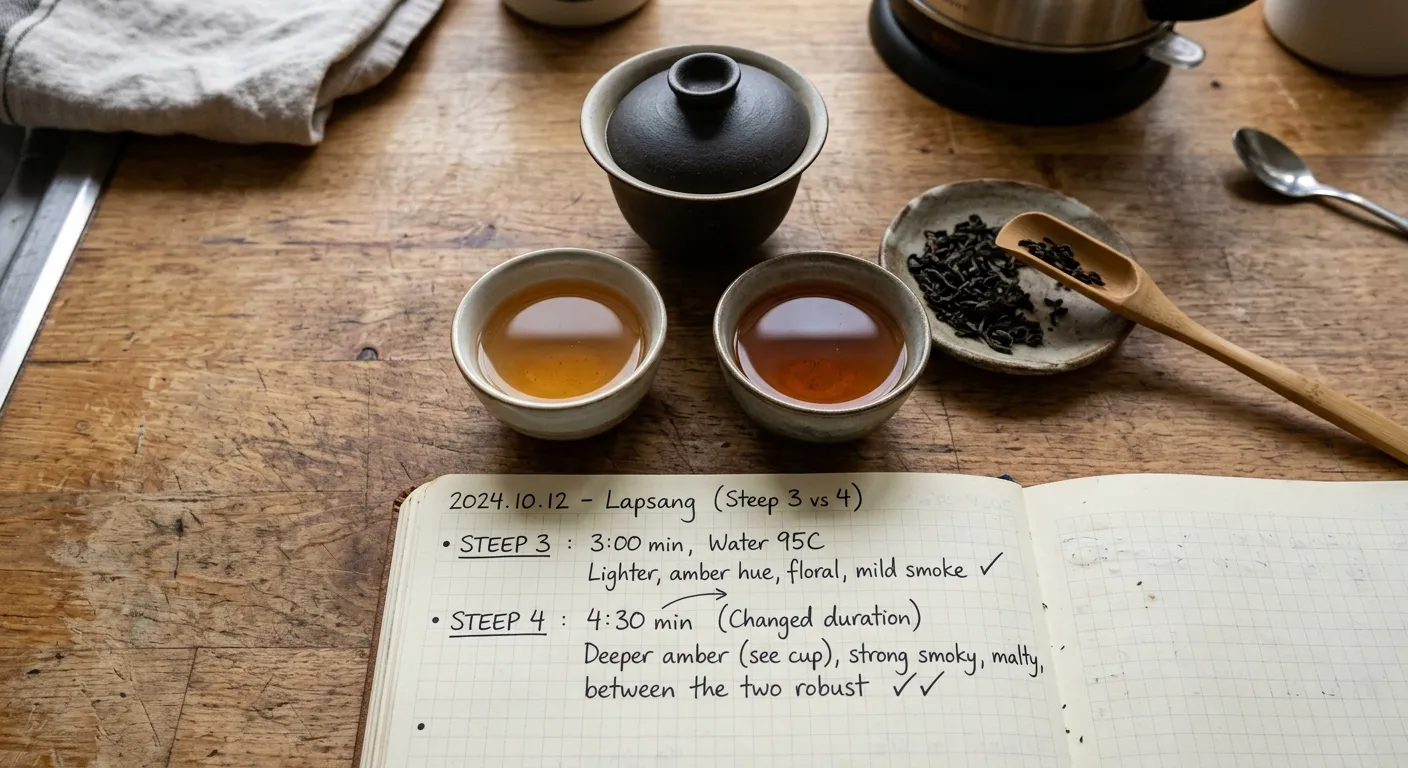
Consistency does not mean every cup tastes identical. It means you know what changed.
Start with repeatable anchors:
- Use the same vessel for a few days.
- Keep the leaf amount roughly similar.
- Use a similar water level.
- Make the first steep in a similar time range.
- Store the tea in a stable place away from obvious moisture, strong odors, and direct light.
- Write down one sentence if the cup stands out.
A short note is enough:
- “Loose tea, mug, lighter leaf, 3 minutes: sweet but thin.”
- “Compressed piece, quick rinse, short first steep: earthy, opened on second cup.”
- “Same tea as yesterday, more leaf: fuller but slightly heavy.”
That kind of note helps more than a long tasting paragraph you never read again.
Small adjustment guide
If the cup tastes thin
Try more leaf, longer steep, or hotter water.
Keep the same vessel steady.
If the cup tastes harsh
Try less leaf, shorter steep, or fewer fragments.
Keep the same tea steady.
If the cup tastes flat
Try a brief rinse, a short rest after rinse, or fresher hot water.
Keep the same leaf amount steady.
If the cup tastes too earthy
Try a shorter first steep, lighter leaf, or more careful separation.
Keep the same water level steady.
If the cup tastes too heavy
Try reducing leaf, pouring sooner, or diluting slightly.
Keep the same tea form steady.
If the cup is not sweet enough
Try a shorter steep if harsh, or a longer steep if watery.
Keep the same vessel and cup steady.
Change only one variable at a time when possible. If you change leaf amount, water, vessel, and steeping time all at once, you may get a better cup, but you will not know why.
How to Start When You Do Not Know What You Want
Some days the hardest part is choosing. A simple decision frame keeps the session from becoming complicated before it starts.
How much time do I have?
If less than 10 minutes, choose mug brewing or one small pot. If more time is available, choose repeated short steeps.
Do I want familiar or exploratory?
A weekday session usually benefits from familiar tea. Save uncertain teas for a day when you can pay attention.
Do I want light, balanced, or deep?
Light means less leaf or shorter time. Balanced means your usual setup. Deep means more leaf, repeated steeps, or a longer session, with the tradeoff that the cup may become heavy.
When you do not know what you want, start with the middle path: familiar tea, moderate leaf, hot water, short first taste, then adjust. The first cup is information.
Using One Dark Tea for Several Everyday Sessions
One tea can support several kinds of home sessions if you change the pace instead of constantly changing the tea.
For a weekday, use a small amount and brew simply. Notice whether the tea gives enough aroma and body without much effort. For a weekend, use the same tea in a smaller vessel with repeated steeps. You may notice when it opens, when it feels most balanced, and when it begins to fade.
This is especially useful for compressed tea. The first session may teach you how easily the piece separates. The second may show whether a rinse helps. The third may tell you whether the tea prefers short steeps or a calmer mug method.
A simple sequence could look like this:
- Day 1: Mug brew lightly. Notice basic aroma and weight.
- Day 2: Use a small vessel and short steeps. Watch how fast color appears.
- Day 3: Repeat the better method from the first two days.
- Weekend: Slow down and compare early, middle, and later cups.
The point is not to rank the tea. It is to learn how it behaves in your home setup.
Weekday vs Weekend Dark Tea Sessions
Weekday dark tea sessions usually need fewer moving parts. Weekend sessions can stretch out, but they still benefit from structure.
On weekdays, reduce decisions. Keep one tea accessible. Use one vessel. Accept that the session may be short. If the tea tastes good enough and cleanup is easy, the ritual can become part of the day.
On weekends, add one layer of attention:
- Compare mug brewing with a small pot.
- Try a rinse in one session and no rinse in another.
- Separate compressed tea more carefully.
- Taste the second steep beside the first.
- Write one note about aroma, body, or finish.
Avoid adding too many experiments at once. A weekend session can be slower without becoming cluttered.
Common Misconceptions About Simple Dark Tea Rituals
A ritual must be ceremonial
For home brewing, the practical ritual may be as modest as heating water, choosing a vessel, brewing attentively, and cleaning up. Repetition gives the session its shape.
Dark tea must always be brewed with the same intensity
Some teas may do well with strong, short steeps. Others may feel better with a lighter hand. Compression, storage condition, broken leaf, vessel size, and taste preference all matter.
Darker liquor always means a better cup
Color can guide you, but flavor, aroma, texture, and finish decide whether the cup works.
More tools replace attention
Better tools can make pouring, straining, and heat handling easier, but they do not replace attention. A simple mug and strainer can teach you plenty if you keep the variables steady.
How to End a Home Dark Tea Session Cleanly
Ending a tea session matters because it decides whether you will want to repeat it tomorrow. If cleanup is annoying, the ritual slowly disappears.
A clean ending can be simple:
- Pour the last cup or decide to stop before the leaves sit forgotten.
- Empty spent leaves into compost or trash, depending on your home setup.
- Rinse the vessel before residue dries.
- Let tools air-dry before storing them.
- Return unused tea to its storage place.
- Make one short note if the session taught you something.
If you brewed compressed tea and did not use the whole piece, avoid leaving damp leaf with dry tea. Keep wet leaves separate and treat them as part of the current session, not as stored tea.
A repeatable ending protects the next session from yesterday’s mess: old leaf smell, stained cups, misplaced tools, or tea left open near kitchen odors.
A Simple Framework to Keep
For everyday dark tea, the most useful ritual is small enough to repeat and clear enough to adjust.
Use this frame:
- Choose: one tea, one vessel, one pace.
- Brew: hot water, sensible leaf amount, and a controlled first taste.
- Notice: aroma, color, body, and finish.
- Adjust: one variable at a time.
- End: clean tools, stored tea, and a short note if useful.
A simple tea session is not a lesser version of a longer one. It is the daily form that lets you meet the tea as it is: sometimes mellow, sometimes earthy, sometimes sweet, sometimes stubborn, and often different after one small change.