
Everyday brewing
How to Use One Dark Tea for Several Everyday Sessions
You can use one dark tea for daily sessions by treating the leaves as a continuing brew, not a pot that must be emptied at once. Start with a moderate amount of leaf, keep the first infusion controlled, and let later cups grow longer only as the tea needs it.
Between sessions, drain the leaves well, keep them clean, and protect them from strong smells. When you return, judge the tea by liquor color, aroma, texture, and aftertaste. If the cup still has clean depth, sweetness, woodiness, earthiness, or a pleasant mellow body, continue. If it turns thin, flat, stale, sharp, or unrewarding, the leaves are finished.
upward
Start with the broader guide
Use the broader guide first if you need the full scope before this page.
Set Up the Tea So It Can Continue
A dark tea used across several everyday sessions needs a practical setup more than a formal routine. The leaves need enough room, heat, and time to release flavor without being pushed too hard at the beginning.
Compressed dark tea often opens unevenly. A tight piece from a cake, brick, or basket may brew on the outside while the center stays compact. Loose or already broken leaves usually release flavor faster and may fade sooner. That is why the first session should be steady rather than aggressive.
Leaf form
Use a small piece, broken chunk, or loose portion that fits the vessel without crowding it.
Vessel size
A small teapot, gaiwan, or mug infuser makes intensity easier to adjust.
Water
Use hot water, and keep the temperature consistent when possible.
First steep
Start shorter for loose or broken leaves; give compressed pieces more time if the cup is pale.
Later steeps
Lengthen gradually instead of making one sudden long infusion.
The goal is not to extract everything immediately. A good repeat-session pattern leaves room for a first cup that shows the tea’s direction, a middle cup with more body, and later cups that may soften into quieter flavor.
If the first infusion is too strong, shorten the next one or add a little more water. If it is too thin, extend the next steep or let the compressed center open before judging the tea. The same leaf can behave differently depending on compression, storage, leaf size, vessel, water, and how much warmth remains in the brewed leaves.
Read the First Session Gently
The first session tells you how the tea is beginning to move. Instead of trying to make the perfect cup right away, read the early signals.
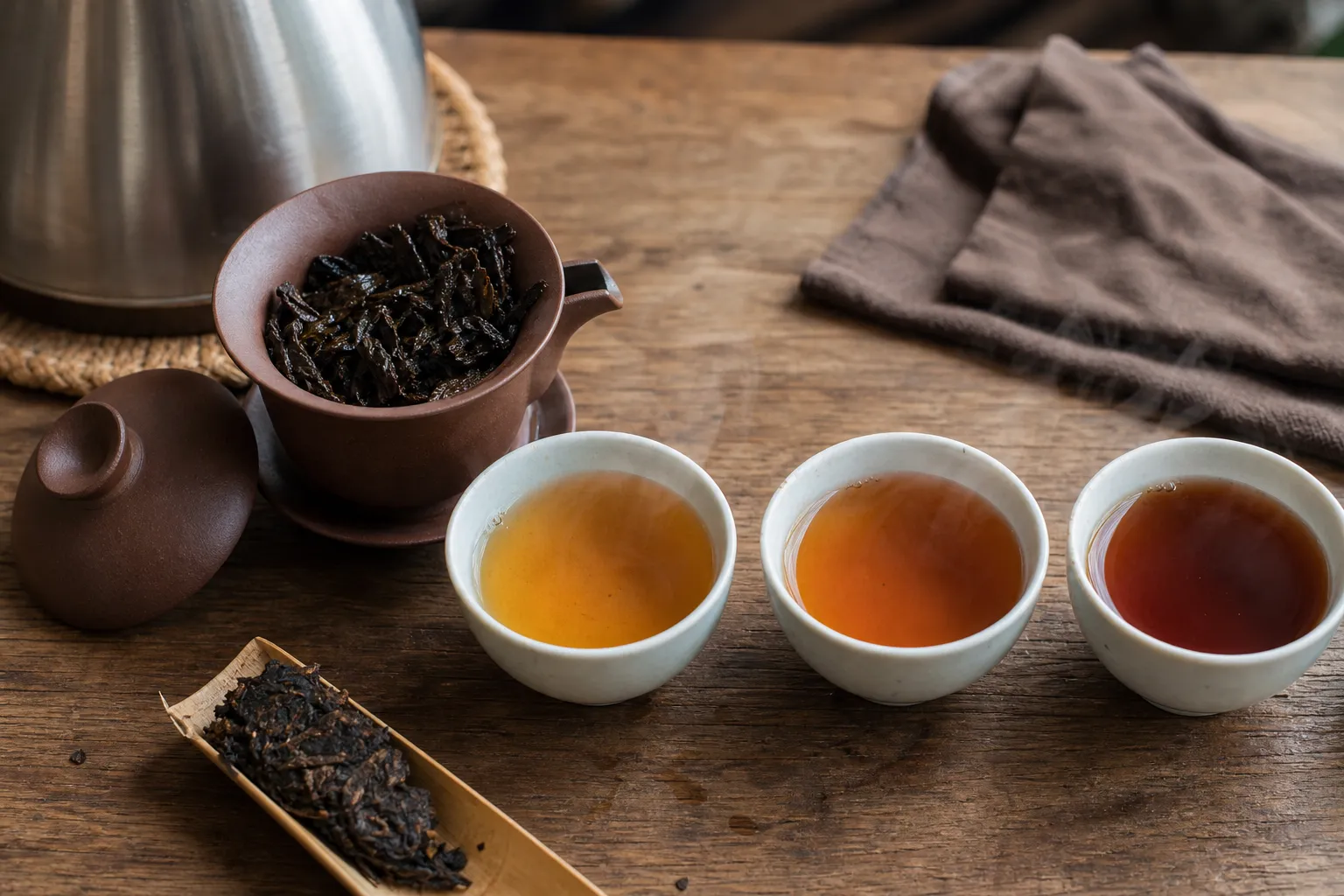
Start with the liquor color. Dark tea may show amber, orange-brown, reddish-brown, or deep brown tones depending on the tea and its condition. Color does not prove strength by itself, but it helps you notice direction. If the liquor is pale and the aroma is quiet, the leaves may need more time, especially if they are still compact. If the liquor darkens quickly and the aroma is already dense, keep the steep shorter.
Then smell the cup and the warmed leaves. You may notice wood, grain, dried fruit, earth, old book, mushroom, herbs, or mineral-like warmth. Not every tea will show those notes, and it does not need to. For daily use, the more important question is whether the aroma feels clean and present. A muted cup may improve as the leaves open. A stale or unpleasant note that grows stronger with heat is a reason to stop and reassess.
Texture matters too. A useful first cup often has some body: not necessarily thick, but not watery. If it feels rough or heavy, reduce the intensity before continuing. If it feels hollow, extend the next infusion. This is the basic rhythm of using the same tea leaves: steep, taste, adjust, and avoid turning one cup into a fixed rule.
Adjust Later Cups Without Chasing Darkness
Later cups often need more time because the easiest flavor has already moved into earlier infusions. That does not mean every later cup should be darker or stronger. A good daily dark tea routine keeps the cup satisfying, not forceful.
Use one adjustment at a time:
- If the cup tastes thin, add time before adding more leaf.
- If the cup tastes harsh, shorten the steep or add water.
- If the aroma is pleasant but the body is light, extend gently.
- If the liquor is dark but the flavor feels flat, the leaves may be tiring.
- If the aftertaste disappears quickly, expect only a few lighter cups to remain.
Small changes usually work better than a sudden jump from a short infusion to a very long one. A long steep can make the cup look stronger while also pulling out roughness, dryness, or a stale edge.
The middle rounds are often the easiest place to understand the tea. By then, compressed pieces have opened more fully, broken edges have settled, and the cup shows whether the leaves still have depth. If the tea becomes rounder, sweeter, smoother, or more aromatic, keep going. If it becomes heavy without becoming more interesting, lighten the next cup.
Liquor color is useful, but do not chase it alone. A dark cup can taste empty, and a lighter cup can still carry aroma and aftertaste. The better question is simple: does this infusion still give you something you want to drink?
Pause Between Everyday Sessions
Pausing between everyday dark tea sessions is fine, but damp leaves need basic care. Keep them in the brewing vessel or a clean cup, drain off standing liquid, and avoid sealing them tightly while they are still warm and wet. Strong surrounding smells can cling to damp leaves, so keep them away from cooking odors, incense, soap, or refrigerator smells.
For a same-day pause, the aim is simple: keep the leaves tidy, drained, and easy to inspect. If they sit in leftover liquor, the next cup may become dull, sour, or over-extracted. If they are closed up while warm and wet, the aroma can turn trapped and unpleasant. A light cover can keep dust away, but brewed leaves should not be treated like dry stored tea.
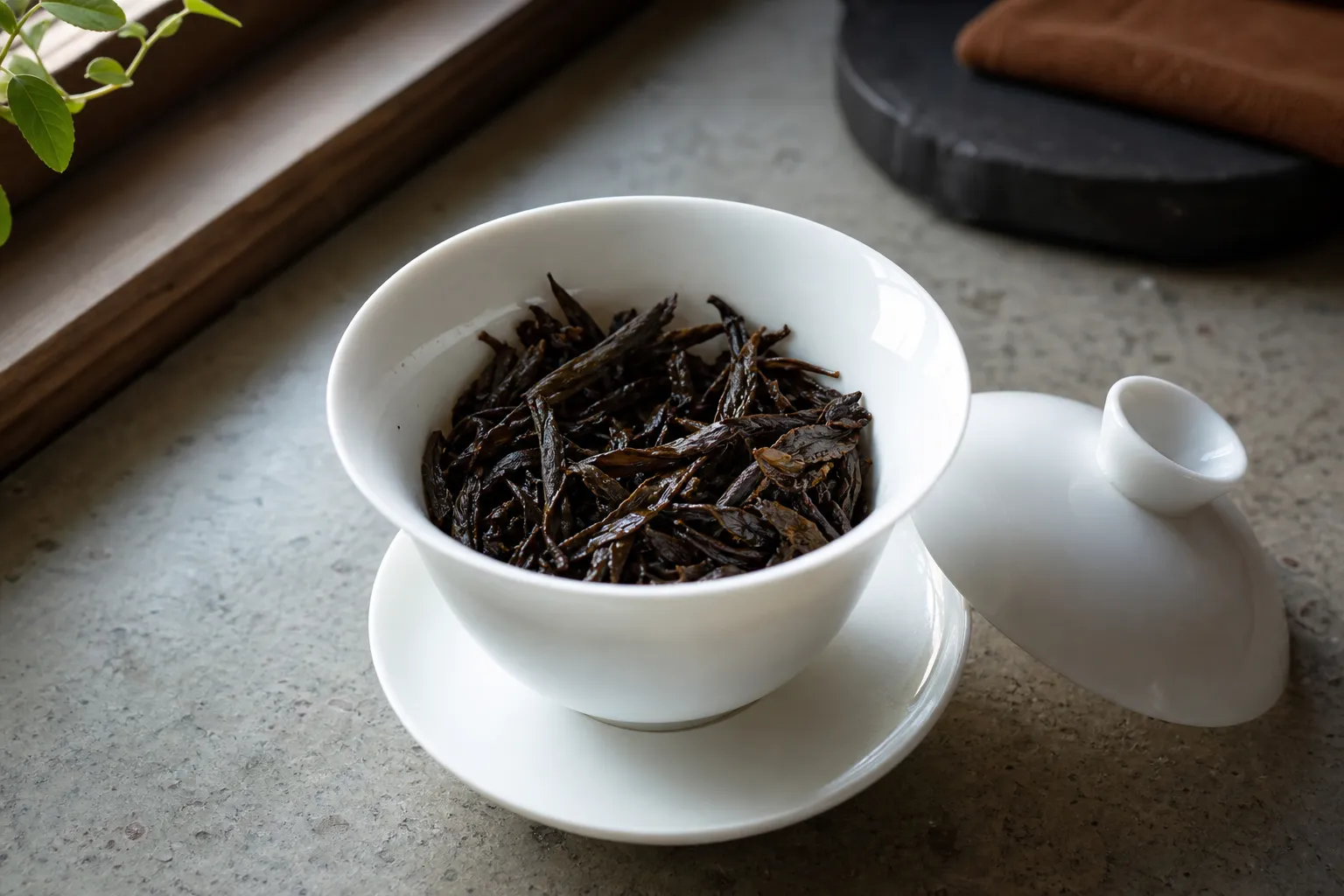
When you return, smell the damp leaves before making a full cup. If the aroma is still clean, warm, woody, earthy, fruity, or otherwise pleasant, continue with a short rinse-like infusion or a normal next steep. If the aroma has turned stale, sour, sharply off, or unpleasantly musty, discard the leaves.
For a longer pause, be more conservative. This page does not set a universal time limit because room temperature, humidity, vessel cleanliness, leaf amount, and remaining moisture all matter. In everyday use, repeat sessions work best when the pause is modest and the leaves are easy to inspect.
Know When the Leaves Are Finished
The leaves are finished when the next cup no longer gives enough flavor, aroma, or texture to make continuing worthwhile. This is a sensory decision, not a fixed number of infusions.
Common signs
- The liquor stays pale even with a longer steep.
- The aroma fades into wet paper, flat wood, or almost no scent.
- The mouthfeel becomes watery or empty.
- The aftertaste disappears quickly.
- Longer brewing brings roughness instead of depth.
- The leaves smell stale or unpleasant after a pause.
A thin cup is not always a failed cup. Some late infusions can be quiet and still pleasant, especially if you want something lighter. If a longer steep brings soft sweetness, gentle wood, or a clean mellow finish, one more round may be worth it. If it only produces colored water, tired bitterness, or a stale edge, stop.
Personal taste matters here. Some drinkers enjoy late, delicate cups; others prefer to stop while the tea still has body. Neither approach needs to become a rule. The point is to notice the change before the session becomes automatic.
Common Confusion About Reusing One Dark Tea
One misunderstanding is that the leaves should perform the same way each time. They will not. Early cups may be brighter or more aromatic, middle cups may feel rounder, and late cups may become lighter. That change is part of the practice.
Another confusion is treating every dark tea as if it has the same endurance. Leaf size, compression, storage condition, breakage, age, and brewing style can all change how many satisfying cups you get. A compact piece may need time to open. Broken leaves may release quickly and fade sooner. A tea with an unpleasant storage note may not become better through repeated steeping.
It is also easy to mistake intensity for quality. A stronger cup is not always a better cup. If the tea becomes muddy, harsh, or tiring, reducing strength may show more useful flavor than forcing a darker liquor.
The clearest way to use one dark tea for several daily moments is to keep asking four small questions: What changed in the color? What changed in the aroma? What changed in the texture? Do I still want another cup? Those answers are more useful than an exact infusion count.
A Simple Repeat-Session Pattern
For an ordinary day, this pattern keeps the process manageable:
- Start with a clean vessel and a measured amount of dark tea.
- Make the first infusion moderate, not overly long.
- Taste for body, aroma, and aftertaste before adjusting.
- Lengthen later steeps gradually.
- Drain the leaves well before a pause.
- Smell and inspect the leaves before resuming.
- Stop when the cup becomes thin, flat, stale, harsh, or no longer enjoyable.
This keeps the answer narrow: one tea, several everyday sessions, practical adjustments, and a clear stopping point. The method does not depend on a promised flavor or an exact number of cups. It depends on the leaf in front of you, the vessel you are using, and the cup you actually want to drink.