
Everyday Brewing Choice
Gongfu Style or Mug Brewing for a Simple Dark Tea Ritual
Choose gongfu style when you want more control and a session built around repeated short infusions. Choose mug brewing when you want one relaxed cup, easy cleanup, and a dark tea habit that fits into an ordinary morning or evening.
The better choice for a gongfu or mug dark tea ritual is not a rank of “proper” versus “less proper.” It depends on how much attention you want to give the leaf, how compressed or broken the tea is, how strong you like the cup, and whether convenience matters more than following each change in aroma, color, and mouthfeel.
For most home drinkers, mug brewing is the easier daily dark tea setup. Gongfu style is better when the tea feels interesting enough to slow down for.
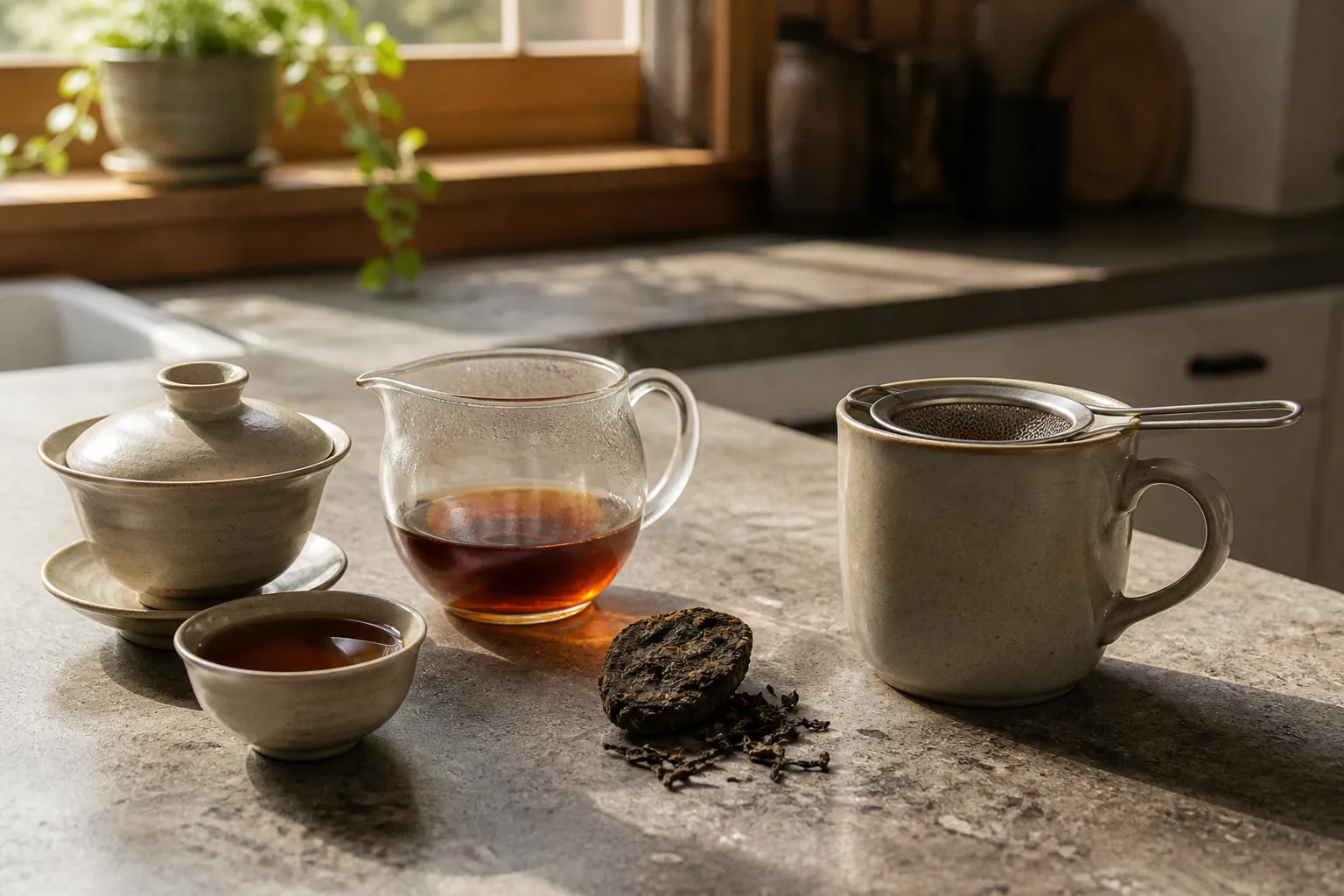
upward
Read the full overview first
Use the broader guide first if you need the full scope before this page.
The quick decision: control or convenience
Gongfu style gives you more small decisions. You use less water at a time, pour short infusions, taste how the first cup differs from the third, and stop before the liquor becomes too heavy. This can be useful with a compressed piece, a tea that opens slowly, or a leaf that changes noticeably after the first steep.
Mug brewing gives you fewer decisions. The leaf sits in a larger cup, the infusion runs longer, and the result is usually judged as one complete drink rather than a sequence. That can be exactly right when you want warmth, steadiness, and low friction daily brewing instead of a focused tasting session.
If your goal is
Notice changes across several pours
Use gongfu style.
If your goal is
Make one cup while reading or working
Use mug brewing.
If your goal is
Adjust strength cup by cup
Use gongfu style.
If your goal is
Reduce tools and cleanup
Use mug brewing.
If your goal is
Compare two teas carefully
Use gongfu style.
If your goal is
Drink a familiar tea without fuss
Use mug brewing.
The distinction is practical rather than ceremonial. Gongfu style often gives you more control over concentration because each infusion can be shortened or lengthened. Mug brewing often gives you a calmer routine because you do not need to manage repeated pours. Neither method makes every dark tea taste better by default.
What changes in the cup
Dark tea can respond differently depending on form, storage, breakage, vessel size, water, and steeping rhythm. Treat the ranges and cues here as adjustable starting logic, not fixed rules.
With gongfu style brewing, the cup can feel more segmented. Early infusions may show aroma and surface sweetness. Middle infusions may feel fuller. Later pours may become softer or thinner. This is useful if you enjoy tracking movement: liquor color deepening, earthiness becoming rounder, a woody note appearing, or a strong edge settling down.
With mug brewing, those stages merge into one longer cup. The result can feel steadier and more casual. If the tea is forgiving, this may be pleasant and warming. If the leaf releases quickly, the cup may become too strong, flat, or heavy before you finish drinking. That does not mean the method is wrong; it means the leaf amount, contact time, or water volume needs adjustment.
Useful cues
- If the liquor stays very pale and the cup tastes thin, use a little more leaf, a smaller vessel, hotter water, or more time.
- If the liquor darkens quickly and the dark tea tastes too strong, use less leaf, more water, or a shorter steep.
- If the cup feels harsh or drying, reduce contact time before changing everything else.
- If the cup feels flat, try a fresher pour rhythm, slightly more leaf, or cleaner-tasting water.
- If the tea tastes overly earthy, lighten the leaf amount or separate the first strong pour from the rest of the cup.
Gongfu style makes these adjustments easier to isolate because each infusion is separate. Mug brewing asks for broader changes: less leaf next time, a bigger cup, or removing the leaves sooner if your setup allows it.
When gongfu style makes sense
Use gongfu style when the session itself is part of the pleasure. It suits a home tea session where the teapot, gaiwan, or small brewing vessel stays near you and the cup is refreshed several times. The point is not to perform a formal routine. The point is to give yourself enough control to observe the tea without committing to one long extraction.
Gongfu style is especially useful when
- The tea is compressed and may open unevenly.
- You have a small piece from a cake or brick and want to see how it releases.
- You are comparing two teas and need a clearer side-by-side impression.
- You want to avoid one large cup becoming too dense.
- You enjoy repeated short infusions more than a single mug.
This method also helps when you are unsure how strong a dark tea will become. A first short pour gives you information. If it tastes light, the next infusion can run longer. If it tastes heavy, the next can be shorter or poured smaller.
The tradeoff is attention. Gongfu style asks you to stay near the kettle or brewing area, pour more often, and clean more pieces afterward. If you are already distracted, it can become annoying rather than calming. A ritual that requires more attention than you have available will not feel simple for long.
When mug brewing is the better ritual
Mug brewing is the better choice when you want dark tea to fit into the day with minimal interruption: leaf, water, cup, wait, drink. For a familiar tea that you already know how to manage, this can be more useful than setting up a small session every time.
Mug brewing is also honest about what many home drinkers actually need. Some days, the goal is not to study the tea. The goal is one warm cup that does not demand a tray, repeated pours, or a tasting mood. If that keeps you drinking the tea you have instead of saving it for an imagined perfect session, the mug has done its job.
Keep the variables gentle
- Use less leaf than you would in a small gongfu vessel.
- Give compressed pieces time to loosen rather than forcing strength with too much tea.
- Watch the color in the first few minutes instead of leaving the cup unattended.
- If the cup gets too concentrated, add hot water or remove the leaves if your mug setup allows.
- If the cup is too light, extend the steep before increasing leaf heavily.
A mug is less precise, but it is not careless. The difference is that you adjust by habit and observation rather than by a sequence of timed infusions. For an everyday dark tea ritual, that may be the most sustainable form of attention.
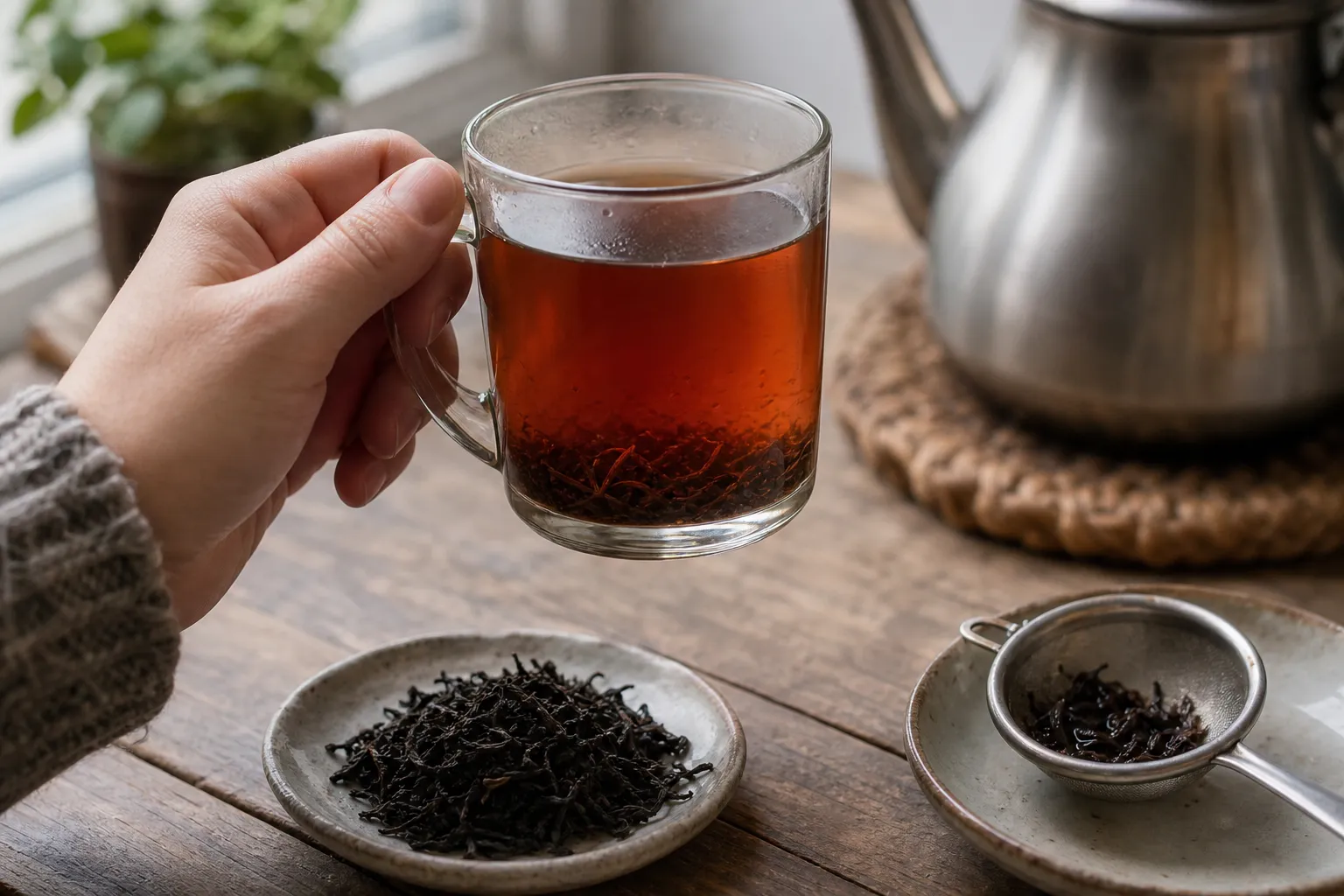
A simple setup for each path
For gongfu style, keep the setup small and repeatable. Use a small brewing vessel, a drinking cup, hot water, and enough leaf to produce a noticeable liquor without making the first pour overpowering. Start with short infusions and lengthen as the tea softens.
A useful gongfu pattern
- Place the leaf in a small vessel.
- Add hot water and keep the first contact brief.
- Pour fully into the cup.
- Taste for strength, texture, and aroma.
- Adjust the next infusion instead of judging the whole tea from the first cup.
A useful mug pattern
- Use a modest amount of leaf.
- Add hot water.
- Watch the liquor color.
- Taste early rather than waiting too long.
- Add water, remove leaf, or shorten the next brew if the cup becomes heavy.
For mug brewing, keep the setup even simpler. Use a mug large enough that the leaf is not crowded, add a modest amount of tea, pour hot water, and taste before the cup becomes too dark. If your mug has an infuser, removing the leaves gives you more control. If the leaves stay in the cup, begin with less tea and add water as needed.
These are not fixed formulas. They are ways to make the cup responsive. The same tea may need different handling when it is tightly compressed, broken into small fragments, stored in a drier place, or brewed in a much larger vessel.
Common confusion: ritual does not mean complicated
A simple dark tea setup can still feel intentional. Ritual does not have to mean many tools, a strict sequence, or a claim that one method is culturally superior. At home, the ritual can be as small as warming the cup, noticing the first aroma, and adjusting the next brew instead of repeating a mistake.
The common mistake is treating gongfu style as automatically better. It can reveal more changes in some teas because repeated short infusions separate the cup into stages. But if you are rushed, tired, or using a tea you already know well, the extra control may not improve the experience.
The opposite mistake is treating mug brewing as merely lazy. A mug can be the most practical way to keep dark tea in daily life. It asks for fewer tools and less cleanup, which can matter more than fine control on ordinary days. If the cup tastes balanced to you, the method is serving its purpose.
A better question is: what kind of attention do you have today?
If you have tasting attention, use gongfu style. If you have drinking attention, use a mug. If you start with a mug and the tea tastes too strong, change the next cup. If you start gongfu style and it feels fussy, switch to a larger cup. The ritual should support the tea, not trap it.
Boundary notes for this choice
Dark tea is not one uniform material. Loose leaves, flakes from a compressed cake, tightly packed brick pieces, and small broken fragments can release at different speeds. Storage conditions can also affect aroma and texture. Water temperature, vessel size, and personal taste can change what “balanced” means in the cup.
Use the method that gives you the kind of feedback you need
- If you need precision, choose gongfu style.
- If you need ease, choose mug brewing.
- If the cup is thin, increase extraction gently.
- If the cup is too strong, reduce contact or dilute.
- If neither method tastes right, change one variable at a time.
The best everyday dark tea ritual is not the most elaborate one. It is the one you can repeat, notice, and adjust without turning a simple cup into a performance.
FAQ
Is gongfu style better than mug brewing for dark tea?
Not always. Gongfu style is better when you want control, comparison, and repeated short infusions. Mug brewing is better when you want one relaxed cup with fewer tools and less cleanup.
Can I use the same dark tea both ways?
Usually, yes. The same tea may feel more detailed in gongfu style and steadier in a mug. Adjust leaf amount and contact time rather than expecting the same strength from both methods.
What should I do if mug-brewed dark tea tastes too strong?
Use less leaf, add more hot water, remove the leaves sooner if possible, or taste earlier next time. If the tea releases very quickly, a short-infusion setup may give you more control.
What should I do if gongfu-style dark tea tastes thin?
Lengthen the next infusion, use slightly more leaf, increase water temperature if appropriate for your tea, or check whether the compressed piece has opened fully.