
Practical dark tea check
Is Tea Dust in a Dark Tea Brick a Problem
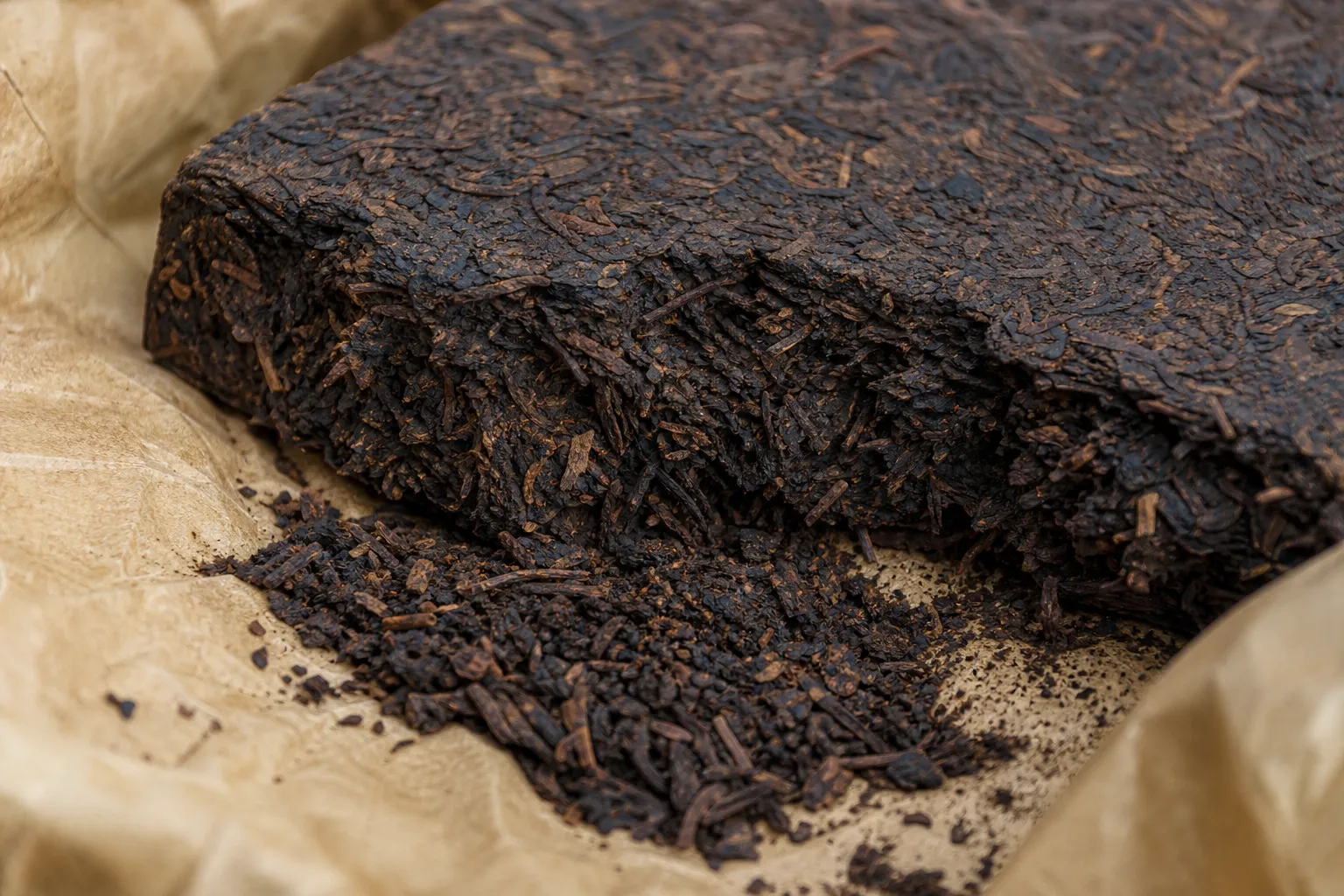
Tea dust in a dark tea brick is not automatically a problem. Fine particles often come from normal handling: shipping, opening the wrapper, prying off a piece, cutting into a tight brick, or rubbing broken edges together.
If the dust looks like the same brown, reddish-brown, black, or tea-colored material as the brick, smells clean and tea-like, feels dry, and gathers mostly around broken edges, treat it as broken compressed tea.
It needs more caution when the fine material looks foreign, gray, ash-like, dirt-like, damp, unexpectedly fuzzy, or comes with a musty, chemical, rotten, or sharply unpleasant smell. In that case, do not explain it away as “just tea dust.” Stop, inspect the brick, and avoid brewing from the suspicious material.
upward
Read the full overview first
Use the broader guide first if you need the full scope before this page.
What the Dust Usually Is
A dark tea brick is compressed leaf material. Once it is pressed, wrapped, shipped, stored, and broken apart, some leaf will fracture. That can leave several kinds of small material in the wrapper or cup:
- Broken tea brick leaves: snapped leaf pieces, stems, flakes, and compressed tea fragments.
- Dark tea brick crumbs: coarse bits that collect near corners, wrapper folds, or the place where you pried the brick.
- Fine powder from the tea brick: smaller particles made by friction, pressure, or repeated handling.
- Dark tea brick sediment: tiny particles that pass into the brew and settle at the bottom.
These do not behave the same in water. Larger broken leaves may brew much like a normal chipped piece of brick. Very fine particles extract faster, darken the liquor sooner, and can make the cup taste heavier, rougher, flatter, or more astringent if you use the same timing as intact chunks.
The useful question is not simply, “Is there dust?” It is: “Does this fine material look, smell, and brew like the tea itself?”
Quick Check: Normal Crumbs or a Warning Sign?
Use the brick in front of you. A practical inspection is more useful than trying to name every particle.
Color
More like normal fragments: Similar to the brick: brown, dark brown, reddish-brown, black, or tea-colored.
More concerning: Gray, ash-like, pale dirt-like, greenish, whitish, or clearly different from the tea.
Location
More like normal fragments: Mostly in the wrapper, corners, broken edges, or pried area.
More concerning: Strange patches, clumps, or spread-through areas inside the brick.
Smell
More like normal fragments: Dry tea aroma; woody, earthy, mellow, aged, or fermented depending on the tea.
More concerning: Musty, damp, chemical, rotten, sharply sour, or unpleasant in a way that feels out of place.
Texture
More like normal fragments: Dry crumbs, leaf fibers, stem bits, flaky compressed tea.
More concerning: Damp powder, sticky clumps, fuzzy growth, grit, or foreign-looking debris.
Storage history
More like normal fragments: Kept dry, ventilated, away from kitchen steam and strong odors.
More concerning: Exposed to leaks, damp air, sealed humidity, mildew smell, or unknown storage.
First brew
More like normal fragments: Some sediment, darker liquor, stronger taste from small particles.
More concerning: Odd odor intensifies, unusual film appears, or the taste no longer resembles the tea.
A crumb-heavy dark tea brick can still be usable if the issue is only broken material. But if the brick has a musty smell, visible fuzzy growth, or damp-looking patches, the better practical move is to avoid drinking that portion rather than trying to adjust the brew.
When It Is Usually Just Broken Compressed Tea
Tea bricks shed material for ordinary reasons. Tight compression can make a brick chip when you pry it. Looser compression can shed flakes in transit. Edges and corners break first. A brick that has been moved between containers, opened several times, or worked with a knife or pick may leave a surprising amount of dark tea brick crumbs.
Normal tea brick fragments usually share the character of the brick:
- The color matches the main tea.
- The dry aroma fits the tea’s style.
- The particles feel dry, not damp.
- You can see leaf fiber, stem, or compressed flake structure.
- The dust is concentrated near broken edges.
This does not prove the brick is high quality. It only means the dust itself is not unusual for compressed tea. A beautiful brick can shed crumbs, and a crumb-heavy brick is not automatically bad.
One common misunderstanding is that no dust always means better tea. It does not. Compression style, leaf size, shipping, wrapper tightness, storage handling, and how the brick was opened all affect how many fines you see.
When Fine Material Deserves Caution
Do not treat every fine particle as normal tea dust. Be more cautious if you notice:
- Foreign dust in the tea brick: particles that look like dirt, ash, grit, or non-tea debris.
- Unexpected fuzzy growth: especially if it appears in patches, spreads from a damp area, or looks raised and soft.
- Musty smell from the dark tea brick: a damp basement, mildew, rotten, or stale-wet odor stronger than the tea’s normal fermented aroma.
- Damp or sticky clumps: powder that does not feel dry and loose.
- Odd color contrast: gray, greenish, whitish, or dusty patches unlike the surrounding leaf.
- Moisture history: exposure to kitchen steam, leaks, sealed humidity, or unknown storage conditions.
Dark tea can have earthy, woody, aged, or fermented aromas. Some styles are not delicate or floral. Still, every damp or musty note should not be folded into “aged tea” without inspection. The distinction is whether the aroma feels integrated with dry tea material or points toward damp storage and spoilage.
If you are unsure, look at the surface, the interior near the suspect area, the wrapper, and the smell after warming a small dry piece in a clean cup. Avoid scraping, rinsing, or brewing around a questionable patch as a way to make the problem disappear. This page cannot judge a brick from a photo or a short description, and public sources do not support one universal rule for every dark tea brick.
Golden Specks in Fu Brick Tea Are a Separate Case
If your brick is specifically Fu brick tea, also called Fuzhuan Cha or Fu tea, you may see yellow or golden specks inside the brick. In Fu brick tea, Golden Flower or Jin Hua refers to a production-related fungal transformation associated with that category. Research on Fu brick tea describes it as a post-fermented dark tea made through steps such as steaming, piling, pressing, fermentation, and drying, with microbial activity involved in its characteristic profile.
That context matters because golden specks in Fu brick tea should not be casually lumped together with ordinary dust, dirt, or random fuzzy growth. But the reverse mistake is just as common: assuming that every yellow, powdery, or fuzzy-looking material in any dark tea brick is desirable.
Keep the distinction narrow:
- If the brick is clearly Fu brick tea, small golden specks may belong to that style.
- If the material is gray, fuzzy, damp, musty, or foreign-looking, treat it as a warning sign.
- If the brick is not Fu tea, do not use Fu-brick vocabulary to explain unknown specks.
The question in your hand is still practical: does the material look like normal tea, style-specific specks, or something that does not belong?
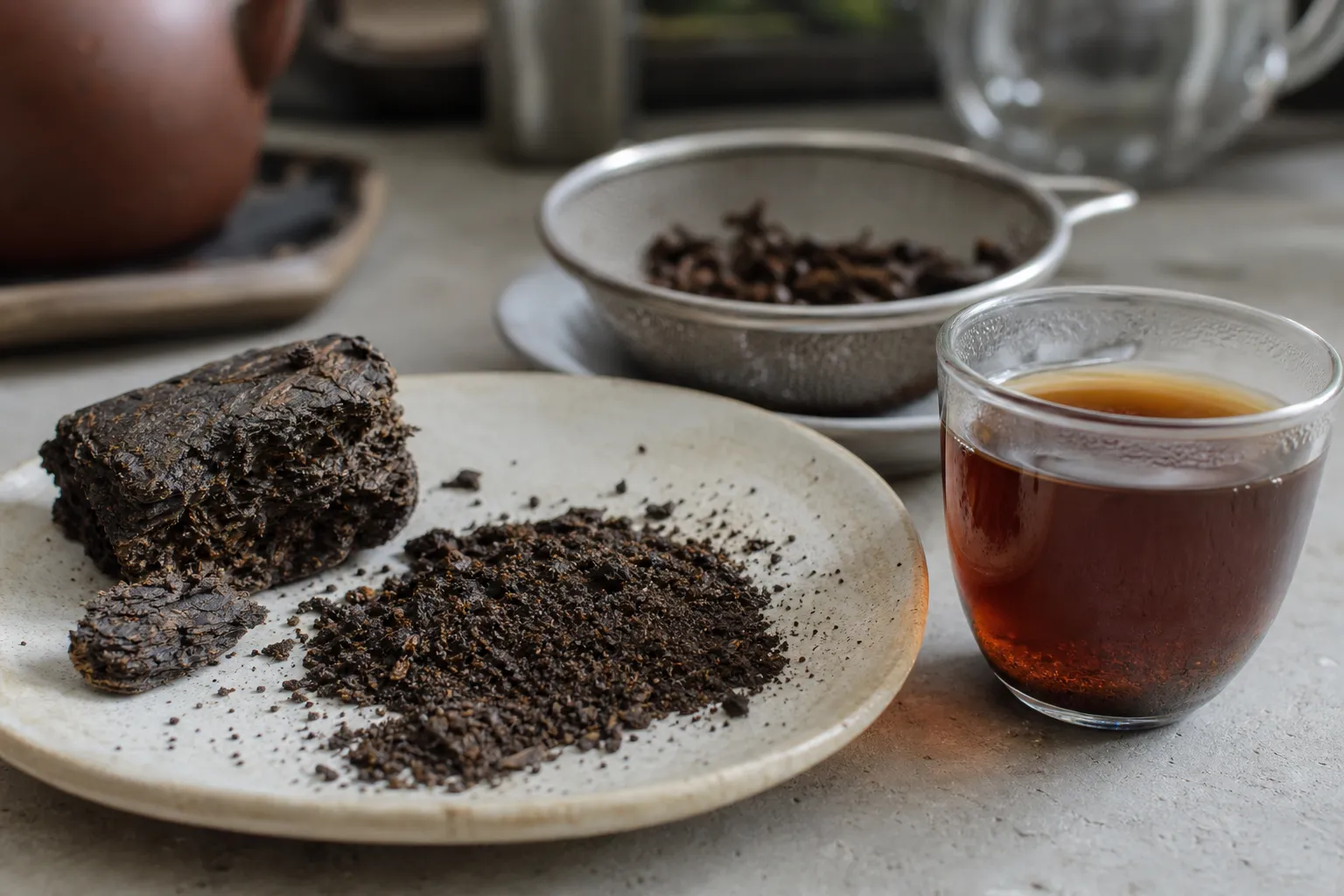
Brewing a Crumb-Heavy Dark Tea Brick
If the dust and crumbs look normal, the next issue is brewing. Smaller particles expose more surface area to water, so the cup can become strong faster than expected.
Try these adjustments before blaming the brick:
- Use slightly less tea if the portion is mostly crumbs. A scoop of loose fragments can brew stronger than the same-looking volume of intact chunks.
- Shorten the early steeps. If you normally brew an early infusion for 20–30 seconds, start shorter and extend later rounds after tasting.
- Decant carefully. Let heavier particles settle for a moment, then pour steadily.
- Use a tea brick strainer if sediment bothers you. It will not change the tea itself, but it can keep fine particles out of the cup.
- Separate crumbs from chunks when possible. Brew the larger piece first, then add crumbs only if the liquor tastes thin.
- Watch for roughness. If the tea tastes harsh, dusty, or flat, reduce leaf amount or steeping time before deciding the brick is the problem.
A little dark tea brick sediment at the bottom of the cup is often a texture issue. It can make the last sip heavier, but it does not automatically mean the tea is contaminated. If the sediment comes with a clean aroma and normal tea taste, adjust your strainer, pouring, or steep time. If it carries an off smell or strange appearance, go back to inspection.
Common Confusions About Dark Tea Brick Crumbs
“Any dust means the tea is old or low quality.”
Not necessarily. Dust can come from breakage, compression style, shipping, or how the brick was opened. It is not a quality grade by itself. Look at color, aroma, dryness, and how the tea brews.
“Dust is fine because dark tea is fermented.”
That is too broad. Dark tea processing does not make later storage problems irrelevant. Damp patches, foreign debris, fuzzy growth, and unpleasant odors still deserve caution.
“More fine material means better tea.”
Do not use that rule for dark tea bricks. Some seller language around other tea types discusses fine hairs or down, but broken compressed tea fragments are a different situation.
“Golden specks and suspicious growth are the same thing.”
They are not the same category. Golden specks in Fu brick tea have a specific Fu-tea context. Gray dust, damp patches, fuzzy growth, and unpleasant musty odors should not be excused by using Fu tea vocabulary.
A Simple Decision Before You Brew
If you are holding a dusty brick, decide in this order:
- Does the fine material match the tea?
If yes, it is more likely broken tea. - Does the dry brick smell clean for its style?
Earthy, woody, aged, or fermented can be normal. Damp, rotten, chemical, or aggressively musty is not something to ignore. - Does it feel dry?
Dry crumbs are one thing. Damp powder or fuzzy clumps are another. - Is it mostly near broken edges?
Broken edges tea dust is common. Strange patches deep inside the brick deserve closer inspection. - Does hot water make the issue clearer?
Normal crumbs may simply brew stronger and leave sediment. Suspicious aromas often become more obvious with heat.
So, is tea dust in a dark tea brick a problem? Usually, no — when it looks, smells, and behaves like broken compressed tea. The answer changes when the material looks foreign, feels damp, grows fuzz, or comes with a musty or unpleasant odor. For normal crumbs, brew with a lighter hand. For suspicious material, do not treat brewing adjustments as the solution.
Sources
Sources and further reading
Reference links are limited to sources considered suitable for public citation in this page.