
Dark tea comparison
Kang Brick Tea vs Fu Brick Tea: How Two Dark Tea Bricks Differ
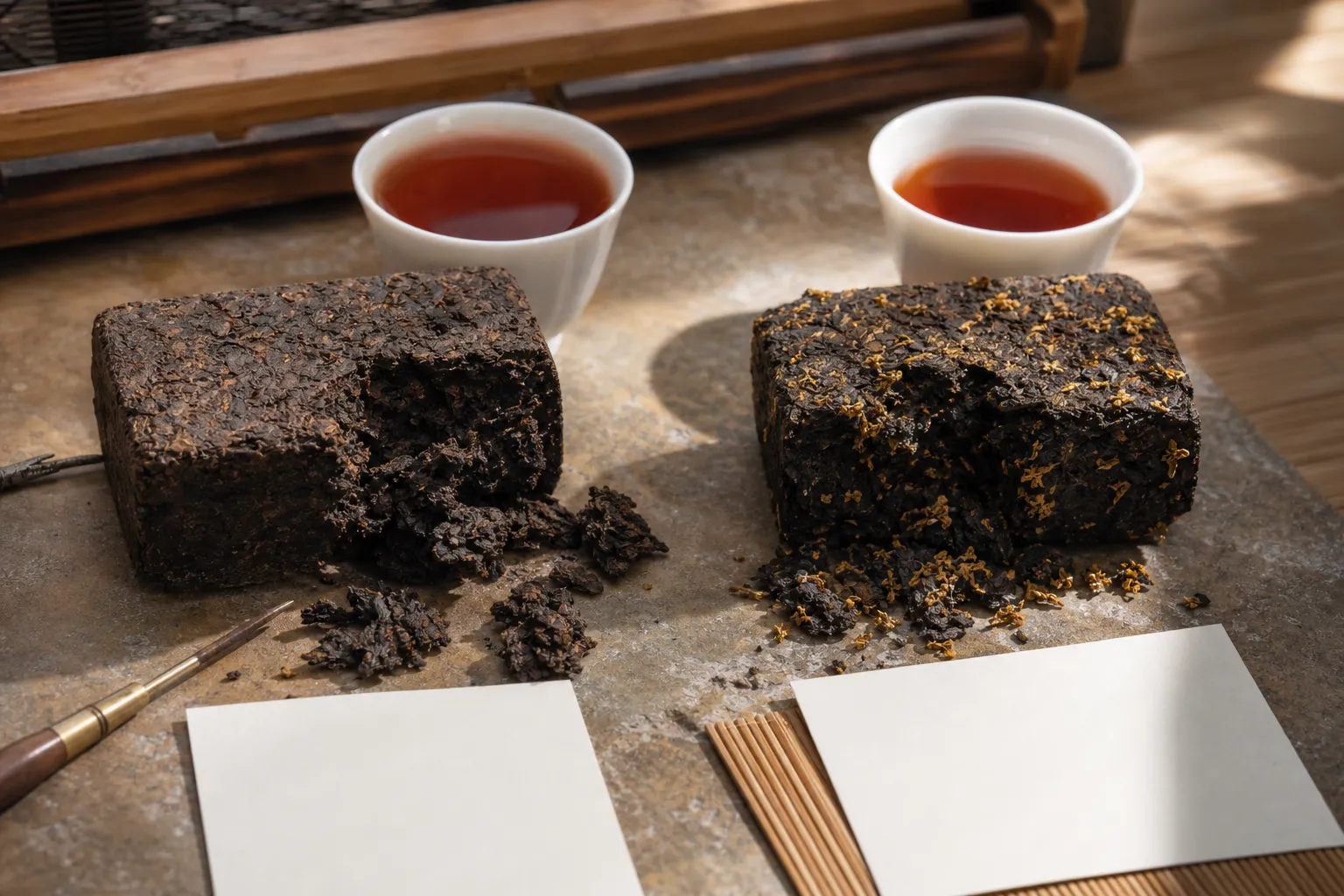
Kang brick tea vs Fu brick tea is best read as a practical comparison between two compressed dark tea bricks, not as a contest with one fixed winner. Fu Brick Tea is easier to identify from the stronger public evidence: it is often linked with golden-yellow “flowers,” a clean fungal-flower aroma, and reddish-orange liquor when brewed well. Kang brick tea is less consistently documented in strong English-language sources, so it needs to be judged more directly: brick condition, dry aroma, liquor clarity, mouthfeel, storage smell, and how the leaf opens in the cup.
The short version: Fu gives you clearer recognition cues. Kang asks for closer tea-by-tea observation. Neither name alone tells you whether the brick has been stored well or will suit your taste.
upward
Read the full overview first
Use the broader guide first if you need the full scope before this page.
Fast comparison in the brick and cup
If you have both bricks in front of you, start with what you can see, smell, and brew. Seller descriptions can help, but they should not replace the cup.
| What to compare | Fu Brick Tea | Kang brick tea |
|---|---|---|
| Main recognition cue | Often associated with small golden-yellow specks inside the brick | No equally strong non-commercial identification cue from the available source set |
| Aroma language | Clean fungal-flower, earthy, sweet hay, dried fruit, jujube-like notes | Should be read from the actual brick: wood, aged leaf, smoke, earth, sweetness, sourness, or storage odor can vary |
| Liquor expectation | Often reddish-orange when brewed cleanly | Judge the sample; do not assume it will mirror Fu |
| Mouthfeel | Often described as mellow, smooth, sometimes thick | Depends on material, age, compression, storage, and brewing strength |
| Brewing behavior | Usually handles near-boiling water and short repeated steeps well | Use compressed dark tea brewing logic, then adjust by taste |
| Storage concern | Golden specks can be part of Fu processing, but they are not a full quality verdict | Clean aroma and dry, stable storage matter more than the name |
The useful distinction is not “golden flowers versus no value.” It is this: Fu Brick Tea has a distinctive fermentation marker that shapes how people identify and discuss it; Kang brick tea needs to be evaluated more through the individual brick and brewed cup.
What to check before brewing
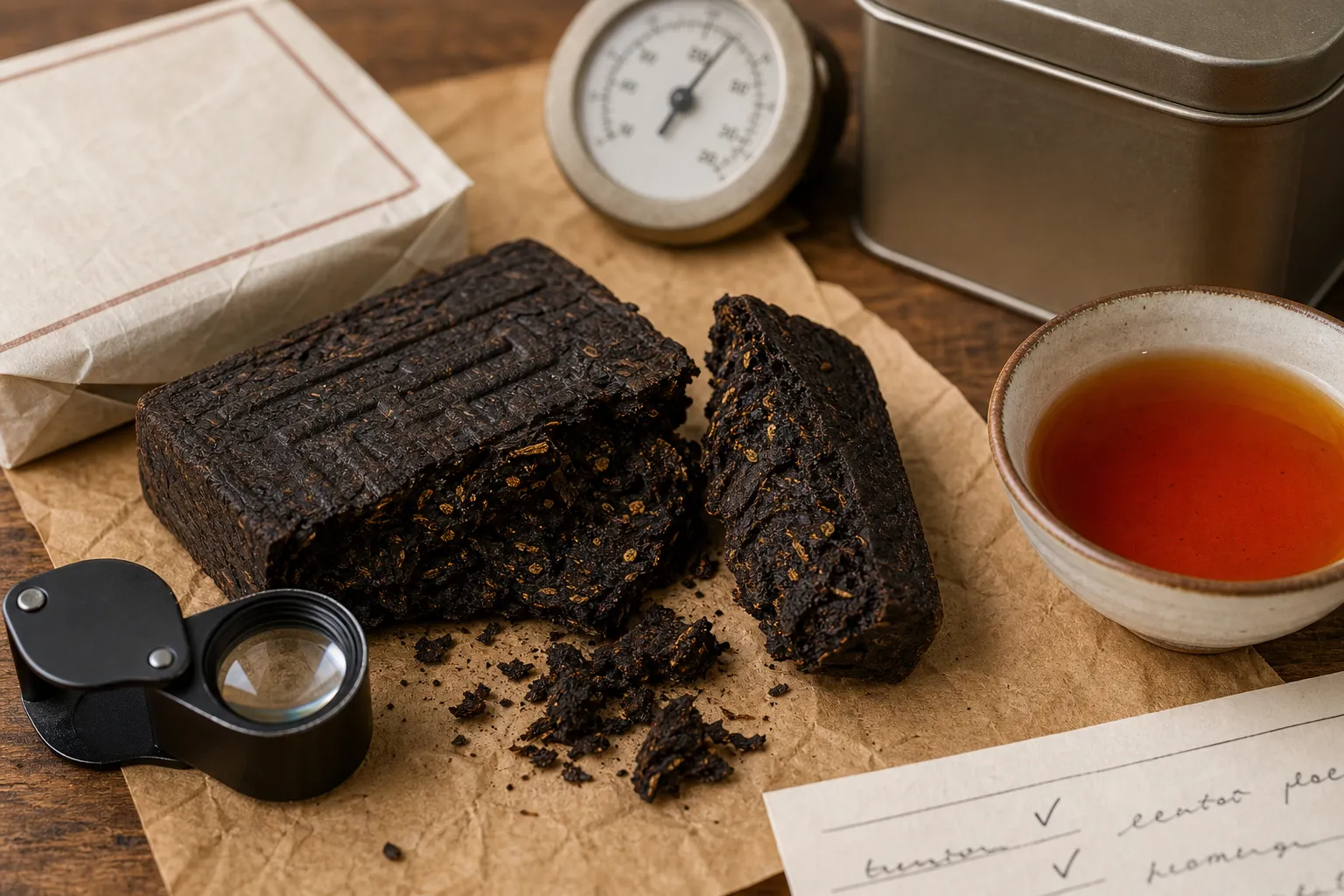
Break off a small piece before making a decision. A compressed dark tea brick can look different on the surface than it does inside, especially if the compression is tight or the storage history is uneven.
For Fu Brick Tea, look for small yellow-golden points distributed within the brick. In English tea shops these are commonly called golden flowers. Research on Fu Brick Tea manufacturing discusses fungal succession, fermentation stages, and organisms commonly named as Eurotium cristatum or related Aspergillus cristatus terminology in connection with this flowering process.
Use that information carefully. Yellow specks can help identify Fu Brick Tea, but they do not prove that the tea was stored well, brewed well, or will taste good to you.
For Kang brick tea, avoid forcing Fu-style expectations onto it. Because strong Kang-specific public evidence is thinner, the better approach is practical inspection:
- Does the dry piece smell clean, aged, woody, or tea-like?
- Is there a damp, sour, stale, or basement-like odor?
- Does the brick separate into layered chunks, or mostly crumble into dust?
- Is the interior aroma different from the surface aroma?
- Does the liquor brew clear enough to read, or stay muddy and flat?
- Does the tea improve after the first rinse or first few steeps?
A Kang brick can be worthwhile without visible golden flowers. The question is whether that specific brick brews cleanly, has balance, and fits the style of dark tea you want to drink.
Aroma and taste: Fu has clearer vocabulary, Kang needs closer tasting
Fu Brick Tea has a more established tasting vocabulary. You may see descriptions such as fungal-flower aroma, clean earthiness, sweet hay, dried fruit, jujube, mellow body, and reddish-orange liquor. Research on Fu Brick Tea supports the broader point that its aroma and taste are shaped by fermentation, fungal communities, processing, storage, extraction, and region. It does not make every Fu brick taste the same.
In the cup, one Fu brick may be bright, sweet, and aromatic. Another may be woody, heavier, more earthy, or flatter. Fresh and aged examples can also differ. A newer Fu may show a more lifted aroma; an older one may feel deeper or more settled if storage has been clean.
With Kang brick tea, do not borrow Fu descriptors just to fill a gap. If the tea tastes woody, mineral, smoky, dry, mellow, sour, or heavy, describe that brick as it is. A fair Kang brick tea comparison asks: does the tea open cleanly, hold balance, and leave a pleasant finish?
A simple tasting sequence for both bricks
- 1. Smell the dry piece before rinsing. Look for clean aged leaf, wood, hay, or sweetness.
- 2. Be cautious with sour, damp, stale, or wet-storage odors that dominate the dry aroma.
- 3. Give the piece a quick hot rinse if it is dusty or tightly compressed.
- 4. Brew a short first infusion and check liquor color, clarity, and aroma.
- 5. Taste for sweetness, bitterness, roughness, sourness, thickness, and aftertaste.
- 6. Adjust the next steep based on the cup, not the label.
Fu’s fungal-flower aroma can be pleasant when it is clean and integrated. If a brick smells fuzzy, sharply sour, wet-cardboard-like, or stale in a way that does not lift after rinsing, treat that as a storage warning rather than a flavor note.
Brewing adjustments for both dark tea bricks
Both Kang and Fu are compressed dark tea bricks, so the first brewing issue is physical. You need enough leaf to brew clearly, but not so much powder that the cup turns rough or muddy.
Work from the side of the brick with a tea pick or thin knife. Follow natural layers where possible and aim for small chunks rather than crushed leaf. Powder extracts quickly and can make the liquor harsh, cloudy, or too strong.
Fu Brick Tea gongfu starting point
- 5–7 g tea
- 100–120 ml vessel
- 95–100°C water
- optional quick rinse
- 10–20 second early steeps, then adjust
Fu Brick Tea mug-style starting point
- 3–4 g tea
- about 250 ml water
- 95–100°C water
- 2–4 minutes as a starting range
These are starting points, not rules. If the cup tastes thin, use slightly more leaf, extend the steep, or break the chunk a little smaller. If it tastes harsh, dusty, or too heavy, reduce the leaf, shorten the steep, or choose a cleaner chunk with less powder. If the aroma feels closed, a rinse and a slightly longer first infusion can help loosen a tight piece.
For Kang brick tea, begin with the same physical logic but keep your expectations open. Use near-boiling water, rinse if the piece is dusty or very compressed, and start with short-to-moderate steeps. Some bricks open slowly. Others release strength quickly once the layers separate.
For a side-by-side comparison
- Use the same vessel size for both teas.
- Use similar leaf weight.
- Use the same water temperature.
- Keep the first three steeps short and equal.
- Compare aroma, liquor color, body, and aftertaste.
This keeps Fu from seeming better only because it was brewed stronger, and it keeps Kang from seeming dull only because it needed more time to open.
Golden flowers, mold confusion, and storage cues
The most common Fu Brick confusion is the difference between intentional golden-yellow specks and unwanted growth. Fu Brick Tea is widely discussed through golden flowers, and manufacturing research connects the flowering stage with fungal communities and Eurotium cristatum / Aspergillus cristatus terminology. That is part of what gives Fu Brick Tea its strong identity among dark tea bricks.
Still, visual inspection has limits. Golden specks are one clue, not a full verdict.
Be more cautious when you notice
- fuzzy growth on the surface
- unusual green, black, or spreading discoloration
- sour, damp, or rotting odors
- wet storage smell that remains after rinsing
- a brick that feels moist rather than dry
- liquor that stays unpleasantly musty across several infusions
Storage matters for both Kang and Fu. Keep dark tea bricks away from kitchen smells, perfume, damp cabinets, direct sunlight, and sealed humid spaces. A breathable, dry, odor-free place is usually more useful than chasing dramatic aging conditions. Good storage should preserve the tea’s character; it should not make the brick smell like the room around it.
Which one should you choose?
Choose Fu Brick Tea if
You want the Fu profile: visible golden-flower cues, fungal-flower aroma language, reddish-orange liquor, and a cup that often leans mellow, earthy, and sweet when brewed carefully. Fu is also easier to research because it has more academic and market discussion.
Choose Kang brick tea if
You are comfortable evaluating the individual brick instead of relying on a famous visual marker. It may appeal to drinkers who like compressed dark tea but do not want every comparison to revolve around golden flowers. With Kang, ask for clear photos, storage notes, and brewing guidance, then check whether the tea in your cup supports the description.
The fair comparison is not “which brick is superior?” It is “which brick gives the cup you want under the brewing and storage conditions you can control?” Fu gives clearer identification signals. Kang asks for closer observation. Both should be judged by aroma, liquor, mouthfeel, storage condition, and how the tea settles after a few steeps.
A short naming note
Kang brick tea and Fu Brick Tea are compressed dark teas. They are not bubble tea chains or drink-shop styles. Searches such as “kung fu tea vs gong cha,” “kung fu tea vs Sharetea,” or “kung fu tea vs CoCo” point to a different category. Here, “gongfu brewing” means small-vessel tea brewing, not a brand comparison.
For this page’s question, keep the focus on the bricks: Fu is commonly recognized through golden-flower fermentation cues; Kang should be evaluated through observable leaf, storage, and cup behavior. That keeps the comparison useful instead of turning it into marketing language or a microbiology lesson.
Sources
Sources and further reading
Reference links are limited to sources considered suitable for public citation in this page.