
Tasting comparison
Shu Pu-erh vs Liu Bao Tea: How Earthy, Woody, and Betel Notes Compare
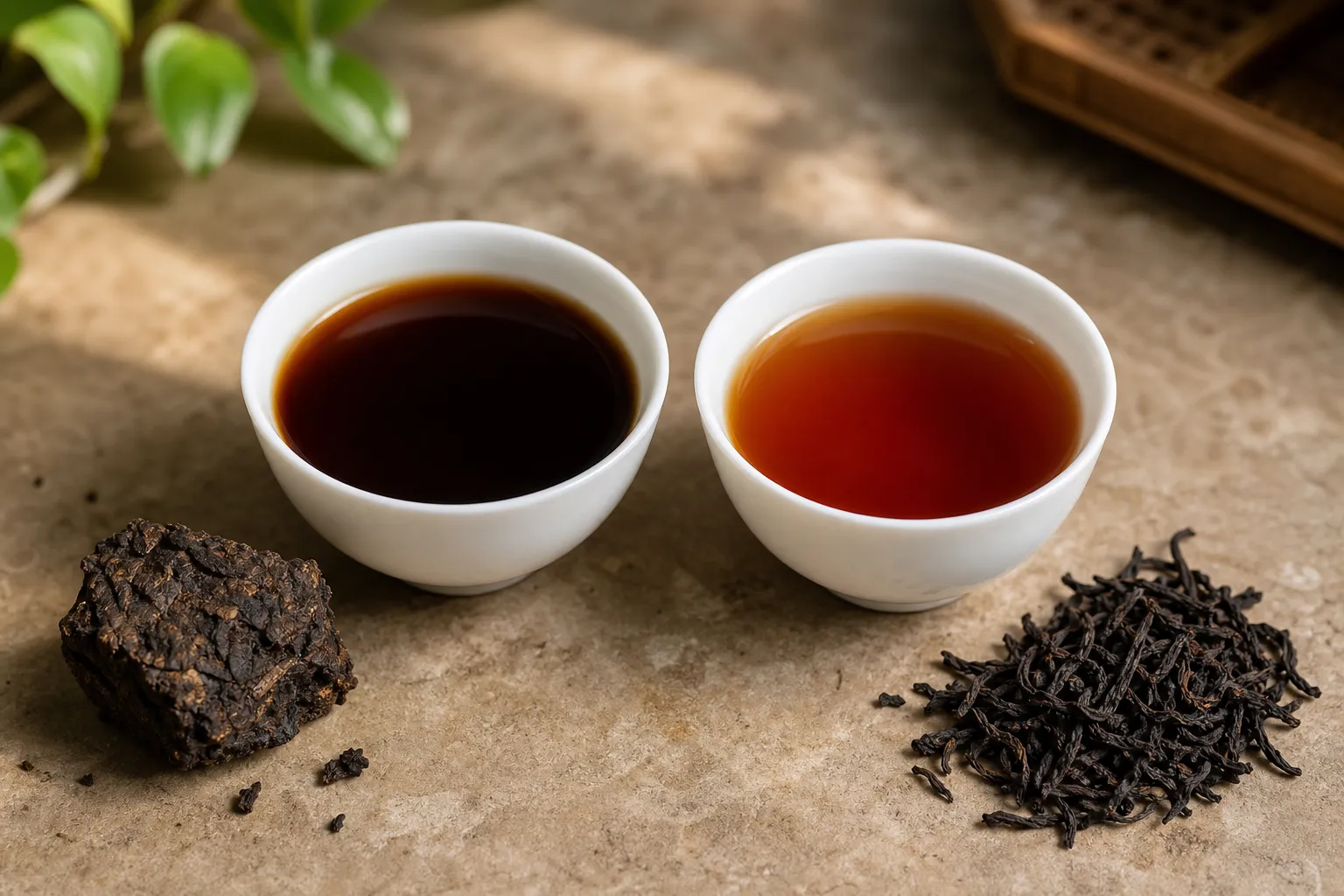
When comparing shu pu-erh vs Liu Bao in the cup, start with the texture and the direction of the aroma. Shu pu-erh often feels darker, thicker, smoother, and more sweet-earthy, with notes that can suggest damp forest floor, mushroom, mulch, or soft dark wood. Liu Bao can share some of that earthiness, but it often reads woodier, redder in the liquor, a little lighter in body, sometimes piney, and may show a betel-nut-like aromatic edge or a faint metallic finish.
That is a tasting pattern, not an identification rule. Age, storage, leaf grade, compression, broken leaf, water, vessel size, and steeping time can pull the two teas closer together or make their differences easier to notice.
upward
Start with the broader guide
Use the broader guide first if you need the full scope before this page.
Quick cup cues
Cup cue
Shu, shou, or ripe pu-erh often leans
Liu Bao often leans
Earthiness
Thick, dark, sweet-earthy, forest floor, mushroom, damp bark
Earthy but usually more woody, dry, or lifted
Liquor color
Brown-red to dark brown, sometimes nearly opaque in strong steeps
Red-brown, garnet-brown, often clearer
Body
Dense, smooth, creamy, coating
Lighter to medium, sometimes brisker or more active
Wood notes
Damp wood, old leaves, cellar-like age in some teas
Dry wood, pine, smoky-pine, old wood
Betel note
Not a core expectation
Commonly mentioned for Liu Bao, but not present in every cup
Finish
Sweet, heavy, mellow, sometimes pondy in some examples
Woody, mineral, metallic, drying, or fragrant in some examples
Taste the earthiness first, but do not stop there
Earthiness is why many drinkers confuse ripe pu-erh and Liu Bao. Both are fermentation-shaped dark teas, and both can produce dark, mellow, aged, woody, or soil-like impressions. If the only note you can name is “earthy,” the cup is not giving you enough detail yet.
In many shu pu-erh cups, the earthiness feels broad and low. It can sit in the aroma as wet leaves, forest floor, dark compost, mushroom, decomposing wood, or sweet damp bark. Better examples make that weight feel smooth rather than muddy. Stronger brews can become very dark, with a creamy or almost syrupy body.
Liu Bao can also be earthy, but the earth often has more air around it. Instead of a soft blanket of damp soil, you may notice old wood, dry storage, pine, dried herbs, or a reddish mineral edge. Some Liu Bao feels less like wet forest floor and more like a wooden room after rain: aged and dark, but not as creamy.
A useful side-by-side prompt
- Smell the wet leaves after the rinse or first short steep.
- Ask whether the aroma feels low, sweet, and mulchy, or more woody, dry, and sharp-edged.
- Sip both while warm, then again as they cool.
- Notice whether the earth note thickens on the tongue or lifts into wood, mineral, or pine.
If both cups simply taste dark and flat, reduce the steep time before judging them. Over-brewing can make different dark teas look more alike than they are.
Wood, pine, and the betel-nut-like Liu Bao note
The most distinctive Liu Bao descriptor is often “betel nut aroma.” For many English-language drinkers, that phrase is not immediately useful because they may not know the smell of betel nut. In tasting terms, it can point toward a dry, fragrant, woody, nutty-spiced, slightly medicinal, or tannic aromatic edge. Treat it as a family of impressions, not one exact smell.
Liu Bao may also show piney or smoky-pine notes. That does not mean every Liu Bao tastes smoked, and it does not mean smoke should dominate the cup. In a balanced tea, the pine impression may appear as a dry resin-like edge or a faint smoke-like line behind the earthiness.
Shu pu-erh can be woody too, especially with age or certain storage conditions, but its wood often blends into heavier earth, mushroom, or sweet dark-leaf notes. When people describe shu pu-erh as “forest floor,” they usually mean a combined impression: damp wood, fallen leaves, soil, and soft sweetness.
Shu pu-erh empty-cup after-smell
Shu pu-erh may leave sweet earth, cocoa-like darkness, mushroom, or damp bark.
Liu Bao empty-cup after-smell
Liu Bao may leave dry wood, pine, reddish mineral notes, or a faint betel-nut-like fragrance.
Do not use betel aroma as a pass/fail test for Liu Bao. Research on Liu Bao fermentation and practical tasting accounts both point to aroma variability, and a single Liu Bao sample may show the note weakly, indirectly, or not at all.
Liquor color and body: thick shu, redder Liu Bao, with exceptions
Color helps, but only when you read it together with texture. A strong shu pu-erh infusion can turn dark quickly, especially if the leaf is broken, heavily fermented, or brewed with a high leaf ratio. The liquor may be brown-red to dark brown and sometimes nearly opaque in small gongfu cups. The body often feels smooth, rounded, creamy, or heavy.
Liu Bao is often described through red liquor. In the cup, many examples appear red-brown, garnet-brown, or dark amber-red rather than the deeper coffee-brown of a strong shu. The body can feel lighter, clearer, and less creamy. Some cups still coat the mouth, but the coating may feel more woody, mineral, or drying than plush.
A simple body check
- Brew both teas at the same strength.
- Take a small sip of shu pu-erh and press it lightly across the tongue.
- Do the same with Liu Bao.
- Ask which one feels heavier at the center of the tongue and which one leaves more edge around the cheeks or gums.
Studies on ripe pu-erh describe “mellow” and “thick” taste as connected with fermentation-related chemical changes that affect mouthfeel. That supports the sensory idea of thickness, but it does not mean every shu will be thicker than every Liu Bao. A light shu and a strong, aged, tightly brewed Liu Bao can reverse the expected pattern.
The metallic finish: when Liu Bao feels sharper than shu
A faint metallic aftertaste is one cue some drinkers notice in Liu Bao. It may appear after the swallow as a mineral, iron-like, coin-like, or dry edge. In a useful comparison, it should not be the only thing happening; it often sits with wood, pine, red liquor, and a fragrant finish.
Shu pu-erh more often leaves a sweet, heavy, mellow, or coating finish. It can also show wet-pile, pondy, or storage-heavy notes in some examples, especially when brewed too hard or when the tea itself leans that way. Those notes are not required traits and should not be treated as signs of quality by themselves.
If Liu Bao tastes harshly metallic
- Shorten the infusion by 5–10 seconds in gongfu brewing.
- Use slightly less leaf.
- Let boiling water settle briefly before pouring.
- Compare the second and third infusions rather than only the first.
If shu pu-erh tastes muddy
Use the same correction: less leaf, shorter steeps, and a quick rinse can make the cup easier to read.
A side-by-side tasting setup that keeps the comparison fair
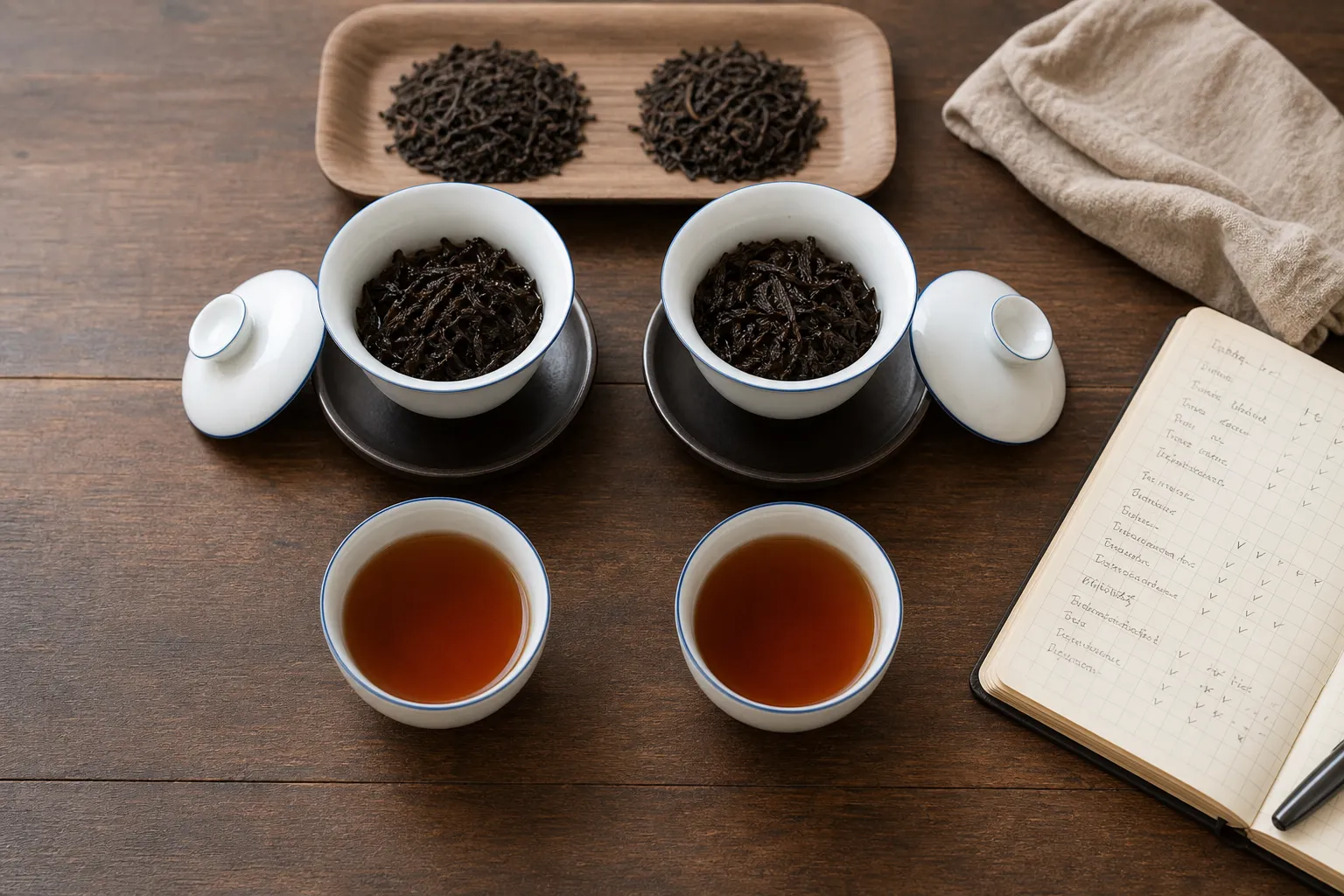
The easiest way to compare ripe pu-erh vs Liu Bao is not to chase perfect brewing. It is to keep the variables steady.
Use two small vessels of similar size, or brew one tea after the other in the same vessel after rinsing it clean. For gongfu style, a practical starting point is:
Gongfu style starting point
- 5–6 g tea per 100–120 ml water.
- Water near boiling.
- One quick rinse if the tea is compressed, dusty, or very dark.
- First drinking infusion around 10–15 seconds.
- Add a few seconds each round as the leaves open.
Mug or small teapot starting point
- 2–3 g tea per 250 ml water.
- Hot water near boiling.
- 2–3 minutes for the first infusion.
- Shorten next time if both teas taste blunt or overly heavy.
Keep notes in pairs, not paragraphs
- Aroma: sweet earth vs dry wood
- Color: dark brown vs red-brown
- Texture: creamy vs lighter
- Finish: sweet-heavy vs metallic-woody
- Odd note: pondy vs piney
- Aftertaste: coating vs fragrant/drying
You are not trying to define every tea in either category. You are learning what these two actual cups are doing under the same conditions.
Common confusion: Liu Bao is not just “another ripe pu-erh”
Because pu-erh is more familiar to many international tea drinkers, it is easy to call any dark, earthy, fermented tea “pu-erh-like.” That shortcut can help at first, but it hides useful differences.
For this comparison, the relevant pu-erh is shu, shou, or ripe pu-erh. Sheng, or raw pu-erh, is a different comparison and can bring brighter, more astringent, floral, bitter, or aging-related traits depending on the tea. If your question is Liu Bao vs ripe puerh taste, stay with shu pu-erh rather than bringing sheng into the same tasting frame.
Avoid leaning too hard on one label term
- “Earthy” does not automatically mean shu pu-erh.
- “Betel nut” does not appear clearly in every Liu Bao.
- “Red liquor” is useful language, but color alone is not enough.
- “Golden flowers” may appear in some dark tea market discussions, but they should not be used here as a shortcut for type, safety, or quality.
- “Old” or “aged” does not guarantee a better cup or a specific flavor.
A better rule: look for a pattern. Shu is more convincing when the cup combines darker liquor, thick body, sweet earth, forest-floor notes, and a mellow finish. Liu Bao is more convincing when the cup combines redder liquor, woody or piney aroma, lighter or more lifted body, possible betel-nut fragrance, and a mineral or metallic edge.
What can change the answer
The comparison shifts quickly when the brewing or tea material changes. Before deciding that a Liu Bao is “too thin” or a shu is “too muddy,” check these variables:
Leaf amount
More leaf makes both teas darker and heavier.
Broken leaf
Smaller fragments release color and bitterness faster.
Compression
Tightly compressed pieces may start slow, then deepen later.
Water
Hardness and mineral content can change body and aftertaste.
Temperature
Very hot water extracts depth quickly, but long steeps can flatten nuance.
Storage
Humid, dry, clean, or mixed storage impressions can alter earth, wood, and aged aromas.
Age and batch style
Older or differently processed teas can move outside the simple cue set.
Infusion number
Early steeps show aroma; middle steeps often show body; later steeps reveal sweetness, wood, and finish.
The category name gives you a starting expectation. The cup gives you the actual answer.
Which one should you choose for the taste you want?
Choose shu pu-erh if
You want a darker, thicker, smoother cup with sweet earth, mushroom, forest-floor notes, and a heavier finish. It is usually the easier choice when you want depth and body more than sharp aromatic detail.
Choose Liu Bao if
You want an earthy dark tea that may feel woodier, redder, lighter, piney, slightly mineral, or betel-nut-fragrant. It often appeals to drinkers who like aged wood, dry aromatic edges, and a finish that feels less creamy than shu.
If you are unsure, brew them side by side rather than buying by descriptor alone. The best answer to shu pu-erh vs Liu Bao is not that one is always darker or that one always has betel aroma. It is that shu often gives the broader, thicker earth; Liu Bao often gives the woodier, redder, more lifted dark-tea profile. The useful comparison begins when you taste those tendencies under the same brewing conditions.
Sources
Sources and further reading
Reference links are limited to sources considered suitable for public citation in this page.