
Hunan Dark Tea vs Guangxi Liu Bao: How the Regional Styles Compare
Hunan dark tea vs Liu Bao is not a clean match between two single teas. Hunan dark tea is a broad regional family, while Guangxi Liu Bao is a named dark tea style with its own regional and storage vocabulary.
The practical answer: choose Hunan dark tea when you want to explore brick forms, Anhua-related styles, and Fu Brick fermentation cues such as woody sweetness, grain, bread crust, or visible “Golden Flowers” in some examples. Choose Guangxi Liu Bao when you want a darker, mellow cup shaped by aged wood, clean earth, reddish-brown liquor, and sometimes the well-known betel nut aroma.
Neither direction is automatically better. The cup depends on form, age, storage, compression, brewing strength, water, and personal preference.
upward
Read the full overview first
Use the broader guide first if you need the full scope before this page.
The main difference: Hunan is a family, Liu Bao is a style
A common mistake is to turn the whole comparison into Fu Brick vs Liu Bao. Fu Brick is important, but it is not all of Hunan dark tea.
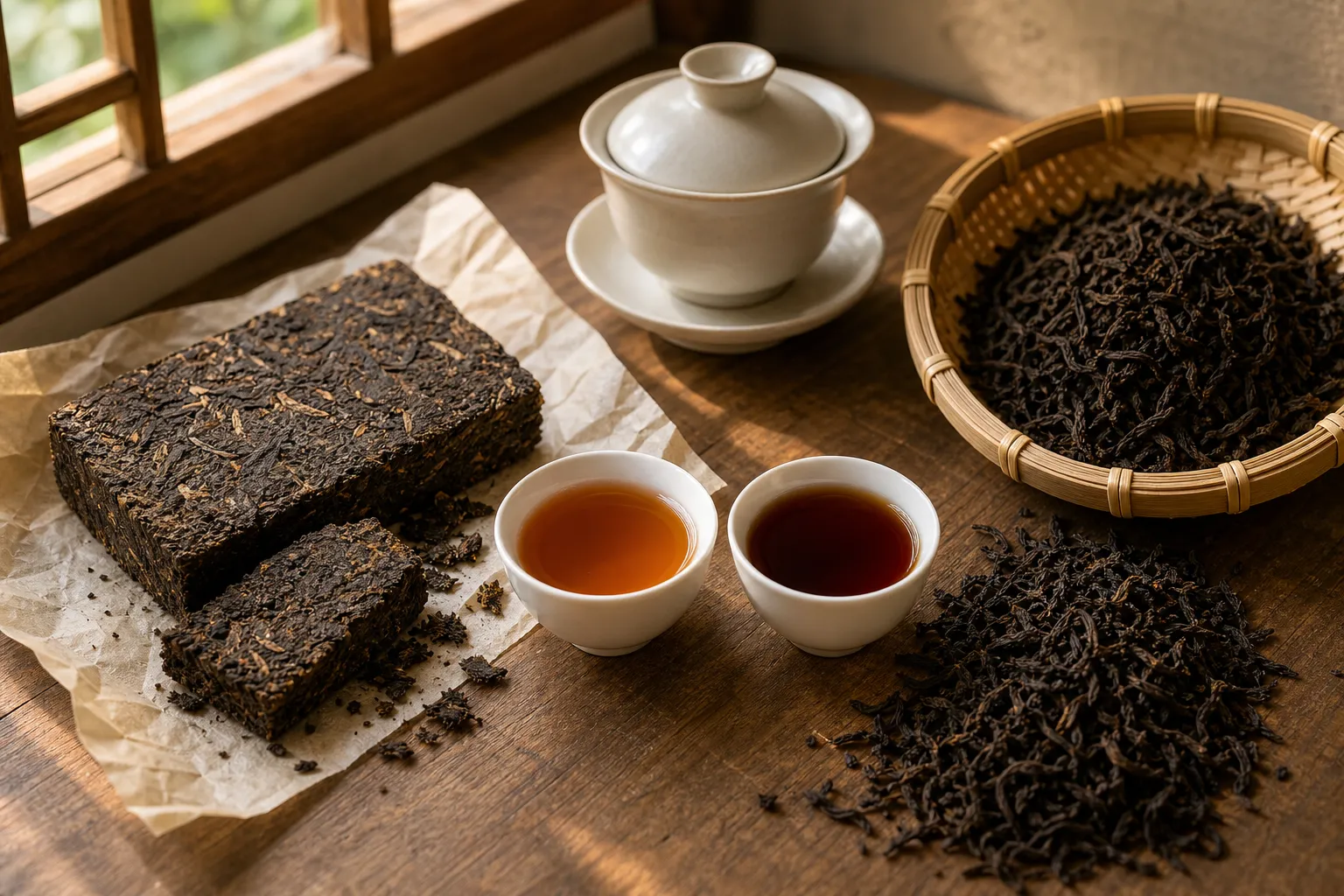
Hunan dark tea can include several compressed forms associated with Hunan and Anhua tea culture. Fu Brick, also written Fuzhuan or Fu Zhuan, is the example many English-language drinkers meet first because of its “Golden Flowers” vocabulary. Other Hunan forms, including black brick or flower brick styles, may taste firmer, smokier, more mineral, more rustic, or simply less sweet than a gentle Fu Brick.
Guangxi Liu Bao is usually discussed as a specific Guangxi dark tea style, closely associated with Wuzhou and Liubao-area identity. Its common vocabulary includes piling, aging, basket storage in some market descriptions, red-brown liquor, aged aroma, mellow body, and betel nut aroma as a prized but not universal sensory note.
| Comparison point | Hunan dark tea | Guangxi Liu Bao |
|---|---|---|
| Category shape | Regional family with multiple forms | Named Guangxi dark tea style |
| Familiar example | Fu Brick / Hunan Fu Brick tea | Liu Bao tea |
| Common words | Anhua, brick tea, Golden Flowers, woody, grainy, bready, robust | Wuzhou, baskets, aged wood, red-brown liquor, mellow, betel nut aroma |
| Main caution | Do not reduce all Hunan dark tea to Fu Brick | Do not reduce Liu Bao to “Guangxi ripe puerh” |
| Best comparison method | Taste by form, compression, aroma, and body | Taste by storage aroma, depth, cleanliness, and finish |
This distinction matters before brewing. A dense Hunan brick piece and a loose aged Liu Bao may behave very differently in hot water, even if both are Chinese dark teas.
What processing and storage change in the cup
Both styles sit within the larger world of post-fermented Chinese dark tea. Research on dark teas, Fu Brick, and Liu Bao describes meaningful variation in fermentation methods, storage, microbial communities, and volatile compounds. For the drinker, the useful point is simpler: regional name alone does not predict the whole cup.
For Hunan dark tea, Fu Brick Golden Flowers are the most familiar vocabulary point. The “flowers” are a visible yellowish bloom associated with Fu Brick-style production. In tasting language, some Fu Brick examples can show rounded body, gentle sweetness, grain, bread crust, dried fruit, woody warmth, or a soft fungal-floral edge. Treat Golden Flowers as a production and sensory cue, not as a shortcut for quality or a promise that you will like the tea.
For Liu Bao, the language often leans toward aged Liu Bao storage: clean cellar-like depth, old wood, reddish-brown liquor, mellow texture, nutty sweetness, and sometimes Liu Bao betel nut aroma. That note can be clear in some teas and faint or absent in others. It may be replaced by earth, wood, smoke, plum, red date, herbal tones, or a bittersweet finish.
Storage can improve or weaken either style. Clean conditions, moderate airflow, and stable handling may help a tea feel more integrated. Poor storage can leave the cup flat, sour, stale, unpleasantly moldy, or dominated by storage odor. Age by itself is not enough information.
How Hunan dark tea and Liu Bao compare in the cup
If you have one Hunan tea and one Liu Bao on the table, do not begin with “Which is better?” Begin with what each tea shows: dry leaf, rinse aroma, liquor color, early flavor, middle infusions, body, and aftertaste.
| Tasting cue | Hunan dark tea, especially Fu Brick-style examples | Guangxi Liu Bao |
|---|---|---|
| Dry form | Often compressed as brick, flake, or broken chunk; some Fu Brick shows visible Golden Flowers | Loose, basket-aged, compressed, or broken; leaf often dark brown to black-brown |
| Dry aroma | Wood, grain, dried leaf, light smoke, sweet earth, bready or fungal tones | Aged wood, clean earth, old basket, nut shell, plum, smoke, cellar-like depth |
| Rinse aroma | Warm grain, sweet wood, bread crust, or soft fungal-floral edge in some Fu Brick | Damp wood, red date, old wood, betel nut, or mellow earthy notes |
| Liquor color | Orange-brown to reddish-brown depending on age, compression, and strength | Often red-brown to dark reddish-brown, especially in aged examples |
| Early flavor | Woody, sweet, grainy, lightly astringent, smoky, or robust | Mellow, earthy, woody, nutty, smooth, or gently sweet |
| Body | Fu Brick can feel rounded when brewed strongly; other Hunan bricks may feel firmer | Often smooth and settled rather than bright or sharp |
| Aftertaste | Grain, wood, dried fruit, dry mineral edge, or soft sweetness | Aged wood, nut, clean earth, or betel nut-like bittersweetness |
These are starting cues, not fixed rules. A young or tightly compressed Hunan brick can taste firmer than expected. A Liu Bao stored in a wetter environment can taste heavier and more storage-forward. A lightly brewed Fu Brick may seem soft and sweet; the same tea pushed hard may become woody, bitter, or drying.
Brewing them side by side
A fair Hunan dark tea comparison with Liu Bao needs equal treatment. If one sample is a dense brick chunk and the other is loose Liu Bao, the loose tea may release color and aroma faster. That can make Liu Bao seem richer in the first steep even if the Hunan tea opens later.
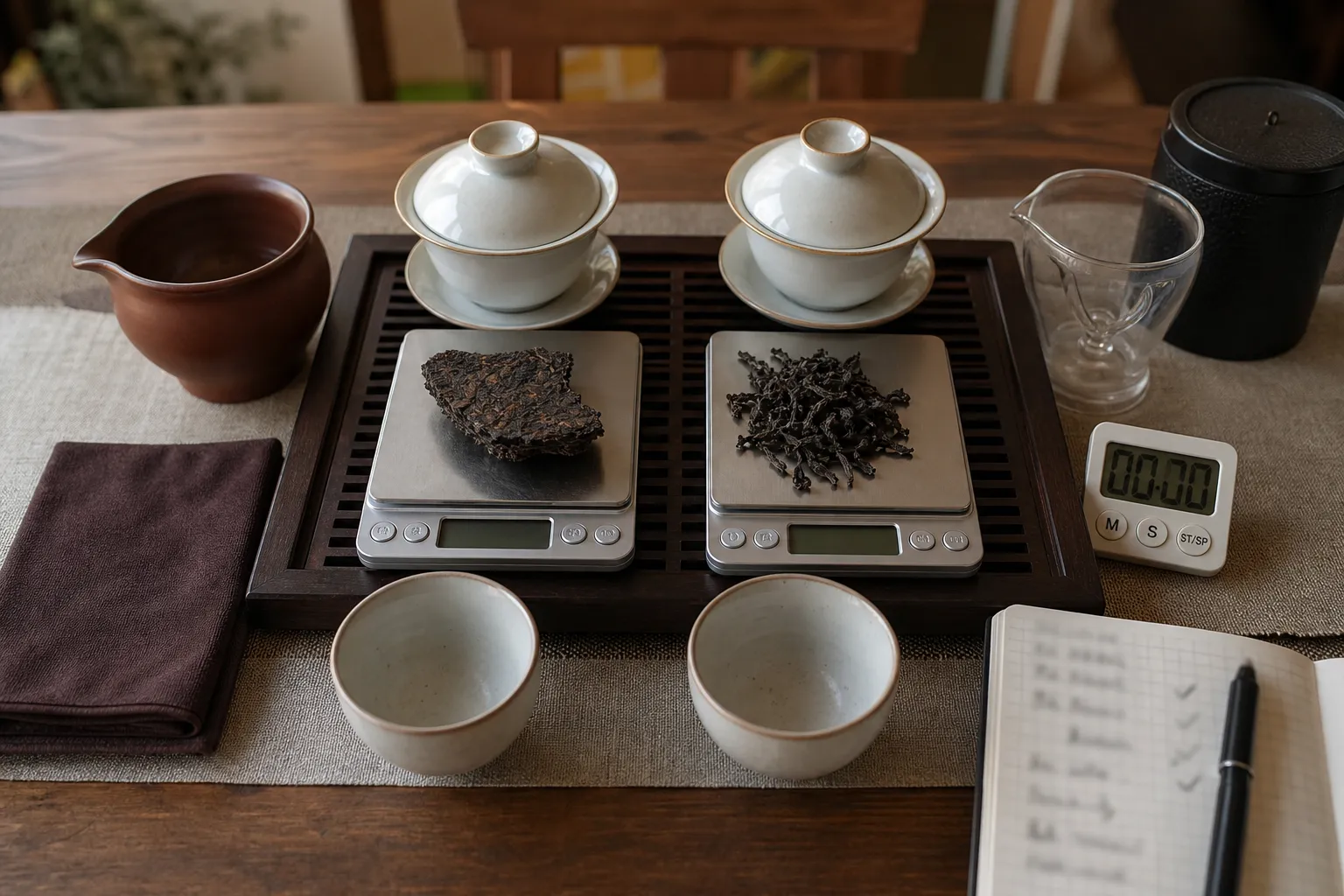
For a simple side-by-side session:
- Use the same vessel size for both teas.
- Weigh the leaf instead of judging by volume.
- Use near-boiling water.
- Rinse briefly if that is your normal dark tea routine.
- Keep early steeps short, then increase gradually.
- Watch whether the compressed tea needs more time to open.
For many small-gaiwan sessions, start around 5–7 g per 100–120 ml with short early steeps. For a mug or larger pot, use less leaf and longer time. Dense Hunan brick pieces may need a slightly longer rinse or a few extra seconds early on. Loose Liu Bao can darken quickly, so it may feel heavy if over-leafed.
Adjust from the cup:
- If it tastes thin, use slightly more leaf or a longer second steep.
- If it turns harsh, shorten the steep or reduce leaf.
- If it feels too earthy, try a longer rinse and lighter brewing.
- If it seems flat, use hotter water, fresher water, or a smaller vessel.
- If storage aroma dominates, let the dry tea air briefly in a clean, odor-free space before brewing.
The goal is not to make the teas taste alike. It is to give each one enough room to show its own structure.
Which one should you try first?
Choose Hunan dark tea first if you are curious about compressed brick forms, Anhua dark tea, Fu Brick, or the aroma language around Golden Flowers. It is also a good direction if you enjoy teas that can move between woody, grainy, sweet, dried-fruit, lightly smoky, and robust.
Choose Guangxi Liu Bao tea first if you want a darker, smoother, storage-shaped profile: aged wood, red-brown liquor, mellow body, clean earth, nutty depth, and possible betel nut aroma. Liu Bao can be especially interesting if you like dark tea that feels settled rather than bright.
If you are comparing Hunan Fu Brick tea and Liu Bao specifically, use this simple expectation: Fu Brick may emphasize brick fermentation, Golden Flower vocabulary, grainy sweetness, and rounded texture; Liu Bao may emphasize aged storage character, woody depth, and mellow red-brown liquor. But batch, age, storage, compression, brewing strength, water, and personal taste can matter more than the name on the wrapper.
Common mix-ups
Fu Brick is not all Hunan dark tea
Fu Brick is a useful anchor because many readers have seen it in shops, but Hunan dark tea forms are broader. If one Hunan sample tastes smoky, firm, or rustic, that does not cancel the sweet, bready language often attached to Fu Brick. It may simply be a different form, batch, age, or storage path.
Liu Bao is not just ripe puerh from Guangxi
The phrase Liu Bao vs ripe puerh appears often because both can be dark, earthy, post-fermented teas. Still, Liu Bao has its own regional identity, processing language, storage culture, and tasting vocabulary. Ripe puerh can be a loose orientation point for new drinkers, but it should not become the standard Liu Bao is judged against.
Betel nut aroma is a clue, not a requirement
Liu Bao betel nut aroma is an important term, but it can mislead new drinkers. Some Liu Bao shows it clearly; some does not. If you do not find it, look for aged wood, nut shell, clean earth, red date, plum, smoke, or a bittersweet finish.
Golden Flowers are not a universal shortcut
Golden Flowers belong strongly to Fu Brick tea vocabulary, but they are not a single test for value or drinking pleasure. A good cup still depends on raw material, processing, storage cleanliness, age, brewing, and whether you enjoy that particular aroma and body.
A compact tasting route
For the clearest comparison, brew one Hunan dark tea and one Liu Bao side by side and write only five lines for each:
- Line 1Dry leaf or brick aroma
- Line 2Rinse aroma
- Line 3Liquor color
- Line 4First clear flavor impression
- Line 5Aftertaste and mouthfeel
For Hunan, notice whether the tea leans sweet-grainy, woody, smoky, bready, fungal-floral, or firm. For Liu Bao, notice whether it leans aged-wood, mellow-earthy, nutty, plum-like, smoky, or betel nut-like.
That small tasting note will tell you more than a broad category claim. Hunan dark tea and Guangxi Liu Bao overlap because both are dark teas, but the useful comparison happens in the cup: form, aroma, storage character, body, and finish.
Sources
Sources and further reading
Reference links are limited to sources considered suitable for public citation in this page.