
Dark tea guide
What Is Liu Bao Tea and How Is It Different From Other Dark Teas
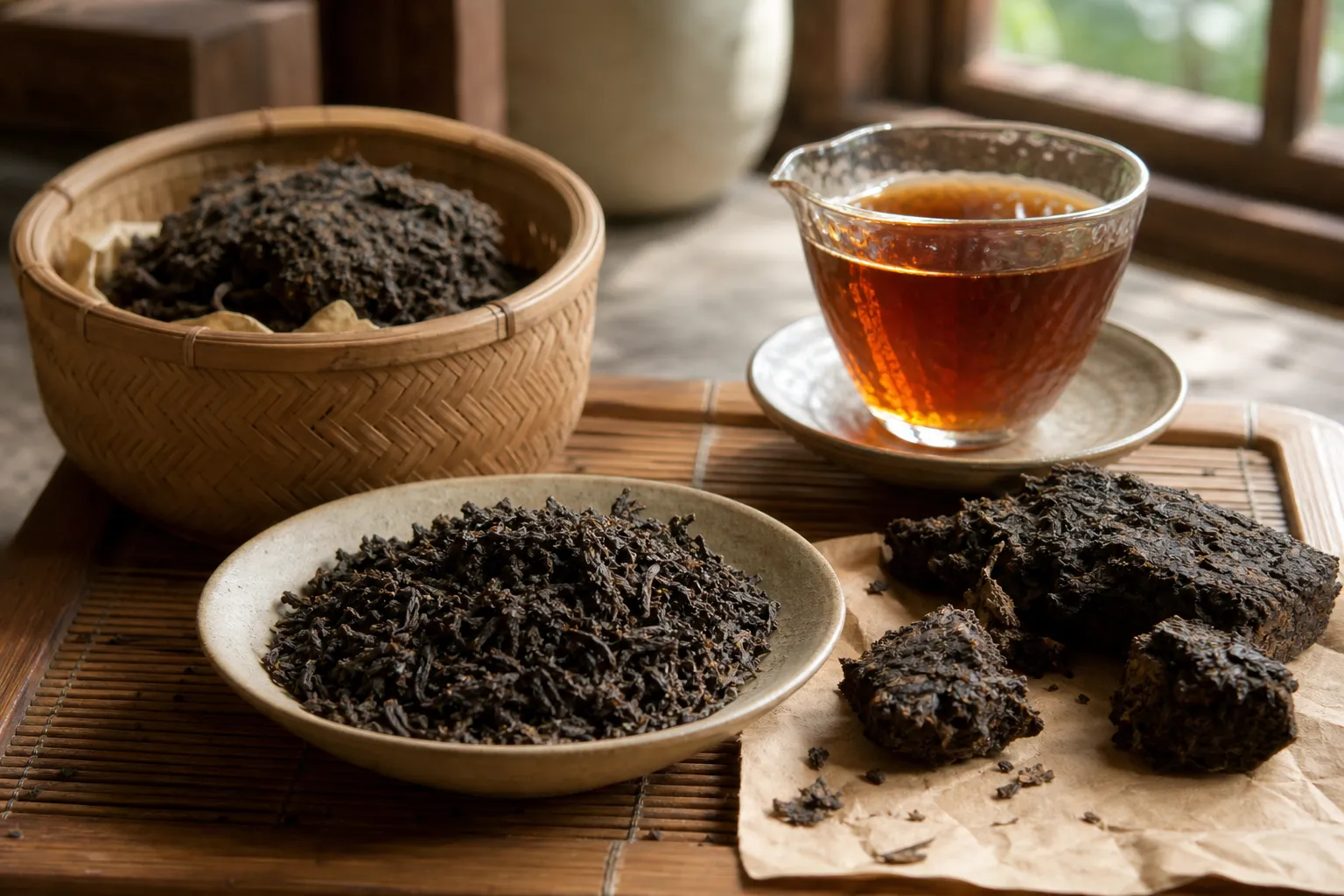
Liu Bao tea is a Chinese dark tea associated with Guangxi, especially the Wuzhou, Cangwu, and Liu Bao town area. In cup terms, what is Liu Bao tea? It is a post-fermented dark tea whose character depends on leaf material, processing style, storage, and brewing. It can sit near ripe pu-erh in a drinker’s mind because both may brew dark, smooth, woody, earthy, and red-brown. But Liu Bao is not just pu-erh from another province. Its Guangxi origin, basket-tea tradition, common aroma vocabulary, and range from lighter traditional-style teas to darker modern-style teas give it a separate identity.
upward
Start with the broader guide
Use the broader guide first if you need the full scope before this page.
The shortest useful definition
Liu Bao belongs to the Chinese dark tea, or hei cha, family. In Chinese tea terminology, dark tea is different from English “black tea.” Dark tea usually refers to teas shaped by post-fermentation or related post-processing after the initial tea making. English black tea is usually the fully oxidized category called red tea in Chinese.
For a drinker, that category distinction matters because Liu Bao can show:
- orange, red-orange, red-brown, or dark brown liquor, depending on style and brewing
- woody, aged, earthy, herbal, floral-fruity, camphor-like, or betel-nut-like aroma notes
- a mouthfeel that may be light and slightly drying, or smooth, mellow, and thicker
- storage influence that can be pleasant when clean, or distracting when stale, musty, or moldy
A common shorthand around Liu Bao is “red, rich, aged, mellow.” Treat it as a tasting clue, not a rule. A young or lighter traditional-style tea may not be thick and dark. An older tea may look impressive but smell flat if storage was poor. The cup in front of you matters more than the label.
Why Liu Bao is not just ripe pu-erh
Many English-language tea drinkers meet Liu Bao after learning ripe pu-erh. The comparison helps, but it can also blur what makes Liu Bao its own tea.
The difference is not that one is always cleaner, sweeter, lighter, or better. They come from different regional traditions and are shaped by different materials, processing habits, and storage histories. Research on Chinese dark teas also supports a broader point: different dark teas can develop different aroma patterns during fermentation and storage. For the drinker, the practical habit is simple—compare cup cues, not just category names.
If you dislike the heavy earthiness of some ripe pu-erh, approach Liu Bao by looking for examples described as lighter fermented, traditional-style, cleanly stored, or less heavily piled. Brew with short early steeps. If you want a thick, mellow, woody cup, a modern-style or well-stored mature Liu Bao may be closer to what you expect, though storage and brewing still decide a lot.
Traditional-style and modern-style Liu Bao
Tea sellers often talk about traditional Liu Bao and modern Liu Bao. This can be useful, but it should not be treated as a simple quality ranking.
Traditional-style Liu Bao
Traditional-style Liu Bao is often described as relying more on time and storage transformation. Some examples can taste lighter, fresher, more floral or fruity, and slightly more astringent. The liquor may lean orange, amber, or red-orange rather than dark brown. When young, these teas can feel closer to lightly transformed dark teas than to ripe pu-erh.
Modern-style Liu Bao
Modern-style Liu Bao is often associated with pile fermentation or wetter post-fermentation methods that move the tea toward darker color and a smoother profile. These teas may show red-brown liquor, woody aged aroma, a softer body, and less sharpness in early steeps. This is the side of Liu Bao that most often reminds drinkers of ripe pu-erh.
Neither style is automatically better. A lighter tea can be lively or thin. A darker tea can be smooth or heavy. Instead of asking only whether a Liu Bao is traditional or modern, check the dry-leaf smell, liquor color, body, and whether the finish stays clean.
Forms: loose, compressed, and basket tea
Liu Bao appears in several forms, and the form changes how you inspect, brew, and store it.
Loose Liu Bao
Loose Liu Bao is the easiest starting point. You can see leaf size, stems, color, and dust level more clearly, and it is easy to adjust the dose. If the tea tastes too strong or too earthy, use less leaf or shorter steeps. If it tastes thin, increase the leaf slightly or extend the infusion.
Compressed Liu Bao
Compressed Liu Bao can come as bricks, cakes, tuos, or other pressed shapes. Compression saves space and can slow how the tea opens in storage and brewing. The tradeoff is handling: broken bits and dusty fragments brew faster than larger intact pieces. If the first cup is harsh, dark, or muddy, the issue may be too much broken leaf rather than the entire tea style.
Basket Liu Bao
Basket Liu Bao is closely tied to the tea’s cultural image. Bamboo-basket tea carries storage and trade associations, and many buyers notice it because it looks different from a pu-erh cake. But basket form is not proof of better tea. It is a form and a tradition, not a tasting result. Smell the tea, inspect the leaf, and judge the liquor.
What Liu Bao flavor can be like
Liu Bao flavor is not one note. The easiest way to read it is to separate aroma, liquor color, mouthfeel, and storage smell.
Aroma
For aroma, look for clean wood, aged wood, dried leaves, earth, herbs, camphor-like coolness, or a betel-nut-like note in some teas. “Medicinal aroma” sometimes appears in tasting language, but here it means a smell impression: herbal, woody, or camphor-like. It is not a claim about what the tea does for the body.
Liquor color
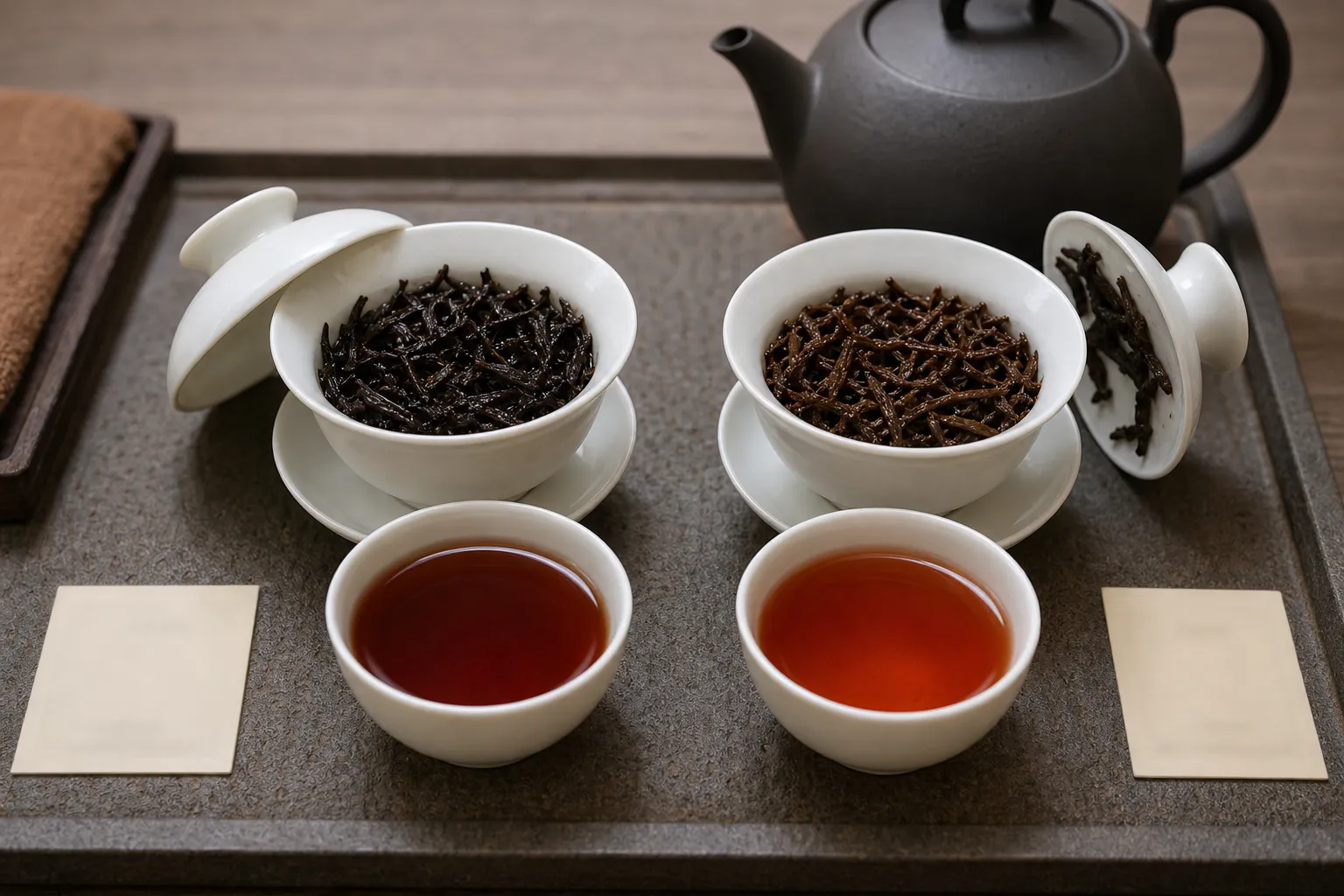
For liquor color, do not assume darker always means better. A red-brown cup may fit a modern, mature, or more heavily fermented Liu Bao. A red-orange or amber cup may fit a lighter style. A very dark cup can also come from too much leaf, too much broken material, or an overlong steep.
Mouthfeel
For mouthfeel, Liu Bao can be light and slightly drying, or smooth and rounded. Some teas feel thick and mellow; others feel clean but thinner. If the cup tastes flat, stale, or sour, storage may be part of the problem. If it tastes bitter and aggressive, the steep may be too long, the water too hard, or the leaf too broken.
A useful first tasting sequence
- Smell the dry leaf before rinsing or brewing.
- Smell the wet leaf after its first contact with hot water.
- Look at whether the liquor is orange, red-orange, red-brown, or dark brown.
- Notice whether the finish is clean, woody, sweet, drying, stale, or musty.
- Adjust steep time before judging the whole tea category.
This keeps the comparison practical. You are not trying to decide whether Liu Bao is “supposed” to taste one way. You are learning which style, storage condition, and brewing response are in your cup.
Storage can change the answer
Storage is one of the main reasons two Liu Bao teas can taste unlike each other. Clean storage can soften edges and bring out aged, woody, or rounded notes in some teas. Poor storage can create mustiness, moldy smells, dullness, sourness, or a basement-like odor.
Age alone is not enough information. A young, clean tea may be more pleasant than an older tea stored badly. A basket tea may smell fresh and woody, or it may carry storage odors. A compressed piece may look dark outside but brew differently from the inner material. Humidity, airflow, heat, light, odor exposure, compression, and leaf condition all affect the result.
When buying or brewing Liu Bao, do not treat old age, dark liquor, basket form, or dramatic aroma language as proof of quality. The more useful question is: does the tea smell clean after hot water opens it?
How to brew Liu Bao for comparison
To understand Liu Bao beside ripe pu-erh or another dark tea, brew it in a way that lets small differences show. Use hot water, a vessel you know well, and short early steeps. If the tea is compressed, separate a piece gently and avoid filling the pot with too much dust.
Adjust by taste:
- If the cup is thin, use a little more leaf or steep slightly longer.
- If it is too heavy or muddy, shorten the steep or reduce broken leaf.
- If it smells stale, rinse once and check the wet leaf; if the stale note stays strong, storage may be the issue.
- If it is sharp or drying, try shorter steeps before deciding the tea is not for you.
- If it is smooth but dull, use slightly hotter water or a longer middle steep.
For a side-by-side comparison with ripe pu-erh, keep the vessel, water, leaf amount, and steep length similar. Then compare only a few cues: liquor color, aroma after the rinse, body, sweetness, and finish. Liu Bao often becomes easier to recognize when you stop asking whether it is “like pu-erh” and start noticing its own wood, red liquor, storage character, and mouthfeel.
Common confusion around Liu Bao
“Bao tea” is not precise enough
Some readers search for “bao tea,” “bao bao tea,” or “what is bao tea” when they mean Liu Bao. The full name matters because “bao” by itself is not a precise tea category. Liu Bao, or Liubao, refers to this Guangxi-associated dark tea tradition.
“Chinese fermented tea” covers different ideas
Another confusion is the phrase “Chinese fermented tea.” Liu Bao is commonly discussed as post-fermented dark tea, but fermentation in tea does not mean the same thing in every category. Green tea, oolong, English black tea, ripe pu-erh, Fu brick, and Liu Bao all involve different processing ideas. For Liu Bao, the useful point is post-processing transformation: microbial activity, moisture, heat, storage, and time can all affect aroma and liquor.
Lifestyle language is not the best buying test
A third confusion comes from lifestyle marketing. Liu Bao is sometimes sold with broad effect-based language, but this page is concerned with tea identity, flavor, brewing, and storage. If you are choosing a first sample, the better questions are sensory ones: does it smell clean, does the liquor match the style, does the mouthfeel suit you, and does the finish invite another cup?
A practical way to recognize Liu Bao
Think of Liu Bao as Guangxi dark tea with a post-fermented identity and a broad sensory range. It may overlap with ripe pu-erh in darkness, smoothness, and aged-wood notes, but it is set apart by origin, form traditions such as basket tea, and common Liu Bao descriptors such as red liquor, mellow body, aged aroma, and occasional betel-nut-like notes.
For a first encounter, do not chase the oldest tea or the darkest cup. Choose a clean-smelling sample, brew it gently, and compare what you see and taste: leaf form, liquor color, aroma, body, and storage character. That will tell you more about Liu Bao than any single category label.
Sources
Sources and further reading
Reference links are limited to sources considered suitable for public citation in this page.