
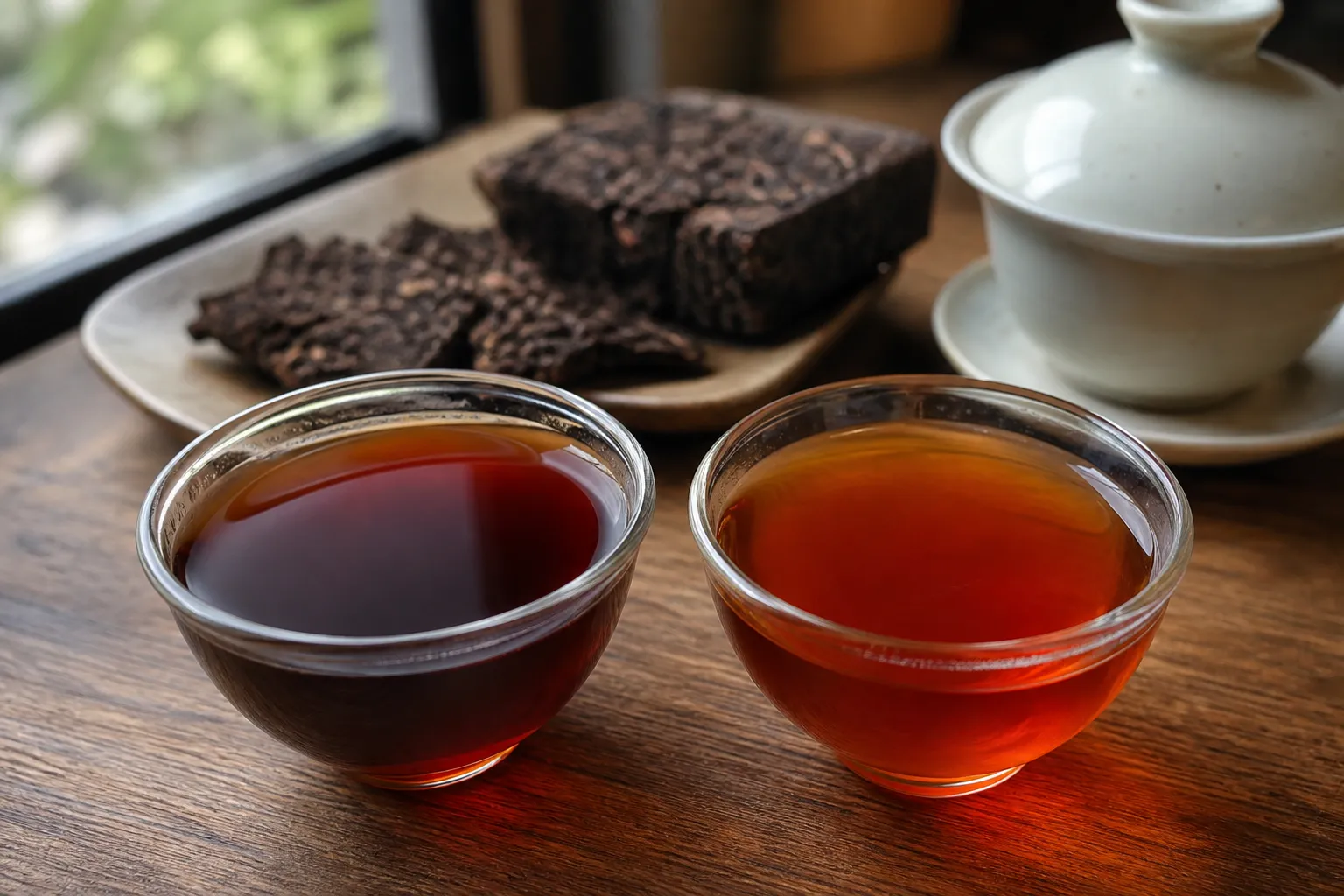
Cup comparison
Shu Pu-erh vs Fu Brick Tea: Pile Fermentation and Golden Flowers in the Cup
Shu pu-erh vs Fu brick tea is not really a contest between two “better” dark teas. It is a comparison of two fermentation paths that tend to show up differently in the cup.
Shu pu-erh, also called ripe or shou pu-erh, is commonly associated with wet piling, or wo dui. In everyday brewing, that often means a darker red-brown liquor, earthier aroma, woodier depth, and a rounder body. Fu Brick Tea, or Fuzhuan, is known for a flowering stage that can produce small yellow-gold specks often called Golden Flowers and commonly associated in research with Eurotium cristatum. In the cup, Fu Brick can lean clearer, reddish-orange, mellow, bready, honeyed, or dried-fruit-like.
That is the useful starting point. The real cup still depends on the brick or cake, storage, breakage, water, vessel, leaf amount, and steep time.
upward
Read the full overview first
Use the broader guide first if you need the full scope before this page.
The quick cup difference
Both teas belong to the broader world of post-fermented dark tea, but they do not usually arrive at the cup through the same route.
Shu pu-erh is made from Yunnan sun-dried tea material and processed through wet piling. Many ripe pu-erh teas brew deep red-brown, mahogany, or nearly black. When the storage is clean, the aroma may suggest damp earth, old wood, dark fruit, cocoa, camphor, or a soft cellar-like depth.
Fu Brick Tea is usually compressed into bricks and made through steps such as steaming, piling, pressing, fermentation, and drying. Many Fu Brick teas show Golden Flowers inside the compressed material. These specks are part of why Fu Brick looks so different from a typical ripe pu-erh cake or loose shu. In the cup, Fu Brick often reads less black and more reddish-orange, amber-red, or clear red-brown, with notes that may suggest warm grain, bread crust, honey, dried fruit, or a gentle fungal-floral edge.
These are tendencies, not rules. A lightly fermented or differently stored shu can be brighter than expected. A dense, aged, strongly extracted Fu Brick can brew dark and sturdy. The comparison works best when you watch the cup instead of forcing the tea to match its label.
What to check before water touches the leaf
Start with the dry piece.
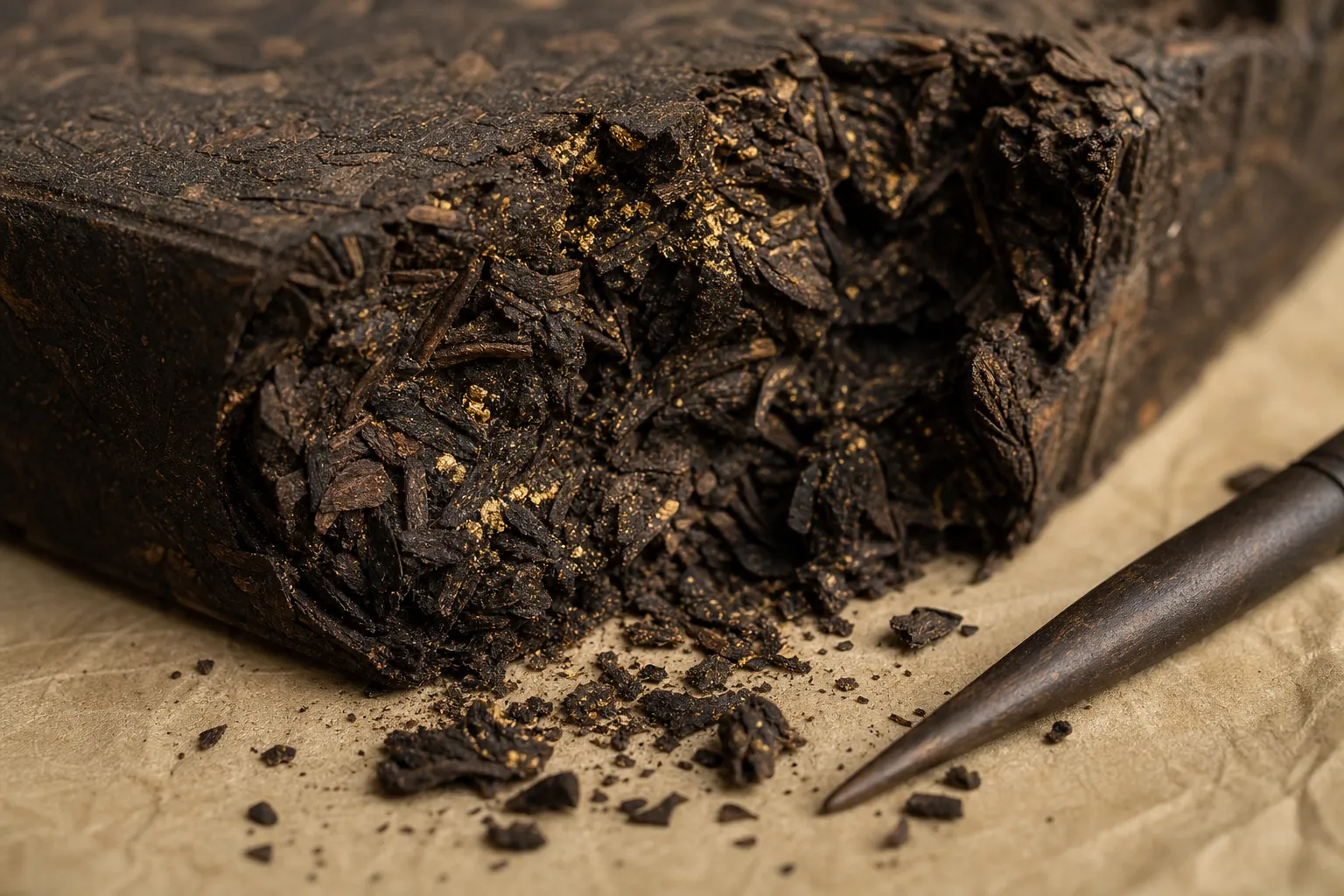
For Fu Brick Tea, break the brick gently and look inside rather than judging only the outside face. Golden Flowers, when present, usually appear as small yellow to golden specks distributed through the tea material. They should look embedded in the compressed tea, not like a fuzzy patch sitting on top. The surrounding leaf may be dark brown, olive-brown, or nearly black depending on material and storage.
For shu pu-erh, you are usually looking at a more uniform dark leaf mass. A cake or tuo may show small leaf fragments, stems, and darker fermented material. Loose ripe pu-erh may be broken, curled, or nugget-like. The dry aroma can be earthy, woody, slightly sweet, or quiet. Clean earthiness is different from unpleasant stale dampness.
Compression changes the brew. A dense Fu Brick chunk may open slowly, so the first steep can seem thin before later infusions fill out. A very broken corner of Fu Brick may release quickly and turn rough if brewed like a larger piece. Shu behaves similarly: fine broken ripe pu-erh extracts fast, while a tight cake chunk needs more time to loosen.
For a fair comparison
- Use a similar leaf weight.
- Use the same vessel size if possible.
- Break both teas into pieces of similar thickness.
- Give compressed or dusty tea a brief rinse.
- Taste the second and third infusions before deciding what the tea is like.
A first rinse can carry storage air, compression dust, or surface aroma. The real comparison usually begins once the leaves have warmed and started to open.
Brewing cues for a fair comparison
For a small gaiwan or teapot, start around 5–7 g of tea per 100–120 ml of water, with water near a boil. If you prefer a lighter everyday cup, use less leaf or a larger vessel. If you like dense dark tea, stay toward the higher end but keep the early steeps short.
A useful side-by-side method
- Warm both vessels.
- Use the same water.
- Rinse each tea briefly, about 5–10 seconds.
- Start the first drinkable infusion around 10–15 seconds.
- Add time gradually as the leaves open.
- Compare aroma, color, texture, and finish separately.
Fu Brick often needs enough leaf and enough time for the compressed material to open. If it tastes thin, use a slightly more open piece, add a little more leaf, or lengthen the next infusion by 5–10 seconds. If it becomes scratchy, woody, or dusty, shorten the steep or use fewer small fragments.
Shu pu-erh often gives body quickly, especially when the material is loose or broken. If the cup tastes muddy, heavy, or too dark, reduce the leaf, shorten the first few infusions, or rinse a little more firmly. If it tastes hollow or watery, extend the steep in small steps.
Do not compare only by darkness. Watch four separate signals:
Color
Fu Brick may show a clearer reddish-orange or red-brown liquor; shu pu-erh often goes deeper red-brown.
Aroma
Fu Brick may suggest grain, bread, honey, or dried fruit; shu may suggest earth, wood, dark fruit, cocoa, or camphor.
Texture
Shu can feel round, thick, and coating; Fu Brick can feel mellow, smooth, and sometimes brighter.
Finish
Fu Brick may leave a sweet grain or dried-fruit echo; shu may leave wood, earth, date, cocoa, or deeper aged notes.
If you are choosing for daily drinking, the split is simple: choose Fu Brick when you want a cup that may feel warmer, bready, reddish, and lightly sweet. Choose shu pu-erh when you want a darker, deeper, earthier cup with more weight.
Golden Flowers are a clue, not a shortcut
Golden Flowers are one reason Fu Brick stands apart visually from ripe pu-erh. The flowering stage in Fu Brick production is an important part of many Fuzhuan teas, and research on Fu Brick manufacturing describes microbial succession and changes in taste-related compounds during processing. Aroma research also supports the narrower point that Fu Brick and Pu-erh can differ in volatile compounds.
But visible specks are not a simple scorecard. More Golden Flowers do not automatically mean the tea will taste better, brew sweeter, store well, or suit your palate. A brick can show clear speckling and still taste flat, rough, dusty, or poorly stored. Another brick with less obvious speckling may still brew into a pleasant cup.
It is also easy to oversimplify “pile fermentation vs Golden Flowers.” Fu Brick production can include piling steps, and shu pu-erh is not explained by one simple microbe story. For the drinker, the useful distinction is narrower: ripe pu-erh is commonly discussed through wet piling and often leans darker and earthier; Fu Brick is commonly discussed through flowering and Golden Flowers and may show a brighter, grain-sweet, reddish cup.
For storage, keep the visual distinction plain. Golden Flowers in Fu Brick are usually small yellow-gold points embedded in the tea. Suspicious storage growth looks different: fuzzy, spreading, white, green, black, or strongly damp-smelling patches are not something to brew around casually. If a tea smells sharply mildewed, rotten, or unpleasantly damp, set it aside rather than trying to force a session.
Why two samples can overturn the usual map
Storage changes aroma
Clean storage can let earthy, woody, grainy, or dried-fruit notes show clearly. Poor storage can flatten both teas or add stale dampness. With shu pu-erh especially, “earthy” should not be used to excuse unpleasant storage notes.
Broken-leaf size changes extraction
Fu Brick corners often include powder and small fragments after breaking. Those bits brew faster than the larger inner chunk. If you compare a dusty Fu Brick sample with a clean chunk of shu pu-erh, the Fu Brick may seem harsher than it would with a better-sized piece.
Age and compression change timing
A tight brick or cake may need several infusions before it opens. A loose ripe pu-erh may give most of its body early. When comparing Fu Brick vs pu-erh body, taste across several steeps, not one strong pour.
Water and vessel shape matter
Very hard water can mute sweetness and make dark tea feel heavy. A large mug steep may flatten the contrast between the two teas, while a small gaiwan can show changes more clearly. Neither method is wrong; they answer different drinking needs.
Market language can be too neat
Fu Brick is often described as honeyed, bready, and mellow. Shu pu-erh is often described as earthy, woody, and smooth. Those words are useful prompts, not promises.
A practical decision after one tasting session
After brewing both teas, ask three cup-level questions.
First, which aroma did you want to return to? If you kept smelling the Fu Brick because it reminded you of grain, bread, honey, or dried fruit, that points one way. If the shu pu-erh’s earth, wood, cocoa, or dark-fruit depth felt more satisfying, that points the other way.
Second, which texture suited the moment? Fu Brick can feel mellow and bright enough for a long casual session. Shu pu-erh can feel heavier, rounder, and more filling. This is not a rule of quality; it is a rule of use.
Third, which tea was easier to adjust? If Fu Brick tasted thin but improved with more leaf or longer steeps, it may fit your brewing style. If shu tasted too heavy but became clean and rounded with shorter steeps, it may be the more flexible daily cup for you.
The practical answer
Fu Brick Tea often gives you Golden Flowers as a visual cue and a cup that may lean reddish-orange, bready, honeyed, mellow, or dried-fruit-like. Shu pu-erh often gives you wet-piled dark tea depth, with darker liquor, earthy-woody flavor, and thicker body. Brew both with the same water, similar leaf, and short early steeps, then let the cup—not the category—settle the choice.
Sources
Sources and further reading
Reference links are limited to sources considered suitable for public citation in this page.