
Fu brick tea guide
Fu Brick Tea Explained: Golden Flowers, Flavor, and Brewing Expectations
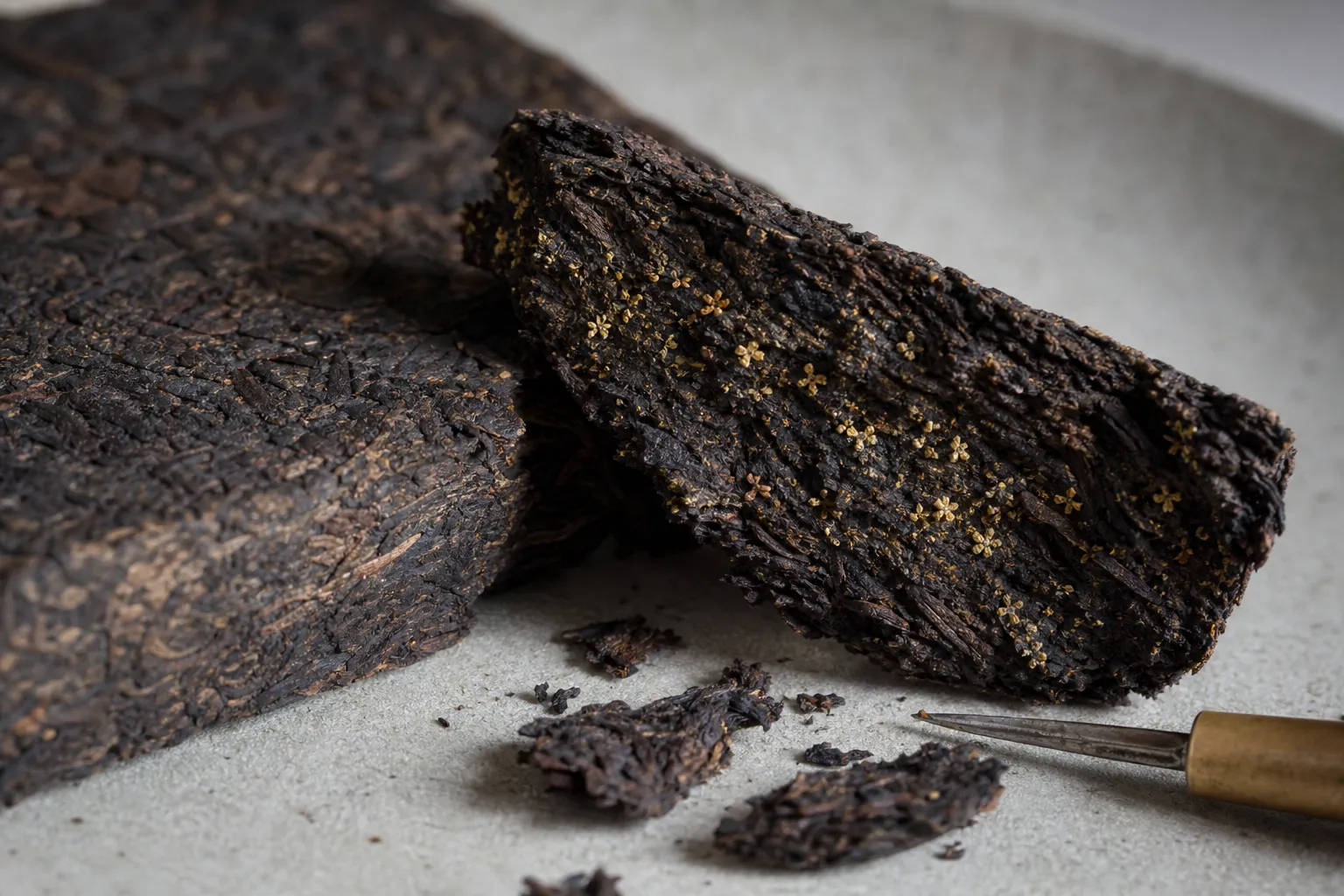
Fu brick tea is a compressed Chinese dark tea, also written as fuzhuan tea or Fu Zhuan Cha. Its best-known visual feature is the yellow-gold flecks inside the brick, often called “golden flowers” or Jin Hua. In many Fu brick teas, these specks are an intended part of the fermentation style and are commonly associated in tea research with Eurotium cristatum.
That does not mean every yellow mark on every old tea brick is automatically fine. A specific brick still needs a practical check: how the flecks appear, how the tea smells, whether the brick feels dry and well stored, and how the liquor behaves in the cup.
If you are looking at a Hunan dark tea brick, Anhua dark tea, Jingyang Fu Tea, or another tea sold with “golden flower” language, the useful question is not only “does it have yellow dots?” It is: do the flecks look embedded in the tea, does the brick smell clean, and does it brew into a balanced cup?
upward
Read the full overview first
Use the broader guide first if you need the full scope before this page.
What golden flowers usually mean in Fu brick tea
In Fu brick tea, “golden flowers” usually means small yellow-gold particles distributed through the compressed leaves. They may look like tiny dots, grains, or small clusters when you pry open the brick. In Chinese tea language, you may see the term Jin Hua. In English, sellers may call the tea golden flower Fu brick tea, golden flowers tea, or Fuzhuan brick tea.
Research on Fu brick tea often connects this golden-flower feature with Eurotium cristatum and the controlled fermentation process used for this tea style. For a tea drinker, the main takeaway is simpler: yellow-gold flecks inside a Fu brick are part of the expected vocabulary of the style, not an automatic defect.
Use the whole brick as your guide:
Small yellow-gold flecks embedded inside the compressed tea
Often consistent with the golden flower feature in Fu brick tea
Flecks visible through broken interior pieces
More encouraging than a few odd patches only on the surface
Fuzzy growth sitting on the outside of the brick
Treat as a warning sign, not as normal golden flowers
Sharp damp, rotten, chemical, or unpleasant odor
Do not let golden flecks excuse the aroma
Wet clumping, strange discoloration, or compromised packaging
Judge the storage condition before brewing
The boundary is important: golden flowers can be an intended feature, but they do not prove that the individual brick in your hand has been stored well. A dry, clean-smelling brick with embedded yellow flecks is a different situation from a damp-smelling brick with fuzzy surface growth.
Are golden flowers the same as unwanted growth?
Beginners often ask whether golden flowers are just another kind of unwanted growth. The careful answer is that Fu brick tea is made through microbial fermentation, and golden-flower development is part of how many Fu bricks are understood. Research describes changing fungal and bacterial communities during processing, with Eurotium cristatum often discussed in relation to the style.
In everyday tea handling, though, two things can get confused:
- The intended golden-flower feature of a properly made Fu brick
- Unwanted growth from poor storage, excess moisture, contamination, or damage
You cannot solve the second problem by saying, “Fu tea has golden flowers.” Look at the tea as a whole.
Good signs often include embedded flecks, a dry brick, and aromas that lean woody, grainy, mellow, lightly fungal, or sweet-earthy. Warning signs include a wet or sticky feel, fuzzy surface patches, sour-damp odor, rotten notes, chemical smells, or an aroma that stays aggressively unpleasant after airing and a quick rinse.
Some retail language makes golden flowers sound like a simple quality badge. That is too flat. Even, visible golden flowers can be one positive cue, but more specks do not automatically mean a better cup. Leaf material, processing, storage, age, compression, and brewing all matter.
What Fu brick tea may taste like
Fu brick tea often sits in an earthy, mellow, smooth, lightly sweet range, but it does not have one fixed flavor. Useful tasting words include wet earth, dry wood, mushroom, grain, sweet potato, dried fruit, red date, and a gentle fungal-floral aroma. Treat those as prompts, not promises.
Two bricks sold under similar names can brew differently. The cup may change with:
- Material: coarser leaves and stems often brew differently from finer, leafier material.
- Compression: a tight piece may start light, then deepen once it opens.
- Age and storage: a newer brick may show a more noticeable golden-flower aroma; a well-kept older brick may feel rounder or deeper.
- Water temperature: hot water usually opens compressed dark tea better than warm water.
- Leaf amount: too little can taste thin and woody; too much can become heavy or muddy.
- Steep time: short infusions keep the liquor clearer; longer steeps pull more body and earthiness.
- Vessel size: a small gaiwan or pot gives more control than a large mug left unattended.
Compared with some young teas, Fu brick tea may show less sharp bitterness or astringency when brewed with short infusions. Still, bitterness, sourness, thickness, and sweetness are not fixed traits. A broken edge piece and a dense center chunk from the same brick can pour differently.
Fu brick tea vs ripe puerh
Ripe puerh is a useful comparison because both teas can be dark, earthy, smooth, and post-fermented. But Fu brick tea is not simply ripe puerh in brick form.
Fu brick tea is commonly discussed through its compressed brick shape, golden-flower fermentation, and Jin Hua vocabulary. Ripe puerh has its own production context and aging language. If you already enjoy ripe puerh, Fu brick tea may feel familiar enough to approach, but taste it on its own terms: notice the brick structure, the golden-flower aroma, the balance between earthiness and sweetness, and how the liquor changes over several infusions.
How to brew a compressed piece of Fu brick tea
There is no single brewing rule for every Fu brick. The aim is to open the compressed leaf without making the first cups muddy or overly heavy.
Start here:
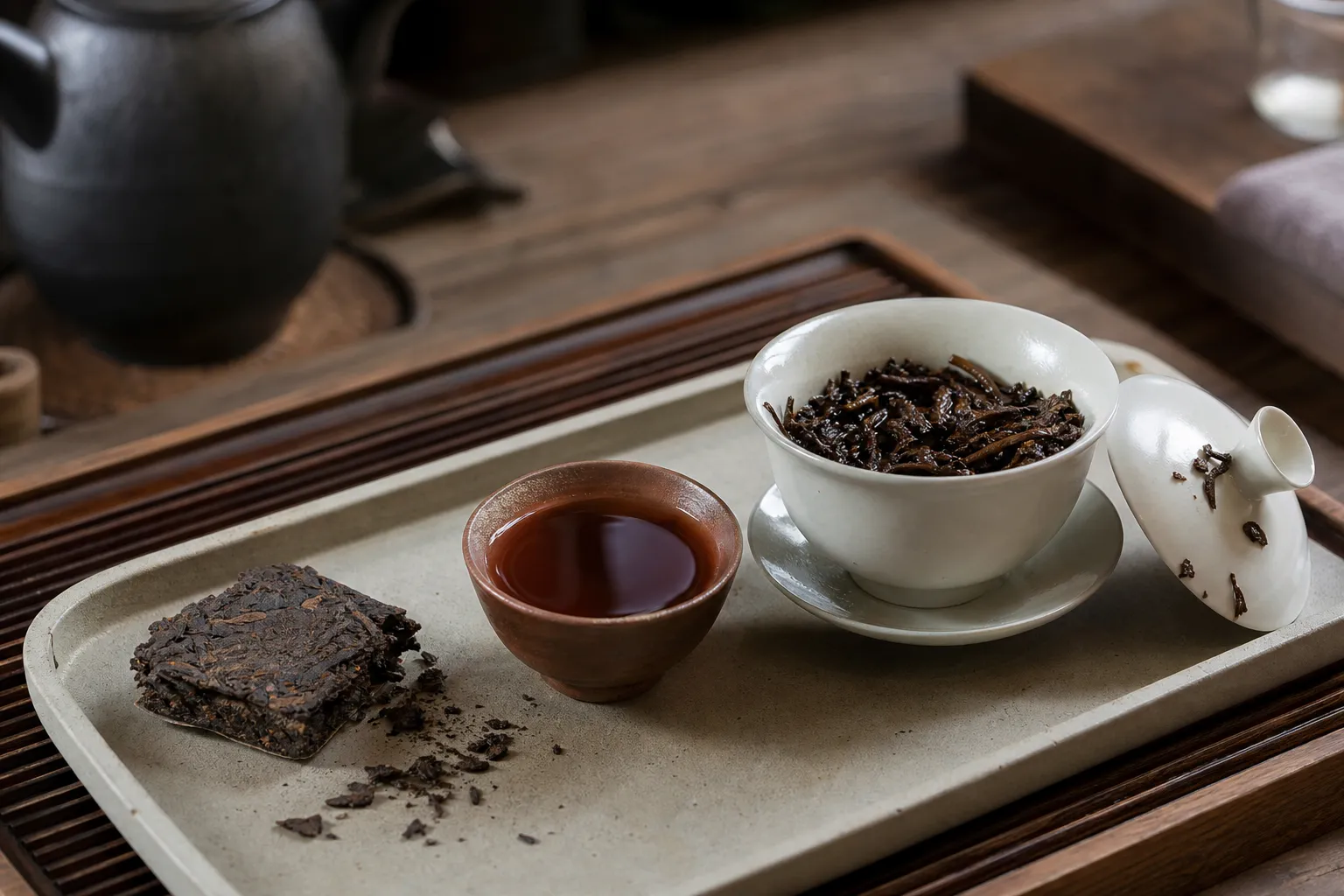
- 1. Break off a small piece. Use a tea pick or knife carefully, working with the layers instead of forcing straight through the brick. If possible, include both edge and interior material.
- 2. Use hot water. Near-boiling water usually works well because the tea is compressed and post-fermented.
- 3. Rinse briefly if helpful. A quick rinse can clear dust and help a tight piece open. If the tea is already loose and clean-smelling, keep the rinse short.
- 4. Begin with short steeps. For gongfu-style brewing, start quick and lengthen as the leaf opens. For a mug or small pot, use less leaf and taste early.
- 5. Adjust from the cup, not the label.
A workable starting point for a small gaiwan or pot is about 4–6 grams of tea for 100–120 ml of water, with a quick rinse and early steeps around 10–20 seconds. For a casual mug, use a smaller piece and avoid letting it sit for several minutes on the first try.
Use the liquor as your feedback:
Thin, woody, or flat
Use a little more leaf, hotter water, or a longer steep
Muddy or too heavy
Shorten the steep, use less leaf, or add another quick rinse
Harsh or drying
Reduce leaf, shorten time, or avoid long boiling
Clean but too light
Let the compressed piece loosen, then increase later steeps
Pleasant but fading
Lengthen each infusion and push the later rounds harder
Fu brick tea can also be simmered in some household tea habits, especially when the brick is coarse and sturdy. If you try it, begin gently: a small amount of leaf, plenty of water, and a short simmer. Boiling can make the cup thick and comforting, but it can also exaggerate storage notes or coarse bitterness.
What to check before buying or keeping a Fu brick
Names vary. You may see Fu brick tea, fuzhuan tea, Fu Zhuan Cha, Fu cha brick tea, Hunan Hei Cha brick, Anhua dark tea, Shaanxi Fu Tea, or Jingyang Fu Tea. These labels help you find the style, but they do not replace looking closely at the tea.
Before buying or keeping a brick, check the practical details:
- Can you see the tea clearly? Useful photos show the brick surface and, ideally, a broken interior.
- Are golden flowers described with restraint? “More golden dots” is not enough to judge the tea.
- Does the storage condition sound plausible? Dry, clean storage matters more than romantic aging language.
- Does the seller separate flavor from health-outcome marketing? For this page, Fu brick tea is being treated as a beverage.
- Does the brick seem dry and intact? Compressed tea still needs protection from moisture, strong odors, heat swings, and direct light.
For a brick already at home, store it in a dry, odor-free place with moderate airflow. Keep it away from spices, cleaning products, damp walls, and sealed plastic if the tea is not fully dry. Fu brick tea aging can be pleasant, but improvement is not automatic. Poor storage can flatten or damage the tea just as easily as time can soften it.
The useful answer in one cup
Fu brick tea is a compressed dark tea where golden flowers usually refer to yellow-gold flecks associated with the tea’s fermentation style. Those flecks can be normal and appealing in context, but they are only one sign. A better first judgment also uses smell, dryness, storage condition, and the brewed liquor.
Expect an earthy, mellow, sometimes lightly sweet cup rather than one fixed flavor. Brew a small piece with hot water, rinse if helpful, start with short steeps, and adjust from what the cup tells you. If it tastes thin, push leaf, heat, or time. If it turns heavy or unpleasant, pull back. That practical feedback is more useful than treating golden flowers, region names, or aging language as the whole answer.
Sources
Sources and further reading
Reference links are limited to sources considered suitable for public citation in this page.