
Guest serving
How to Serve Dark Tea to Guests Without Making It Too Strong
A rinsed cake fragment or a small scoop of loose leaf can turn heavy quickly when several cups are waiting. To serve dark tea to guests without making it too strong, start with less leaf than you would use for yourself, keep the first steeps short, pour into a sharing pitcher, and adjust by liquor color, aroma, mouthfeel, and guest response. If the cup looks nearly opaque, smells sharply earthy, or feels thick before anyone has asked for more depth, lighten the next pour.
The goal is not weak tea. A guest-friendly dark tea should still show warmth, fermented depth, and a clean finish. It simply leaves room for people who may not be used to compressed, aged, or heavily stored tea. Because this page has no public reference links to cite, the guidance stays with observable serving cues rather than fixed claims about one correct method.
upward
Read the full overview first
Use the broader guide first if you need the full scope before this page.
Start Lighter Than Your Own Cup
The easiest control is leaf amount. A brew that feels balanced to a regular dark tea drinker can seem dense, muddy, or bitter to a guest who mostly knows green, black, or lightly oxidized teas. When sharing dark tea, brew as an introduction first; you can build strength later.
For loose leaf, use a modest scoop and leave room for the leaves to expand. For a cake or brick, break off a small, even piece rather than a thick chunk with a hard center. A compact piece can release slowly at first, then darken the liquor suddenly once it opens. Thin flakes or gently separated material are easier to manage for a lighter first cup.
A brief rinse can help you read the tea before serving. Notice whether the wet leaves smell clean, woody, sweet, earthy, sharp, stale, or heavy. That aroma is not a complete quality judgment; storage, form, and age can all change it. It is a hosting cue. If the wet leaf already smells intense, shorten the first steep and use a little more water.
Make the first round slightly lighter than you think necessary. Later infusions can add body. A first cup that lands too heavy is harder to undo at the table.
Keep Early Steeps Short
Short early steeps are the main control after leaf amount. Dark tea can move from mellow to overbearing when the first infusion sits too long, especially in a small pot or gaiwan. Pour sooner than you would in a private session and watch the liquor as it enters the pitcher.
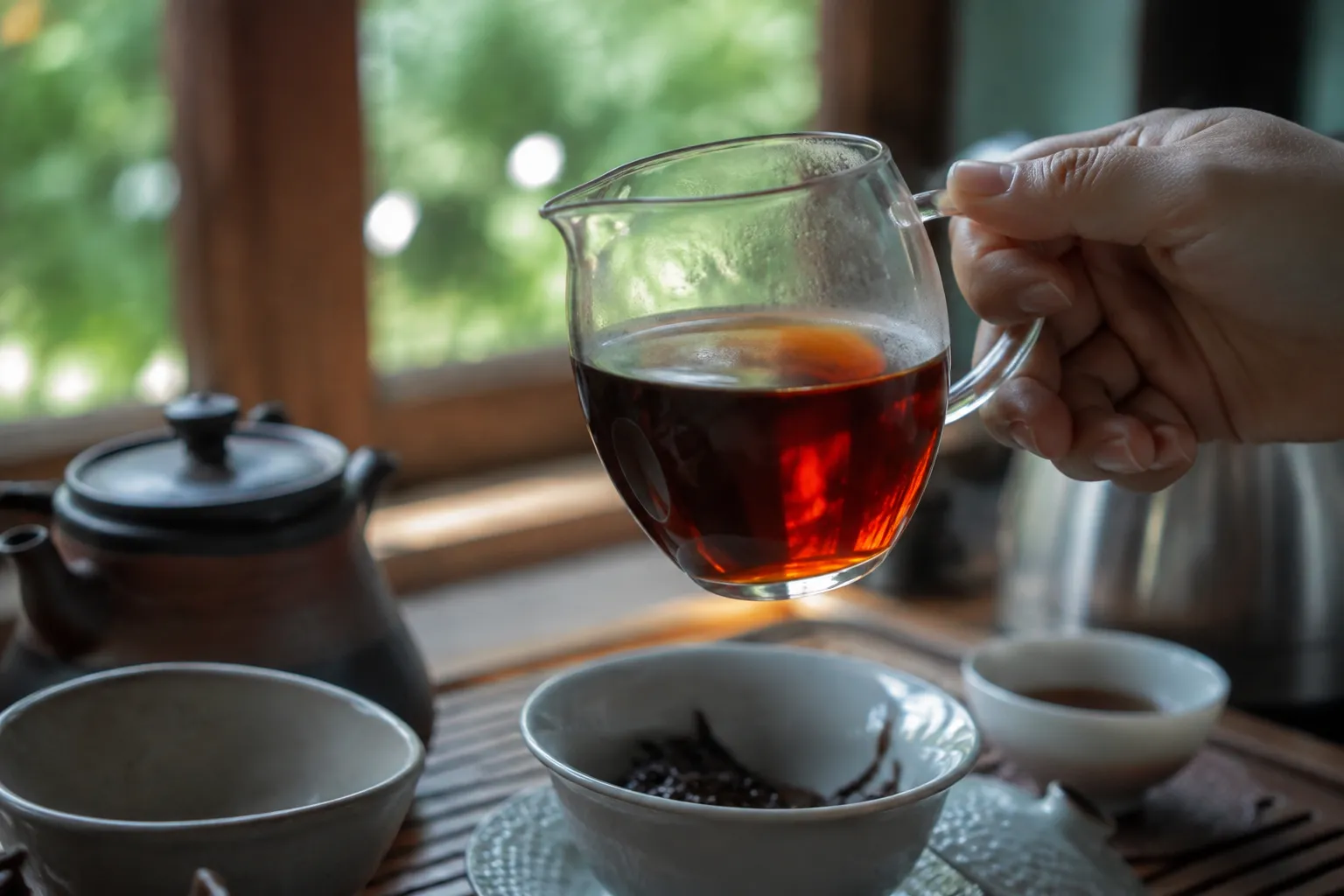
Use a visual target, not a rigid rule. Look for a clear amber, reddish-brown, or deep brown cup that still lets light through at the edge. Some dark teas naturally brew darker than others, and a tightly compressed piece may behave differently from loose leaf. The useful cue is whether the cup looks readable rather than flat, muddy, or nearly black before tasting.
Later rounds can carry more strength. Once guests have tasted the first cup, lengthen the next steep slightly, pour a little less water, or let the leaves open more fully. Repeat infusions work well for hosting because the table can move gradually: one guest may stay with softer cups, while another may enjoy the deeper middle rounds.
First pour
Light, clean, easy to enter.
Watch for a transparent edge, gentle aroma, and no heavy coating.
Second pour
More body without harshness.
Watch for warmer color, fuller texture, and a still smooth finish.
Middle pours
Let the tea show depth.
Watch guest interest, aroma clarity, bitterness, or heaviness.
Late pours
Softer refills.
Watch fading sweetness, thinner texture, and the need for longer steeping.
This rhythm is only a starting point. A loose, mild tea may need more time from the beginning; a dense brick piece may need restraint until it opens.
Use a Pitcher and Smaller Cups
Vessel choice changes how strong the serving feels. A small pot packed with leaf can make dark tea too concentrated before the host has time to react. A larger pot, a moderate gaiwan, or a sharing pitcher gives you more room to adjust.
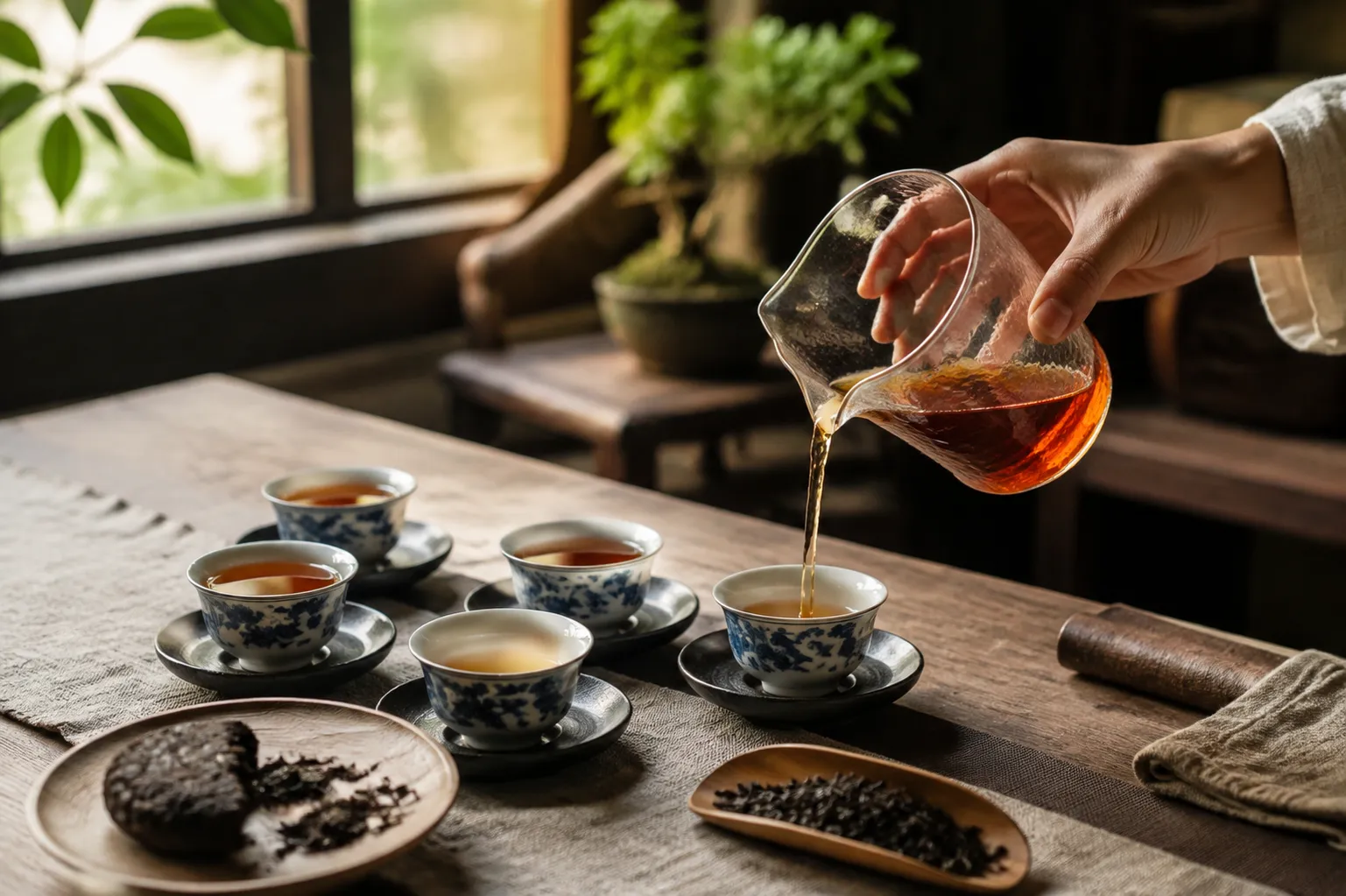
A pitcher is especially useful with several guests. It gathers the whole infusion before pouring, so one person does not receive the strongest last drops from the pot. It also gives you a moment to inspect the liquor. If the color looks too dense, dilute the tea with hot water in the pitcher before it reaches the cups.
Cup size matters. Small cups make an intense tea easier to approach because each pour is a taste, not a commitment. Larger mugs can magnify heaviness, especially when the liquor has a thick mouthfeel or a strong storage aroma. For guests who are new to fermented tea, smaller pours also make feedback easier.
If you are using a very small brewing vessel, reduce the leaf more sharply and pour quickly. If you are using a larger vessel, do not rely on water volume alone; a long steep in a big pot can still become heavy.
Fix a Cup That Lands Too Strong
If the first pour lands too hard, adjust the cup instead of treating the strength as something guests have to accept. Add hot water to the pitcher or to individual cups, then shorten the next infusion.
Let the cup tell you what to change. If the liquor tastes bitter at the back of the tongue, reduce steeping time first. If it feels thick, earthy, or coating in a way that hides the finish, dilute the current pour or use less leaf next time. If the aroma is forceful but the taste is thin, the issue may be storage character or leaf condition rather than simple strength; lighter brewing may soften the edge, but it may not make the tea fully balanced.
Guest feedback is part of the brewing control. Some people say a cup is strong when they mean bitter; others mean earthy, smoky, dry, dark in color, or simply unfamiliar. Ask in plain terms: lighter, smoother, less bitter, or more water? That answer is more useful than defending a fixed recipe.
A practical correction sequence
- 1. Add hot water if the current pitcher is too concentrated.
- 2. Pour smaller cups for the next round.
- 3. Shorten the following steep.
- 4. If the cup is still heavy, remove some leaf or use more water.
- 5. If guests want more depth, lengthen later infusions gradually.
This keeps the serving flexible without turning the table into a technical exercise.
What Changes the Best Serving Strength
There is no single dark tea serving strength for every table. The best starting point changes with leaf form, compression, storage, water, vessel, and guest preference.
Compressed tea often needs more attention than loose leaf. A tightly packed cake or brick may seem quiet during the first steep, then open and release much more color and body. Loose leaf can give up flavor faster and more evenly. Broken pieces, dust, and small fragments can brew quickly, so they may need less time than a neat flake from a cake.
Storage character also affects how guests read strength. A clean woody or sweet aroma may feel welcoming even when the liquor is dark. A damp, musty, sharp, or very earthy aroma can make a moderate cup feel heavier. The practical move is simple: let aroma guide caution, and do not push an intense-smelling tea hard in the first round.
Water temperature and water volume matter, but they do not override taste. Hot water often extracts quickly; more water can spread the infusion out; a longer steep can still concentrate the cup. If the guests are new to dark tea, prioritize smoothness and clarity over maximum depth.
Guest preference is the final variable. A table of experienced fermented tea drinkers may enjoy a stronger middle infusion. A mixed group may prefer a gentle first pour with optional deeper refills. Serving is not a test of whether people understand the tea. It is a way to make the tea readable.
Common Confusion Around Strong Dark Tea
One common misunderstanding is that dark tea must be served very strong to feel respectful, authentic, or complete. That is not a useful hosting assumption. A lighter first cup can still show the tea clearly, especially when later infusions are available.
Dark color is not automatic failure. Some dark teas naturally produce a deep liquor. The better question is balance: does the aroma stay clear, does the texture feel pleasant, and does the finish leave the guest wanting another sip?
The opposite mistake is making the tea so light that it loses its shape. If the cup tastes like warm water with a faint earthy shadow, add a little time to the next steep. A guest-friendly cup should not hide the tea; it should let the first drinker meet it without being overwhelmed.
The most reliable cue is the combination of color, smell, texture, and response. If guests drink slowly but stop after one sip, ask and adjust. If they finish the cup and reach toward the pitcher, you have room to deepen the next infusion.
A Simple Guest-Friendly Serving Plan
Before guests sit down, break or measure less leaf than your usual personal amount. Warm the vessel if that is part of your routine, give the tea a brief rinse, and smell the wet leaf. If the aroma is intense, keep the first steep especially short.
Pour the first infusion into a sharing pitcher and check the edge of the liquor against light. Serve small cups. Keep hot water nearby so you can soften the pitcher if the color, aroma, or mouthfeel seems too concentrated. For the second and third rounds, adjust one variable at a time: a little longer steep, a little more water, or a smaller pour.
Compact setup
- Use less leaf than your private brew.
- Keep the first infusion short.
- Pour through a sharing pitcher.
- Serve small cups first.
- Dilute with hot water if the cup is too dense.
- Let repeat infusions become stronger only after guests show interest.
The next decision is in the cup. If the first pour tastes clean but thin, steep a little longer. If it tastes heavy, lighten the next round before the tea starts speaking louder than the table.