
How to Read Dark Tea Gift Culture Without Overthinking It
A dark tea gift usually needs a practical reading before a symbolic one. Start with the occasion, your relationship with the giver, the tea's form, and the way it was presented. It may be a courteous thank-you, something chosen for sharing, a reminder of travel or regional interest, or simply a useful gift for someone who drinks tea. It does not automatically carry a hidden message about status, rarity, or how you are expected to respond.
Look at what is in front of you. Was it given for a holiday, a home visit, a meal, a thank-you, or an ordinary meeting? Is it loose leaf meant to be brewed soon, or a compressed cake or brick that calls for a slower first session? Did the giver mention where it came from, why they chose it, or how they brew it? Those details usually matter more than the shape of the tea alone.
Tea has long appeared in Chinese hospitality and social practice. UNESCO describes traditional tea processing and associated practices as living cultural traditions, while The Met provides broader historical context for tea culture in China. Neither source supplies a single modern rule for reading a dark tea gift. That limit is useful: the occasion and the people involved matter more than a universal code.
upward
Start with the broader guide
Use the broader guide first if you need the full scope before this page.
Read the occasion before the package
A tea gift brought to a meal, home visit, or casual gathering may be there to open and share. A gift offered after hosting, help, or a personal occasion can carry a warmer note of thanks or regard.
Still, the same tea may have been chosen because the giver likes its flavor, found it while travelling, or thought it suited your usual tea routine. A compressed tea gift may be selected for its visual presence, portability, or simple interest in a different form. The occasion narrows the possibilities; it does not settle them.
A useful question
What would make sense for this moment if the gift were another food or drink? At dinner, it may be for the table. After a visit, it may be courtesy. For someone known to enjoy tea, it may simply be personal and practical. This keeps Chinese tea gift customs in proportion instead of turning every package into a puzzle.
Let the relationship set the scale
Between close friends, a tea gift can invite conversation. The giver may hope you will open it, ask about it, or brew it together. In that case, ordinary attention is enough: notice the form, ask what they enjoy about it, and make room to taste it when it suits the moment.
From a colleague, host, relative, or new acquaintance, the gesture may be simpler. You do not need to identify the tea's origin, age, or market position to receive it well. One practical question can open the conversation:
- “Have you brewed this one before?”
- “Do you usually drink it at home or share it with others?”
- “Would you open it soon, or keep it wrapped for now?”
A loose-leaf gift may fit a recipient's usual routine. A cake or brick may reflect the form the giver encountered or enjoys. Do not give compression more emotional weight than the relationship supports.
Cake, brick, or loose leaf: form is a clue
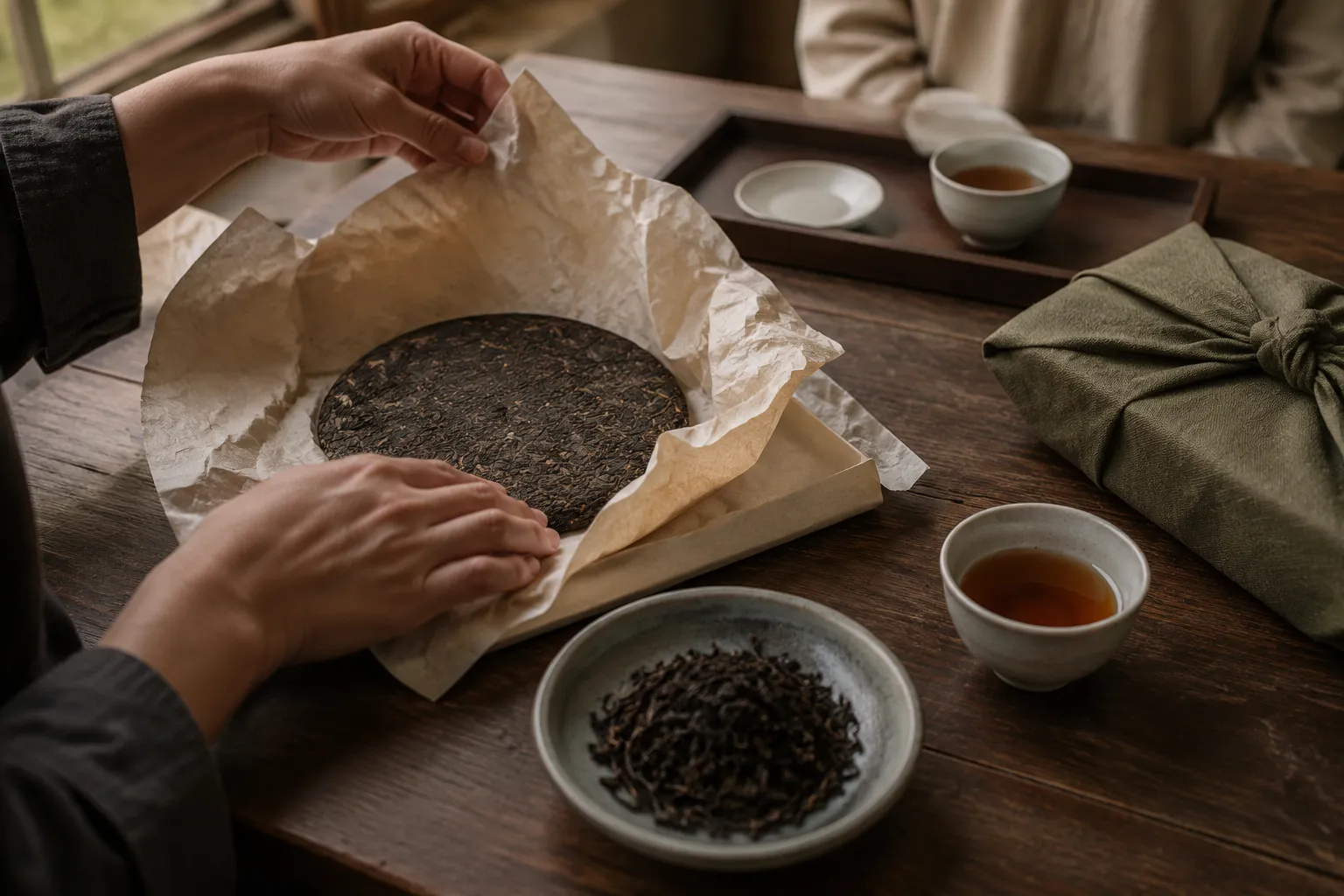
A tea brick gift has visual presence because the leaves are pressed into a firm shape. That can make it seem formal or difficult to use, but compression alone does not tell you the tea's price, rarity, or the giver's expectations.
Use the form to decide what to do next.
Loose dark tea
Notice: Label, aroma, and quantity.
Next step: Choose a vessel and brew a small first session.
A cake
Notice: Wrapper and whether the edge separates naturally.
Next step: Keep the wrapper; portion only what you plan to brew.
A brick
Notice: Its compact shape and any brewing note.
Next step: Break off a small piece when you are ready.
A presentation box
Notice: Any note, label, or shared occasion.
Next step: Read the enclosed information before assigning meaning.
A loose dark tea can be thoughtful; a brick can be an everyday drinker. Packaging may reflect travel, retail presentation, or a wish to make the gift feel considered. It does not, by itself, tell you how the tea should be valued or stored.
When brewing a compressed piece, start small. Work from a natural edge where possible, so the leaves do not turn to dust. A gentle rinse can help the material loosen. Then let the first steep give you usable information: aroma, liquor color, body, and whether the cup seems light, earthy, sweet, woody, or heavy. Adjust the next steeping time from there.
Let presentation guide your response
Presentation often gives a clearer cue than imagined symbolism. Tea opened during a gathering may be meant for sharing. A carefully wrapped package handed over at the end of a visit may be best received with thanks and tasted later. A small packet may be a sample or an easy addition to an everyday shelf.
Check for concrete information first. A tea name, region, production date, brewing note, or message from the giver gives you a real starting point. When those details are absent, keep the interpretation broad. You do not need to locate a hidden tradition before deciding whether to brew the tea.
Broad accounts of Chinese tea culture show tea as part of hospitality, social exchange, and shared practice. They do not make every gift part of one regional pattern, nor do they require a particular response from the recipient. Family habits, local customs, and personal preference can change the meaning.
Avoid turning appearance into a ranking system. A larger cake is not necessarily more significant than a small packet. A decorated box need not stay on display, and a plain wrapper does not make the tea uninteresting. Give more weight to the giver's words, the occasion, and your ordinary tea practice.
A low-pressure way to receive or give tea
When receiving tea, a calm response usually works well:
- Thank the giver and acknowledge the occasion.
- Ask one concrete question when there is a natural opening.
- Keep the label, wrapper, and any note until you know what you have.
- Brew a small amount when you can pay attention, especially with compressed tea.
- Share a brief impression later when that fits the relationship.
The same idea helps when giving tea. Choose a form that fits the recipient's likely routine rather than trying to place a grand message in the package. Loose leaf can suit quick access. A cake or brick can suit someone curious about compressed tea, especially when you include a short note about why you chose it or how you would start brewing it.
Keep the limit visible
The available cultural material is broad rather than dark-tea-specific. It supports tea's place in social life, not fixed rules for particular regions, packages, or relationships. So when the wrapper comes off, return to the practical question: share it now, taste it later, or store it neatly until you know more. The cup will give you the next useful cue.
Sources
Sources and further reading
Reference links are limited to sources considered suitable for public citation in this page.