
Guest serving guide
Common Misconceptions About Serving Dark Tea to Guests
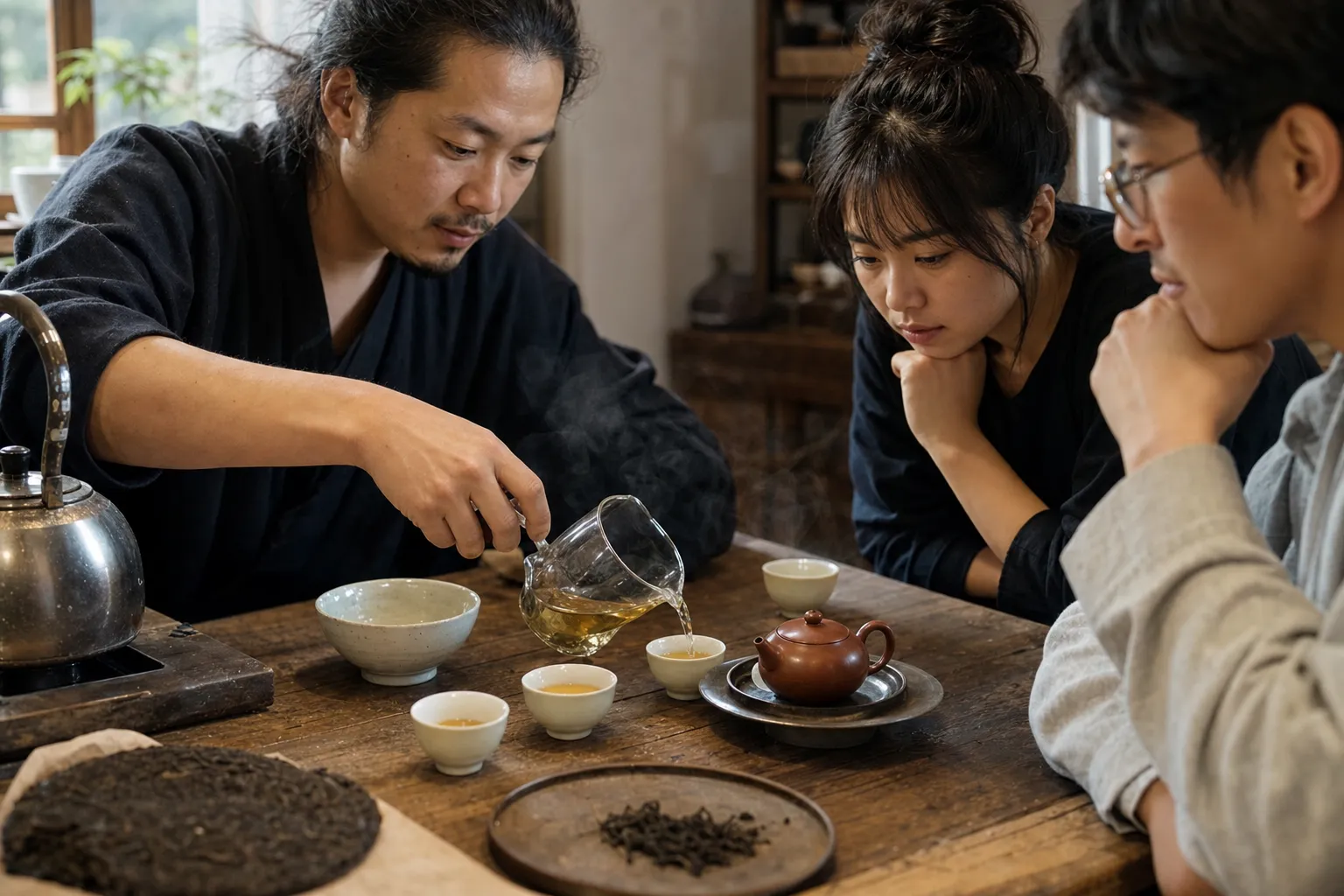
A good guest cup is not always the strongest, darkest, oldest, or most formal cup you can make. The useful answer to most serving dark tea misconceptions is simpler: start with the guest, the tea form, and the cup in front of you.
If someone is new to fermented tea, a lighter first pour often gives them room to notice sweetness, wood, grain, or earthy tea notes without being pushed into a heavy brew. If they enjoy deeper cups, you can lengthen the next steep, add a little more leaf, or move to a smaller vessel.
This is practical serving guidance, not a universal rule of etiquette. Because this page has no public source set for broad cultural or quality claims, it stays close to what a host can observe: leaf amount, vessel size, water, steeping time, liquor color, aroma, mouthfeel, and guest response.
upward
Start with the broader guide
Use the broader guide first if you need the full scope before this page.
Misconception 1: Stronger Tea Shows More Respect
One of the easiest dark tea strength mistakes is assuming that a powerful cup is the most generous cup. Strength can be welcome for a guest who already likes dense, earthy, long-steeped tea. For a new guest, the same cup may taste heavy, drying, or hard to place.
A better hosting move is to separate generosity from intensity. Warm the cups, rinse compressed leaves if that suits the tea, pour evenly, and notice whether the guest finishes the cup with interest or hesitation. None of that requires making the first infusion as dark as possible.
In many everyday brewing setups, start lighter than you might drink alone. With a small gaiwan or teapot, use short early steeps and watch how the liquor develops. With a larger pot, reduce the leaf amount or shorten the first pour. If the cup tastes thin, the next infusion can go longer. If it lands too heavy, pour smaller cups, shorten the next steep, or soften it with a little hot water.
Pale liquor, faint aroma
The steep may be too light for this tea. Add a few seconds next round.
Very dark liquor, heavy cup
The first serving may be too intense. Shorten the next steep or pour smaller cups.
Guest drinks slowly but keeps smelling the cup
They may be interested but cautious. Offer a lighter second cup.
Guest asks about the earthy taste
They need flavor context, not pressure. Name the note gently and ask what they notice.
Respect is easier to taste when the guest can follow the cup.
Misconception 2: Every Guest Wants the Same Brew
Dark tea guest preferences can vary more than the host expects. Some people like a mellow, rounded cup. Some look for a deeper fermented character. Some prefer a cleaner first infusion before moving into thicker steeps. Others may enjoy the aroma but want only a small serving.
The hosting mistake is treating preference as something you must guess perfectly. You do not need a speech or a formal survey. A simple question works: “Would you like this lighter at first, or a little stronger?” It keeps the table relaxed and gives the guest permission to answer honestly.
This matters especially with compressed cakes or bricks. A tight piece can open slowly, then release more body after the first few steeps. Loose leaf may show its character faster. A cup that seems mild at first can become much fuller once the leaves loosen, so let the early cups tell you how the material is unfolding.
A practical sequence
- 1. Make the first cup moderate rather than forceful.
- 2. Watch liquor color and aroma after the leaves open.
- 3. Ask once whether the guest prefers lighter or deeper.
- 4. Adjust steeping time before changing everything else.
- 5. Keep cup size small if the tea is dense or unfamiliar.
That avoids the common sharing tea mistake of serving your own favorite intensity as if it were the only natural setting.
Misconception 3: Earthy Aroma Should Be Hidden
Dark tea aroma misunderstandings often begin before anyone tastes the tea. A guest may smell damp wood, old paper, grain, mineral notes, dried fruit, or an earthy edge. Depending on the tea, storage, and brewing strength, those aromas can feel inviting, confusing, or too strong.
The answer is not to hide the aroma or overdefend it. Explain it plainly. You might say that some fermented teas can show earthy, woody, or stored-leaf notes, and that the cup may soften after the first infusion. Keep the explanation short; the guest needs a way into the flavor, not a lecture.
If the aroma seems too heavy, adjust the brew instead of arguing with the reaction. Use a quick rinse if that is part of your normal preparation for that tea. Shorten the first steep. Pour smaller cups. Let the leaves breathe briefly in the warmed vessel. If the cup smells flat, stale, or unpleasant to you, choose a different tea for guests rather than trying to explain it into acceptability.
Keep one boundary clear: aroma is not proof of age, value, storage history, or superior character. Describe what is in the cup. “This has a warm, earthy note” is more useful than turning aroma into status.
Misconception 4: One Vessel Is the Proper Way to Serve It
Dark tea vessel choice can shape the whole visit, but no single vessel fits every hosting situation. A small gaiwan or teapot gives you more control over quick steeps, changing strength, and multiple rounds. A larger pot can feel easier when several guests want a steady cup and the tea is forgiving at lower intensity.
The gongfu style misconception is that a concentrated, repeated-steep setup is automatically the best presentation. It can be a lovely way to share changes in aroma, liquor color, and mouthfeel. It can also be too demanding for a casual guest who just wants a warm cup while talking.
Large pot tea misconceptions work in the other direction. A larger pot is not careless by default. It only becomes a problem when the leaf amount, steeping time, and cup size are not adjusted. If you put a high leaf ratio into a large vessel and let it sit too long, the tea can become thick or blunt. If you use less leaf and pour in time, the result can be calm and guest-friendly.
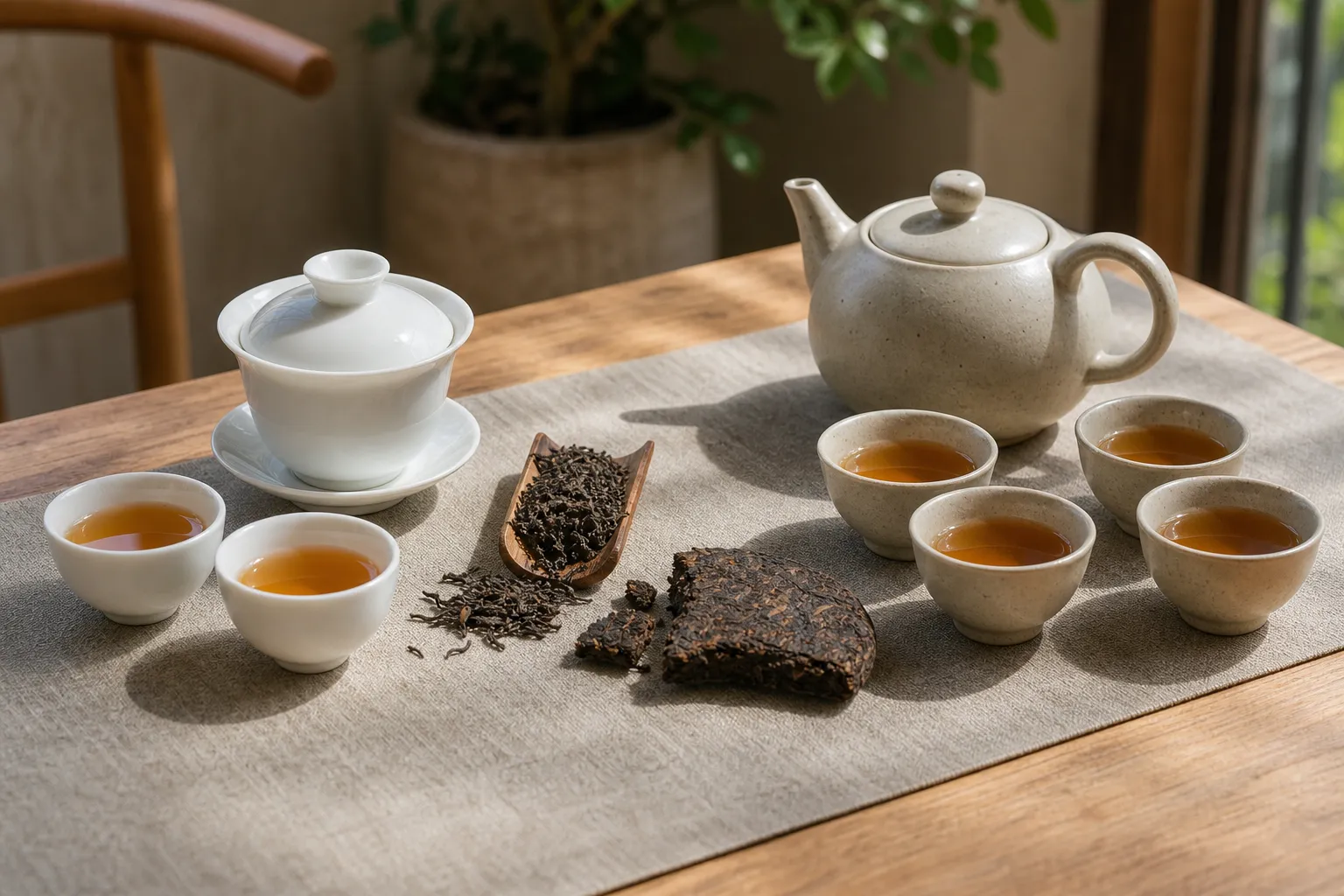
One or two curious guests
A small gaiwan or small teapot often fits because it is easy to adjust each steep.
Several guests at a meal
A larger teapot often helps because it is easier to pour steady cups.
Guest is new to dark tea
Small cups from a lighter brew reduce pressure and make tasting easier.
Tea is very compressed
A small vessel with short rounds lets the leaf open gradually.
The vessel is not the etiquette. The adjustment is.
Misconception 5: Dark Tea Must Be Presented as Rare or Old
Another guest tea misunderstanding is assuming that dark tea needs a grand explanation before it can be enjoyed. Some dark teas are compressed. Some are loose. Some have age; some are younger. Some taste sweet and soft; others lean earthy, woody, or brisk.
Without reliable details for a specific tea, avoid claims about age, market standing, special status, or storage story. A guest does not need those claims to taste the cup.
Explaining dark tea respectfully means giving enough context for the guest to feel oriented. A useful introduction might be: “This is a fermented dark tea. I’m brewing it lightly first so you can see how the aroma opens.” That gives the guest a map without turning the cup into a performance.
Avoid these overstatements at the table
- Stronger always means better.
- All dark tea should taste old.
- Earthy aroma proves higher value.
- One method is proper for every tea.
- A guest should like a flavor because it is traditional.
A calmer explanation leaves room for preference. If the guest enjoys the cup, deepen the next steep. If they seem unsure, keep it lighter or move to a softer tea. The goal is not to win an argument for fermented tea; it is to serve a cup they can actually meet.
A Simple Hosting Check Before You Pour
Before serving, pause over three variables: leaf, vessel, and guest. The leaf tells you how quickly the tea may open. The vessel tells you how much control you have. The guest tells you how bold the first cup should be.
Use this quick check
- If the tea is tightly compressed, expect the first steep to change as the piece opens.
- If the guest is new to dark tea, serve it lighter at first.
- If the liquor darkens quickly, shorten the next steep.
- If the cup tastes thin, extend the next round gradually.
- If earthy notes dominate, pour smaller cups and explain the aroma simply.
- If the setting is casual, do not force a formal brewing rhythm.
This keeps the answer at cup level: observe, ask, adjust, and avoid turning one host’s habit into a rule for every table.
What to Say When a Guest Is Unsure
A guest who pauses over dark tea is not always rejecting it. They may be trying to name a flavor they do not usually meet. A few plain words can help.
Try language like
- “This first cup is lighter; the next one can be deeper.”
- “You may notice earthy or woody notes.”
- “If it feels too strong, I can shorten the next steep.”
- “This tea changes as the leaves open.”
- “There is no need to like the strongest version.”
Those sentences work because they keep control at the table. They do not pressure the guest or bury the cup under explanation. They also let you respond to the real problem: too strong, too flat, too earthy, too unfamiliar, or simply not the guest’s preference.
The best correction to most serving dark tea misconceptions is flexibility. Begin with a cup that is easy to enter, then let aroma, liquor color, mouthfeel, and the guest’s response guide the next pour.