
Guest-Friendly Practice
How to Share Dark Tea: Serving Customs and Guest-Friendly Practice
A guest sees the dark liquor, catches the earthy aroma, and may not know whether the cup will be mellow, heavy, smoky, sweet, or simply too strong. That is the real reason people search for how to share dark tea: they want the first cup to feel approachable, not like a test of knowledge.
Good dark tea serving etiquette is flexible. Choose a tea you can brew with control, make the first infusion gentle enough for the table, pour evenly, explain flavor in plain words, and adjust the next steep by watching both the liquor and the guests.
One boundary matters here: this page treats dark tea sharing as practical hospitality, not as a formal rulebook or a claim about what tea does for the body. Since no usable public reference links were available for this article, cultural language stays general and cautious. The guidance is grounded in observable serving choices: tea form, leaf amount, vessel size, water temperature, steeping time, cup size, aroma, liquor color, mouthfeel, and guest preference.
upward
Read the full overview first
Use the broader guide first if you need the full scope before this page.
Start With the Guest, Not the Ceremony
Sharing tea begins before the kettle boils. The first decision is not which custom to perform; it is how much strength, attention, and explanation the guests can comfortably receive.
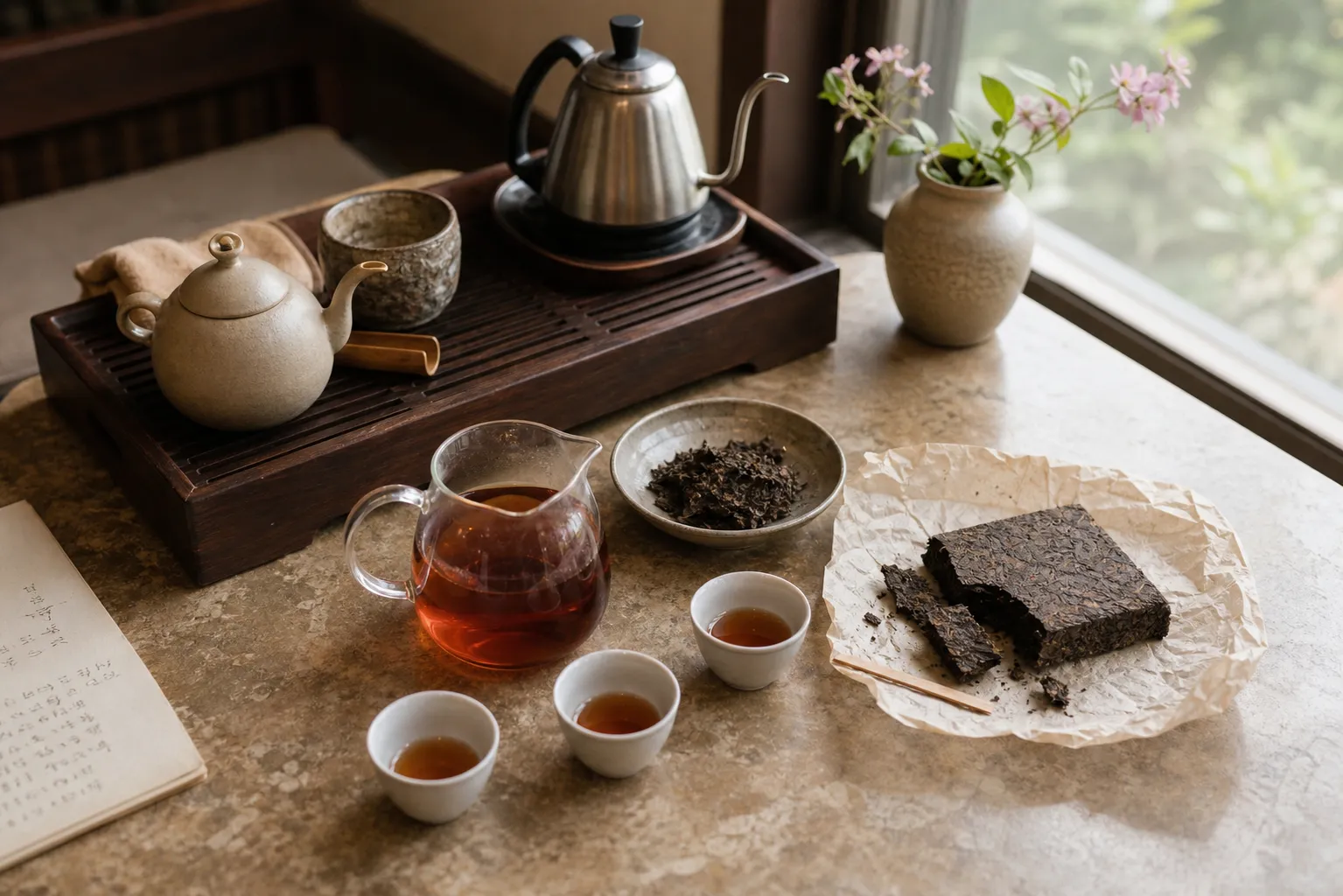
For a casual home tea session, a calm table matters more than a complicated sequence. Set out the tea, cups, kettle, brewing vessel, and a place to pour off extra liquor before guests sit down. If the tea is compressed, loosen a piece ahead of time so the session does not begin with everyone watching you pry at a cake or brick. If the tea is loose leaf, let guests see the dry leaf shape and color without making inspection feel like an exam.
A guest-friendly setup usually has three qualities
- The first cup is small or moderate, not a large commitment.
- The first infusion is approachable, not the strongest version of the tea.
- The host explains only what helps the guest drink the cup in front of them.
This is where serving dark tea to guests differs from performance. You do not need to turn every pour into a lesson. A short line often does enough: “This is a fermented dark tea; it may taste earthy, woody, mellow, or slightly sweet depending on the steep.” That gives guests a map without telling them what they must taste.
If someone is new to fermented tea, avoid starting with the most intense brick, the strongest storage aroma, or the heaviest steep you personally enjoy. Choose a tea that opens cleanly, brews predictably, and leaves room for adjustment. If the first cup lands well, later infusions can go deeper.
Choose a Dark Tea That Is Easy to Share
The tea form changes the session. Loose-leaf dark tea, a compressed cake, and a brick piece can all work with guests, but they ask different things from the host.
Loose leaf is usually easier to measure and correct. The leaves separate quickly, the first steep tends to show itself sooner, and you can soften strength by using less leaf or shorter timing. For first-time guests, loose leaf can make dark tea feel less mysterious.
A cake or brick brings more texture to the table. Guests may enjoy seeing how compressed tea loosens and changes across several infusions. The tradeoff is uneven extraction: small flakes release quickly, while dense chunks open slowly. If you share a dark tea brick piece during a guest session, loosen it gently before brewing and include a mix of smaller and larger fragments when possible. That helps the cup develop more evenly.
The best guest tea is not always the rarest, oldest-looking, or most intense one. It is the tea you can serve with confidence and adjust without drama.
Loose leaf
Better for guests when you want an easy first cup and quick adjustment. Watch for strength building fast if the leaf amount is high.
Cake piece
Better when you want guests to see compressed tea open over time. Watch for flakes and chunks brewing at different speeds.
Brick piece
Better when you want a sturdy cup with visible texture. Watch for dense pieces that need patience before they loosen.
Very strong stored tea
Better when guests already enjoy earthy or heavy cups. Watch for new drinkers finding the first aroma difficult.
If you are choosing a dark tea for guests who have never tried it, start with clarity over drama. Look for dry leaf or a broken piece that smells clean to you, not musty or confusing at the table. Since storage, age, compression, and water can change the cup, keep your promise modest: “This should be a steady introduction,” not “This is the correct way to taste dark tea.”
Make the First Cup Approachable
The first cup sets the mood. If it is too heavy, guests may become polite rather than curious. If it is too thin, they may not understand what makes the tea worth sharing. The useful middle is a cup with enough aroma and color to be identifiable, but not so much bitterness, earthiness, or thickness that it closes the conversation.
Four controls matter most in many everyday brewing setups
- Use a moderate amount of leaf rather than filling the vessel.
- Keep the first steep shorter if the tea darkens quickly.
- Pour fully so liquor does not sit on the leaves between cups.
- Serve smaller cups so guests can taste without feeling stuck with a large pour.
Water temperature also changes the first impression. Very hot water can draw flavor quickly from some dark teas, especially small broken pieces. Gentler handling can help when you are unsure how guests will respond. The better cue is not a fixed number; it is the liquor. If the color turns deep almost immediately and the aroma is already heavy, shorten the steep. If the cup looks pale and smells faint, give the next infusion a little more time.
The question of first pour or rinse should stay practical. Some hosts briefly rinse compressed or stored tea when the first wetting mainly opens the leaves. Others serve the first infusion when it smells clear, tastes balanced, and suits the tea. Without a dependable universal rule, treat the rinse as a serving choice rather than etiquette law.
A simple approach works
- If the first wetting smells flat, dusty, or closed, pour it off and serve the next infusion.
- If the first infusion smells clear and tastes pleasant, it can be offered as the first cup.
- If guests are watching, explain the choice plainly: “I’m using this first pour to wake the leaves,” or “This first cup is light, so we can taste how it opens.”
The goal is not to hide the process. It is to keep the first cup friendly.
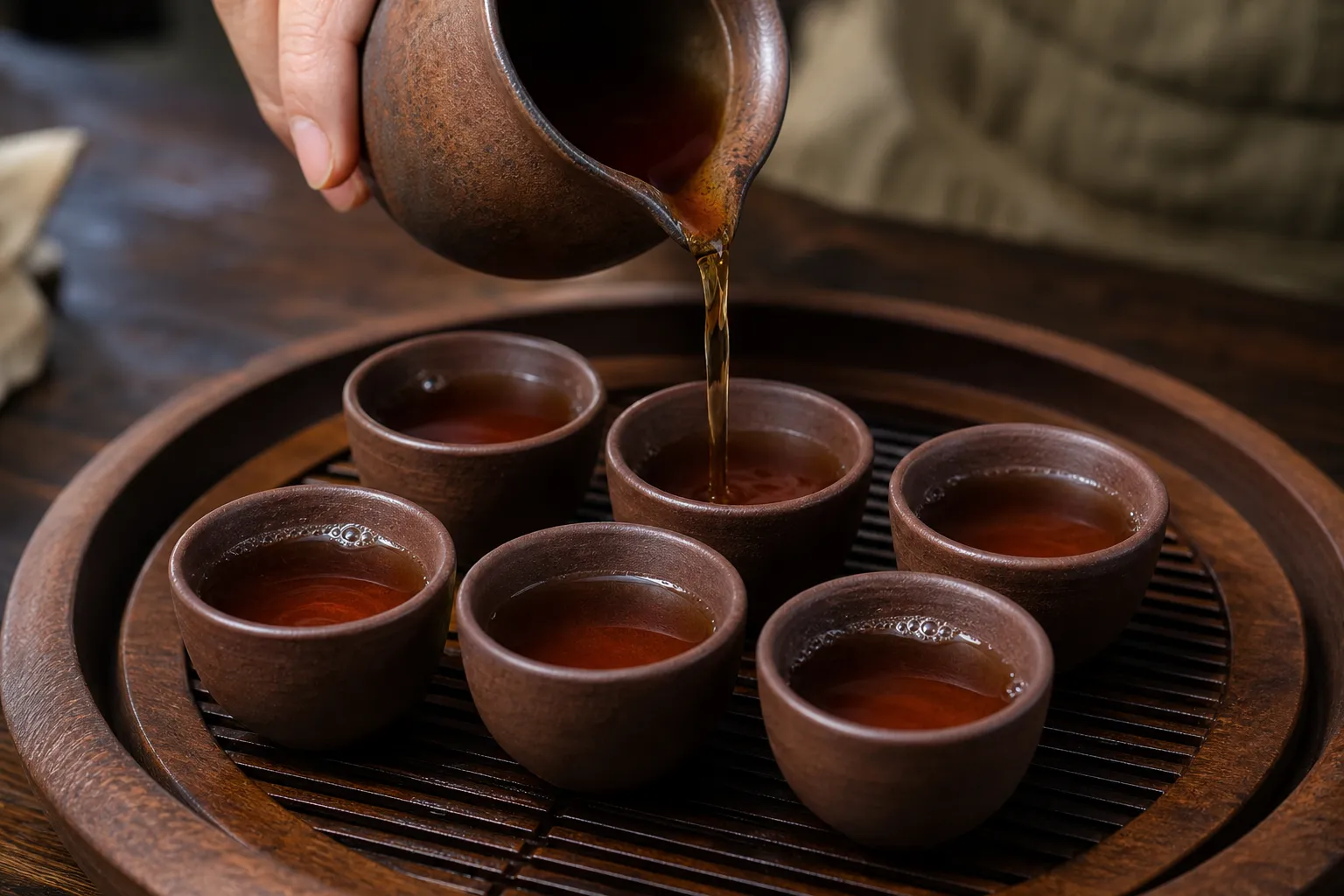
Pour Dark Tea Evenly for Several Cups
When several people share one brew, pouring technique matters. Tea left in the brewing vessel keeps extracting. The first cup poured can be lighter, while the last cup can be darker and stronger if the pour is slow or uneven.
A fair pour starts with emptying the brew completely. If you use a serving pitcher, pour the whole infusion into it first, then divide it among cups. This makes the liquor more even, especially when serving several guests. If you pour directly from a teapot or gaiwan, move in rounds: a little into each cup, then return for a second pass. That helps keep one person from receiving only the light beginning and another receiving the concentrated end.
Cup size changes the feeling of the session. Small cups let guests taste several infusions without too much volume. Moderate cups are easier for casual conversation, especially if the table includes snacks or a meal. Very large cups can make dark tea feel heavier than intended, and they reduce the chance to adjust between steeps.
A practical dark tea cup size is whatever lets guests finish comfortably before the next infusion changes. For a focused tasting, smaller cups often make sense. For a relaxed table, moderate cups can be better. The serving choice should support attention, not pressure.
Watch the cups after pouring. If guests finish quickly and ask questions, the strength may be working. If cups sit mostly full, the tea may be too strong, too hot, too unfamiliar, or simply not what they want at that moment. Courtesy means adjusting without making the guest explain too much.
Explain Dark Tea Flavor Without Overloading the Table
Dark tea can be hard to describe because familiar words do not always land the same way. “Earthy” may sound appealing to one guest and worrying to another. “Stored” may suggest depth to one person and staleness to someone else. When explaining dark tea flavor, use plain sensory language and keep it tied to the cup.
Helpful words include mellow, woody, earthy, smooth, brothy, mineral, sweet aftertaste, dark liquor, soft mouthfeel, or heavier finish. Use them as possibilities, not instructions. A guest should not feel wrong if they taste something different.
Short explanations usually work best
- “This cup is dark in color, but it should not need to feel harsh.”
- “The aroma may seem earthy at first; later cups can become rounder.”
- “If this tastes too strong, I can shorten the next steep.”
- “This tea changes across infusions, so the second or third cup may be easier.”
That last line helps because several dark tea infusions can behave differently. A compressed piece may start quiet, open into a fuller middle, then soften. Loose leaf may show flavor sooner and fade sooner. A guest does not need the full theory; they only need to know the cup is allowed to change.
Avoid turning flavor into status. Do not tell guests they should appreciate a certain aroma because the tea is compressed, expensive-looking, difficult to brew, or culturally important. Without a verified source for a specific custom, and without knowing each guest’s palate, that kind of explanation becomes pressure. Better tea hospitality leaves room for “I like this,” “I am not sure,” and “Can I have a lighter pour?”
Offer Refills Without Interrupting the Conversation
Refills give a dark tea session its rhythm, but they can also become intrusive. The best refill is offered before a cup feels abandoned, yet without pushing the guest to keep drinking.
A light question works: “Would you like another small cup, or should I make the next one lighter?” This gives the guest a choice beyond yes or no. It also lets you adjust steeping strength without turning the session into a critique.
If guests are talking, avoid stopping the whole table for every infusion. Prepare the next steep quietly, pour evenly, and place cups where people can reach them. If someone has not finished the previous cup, do not refill over it unless they clearly want that. A half-full cup can mean the tea is still too hot, the flavor is too strong, or the guest is simply done.
When serving dark tea with snacks or a meal, the rhythm changes. Food can soften the impression of a strong tea, but it can also distract from subtle aroma. If the meal is rich, a darker cup may feel comfortable to some guests. If the snacks are delicate or sweet, a lighter steep may keep the tea from dominating. The pairing does not need to be exact; it only needs to keep the table pleasant.
Use food as a pacing tool, not as a claim about physical effects. Plain snacks, nuts, mild sweets, or simple savory bites can give guests a break between cups. If the tea becomes too heavy, shorten the next infusion or serve warm water alongside it.
Adjust Strength by Reading the Cup and the Guest
A shared dark tea session is a series of small corrections. The leaf, water, vessel, and guest reaction all tell you what to do next.
If the tea tastes too strong, reduce one variable at a time. Shorten the next steep, pour sooner, move to smaller servings, or use slightly less leaf if you start another brew. If the liquor looks almost black early in the session and the mouthfeel is heavy, assume the cup may need restraint for new guests.
If the tea tastes thin, lengthen the steep, use a little more leaf next time, or let a compressed piece open more fully. Thin does not always mean bad; early infusions from dense chunks can be quiet. But if guests look puzzled and the cup has little aroma, the tea may need more time.
If the aroma is earthy in a way guests seem unsure about, do not argue for it. Offer context, then adjust. A short rinse, a lighter first served cup, or a later infusion may present the tea more comfortably. If the concern remains, switch to a milder tea rather than trying to persuade the table.
The host’s job is to keep the session responsive. Dark tea can be generous across several infusions, but only if the people drinking it still want to follow where it goes.
Common Misconceptions About Serving Dark Tea to Guests
It requires one formal ceremony
It does not need to be treated that way on a home table. A respectful session can be quiet, casual, and practical: clean tools, attentive pouring, modest explanation, and flexible strength.
Stronger means better
Deep liquor can be beautiful, but a first-time guest may notice weight before nuance. Strength should match the moment, with later infusions carrying more depth if the table welcomes it.
The rinse is a universal rule
It is better to frame the rinse as a serving choice. Use it when it helps open compressed tea or when the first wetting does not seem pleasant. Serve the first infusion when it is clear, balanced, and appropriate for the guests.
More explanation proves quality
Dark tea has cultural associations, but unsupported historical or regional claims do not make the cup better. If you cannot verify a specific custom, keep the language humble: “Some hosts prefer…” or “At this table, I like to…”
Finally, avoid using tea quality language as pressure. A guest does not have to praise a tea because it is compressed, old-looking, expensive-looking, or difficult to brew. Hospitality is not proving the tea. It is making room for the guest to taste honestly.
A Simple Guest-Friendly Dark Tea Serving Flow
- Before guests arrive, choose a tea you can brew with control. If it is compressed, loosen a small piece. Warm the vessel if that suits your setup, prepare cups, and keep a place ready for discarded or extra liquor.
- At the table, introduce the tea briefly. Mention that it is a fermented dark tea and that the flavor may move through earthy, woody, mellow, or sweet notes. Keep the description open.
- For the first cup, brew lighter than your personal maximum. Watch the color and aroma. If the first wetting seems more useful as a rinse, do not serve it; if it tastes clear and friendly, it can begin the session.
- Pour evenly. Use a serving pitcher if you want consistency, or pour in rounds if serving directly into cups. Keep portions small enough that guests can taste without commitment.
- After the first cup, ask one useful question: “Would you like the next one similar, lighter, or stronger?” That question turns dark tea serving etiquette into practical care. It respects preference while giving you a clear brewing adjustment.
- As the session continues, let the tea change. A later infusion may become softer, deeper, cleaner, or less aromatic depending on the leaf, compression, storage, and brewing choices. Name what is visible in the cup, then adjust the next steep.
Sharing dark tea works best when the host stays attentive but not controlling. Choose the tea thoughtfully, make the first cup approachable, pour with fairness, explain flavor simply, and let each refill respond to the table. The next decision is small: look at the liquor, smell the cup, notice the guest’s pace, and set the following steep from there.