
Daily Brewing
How to Make Dark Tea a Daily Practice Without Overcomplicating It
A daily dark tea practice works best when the first cup is easy to start, easy to adjust, and easy to clean up. Choose one familiar tea, one small vessel, hot water, and a time of day you can repeat. Use a modest amount of leaf, keep the first steep short, then adjust by liquor color, aroma, and mouthfeel.
The point is not to turn every cup into a formal session. The point is to make dark tea simple enough that you can return to it tomorrow. If the cup tastes thin, steep a little longer or use slightly more leaf next time. If it feels heavy, shorten the next steep or use less tea.
upward
Read the full overview first
Use the broader guide first if you need the full scope before this page.
Build the Habit Around the First Cup
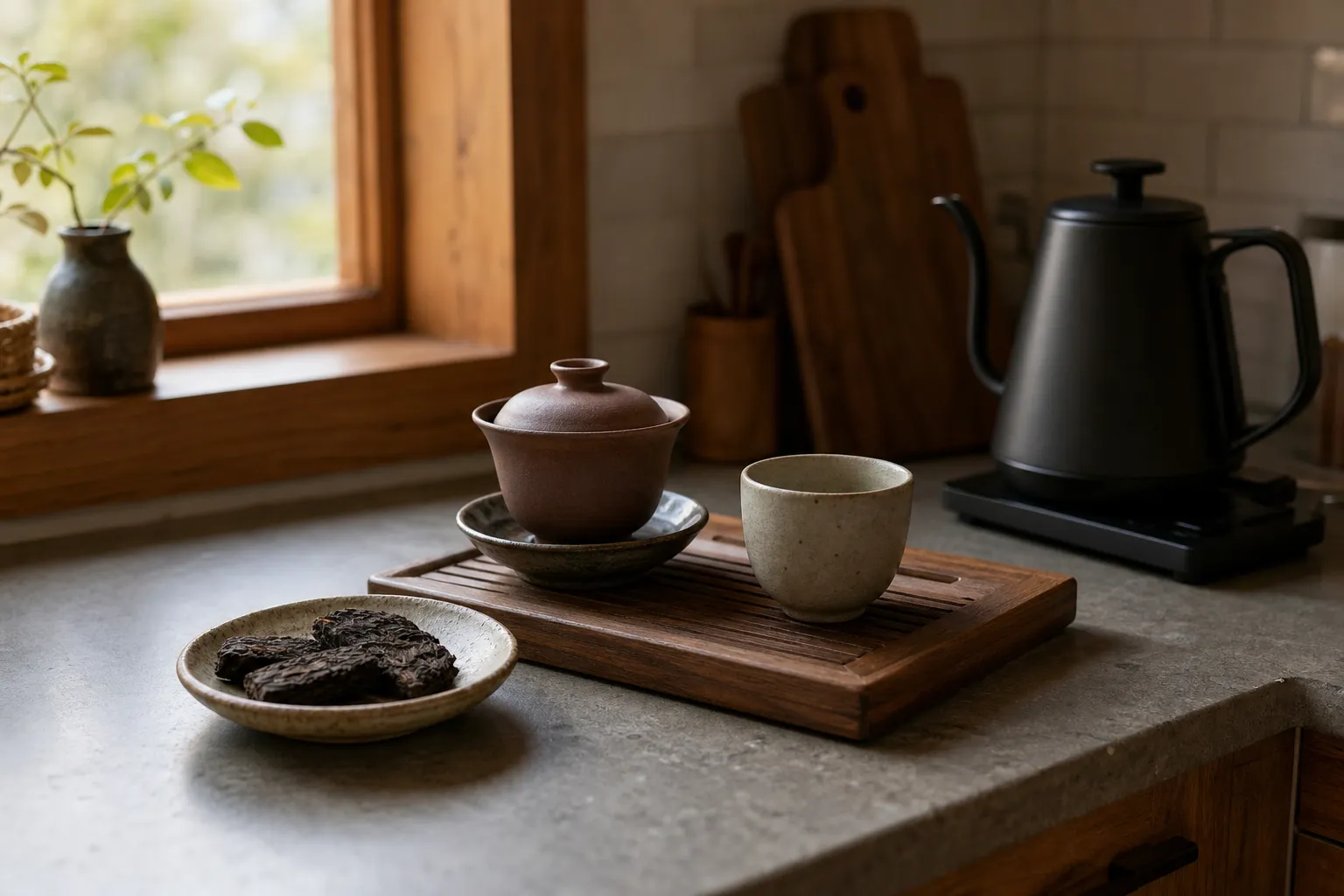
The simplest dark tea setup is the one you will actually use. In many home brewing setups, that may be only a kettle, a small teapot or gaiwan, a cup, and a place to put wet leaves after brewing. A tray is useful if you already have one, but the routine should not depend on a full tea table.
Choose a vessel that matches your day. A small pot or gaiwan makes several short infusions easier without producing a large cup at once. A mug with a basket infuser also works when you want a quiet home dark tea practice rather than a longer session with many pours. Vessel size matters because it changes concentration, cooling speed, and cleanup.
Keep the tea close to the kettle. If you drink compressed tea, break off a few small pieces ahead of time and store them in a clean, dry container for the week. If you drink loose leaf, keep a small spoon nearby. Reducing the first step often matters more than adding another tool.
A low-friction tea practice starts before the water boils: the tea should be visible, reachable, and simple to portion.
Use One Brewing Starting Point
Dark tea varies by form, storage, compression, age, water, vessel, and taste. One formula will not fit every leaf. Still, a starting range gives the routine a handle.
Tea Amount
Start with a small pinch of loose leaf, or a few small pieces from a cake or brick. Adjust if the cup tastes too thin or too heavy.
Water Temperature
Use hot water near a full boil in many setups. Adjust if the tea tastes flat, sharp, or overly strong.
First Steep
Try about 10–20 seconds for concentrated brewing. Adjust if the liquor is pale, harsh, or muddy.
Later Steeps
Add time gradually. Adjust when the flavor fades or becomes too dense.
Infusions
Stop when the cup no longer tastes pleasant, or when the routine becomes too long to repeat.
These are handles, not rules. A compressed piece from a brick may open slowly, while broken loose material can release flavor quickly. A small vessel can make the tea strong fast; a larger mug may need more time.
If you want a simple tea habit, do not chase the exact number of seconds every morning. Keep the first steep short, look at the liquor, smell the cup, and let the next pour respond to what is there.
The useful pattern is steady: start light, taste, then lengthen only if the tea asks for it.
Decide on Rinse or No Rinse
The rinse question can make daily brewing feel more complicated than it needs to be. In many dark tea sessions, a quick rinse can help compressed leaves open, warm the vessel, and move the first aroma into the cup. It is not required for every everyday brew.
When a Rinse Helps
A rinse often makes sense when the tea is tightly compressed, when the pieces are dusty from breaking, or when you want the first drinking steep to feel clearer. Pour hot water over the leaves briefly, discard that water, then begin the first drinking infusion.
When to Skip It
Skipping the rinse can make sense with clean loose leaf, mug brewing, or a morning routine that needs to stay short. The first cup may be slightly more muted or uneven, especially with compressed tea, but that may be acceptable.
The better question is not whether dark tea always needs a rinse. It is whether this step improves your cup enough to keep doing. If the rinse improves aroma and texture without making the routine fussy, keep it. If it becomes the step that stops you from brewing, skip it and adjust the first steep.
For a repeatable tea routine, the step that survives tomorrow matters more than the step that looks complete today.
Let the Cup Guide the Next Steep
A daily practice becomes easier when each brew stops feeling like a test. Dark tea gives practical signals in the cup, and those signals can guide small changes.
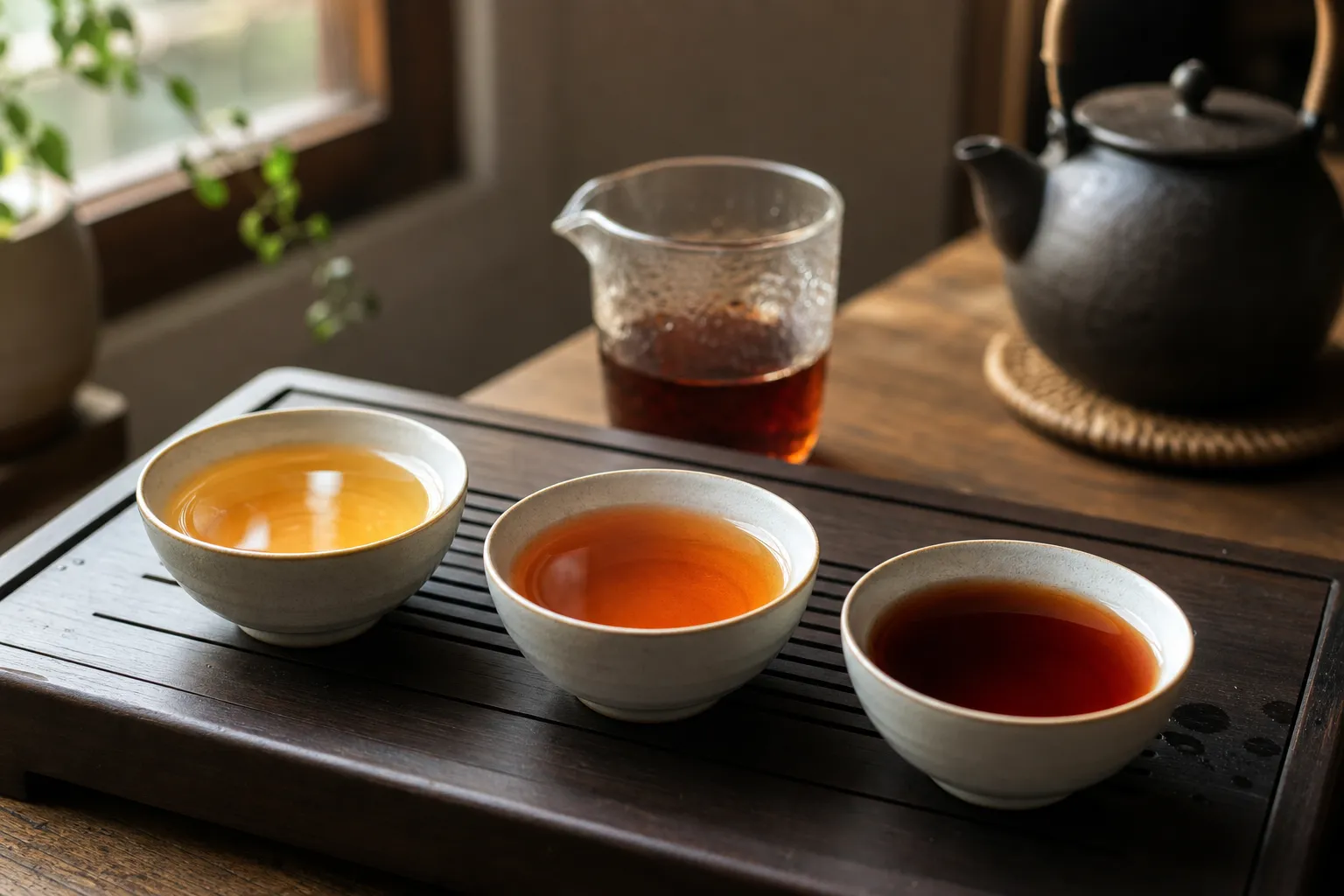
Liquor color is the first visible cue. A pale amber or light brown cup may be gentle, but if it also tastes watery, the tea may need more time, more leaf, or hotter water. A very dark cup is not automatically better; if it tastes heavy, rough, or overly earthy, shorten the next steep or reduce the leaf next time.
Aroma gives another cue. Some dark teas can show earthy, woody, sweet, grain-like, herbal, or mellow notes depending on the tea and storage. If the aroma feels closed, a short rinse or a slightly longer first steep may help the leaves open. If the aroma stays stale or unpleasant, do not force the session; storage condition and tea quality can limit what brewing can fix.
Mouthfeel is often the most useful daily signal. A thin cup may pass too quickly across the tongue. A heavy cup may sit too thickly or feel tiring. A balanced cup does not need to be dramatic; it should feel pleasant enough that another small infusion sounds welcome.
Small Adjustments
- If the tea tastes thin, steep longer by a few seconds or use slightly more leaf next time.
- If it tastes harsh, shorten the steep, use a little less tea, or give the leaves a brief rinse.
- If it tastes flat, try hotter water or a slightly longer infusion.
- If it tastes too earthy, lighten the brew and see whether later infusions become softer.
- If the routine feels inconvenient, reduce the number of infusions instead of abandoning the habit.
The cup does not need a tasting sheet every day. One clear note is enough: thinner, stronger, softer, heavier, cleaner, sweeter, or done.
Keep the Routine Short Enough to Repeat
The easiest way to overcomplicate a daily dark tea practice is to make it too long. A full session can be enjoyable, but a daily routine needs a smaller version.
Prepare
The kettle, vessel, tea, and cup are ready without searching through shelves.
Brew
One to three infusions are enough; the routine does not need every possible pour the leaves can give.
Clear
Wet leaves are removed, the vessel is rinsed, and the tea area is dry enough for tomorrow.
Cleanup is not separate from the habit; it protects the next cup. Wet leaves left too long can make the vessel unpleasant. A crowded tea space can make the next session feel like a chore. A small discard bowl, compost container, or sink routine keeps the end of the brew as simple as the beginning.
Storage also affects friction. Keep daily tea away from strong odors, direct light, and damp kitchen spots. For compressed tea, avoid breaking more than you will use soon unless you have a clean, dry place to keep the pieces. For loose leaf, close the container after portioning.
A good routine leaves the tea area ready, not perfect.
What Usually Makes the Practice Fall Apart
Most daily tea habits fail from too much expectation, not too little knowledge. The routine becomes fragile when it depends on the right mood, a long session, special equipment, or a belief that every cup must show the full character of the tea.
Dark tea can handle a practical approach. Some days, the cup is a short mug brew. Some days, it is several small infusions. Some days, the tea is more about noticing storage aroma, liquor color, and texture than naming every flavor note.
Common Traps
- Making the setup so elaborate that you only use it on free days.
- Changing tea, vessel, amount, and steeping time all at once.
- Judging every dark tea by the first infusion only.
- Forcing many infusions when the day only allows one or two.
- Treating a stronger cup as automatically better than a balanced one.
- Expecting brewing to correct poor storage or a tea you simply do not enjoy.
The simpler path is to hold most variables steady. Use the same vessel for a while. Keep the same approximate tea amount. Brew at the same time of day. Then change one thing when the cup tells you to: time, leaf amount, water heat, rinse, or number of infusions.
Repetition makes adjustment easier because you can tell what actually changed.
A Simple Daily Dark Tea Practice You Can Start Tomorrow
Set one tea near your kettle tonight. Choose a small pot, a gaiwan, or a mug with an infuser. Put the cup where you will use it. If the tea is compressed, prepare a few small pieces so the morning does not begin with prying at a cake or brick.
Tomorrow, use hot water and a modest amount of tea. Rinse only if it helps the leaves open or makes the cup more pleasant. Keep the first steep short. Look at the liquor color, smell the aroma, and take a small sip before deciding what the next infusion needs.
If the first cup is thin, go a little longer. If it is heavy, pull back. If the tea fades after two infusions and you need to leave, stop there. A daily practice does not need to exhaust the leaves every time.
The next useful decision is small: choose the vessel and tea amount you can repeat for a week, then let the cup teach the adjustment.