
Ripe Pu-erh vs Anhua Dark Tea: Which Tastes Smoother, Sweeter, or More Rustic
If you are choosing by taste, ripe pu-erh vs Anhua dark tea is not a one-winner comparison. In many everyday brewing setups, ripe or shu pu-erh feels smoother in a dark, rounded, earthy way, especially when the storage is clean and the steeps are kept short. Fu Brick-style Anhua dark tea can taste softer, sweeter, bready, grain-like, or honeyed. Other Anhua forms, including Hei Zhuan and Hua Zhuan, may feel more smoky, roasted, piney, firm, or rustic.
The practical answer: choose ripe pu-erh for deep earthy smoothness, Fu Brick-style Anhua for mellow sweetness, and firmer Anhua bricks when you want a more rugged dark-tea character.
Quick cup decision
- Smoother: often ripe pu-erh, if the tea is cleanly stored and not overbrewed.
- Sweeter: often Fu Brick-style Anhua, especially when it shows bready, honeyed, or grain-like notes.
- More rustic: often Hei Zhuan, Hua Zhuan, or stronger Anhua bricks, especially when smoke or roast is noticeable.
- Earthier: usually ripe pu-erh, though some Anhua teas can also feel woody or cellar-like.
- More smoky: more often some Anhua dark tea forms than a gentle ripe pu-erh session.
upward
Start with the broader guide
Use the broader guide first if you need the full scope before this page.
The main taste difference in the cup
Ripe pu-erh, also called shu pu-erh, is commonly associated with dark red-brown liquor, earthy aroma, woody depth, and a soft, heavy mouthfeel. Research on ripe pu-erh taste often uses terms close to “mellow” and “thick,” which lines up with how many drinkers describe a clean, well-brewed cup: rounded rather than sharp, dark rather than bright, and coating rather than brisk.
That does not mean every ripe pu-erh is smooth or sweet. A pushed brew can turn flat, muddy, sour, or harsh. Poor storage can create unpleasant mustiness instead of clean earthiness. But when the tea is sound and the brewing is controlled, ripe pu-erh often gives the smoother side of a dark tea comparison: old wood, damp forest floor, dark cocoa, dates, or mild coffee-like depth.
Anhua dark tea is broader. It should not be treated as one flavor. Fu Brick, or Fu Zhuan, is one important Anhua-related style, but not the whole category. It is often described in English tea language as mellow, sweet, bready, yeasty, grain-like, or honeyed. Some Fu Brick teas show visible yellow specks commonly called Golden Flowers; here, that is only a production and subtype cue, not a promise that the tea will taste better.
Other Anhua dark teas, such as Hei Zhuan and Hua Zhuan, can lean firmer. Depending on material, processing, storage, and brewing, they may taste roasted, woody, smoky, pine-resinous, mineral, or pleasantly coarse. If Fu Brick is the softer, breadier side of Anhua hei cha flavor, Hei Zhuan and Hua Zhuan are often the stronger old-wood, smoke, and roast side.
Ripe pu-erh, Fu Brick-style Anhua, and other Anhua bricks
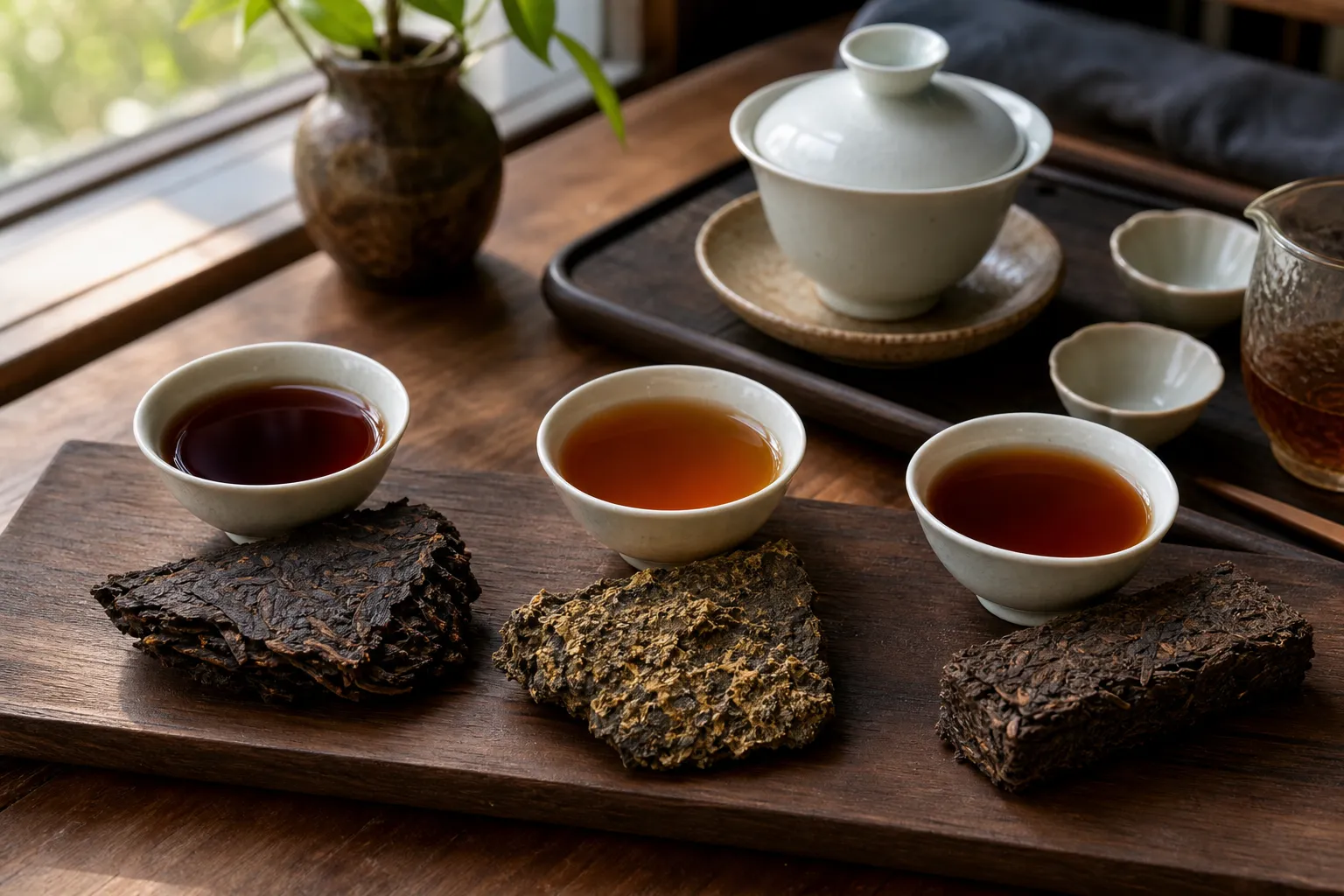
A simple two-column comparison hides the main issue: Anhua dark tea is a family of forms, not one fixed cup profile. This three-part view is more useful when comparing ripe pu-erh taste with Anhua dark tea taste.
Ripe pu-erh / shu pu-erh
- Liquor color: Often dark red-brown to very deep brown.
- Aroma: Earthy, woody, dark, sometimes cocoa-like or coffee-like.
- Smoothness: Often rounded and thick when brewed gently.
- Sweetness: Can show date, molasses, or dark sugar notes, but not always.
- Rustic character: Earthy and old-wood rustic.
- Aftertaste: Heavy, dark, lingering, sometimes sweet-earthy.
Fu Brick-style Anhua
- Liquor color: Often orange-brown to reddish-brown, depending on age and brew strength.
- Aroma: Bready, grain-like, honeyed, mellow, sometimes lightly woody.
- Smoothness: Can be mellow and soft, especially in the mid-session.
- Sweetness: Often the better bet for gentle sweetness.
- Rustic character: Softer rustic, more bread and grain.
- Aftertaste: Softer, grainy, sweet, mellow.
Hei Zhuan, Hua Zhuan, and firmer Anhua forms
- Liquor color: Often amber-brown to darker brown; can deepen with compression and longer steeps.
- Aroma: Smoky, roasted, piney, woody, rustic, sometimes mineral.
- Smoothness: Can be firmer, drier, or more textured.
- Sweetness: May have underlying sweetness beneath smoke or roast.
- Rustic character: More obviously rugged, smoky, roasted, or firm.
- Aftertaste: Drying, smoky, woody, or resinous, depending on tea and brew.
The available research supports a cautious view: different dark teas can vary in aroma compounds, fermentation paths, raw materials, and sensory profiles. It does not prove a universal ranking such as “ripe pu-erh is always smoother” or “Anhua is always sweeter.” The useful verdict stays tied to the specific tea in front of you.
How to compare two cups fairly
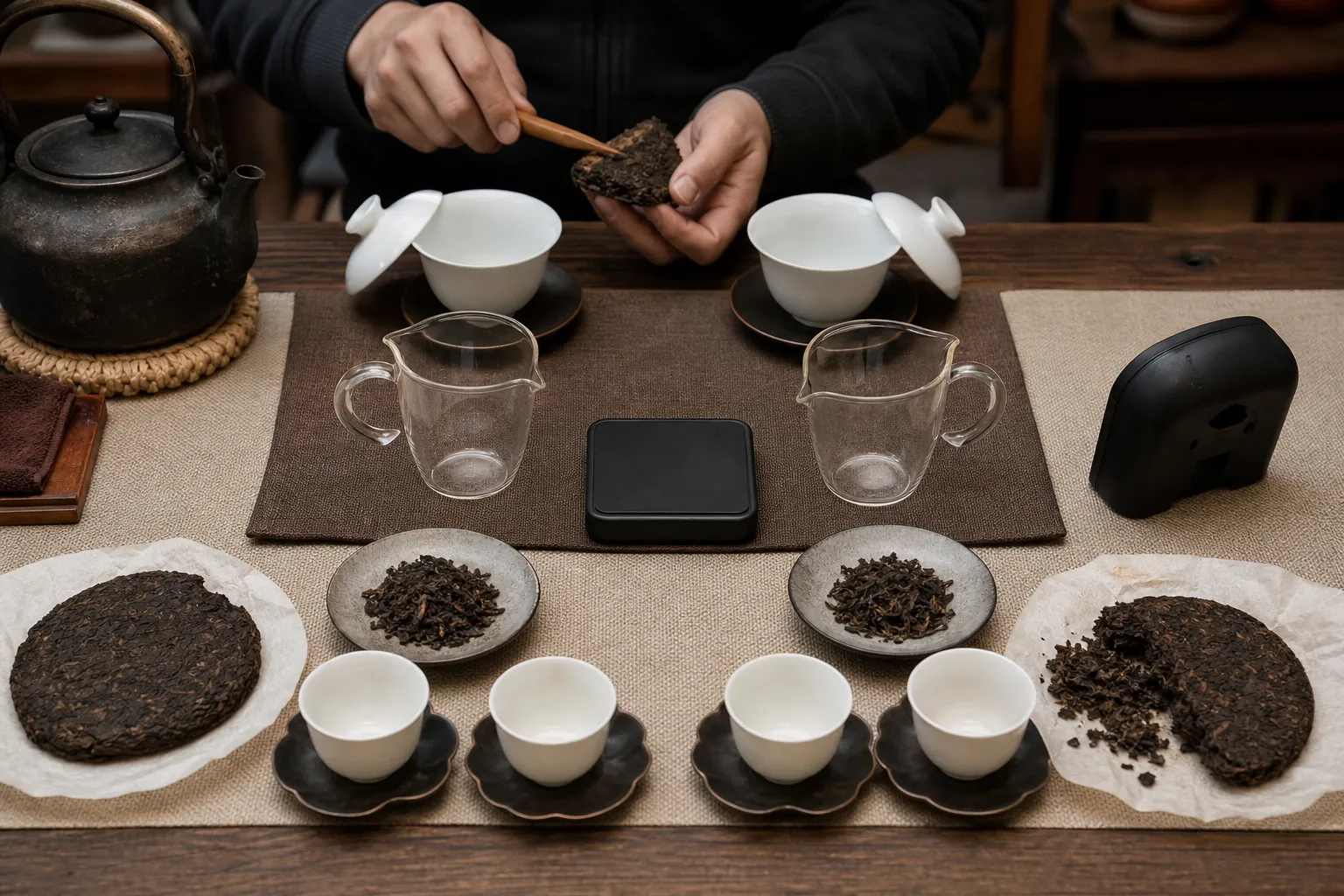
For a fair shu pu-erh comparison with Anhua dark tea, keep the setup simple. Use a similar leaf weight, similar vessel size, and short infusions. If one tea is a tight brick and the other is loose or loosely broken, open the compressed piece enough that water can reach the inner leaves. A tight chunk can taste thin at first, then suddenly become heavy and rough.
A useful tasting sequence:
-
1. Smell the dry leaf.
Ripe pu-erh may smell earthy, woody, dark, or slightly sweet. Fu Brick-style Anhua may smell bready, grainy, or honeyed. Some Anhua bricks may smell smoky, roasted, or pine-like. If either tea smells sharply sour, stale in an unpleasant way, or clearly off, do not force the comparison.
-
2. Rinse and smell the wet leaf.
The rinse often shows the tea’s direction more clearly than the dry leaf. Ripe pu-erh may open into damp wood, old book, cocoa, or earth. Anhua dark tea may release grain, smoke, roast, honey, or woody notes. Clean earthiness is different from unpleasant musty storage.
-
3. Check the first drinkable infusion.
Keep it short. Ripe pu-erh can become too heavy if you start with a long steep. Anhua bricks, especially tight ones, may need a little time to open. Do not judge only from the first cup if the leaves are compressed.
-
4. Watch the mid-session mouthfeel.
This is where dark tea mouthfeel becomes clearer. Ripe pu-erh may feel thicker and more rounded. Fu Brick-style Anhua may become soft, sweet, and grainy. Firmer Anhua forms may show more texture, roast, or smoke.
-
5. Notice the aftertaste.
A smoother ripe pu-erh often leaves a dark, woody, lightly sweet finish. A sweeter Fu Brick-style Anhua may leave a bread-crust or honey-grain impression. A rustic Anhua brick may leave smoke, pine, dry wood, or a slightly gripping finish.
If the goal is to decide what you prefer, do not compare aroma alone. Drink at least two or three infusions, because smoothness and sweetness often appear after the leaves have opened.
What can change the answer
The tea name matters, but brewing and storage can change the result enough to reverse your first impression.
Leaf amount
Too much ripe pu-erh can make the cup heavy, muddy, or overly earthy. Too much smoky Anhua can make the smoke dominate the sweetness. If the cup feels blunt or tiring, reduce leaf or shorten the steep.
Compression
A tightly compressed piece of Hei Zhuan, Hua Zhuan, or pu-erh cake may release unevenly. The outer leaves brew quickly while the inner leaves stay closed. Break the piece into smaller chunks rather than grinding it into dust.
Water temperature
Many dark teas tolerate hot water, but hard boiling water plus long steeps can make some cups taste rough. If the tea turns harsh, shorten the infusion before lowering the temperature.
Steeping time
This is the easiest control. For a small gaiwan or teapot, start with quick infusions after a rinse. Lengthen gradually only when the liquor tastes thin.
Storage and age
Clean storage can soften edges and deepen aroma. Poor storage can create stale, sour, or unpleasant musty notes. Earthy ripe pu-erh should not be confused with obvious storage faults.
Subtype
This is the biggest Anhua variable. Fu Brick Anhua flavor may be mellow and sweet, while Hei Zhuan flavor or Hua Zhuan flavor may feel stronger, smokier, and more rustic. Calling all of them simply “Anhua dark tea” can lead to the wrong expectation.
If your cup tastes wrong, adjust this first
- If ripe pu-erh tastes too earthy, use less leaf, rinse once, and keep the first few infusions short. A cleaner cup often appears when the tea is not pushed too hard.
- If ripe pu-erh tastes thin, the compressed piece may not be open yet. Let the wet leaves rest briefly after the rinse, then increase the next steep by a few seconds.
- If Anhua dark tea tastes too smoky, shorten the steep and compare the second or third infusion. Smoke can sit heavily in the first cup, especially with some rustic bricks.
- If Fu Brick tastes flat instead of sweet, try slightly more leaf or a longer mid-session infusion. Some sweeter, bready notes need enough extraction to appear.
- If Hei Zhuan or Hua Zhuan tastes harsh, use a smaller amount of leaf or break the tea into larger flakes rather than dusty fragments. Dust extracts quickly and can make the cup feel rough.
- If either tea tastes unpleasantly musty, sour, or questionable, do not try to rescue it with stronger brewing. Clean earthy, woody, and aged notes belong in dark-tea territory; obvious off-notes are a different matter.
Which should you choose?
Choose ripe pu-erh if you want the darker and smoother side of dark tea: deep red-brown liquor, earthy warmth, woody aroma, and a thick, settled mouthfeel. It is the safer pick for drinkers who like dark cocoa, old wood, mild coffee-like depth, and a rounded finish.
Choose Fu Brick-style Anhua dark tea if you want sweetness before earthiness. It can suit a drinker looking for mellow, bready, grain-like, honeyed, or softly thick flavors without the deepest damp-earth profile of ripe pu-erh.
Choose Hei Zhuan, Hua Zhuan, or firmer Anhua dark tea if rustic character is the point. These teas may be less polished and more textured, with smoke, roast, pine, firm wood, or a drier finish. They are not always sweeter than ripe pu-erh, but they can be more rugged and atmospheric.
So the answer is not one winner. Ripe pu-erh often wins for dark, earthy smoothness. Fu Brick-style Anhua often wins for gentle sweetness. Other Anhua dark teas often win for smoky, roasted, rustic character. Brew both lightly at first, then adjust by taste instead of letting one long steep decide the whole comparison.
Sources
Sources and further reading
Reference links are limited to sources considered suitable for public citation in this page.