
What Is Anhua Dark Tea and What Should It Taste Like
Anhua dark tea is a family of post-fermented dark teas associated with Anhua in Hunan, China. It is not one single tea with one fixed flavor. In the cup, Anhua dark tea can taste mellow, woody, earthy, lightly sweet, smoky, aged, or smooth, depending on its form, storage, compression, and brewing.
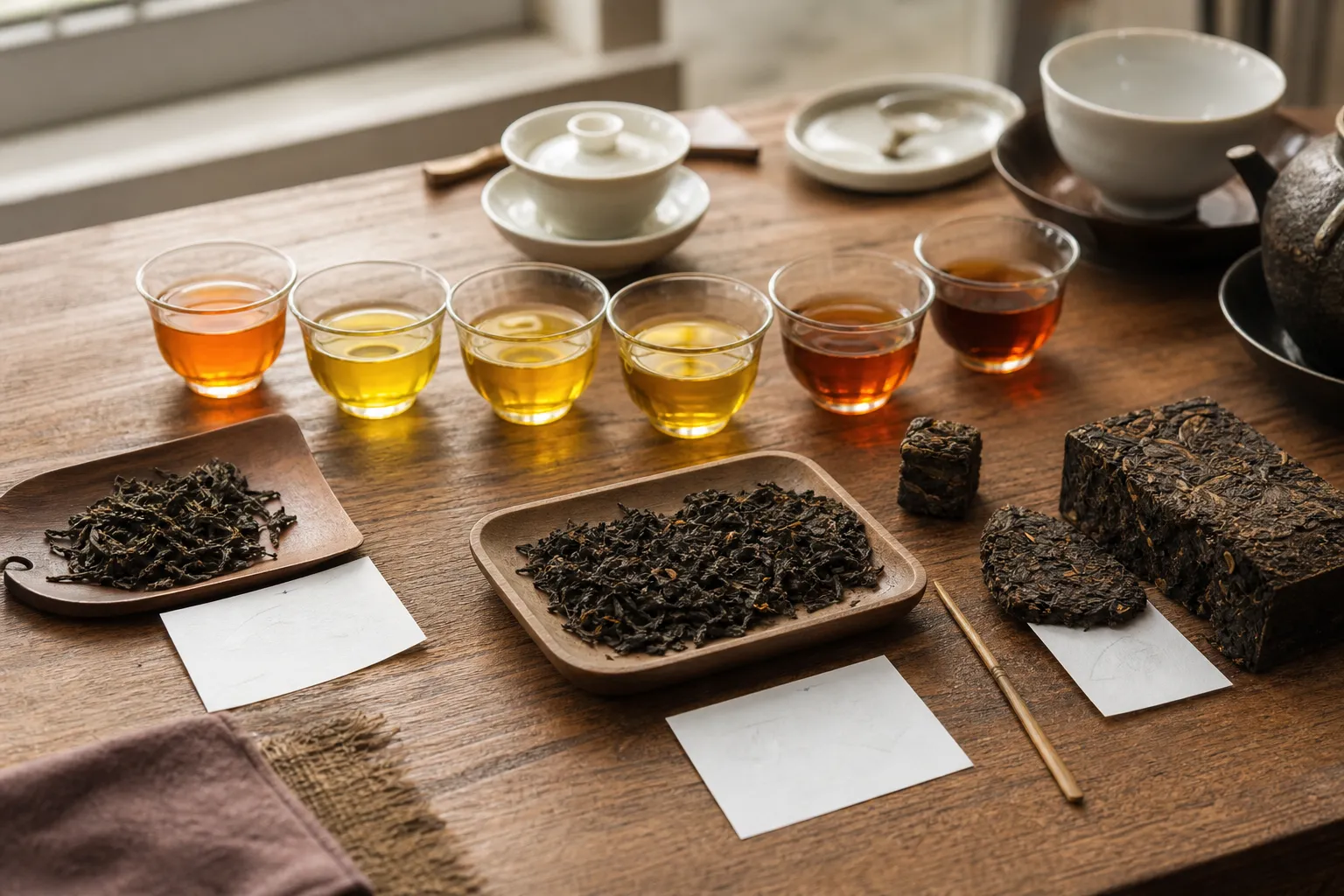
A useful everyday expectation is a warm, rounded cup with less sharp greenness than many fresh teas, liquor that may range from orange-yellow to deep yellow-brown, and an aroma that feels clean rather than damp, dirty, or sharply sour.
The better question is not “What is the one true taste?” It is: which form am I brewing, how was it stored, and what is the cup showing me?
upward
Read the full overview first
Use the broader guide first if you need the full scope before this page.
Anhua dark tea is a Hunan dark tea family, not one flavor
In Chinese tea categories, dark tea is usually discussed as post-fermented tea. For a drinker, that means processing, microbial activity, compression, storage, and time can all shape the way the leaf smells, opens, and tastes.
You may see Anhua dark tea described through common market and cultural categories such as:
Form you may encounter
What it usually means in the cup
Tianjian dark tea
Often loose or less densely handled; it may release aroma faster than a tight brick.
Fu brick tea
A compressed brick form, sometimes associated with visible golden flowers; it may need a rinse or more opening time.
Black brick or Hua brick
Compressed forms where density, break size, and storage strongly affect extraction.
Qianliang tea or flower roll
A large rolled form; small broken pieces, flakes, and dense chunks can brew differently.
These names help you orient yourself, but they are not a strict quality ladder. A loose Tianjian is not automatically better than a brick, and a Fu brick is not automatically better because it has a famous form name. In the cup, look for clean aroma, balanced extraction, pleasant body, and storage that has not pushed the tea into damp or dirty notes.
What Anhua dark tea can taste and smell like
A reasonable tasting range includes mellow, smooth, woody, earthy, lightly sweet, rich, smoky, or aged notes. Some cups lean clean and sweet. Some are more rustic and stemmy. Some may show a pine-smoke impression. Some Fu brick examples may carry a distinctive fungus-flower aroma connected with their processing.
None of these notes is required in every tea.
Dry leaf or dry brick aroma
Look for clean wood, warm straw, dried leaf, old paper, mild earth, smoke, or a faint sweet aged note. A compressed piece may smell quiet until it is warmed or rinsed.
Wet leaf aroma
After a rinse or first steep, the tea often becomes more expressive. Woody, earthy, smoky, sweet-grain, or aged notes can appear. If the smell turns sharply sour, damp, dirty, or like a wet basement, treat that as a storage warning rather than desirable aged character.
Liquor color
Anhua dark tea liquor can appear orange-yellow, deep yellow, amber-brown, or yellow-brown depending on tea form, age, roast, storage, and steep strength. A darker cup is not automatically better. A pale cup is not automatically weak if the texture and aroma are still present.
Mouthfeel
Many drinkers look for a rounded, mellow body rather than a sharp, grassy attack. A well-brewed cup may feel smooth, gently thick, or quietly sweet after swallowing. If it feels thin, extend the steep or use a little more leaf. If it turns rough, bitter, or drying, shorten the steep or reduce the leaf.
Aftertaste
A clean lingering sweetness, woodiness, or soft aged note is a good sign. Length alone is not enough; an aftertaste that is dirty, sour, or harsh is still a problem.
Why the same Anhua tea can brew so differently
Two teas with the same broad label can behave very differently in water. The main variables are form, compression, storage, and how hard you push the brew.
Compression changes the opening speed
Loose tea usually gives up aroma and flavor quickly. A dense brick piece may need time to open. If you brew a tight chunk like loose leaf, the first cup may taste thin while the inside of the piece remains dry or barely expanded.
For dense pieces, try this:
- Break the piece into smaller layers instead of one hard cube.
- Use a quick rinse to warm and loosen the tea.
- Let the wet leaf rest briefly after rinsing.
- Start with a moderate steep, then lengthen later infusions as the piece opens.
- For a heavier daily cup, simmering or boiling can suit some sturdy dark tea forms, though it will also make flaws more obvious.
Leaf amount and vessel size change intensity
In a small teapot or gaiwan, a little extra leaf can make a mellow tea heavy very quickly. In a large mug or pot, the same amount may taste flat.
Adjust by what the cup is doing:
Thin or watery
Use more leaf, hotter water, or a longer steep.
Harsh or bitter
Use less leaf, shorten the steep, or add a rinse.
Flat and dull
Check the storage aroma first, then try hotter water or a smaller vessel.
Too earthy or heavy
Use a shorter steep and pour fully between infusions.
Age is not the whole answer
Age can soften some rough edges, but older Anhua dark tea is not automatically smoother, cleaner, or more enjoyable. Storage matters more than the number on a wrapper.
Clean aging may bring woody, mellow, earthy, or lightly sweet notes. Poor storage can bring damp odors, stale notes, unpleasant sourness, or contamination smells. If the dry tea smells unpleasant before brewing, hot water usually makes that problem clearer.
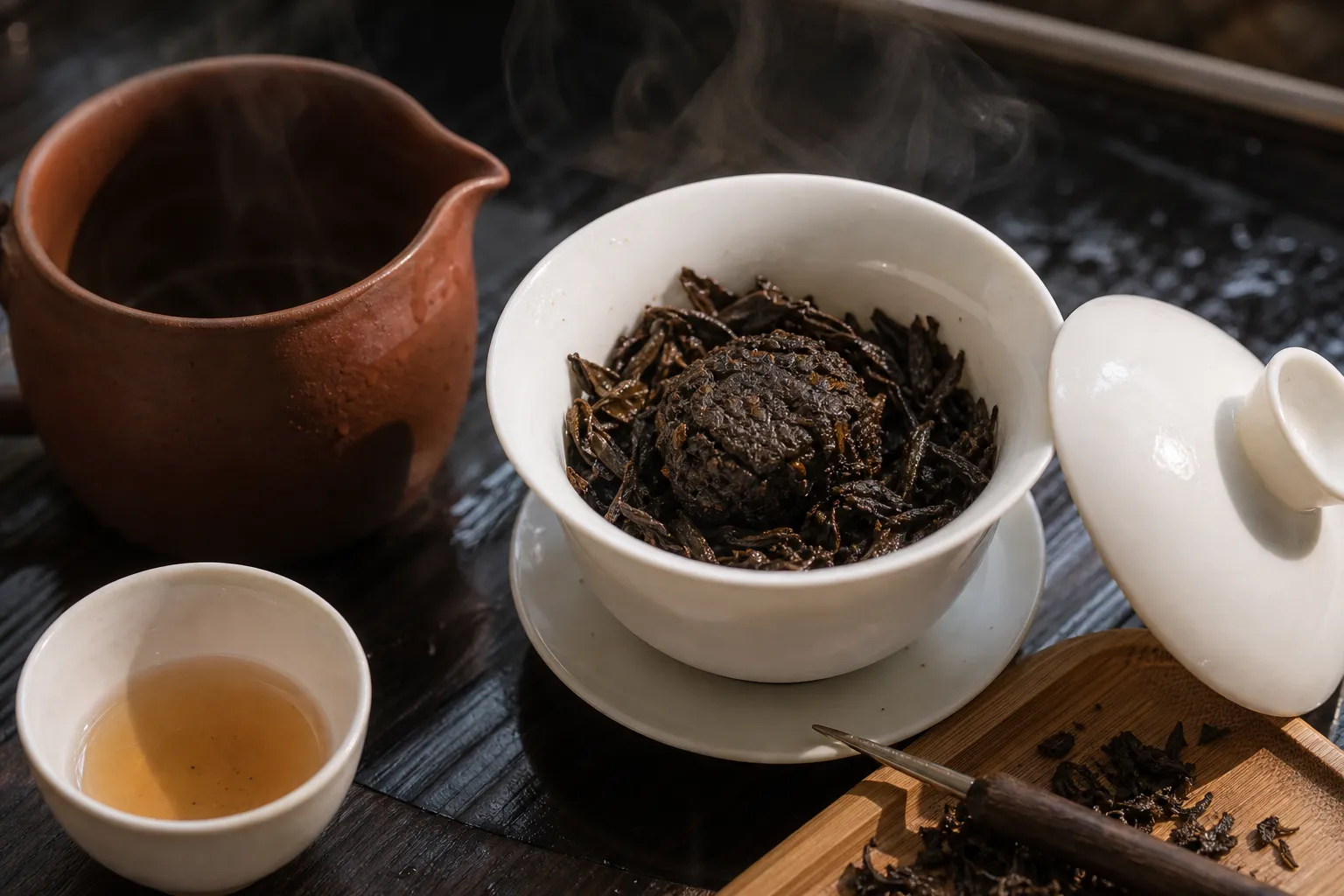
Golden flowers in Fu brick: useful clue, not a universal standard
Some Fu brick tea is associated with small yellow-golden specks often called golden flowers or jinhua. In Fu brick contexts, this feature is linked with the flowering process and with fungus-related aroma development. It is one reason Fu brick tea is often discussed separately from other Hunan dark tea forms.
But golden flowers are not a universal test for all Anhua dark tea.
A Tianjian dark tea does not need golden specks to be worth drinking. A Qianliang piece should not be judged by the same visual expectation as a Fu brick. Even within Fu brick tea, visible specks are only one observation. The tea still needs to smell clean, brew clearly, and taste pleasant.
A better practical check is:
- Does the dry tea smell clean?
- Does the wet leaf smell woody, mellow, floral-fungal, smoky, or earthy in a pleasant way?
- Does the liquor taste rounded rather than dirty or sharply sour?
- Does the storage aroma stay within clean aged character?
If the answer is no, golden specks alone do not make the cup work.
How to taste a sample without overthinking it
For a first session, keep the method plain. The goal is not to force the strongest brew; it is to find the tea’s range.
Use hot water, a small pot or gaiwan if you have one, and a moderate amount of leaf. Rinse quickly if the tea is compressed, dusty, or slow to wake up. Smell the wet leaf after the rinse. Then brew short at first and lengthen as needed.
For loose Tianjian or a loose-style Anhua hei cha, begin with shorter infusions. These teas may release aroma quickly, so long early steeps can flatten the sweetness or bring out roughness.
For a Fu brick, black brick, Hua brick, or Qianliang fragment, watch how the piece opens. A tight chunk may need a rinse and slightly longer later steeps. If the first infusion is weak but the wet leaf still smells promising, do not judge too early.
For a stronger bowl or thermos-style drink, longer steeping or boiling can suit sturdy compressed tea. It can also magnify storage flaws. If a boiled cup becomes muddy, sour, or too heavy, return to shorter infusions.
Common confusions about Anhua dark tea taste
Is Anhua dark tea the same as puerh?
No. Both belong to the broader world of dark or post-fermented teas, but Anhua dark tea is associated with Hunan, while puerh is associated with Yunnan. They can share earthy or aged vocabulary, but they should not be expected to taste identical.
Is Anhua dark tea black tea?
In English, “black tea” can cause confusion. Chinese dark tea is not the same category as fully oxidized black tea, such as many breakfast teas. Anhua dark tea is better understood as Hunan dark tea or Anhua hei cha.
Should it taste smoky?
It can, but it does not have to. Some examples show pine-smoke or roasted impressions; others lean more woody, mellow, sweet, or earthy. If smoke dominates in a harsh or acrid way, adjust brewing first, then decide whether the tea suits your taste.
Are stems and mature leaves a bad sign?
Not necessarily. Some dark tea forms use mature material and may include stems. Judging Anhua dark tea by delicate green-tea bud standards can mislead you. Look instead at aroma, cleanliness, body, and balance.
The clean-cup test
If you only remember one thing, use this test: Anhua dark tea should taste fermented or aged in a clean way, not spoiled. It may be woody, earthy, smoky, mellow, sweet, or quietly thick. It should not smell like damp storage, dirty cellars, chemical contamination, or unpleasant sourness.
The most useful cup is not simply the darkest, oldest, most compressed, or most decorated with golden flowers. It is the one where form, storage, and brewing come together into a clean, drinkable liquor with enough aroma and body to make you want the next sip.
Sources
Sources and further reading
Reference links are limited to sources considered suitable for public citation in this page.