
Should You Rinse Loose Leaf Dark Tea and Compressed Tea the Same Way
Not exactly. In everyday brewing, loose leaf dark tea and compressed dark tea often need different rinse decisions because they meet hot water in different ways.
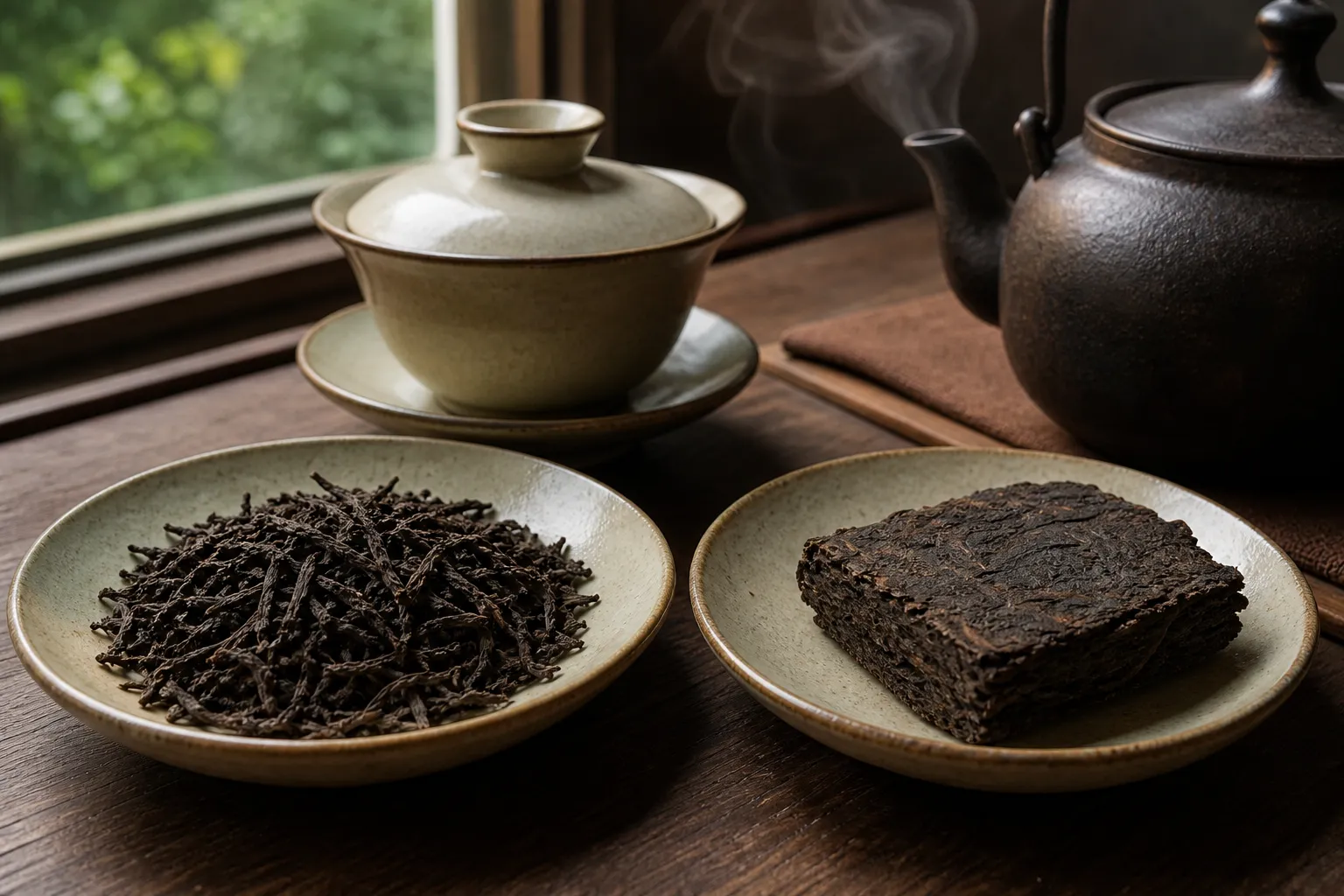
Loose leaf dark tea is already exposed. If it smells clean, looks fairly whole, and is not dusty, the rinse can be skipped or kept to a quick flash. Compressed dark tea — a cake, brick, tuo, mini, or hard chunk — more often benefits from a purposeful short rinse because the first hot water mainly wets the outside. If you want to rinse compressed dark tea, think of the rinse less as “washing” and more as helping the piece absorb water, loosen at the edges, warm through, and prepare for a steadier first drinking infusion.
The useful question is not “Does dark tea always need a rinse?” It is: what is the leaf form doing in your gaiwan, pot, or cup after the first contact with hot water?
upward
Read the full overview first
Use the broader guide first if you need the full scope before this page.
Loose leaf is already exposed; compressed tea needs to open
Loose leaf dark tea gives hot water more immediate access. The leaves may be twisted, curled, coarse, broken, or mixed in size, but they are not locked inside a dense mass. That means extraction can begin quickly. If the dry aroma is clean and the leaf pieces are not full of powder, skipping the rinse can preserve the light sweetness and early aroma of the first cup.
Compressed dark tea behaves differently. A tea brick first infusion can be uneven if the piece is still hard inside. The outside gets wet first, while the center may stay dry or only partly warmed. The first drinking infusion may taste thin at the beginning, then turn heavy as the outer layers release faster than the core.
That is where a short rinse for tea bricks, cakes, tuos, minis, and tight chunks can help. A practical “wake-up” rinse simply means you are watching for physical and sensory changes:
- The compressed piece starts absorbing water instead of shedding it.
- The edges begin to loosen.
- Small leaves or flakes separate from the chunk.
- Steam carries more aroma from the vessel.
- The rinse liquor shows some color instead of staying almost clear.
- The first drinkable cup tastes less hollow or less uneven.
Research on Fu brick tea, dark tea processing, and extraction behavior supports the broader idea that form, processing, aroma release, and water contact can matter. It does not prove one universal rinse time. Exact seconds still belong to the tea in front of you.
A practical starting point by leaf form
For most everyday gongfu-style dark tea brewing, start modestly. A rinse should be short enough that you do not throw away the main body of the tea, but hot and direct enough to wet the leaf.
Clean, whole loose leaf dark tea
Skip the rinse, or use a flash rinse of a few seconds.
Check whether the first cup is pleasant, light, and clear enough for your taste.
Loose leaf with visible dust or many tiny fragments
Use a very quick rinse, or pour gently and shorten the first infusion.
Check whether the cup turns muddy, harsh, or too strong too soon.
Loosely compressed cake or brick flakes
Use a short hot rinse, often around 5–10 seconds.
Check whether the flakes separate and give aroma after the rinse.
Tight compressed chunk, mini tuo, or hard brick piece
Use a hot rinse, brief rest, then decide if a second short rinse is useful.
Check whether the tea block is still hard in the center and whether the first infusion would be too light.
Very broken compressed tea with lots of powder
Use a shorter rinse than usual, or no rinse if you want to keep early flavor.
Check whether you are losing too much sweetness into the rinse bowl.
For a compressed dark tea rinse, a good starting move is: add hot water at your normal brewing temperature, cover the tea, wait about 5–10 seconds, pour it out, then let the damp tea sit briefly. Ten to thirty seconds of rest is often enough for small pieces. A very tight brick chunk may need a little longer under a lid before the first drinking infusion.
If the rinse liquor is already dark, aromatic, and full, do not automatically rinse again. You may be discarding a useful part of the tea. If the piece still looks like a pebble, the vessel gives almost no hot aroma, and the first cup would likely be pale and thin, a second short rinse can make sense.
When loose leaf dark tea should not be treated like a brick
Rinsing loose leaf dark tea as if it were a tight compressed brick is an easy way to flatten the beginning of a session. Loose leaves have more exposed surface area, so the rinse can remove not only dust or a surface storage note, but also the first light aromatics and sweetness.
This matters most with leaves that are already open, fragile, or broken. Small flakes and fannings extract faster than a dense chunk. If you rinse them too long, the water you discard may look and smell like the first real cup. The next infusion can feel less lively, especially in a small vessel.
Use the dry leaf and the first hot contact as your guide:
- If the dry leaves smell clean, woody, mellow, sweet, or gently fermented, you may not need a rinse.
- If the leaves are very dusty, a flash rinse can help clear loose particles.
- If the first cup tastes thin but clean, you may simply need a longer first infusion.
- If the first cup tastes rough because the leaf is broken and fast-extracting, shorten the steep rather than adding a long rinse.
A loose leaf dark tea rinse is best kept light unless there is a clear reason. The goal is not to obey a rule. The goal is to avoid making the first drinkable infusion either muddy from small particles or empty because you poured away too much.
When compressed dark tea needs more than one quick splash
Compressed dark tea is where rinse decisions become more useful. A cake, brick, tuo, mini, or tightly compressed chunk can look wet on the outside while remaining firm inside. That is when a compressed tea wake-up rinse earns its place.
After the first rinse, pause and look. Do not judge only by the clock.
A second short rinse may help when:
- The chunk still looks hard and sealed.
- The edges have not loosened.
- The gaiwan or pot gives very little aroma after the rinse.
- The rinse liquor is almost colorless.
- The same tea has previously made a very pale first infusion.
- The piece is large and tight enough that the first cup would likely extract unevenly.
The second rinse does not need to be long. Often, repeating a short hot rinse is better than soaking the tea. Long rinses can pull out flavor you would rather drink, especially if the compressed piece has already started to separate.
For a tight compressed tea rinse, try rinse-and-rest: pour hot water over the piece, discard quickly, close the lid, and let the damp heat work for a short while. When you open the lid, check whether the edges have relaxed and whether the aroma has become clearer.
If the tea is a small mini tuo that stays hard after one rinse, it may need patience. If it is a chunk pried from a brick with many loose flakes around a hard core, the flakes may extract fast while the core lags behind. In that case, pour gently, keep the rinse short, and consider breaking the piece a little more evenly next time instead of relying only on rinsing.
Storage aroma, smoke, dust, and the first rinse liquor
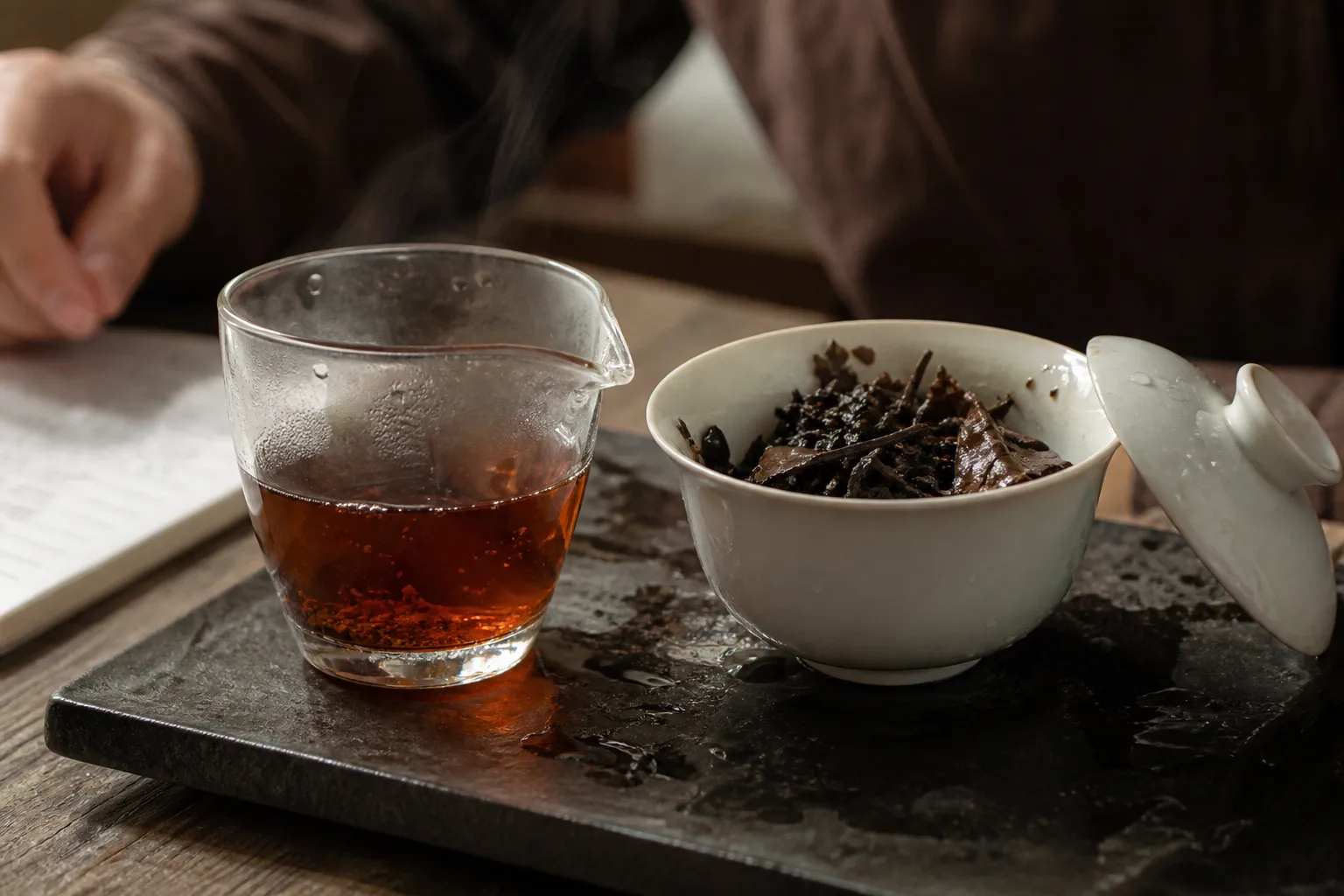
A dark tea rinse can also be a sensory adjustment. Some dark teas carry surface notes from storage, fermentation, smoke, packing, or time in a wrapper. A short rinse may soften the first impression by clearing loose dust and warming the leaves before the first drinkable cup.
But keep the claim small. A rinse may reduce a surface impression; it does not fix tea that seems questionable. If the tea smells clearly musty in an unpleasant way, rotten, strongly chemical, or visibly suspicious, do not treat rinsing as the solution. The better choice is caution.
Use the rinse liquor as a clue:
- Pale rinse, little aroma: the tea may still be closed, especially if compressed.
- Dark rinse with strong aroma: the tea is already releasing; avoid extra rinses unless you have a reason.
- Cloudy rinse with visible particles: there may be dust or broken leaf; shorten the next infusion.
- Smoky or damp-storage note in the rinse: check whether the first drinking infusion smells cleaner after the rinse.
- Very flat rinse from a hard chunk: rest the tea briefly before brewing again.
Preheating also matters. A rinse warms the vessel as well as the tea. If you skip the rinse for loose leaf dark tea, you can still warm the gaiwan, pot, or cup with hot water before adding the leaves. That keeps the first infusion from losing heat to cold ceramic and gives you a fairer read on the tea.
Rinse, first infusion, and “cleaning” are not the same
The rinse is the water you pour over the leaves and discard. The first infusion is the first cup you intend to drink. Confusing the two creates many brewing mistakes. If you count the rinse as the first infusion, you may think the tea is weak when you have actually thrown away the opening extraction. If you treat the first drinking cup as a rinse, you may discard flavor without a reason.
It is also easy to overstate what rinsing does. In tea practice, rinsing is mainly a brewing adjustment: wetting leaves, warming the vessel, clearing some loose particles, and shaping the first drinkable cup. Do not rely on it as a safety test, a universal residue-removal step, a solution for suspicious tea, or a dependable way to reduce caffeine. Research on rinsing and residues in other tea contexts can inform caution, but it does not turn a quick dark tea rinse into a catch-all answer.
Before you pour, ask four small questions:
- Is this loose leaf, loose compression, or a tight brick-like piece?
- Is there dust, powder, or many broken flakes?
- Does the dry tea smell clean, smoky, stored, or odd?
- After hot water, does the leaf open, or does the tea block still look hard?
Those answers matter more than a fixed rule.
The everyday decision rule
Use the hot water you would normally use for the tea, but do not use the same rinse plan for every form.
For loose leaf dark tea, skip the rinse or keep it extremely short unless there is dust, a strong surface note, or your own preference for a cleaner first cup. Watch that you are not pouring away the first pleasant sweetness.
For compressed dark tea, start with a short hot rinse, especially for cakes, bricks, tuos, minis, and hard chunks. Let the damp tea rest briefly. If the piece remains tight and the first infusion would likely be too light, use a second short rinse or a slightly longer rest.
For broken compressed tea, be careful. Once a cake or brick has been pried into many small bits, it behaves partly like loose tea. It may not need the same treatment as a solid chunk.
So, should you rinse loose leaf dark tea and compressed tea the same way? Usually no. The water temperature may be similar, but the purpose and timing differ. Loose leaf often asks for restraint. Compressed tea often asks for a short wake-up step. The cup will tell you which one you needed.
Sources
Sources and further reading
Reference links are limited to sources considered suitable for public citation in this page.