
Gongfu Brewing Decision
Should You Rinse Dark Tea Before Gongfu Brewing
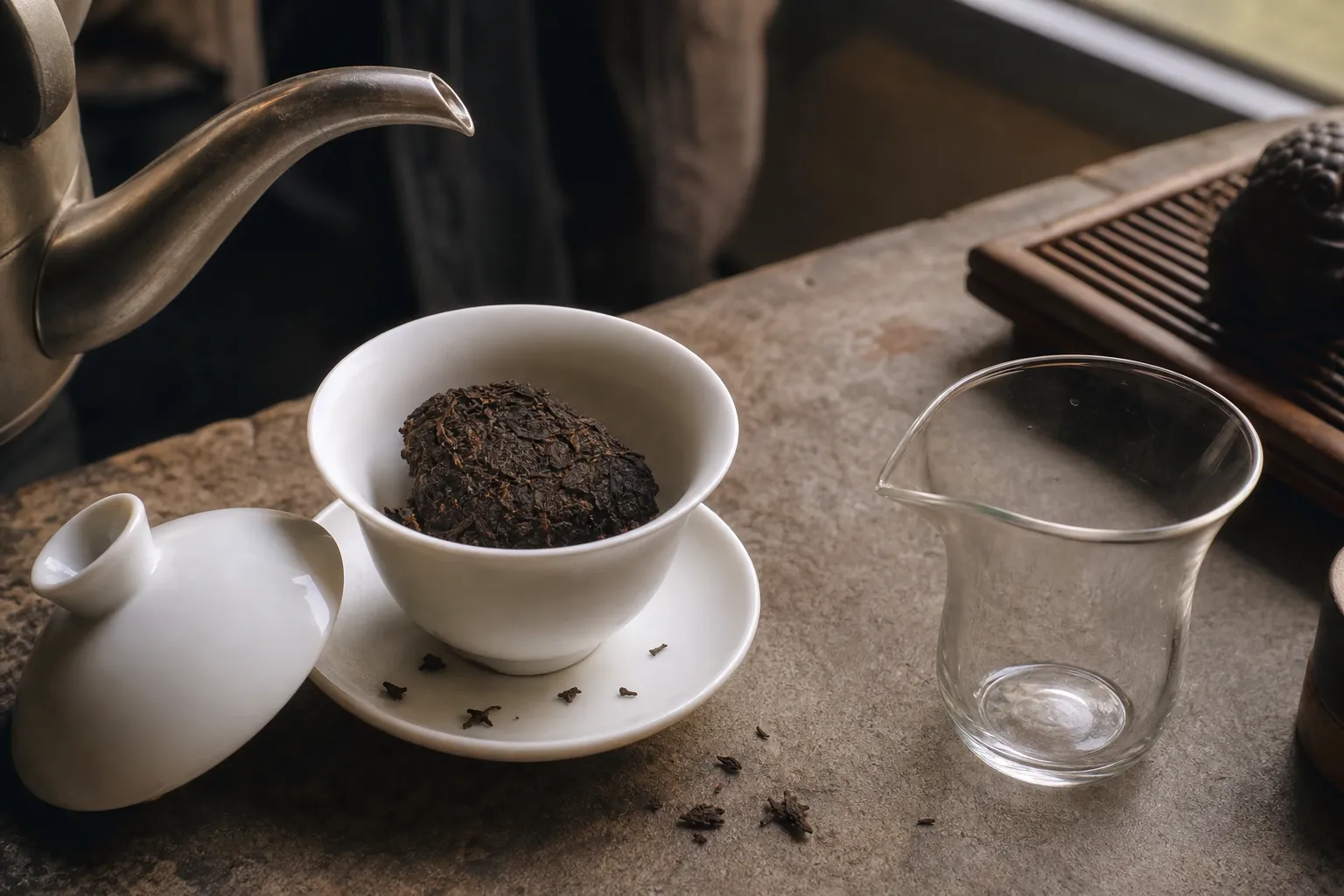
A dense chip of dark tea often looks still in the gaiwan until the first hot pour reaches it. In many gongfu sessions, a rinse helps: it warms the vessel, loosens compressed leaf, moves small fragments out of the first cup, and gives you an early read on storage aroma.
You do not have to rinse every dark tea before gongfu brewing. Loose leaf, light flakes, and teas you want to taste from the very first infusion can go straight into the first drinkable steep. The better question is not whether rinsing is required, but what you need the first pour to do.
Use a short rinse when the leaf needs opening, warming, or a gentler start. Skip it when the first infusion is part of the tasting.
upward
Start with the broader guide
Use the broader guide first if you need the full scope before this page.
What a First Rinse Does
A rinse is a quick pour of hot water over the leaf, usually discarded before the first drinkable infusion. In everyday gongfu brewing, it is less a rule than a small adjustment at the start of the session.
For dark tea, a first rinse can help in four practical ways
- Warm the gaiwan, teapot, fairness cup, and cups.
- Start loosening compressed pieces from a cake, brick, or tuo-shaped tea.
- Move out tiny leaf fragments that may cloud the first pour.
- Give you a wet-leaf aroma check before the first steep.
That does not make the rinse a final judgment on quality, storage, age, or authenticity. Without stronger source support, those claims should stay off the page. Treat the rinse as a brewing control: useful when it changes how the leaf opens, not proof of what the tea is.
A useful dark tea rinse is usually brief. Pour hot water in, let the surface wet through, and decant promptly. If the piece is still tight, let it rest for a moment in the warm vessel, then give the first drinkable infusion a little more time. If the wet leaf already smells open and sweet, keep the first steep short.
Watch the leaf, not only the clock. Look for separation at the edges, a shift from closed or storage-heavy aroma toward clearer warmth, and whether fine particles make the liquor look cloudy.
When Rinsing Is Worth It
A first rinse is most useful when water needs help reaching the leaf evenly. Dark tea often comes compressed, and compression changes the first few seconds of brewing. A thin cake flake, a dense brick chunk, and loose fermented tea do not behave the same way.
Tightly compressed piece
Water may reach the outside before the inner leaf. Use hot water and a brief rinse; rest the leaf if it stays closed.
Noticeable storage aroma
The first wet-leaf smell may feel heavy, earthy, or closed. Rinse once, smell the warmed leaf, then set the first steep.
Broken material with many small particles
Fine fragments can cloud the early liquor. Use a quick pour and decant cleanly.
Small dense chunk from a brick
The surface may brew before the center opens. Rinse, pause briefly, then begin short infusions.
Cold gaiwan or teapot
Heat loss can make the first steep flat. Let the rinse warm the vessel and cups.
A tightly compressed dark tea rinse does not need to be dramatic. For a small dense piece, hot water and a clean pour may be enough to soften the outer layer. If it remains hard, do not expect the first infusion to solve everything. Let the warm vessel do some work, then adjust from the cup.
Storage aroma is another common reason to rinse. Some teas smell more open after their first contact with hot water. The aroma may be woody, earthy, cellar-like, or simply closed from storage. The point is not to erase the tea’s character. It is to decide whether that first wet-leaf note belongs in the cup or can pass with the rinse.
For broken material, the rinse is mostly about texture and clarity. Small fragments can make dark tea liquor harder to read, especially in a pale cup. A short rinse may reduce the first wave of floating bits, though it will not make every infusion clear.
When You Can Skip the Rinse
Skipping the rinse is reasonable when the leaf is loose, separated, and inviting from the start. Clean-looking loose leaf dark tea does not always need a separate wake-up pour. If the aroma is pleasant before brewing, the first infusion may be worth drinking rather than discarding.
You can skip the rinse when
- The leaf is loose or only lightly compressed.
- You want to taste the dark tea first infusion.
- The dry leaf has no storage note that bothers you.
- The material is not especially broken or particle-heavy.
- You prefer a fuller first cup in a casual session.
This is not a lesser method. It is only a different use of the first pour. If the first cup tastes thin, flat, or closed, adjust the second infusion: add a few seconds, use hotter water, or let the leaves rest briefly in the warmed vessel.
Skipping the rinse can be especially useful when you are learning a tea. The first infusion shows how quickly the leaf gives flavor, how clear the liquor appears without intervention, and whether the early aroma is light, sweet, heavy, or muted. For comparison tasting, that information may matter more than following a fixed rinse habit.
Taste still decides. If the first cup often feels too earthy, heavy, or rough for you, a short rinse may make the session more balanced. If the first cup is your favorite part because it is light and direct, skipping the rinse preserves it.
How Long Should a Dark Tea Rinse Be?
For gongfu brewing, start short. A practical rinse can be a quick in-and-out pour or a few seconds, depending on compression, vessel size, and aroma. The goal is to wet and warm the leaf, not to extract a full cup.
Loose leaf that opens quickly
Skip, or use a very quick flash rinse.
Small flake from a cake
Quick rinse, then short infusions.
Dense brick piece
Short rinse, brief rest, then first infusion.
Noticeable storage aroma
Short rinse, smell the wet leaf, then adjust.
Broken tea with many fine particles
Quick rinse with careful decanting.
Gongfu rinse water temperature usually stays close to the brewing temperature. Many dark tea drinkers use very hot water because compressed and fermented leaves often need heat to open. Still, the right choice depends on the tea, vessel, and your taste. If the first drinkable infusion is too forceful, shorten the steep before lowering the temperature. If it is thin or dull, extend the steep slightly or keep the vessel warmer.
A rinse can be too long. If the rinse sits until the liquor becomes dark and full, you may have brewed a real infusion and thrown it away. That can be acceptable for a very dense or storage-aromatic piece, but it is not necessary for every session.
After the rinse, smell the lid or warmed leaves. If the aroma is still closed and the leaf remains compact, give the first infusion a little more time. If the aroma is clear and the leaves have started to loosen, keep the first steep brief.
The “Wake Up the Leaves” Misunderstanding
People often say a rinse can “wake up” dark tea leaves. As a practical phrase, it can be useful. It points to visible leaf opening, vessel warming, and the first release of aroma.
The problem comes when the phrase becomes a rule. A rinse does not make every dark tea better. It does not turn poor storage into good storage, and it does not prove that a tea was well made. It also does not mean skipping the rinse is careless.
In a gongfu session, the rinse is only one control among leaf amount, vessel size, water temperature, steeping time, and compression. The more useful question is: what should the first pour accomplish?
If it needs to open a dense piece, move fine fragments, warm a cold vessel, or soften a storage-heavy first aroma, rinse. If it is part of the tasting, drink it.
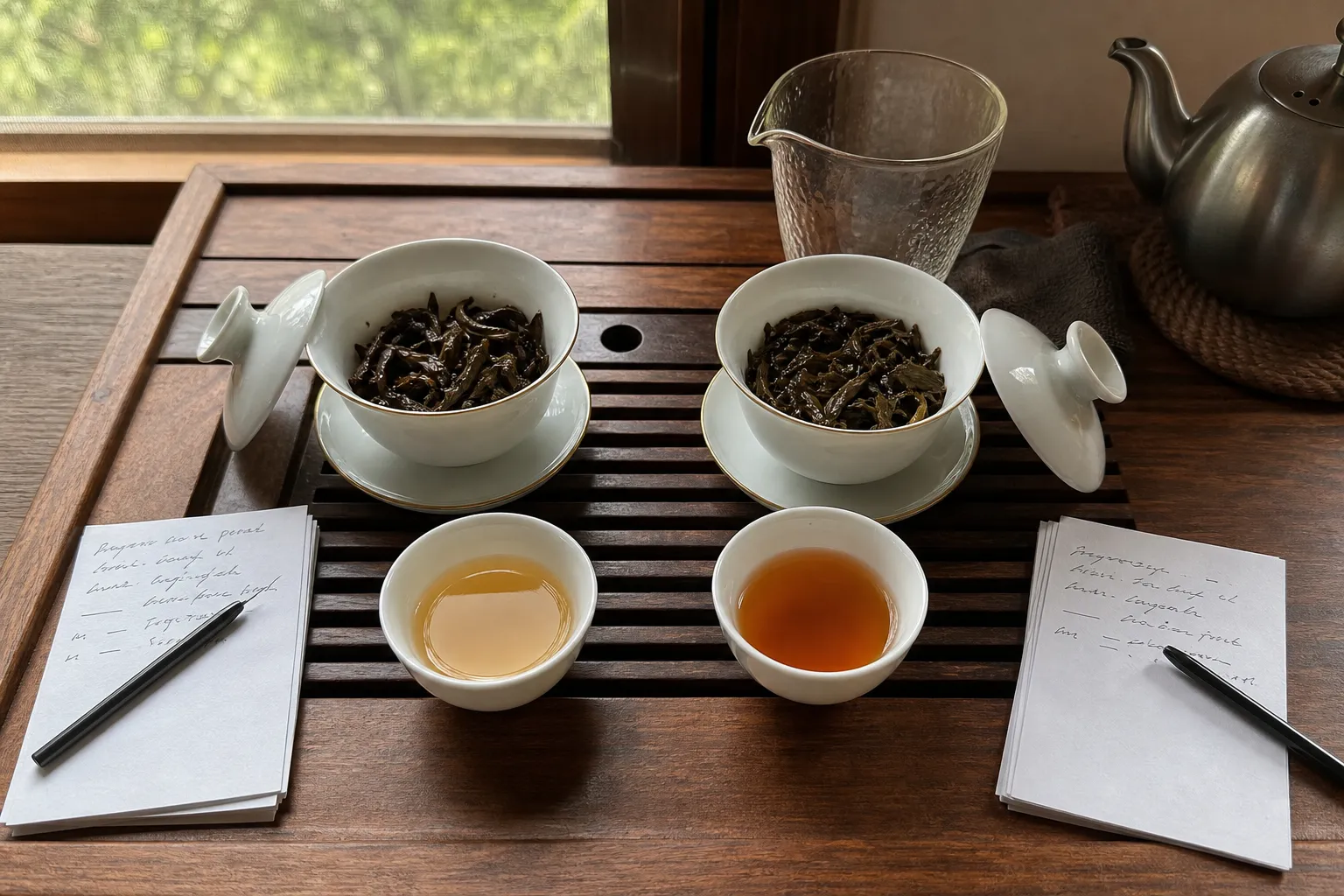
If you are unsure, compare two sessions with the same tea: rinse once, skip once, and keep the leaf amount, vessel, and water similar. Compare the first two infusions by aroma, body, liquor clarity, and aftertaste. Keep the result modest. One session does not define the tea forever, and different pieces from the same cake or brick can behave differently.
A Simple Check Before You Pour
Before heating the water, look at the tea for ten seconds. Is it loose, flaked, or tightly compressed? Are there many crumbs? Does the dry leaf smell pleasant to you, or does it carry a storage note you would rather soften? Is the vessel already warm?
Use a short rinse
Choose this if the tea is dense, particle-heavy, strongly storage-aromatic, or going into a cold gaiwan. Pour hot water, decant promptly, smell the wet leaf, and begin the first drinkable infusion with attention to leaf opening.
Skip the rinse
Choose this if the leaf is loose, clean-looking, and appealing from the start. Brew the first infusion lightly and taste what the tea gives before making corrections.
Use a very quick rinse
Choose this when you are between the two. This suits small flakes, moderately compressed pieces, or teas where you want vessel warming without losing much early character.
The next adjustment belongs in the cup. If the first infusion tastes thin, give the next steep more time or heat. If it tastes too heavy, shorten the next pour. If the liquor is cloudy from fine particles, decant more carefully. Rinsing dark tea before gongfu brewing is useful when it solves a visible brewing problem; when it does not, the first cup can simply begin the session.