
Gongfu Brewing
How to Gongfu Brew Loose Leaf Dark Tea Without Overextracting It
To gongfu brew loose leaf dark tea without overextracting it, use a small vessel, a moderate amount of leaf, hot water, and short infusions that you adjust by taste. Loose leaves often open faster than compressed chunks, so the main skill is not waiting for a fixed time. Pour as soon as the liquor, aroma, and body look ready.
A good session feels controlled: flavorful, warm, and layered, but not harsh, muddy, or so heavy that later cups have nowhere to go.
upward
Read the full overview first
Use the broader guide first if you need the full scope before this page.
Start With a Setup You Can Control
You do not need elaborate equipment. You need a vessel that lets you stop extraction quickly.
Vessel
Start with a small gaiwan or small teapot. It should pour quickly and completely.
Leaf Amount
Use a moderate amount, not packed tight. Broken leaf can become heavy fast.
Water
Use hot water, adjusted by taste. Slightly cooler water can soften roughness.
First Steep
Keep it very short. The first cup should not feel overloaded.
Later Steeps
Add time slowly. Let the tea show when it is fading.
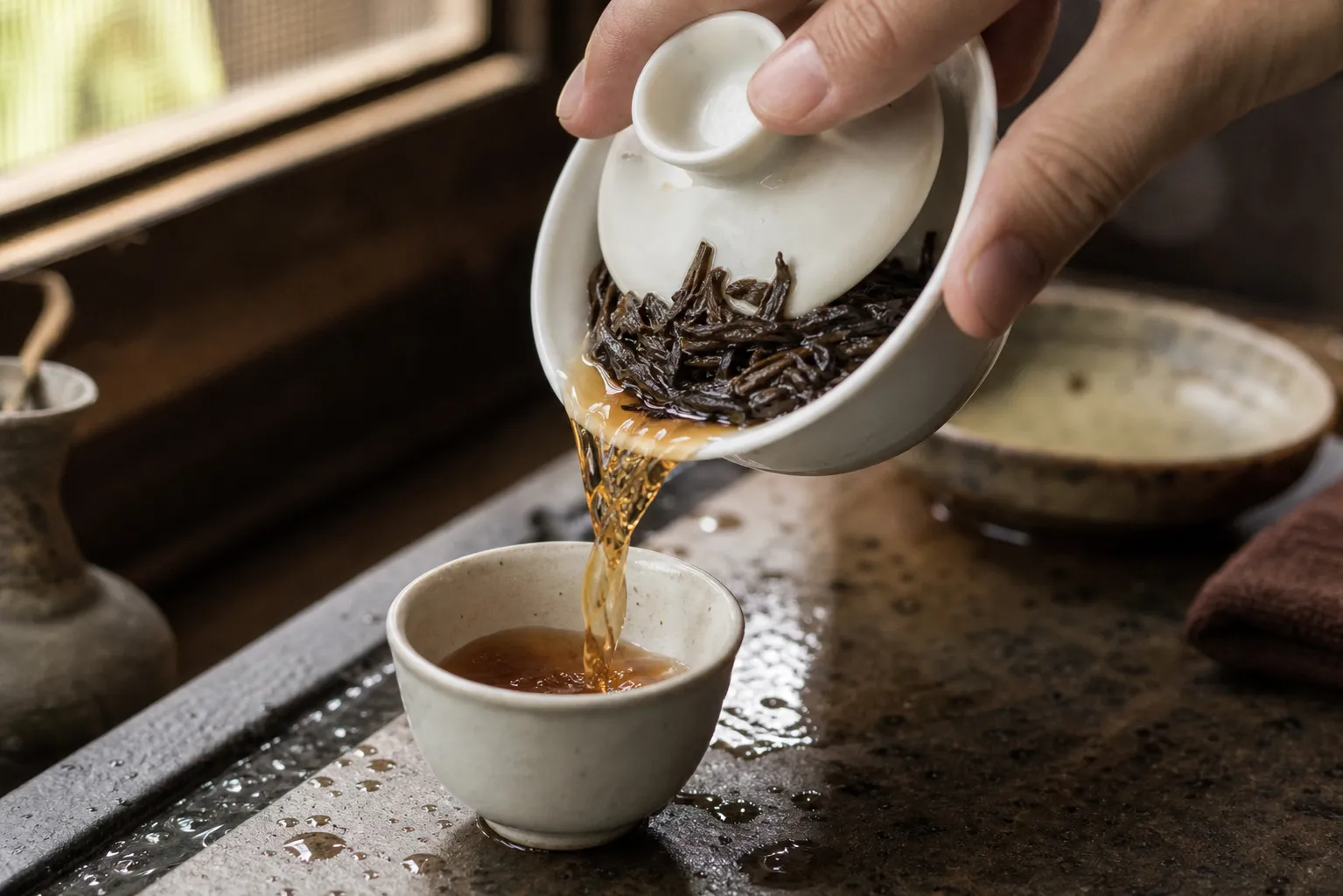
A loose leaf dark tea gaiwan is useful because you can see the leaves and pour fast. A small teapot can also work if it does not trap much liquid after pouring. If tea remains in the spout, under the lid, or among the leaves, it keeps extracting between rounds and may make the next cup taste heavier than expected.
Loose dark tea is not the same as a tight piece of compressed tea. Loose leaves usually wet and release flavor quickly. Small fragments, dusty material, and broken pieces can darken the liquor and bring out bitterness sooner than larger intact leaves. If the leaf looks very fine or fragmented, begin with a lighter hand and shorter steeps.
Handle the First Three Infusions Carefully
The first few infusions show whether your leaf amount, vessel, water, and timing are working together.
A Simple Rhythm
- Warm the vessel.
- Add the leaf and smell it dry, then warmed.
- Decide whether a rinse is useful.
- Make the first short infusion.
- Pour fully.
- Taste before changing the method.
- Adjust one variable at a time.
The rinse choice for dark tea is not automatic. A quick rinse can help loosen compacted clumps, clear loose dust, or soften the first strong edge of a tea that opens quickly. If the leaves are already loose, clean-looking, fragrant, and easy to wet, skipping the rinse can give you a fuller first cup.
If you rinse, keep it brief and pour away promptly. A long rinse can behave like a full infusion. If you skip the rinse and the first cup tastes muddy, dusty, or blunt, correct the next infusion: shorten it, pour faster, or use slightly less leaf next time.
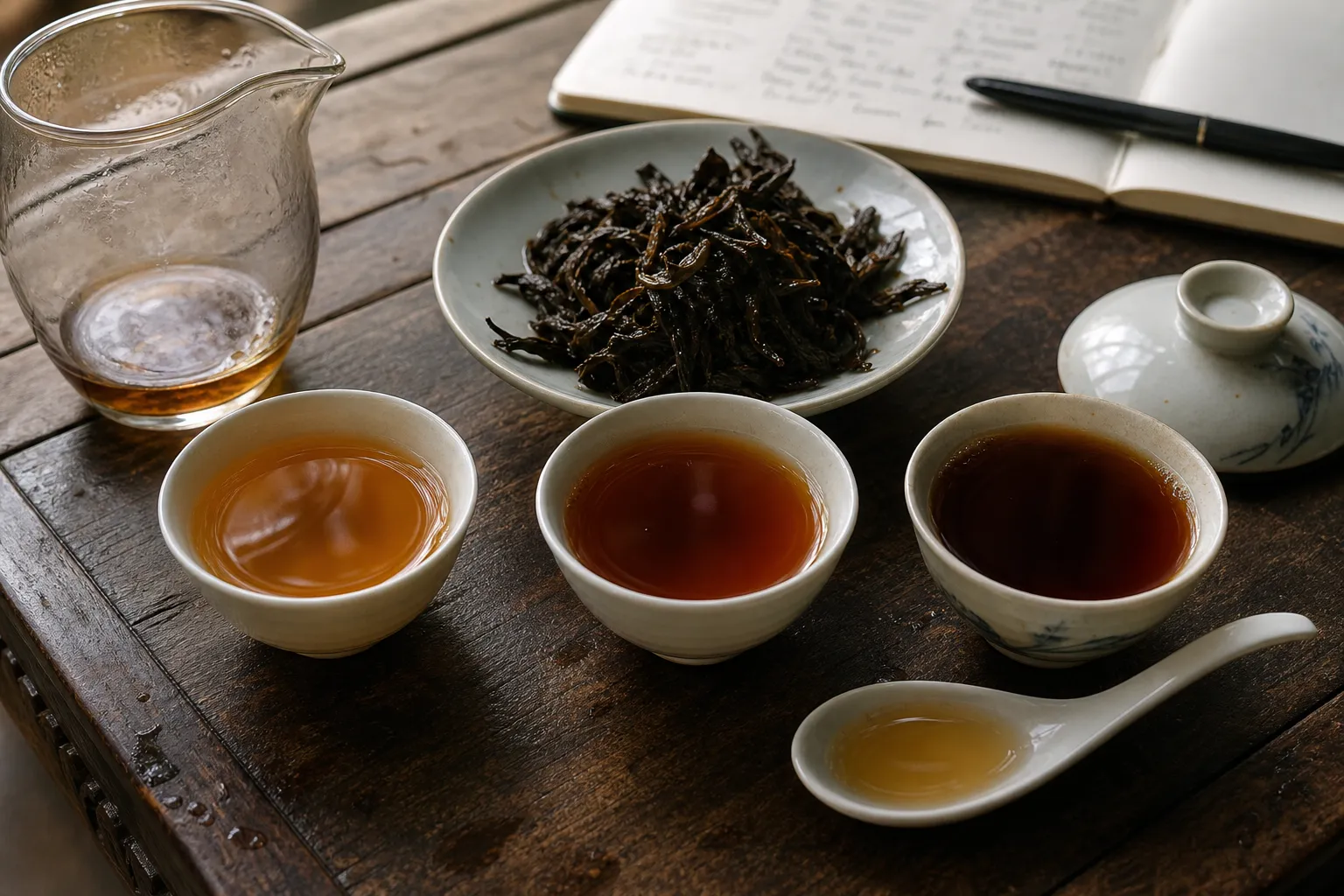
Watch the liquor as it leaves the vessel, but do not judge by color alone. A deep reddish-brown or dark amber cup can still taste clean and rounded. A paler cup can already feel sharp if the leaf is broken or the water is too forceful for that tea. Use color as an early cue, then confirm with aroma, texture, and finish.
Aroma changes are often more helpful than the clock. Depending on the tea and storage, early cups may show warm wood, grain, earth, dried fruit, or a deeper fermented note. If the aroma turns flat while the mouthfeel becomes thick and drying, the steep may be running too long. If the aroma is faint and the liquor feels hollow, the next cup may need a little more time.
Signs the Tea Is Going Too Far
Overextraction in gongfu brewing dark tea is not simply “the cup looks dark.” It usually appears as several signs at once:
- The liquor becomes dense almost immediately.
- The aroma feels muted rather than open.
- The mouthfeel turns rough, drying, or heavy.
- Bitterness sits at the back of the tongue and lingers.
- Later infusions taste tired sooner than expected.
- The cup feels dull and thick instead of full and lively.
Bitterness is not always a flaw in dark tea. Some teas have a firm edge, especially with hot water and a generous leaf amount. The problem is bitterness that crowds out aroma, sweetness, texture, and aftertaste. When the cup becomes mostly weight and roughness, extraction is outrunning balance.
The quickest correction is to shorten the next steep and pour more decisively. If the cup improves, timing was likely the main pressure point. If it stays harsh, reduce the leaf amount in the next session or try slightly cooler water. If the tea turns heavy only after several rounds, you may be increasing steep length too quickly.
Taste Cues and Adjustments
Thin, pale, quiet
Likely pressure point: not enough extraction. Next adjustment: steep a little longer.
Fragrant but weak
Likely pressure point: leaf amount may be low. Next adjustment: add slightly more leaf next session.
Dark and rough early
Likely pressure point: too much extraction too fast. Next adjustment: shorten steep or reduce leaf.
Heavy after several rounds
Likely pressure point: time increases too quickly. Next adjustment: hold the next steep shorter.
Flat and muddy
Likely pressure point: poor separation or trapped liquor. Next adjustment: pour more completely.
Sharp but not strong
Likely pressure point: water may be too forceful. Next adjustment: try slightly cooler water.
This approach works better than forcing one timing chart onto every loose dark tea. Leaf size, storage, age, breakage, vessel shape, and water can all change how quickly the cup builds.
Vessel Size, Leaf Load, and Pouring Speed
Vessel size matters because gongfu brewing concentrates the relationship between leaf and water. A small vessel with a high leaf load can make vivid cups, but it also leaves less room for error. A larger vessel with the same leaf amount may taste softer, slower, and less concentrated.
When learning a tea, avoid packing the vessel. Loose leaves need room to wet, move, and release flavor. If the vessel is crowded, water may pass unevenly through the leaf, and the liquor can become strong before the larger pieces have opened evenly.
Pouring speed is part of the method. With dark tea short steeps, the difference between a clean pour and a slow dribble can be the difference between rounded and heavy.
Watch for Hidden Extraction
- Liquid left in the vessel after pouring.
- Leaves sitting in a wet puddle between infusions.
- A tightly closed lid holding too much heat after a strong steep.
- The last, strongest drops landing unevenly in the serving cup.
- Delayed pouring because you are watching the clock instead of the liquor.
After each infusion, tilt the vessel enough to drain it well. You do not need to dry the leaves; just avoid leaving a small brew trapped at the bottom.
Why the Answer Changes by Tea
There is no single setting for dark tea without overextracting because loose leaf dark tea is not one uniform material. It may include larger leaves, cut pieces, stems, broken bits, or leaves stored under different conditions.
Leaf form changes speed. Smaller particles extract faster. Larger leaves may need more time to open. Mixed leaf sizes can be tricky because the small pieces darken the liquor while the larger leaves are still unfolding.
Storage changes aroma and body. A tea that smells clean, mellow, and open may tolerate hotter water and slightly longer steeps. A tea that smells closed, musty, or very heavy may need a gentler first session so you can separate storage character from brewing pressure. That is a brewing observation, not a final judgment on the tea.
Water changes texture. Some water makes tea feel sharper or flatter. If several teas suddenly taste rough with your usual method, water may be part of the pattern. Before changing everything, try a shorter steep and a cleaner pour. If the roughness remains across teas, test different water when practical.
Personal taste also matters. Some drinkers like a dense, forceful cup. Others prefer a clearer, more aromatic sequence. Avoiding overextraction does not mean making the tea weak. It means keeping strength, bitterness, thickness, aroma, and finish in balance.
A Simple Brewing Rhythm to Use Next Time
- Start with a moderate amount of loose leaf in a small vessel.
- Smell the warmed leaf before adding water.
- Rinse briefly only if the leaf seems to need it.
- Make the first infusion short and pour completely.
- Taste for color, aroma, body, and finish.
- If the cup is thin, add a little time.
- If the cup is rough or heavy, shorten the next steep.
- If roughness continues, reduce leaf or use slightly cooler water next session.
A balanced gongfu brew is not defined by one color, one steep count, or one schedule. Each cup should have enough flavor to satisfy while still leaving room for the next infusion to change. The aroma should have space. The body should feel present without turning dull. If bitterness appears, it should support the cup rather than flatten it.
When loose leaf dark tea begins to taste too strong, correct immediately. Pour faster, shorten the next steep, reduce the pressure of the brew, or use less leaf next time. Gongfu brewing gives you many small chances to adjust; use them before the tea becomes heavy.