
Steeping judgment
Can You Steep Dark Tea Too Long
A dark tea liquor that turns nearly opaque, heavy on the tongue, and sharply earthy is often giving a simple signal: the leaves stayed with the water longer than this cup needed. So, can you steep dark tea too long? Yes. Dark tea can be oversteeped for a particular leaf amount, vessel, water temperature, and taste preference.
That does not mean there is one dark tea steeping limit for every cake, brick, loose-leaf batch, or drinker. “Too long” means the cup has moved past the balance you wanted. It may taste bitter, flat, muddy, drying, overly thick, or simply stronger than planned. The tea is not automatically ruined; the next steep just needs a clearer adjustment.
upward
Read the full overview first
Use the broader guide first if you need the full scope before this page.
What Oversteeped Dark Tea Feels Like
Oversteeped dark tea is not always harsh. Sometimes it is only less defined. The liquor may still be drinkable, but the flavor notes blur together and the finish feels heavier than the aroma suggested.
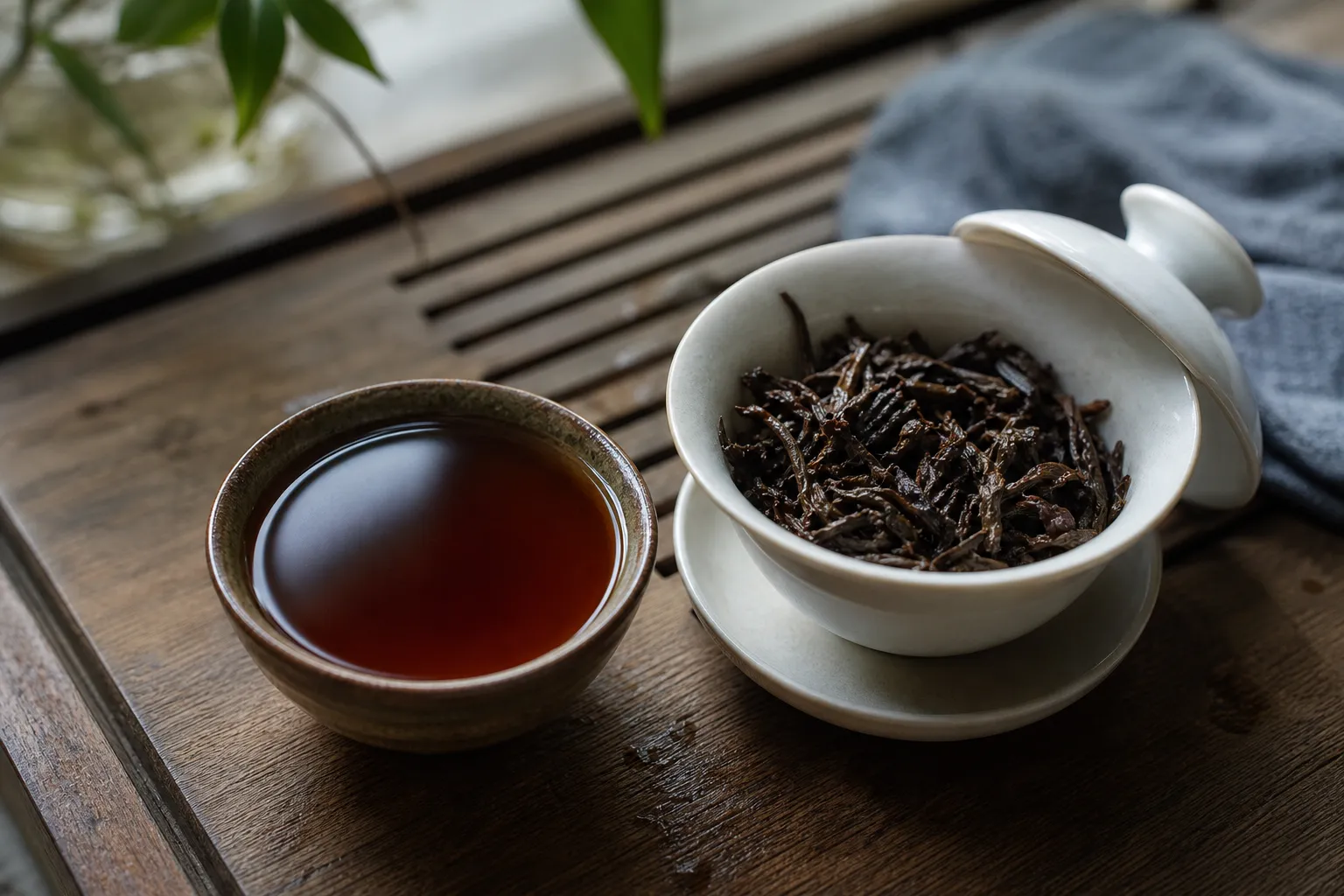
Look at the cup before you blame the clock. Dark tea liquor color can deepen quickly, especially with broken leaf, a loosened cake fragment, or a small vessel packed with leaf. A dark cup is not automatically a problem. It becomes a useful warning when deep color arrives with dull aroma, rough texture, or a thick, dragging mouthfeel.
Common signs
- Liquor that feels too dense for the leaf amount and vessel.
- Aroma that shifts from warm, woody, or mellow to flat, damp, or sharply earthy.
- Bitterness that covers the tea’s sweetness or grain-like depth.
- Mouthfeel that turns drying, rough, or heavy instead of rounded.
- Aftertaste that feels muddy rather than clean or slowly fading.
These are brewing cues, not fixed defects. Some drinkers like a dense cup. Some dark teas are brewed with long contact time on purpose. The useful question is whether the cup still matches the strength, clarity, and texture you wanted.
Why Steeping Time Changes So Much
Dark tea steeping time works with several other variables: leaf form, compression, water temperature, vessel size, leaf amount, storage character, and how many infusions the leaves have already given. When one variable changes, the same steeping time can taste gentle in one cup and overdone in another.
Loose leaf usually releases color and flavor faster than a tight piece of compressed tea. Small fragments and broken edges expose more surface area, so they can thicken a brew quickly. A tight brick or cake chunk may begin slowly, then open suddenly after a rinse or after the first few infusions. This is why compressed dark tea steeping can feel uneven if you judge only by minutes.
Vessel size matters too. A small teapot or gaiwan with a generous amount of leaf can make a strong cup with brief steeps. A larger mug or pot with fewer leaves may tolerate a longer steep before the liquor turns heavy. Hotter water often pulls strength faster; cooler water may soften the cup, though it can also leave some teas tasting thin.
Storage character should be read through aroma and taste, not assumption. A tea with a noticeable storage aroma may become earthy or heavy quickly when steeped long. Another tea may stay mellow with extended contact. Since no universal public brewing range applies cleanly here, the practical method is to watch the first cup and adjust the next one.
Thin, pale, or quiet
Steep a little longer, use slightly more leaf, or use hotter water.
Strong but pleasant
Keep the time close and watch later infusions.
Bitter, rough, or drying
Shorten the next steep or use less leaf next session.
Muddy, flat, or overly earthy
Shorten the steep and consider a brief rinse next time.
Heavy but aromatic
Reduce time slightly before changing the whole setup.
Change one variable at a time. If you shorten the steep, reduce the leaf, and change the water temperature together, you may not know which choice improved the cup.
When a Long Steep Is Not a Mistake
A dark tea long steep can be intentional. Some drinkers use a larger mug and let the leaves extract slowly. Others want a thick, warming cup rather than a sequence of precise infusions. Long contact time does not automatically make the tea wrong.
The difference is intention and result. If you wanted a concentrated brew and the cup tastes full, smooth, and satisfying, the steep has done its job. If you wanted a layered cup and received a heavy, bitter, or flattened one, the steep was too long for that setup.
Dark tea is often forgiving, but forgiving does not mean impossible to oversteep. A fermented tea can still become too strong for the leaf amount, vessel, water temperature, or drinker’s preference. The cup is the check.
For small-vessel brewing with a high leaf-to-water ratio, short infusions often make more sense. For a casual mug or larger pot, longer contact may be reasonable because the water volume is greater. These are starting points, not fixed limits.
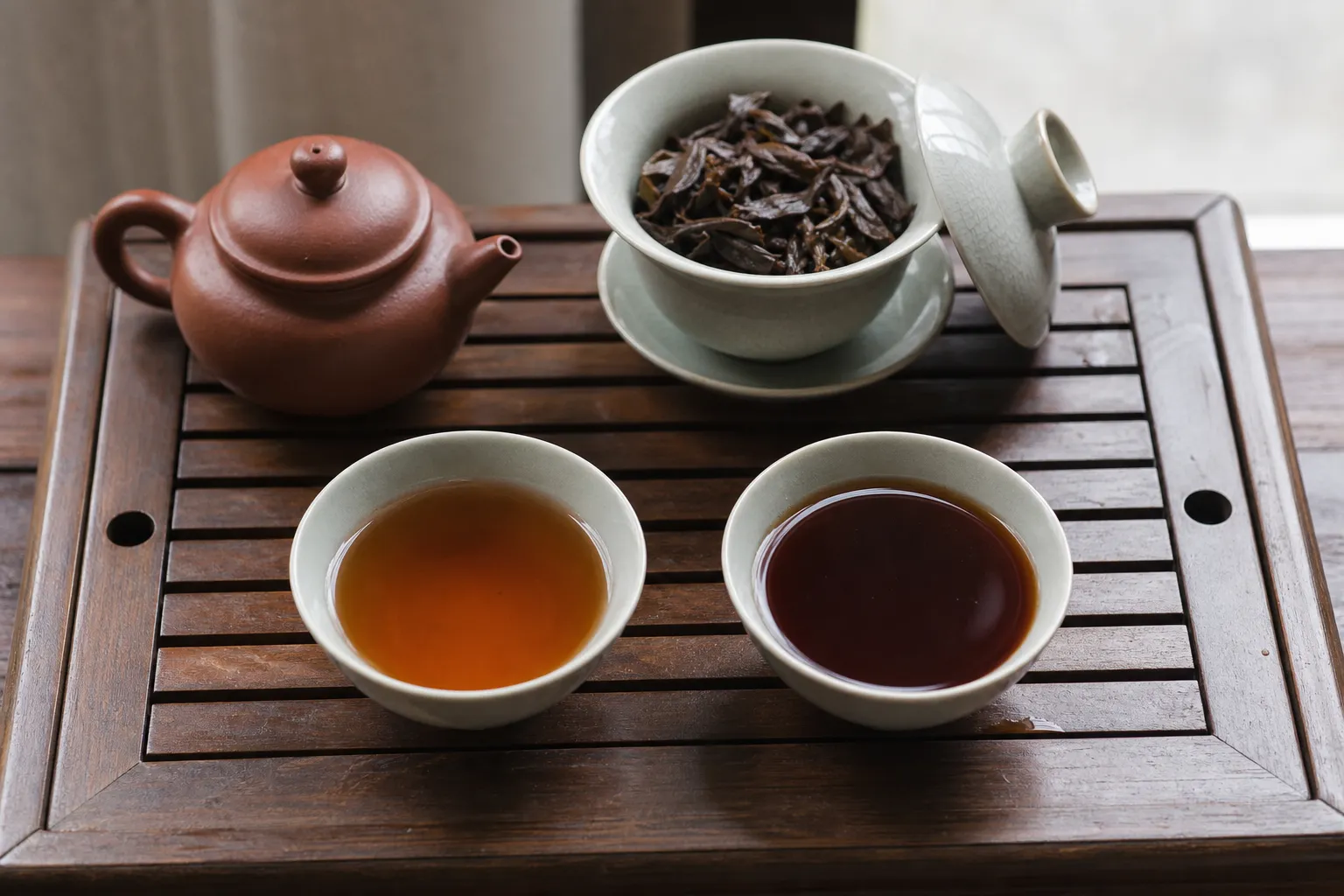
If you are unsure whether you like long steeps, compare two cups from the same tea. Brew one shorter and one longer while keeping leaf amount and water similar. Notice whether the longer cup gains depth or only gains weight.
How to Adjust an Overlong Steep
If the current cup is too strong, do not treat the whole session as failed. Dark tea leaves often have more to give, and the next infusion can be corrected.
First, pour the liquor off the leaves completely. Water left sitting with the leaves will keep pushing the brew heavier. Then taste the cup before changing anything. If it is only stronger than planned, you may drink it slowly or dilute it with a little hot water. If it is bitter, drying, or muddy, use that as your note for the next steep.
For the next infusion, shorten the contact time. If the oversteeped dark tea came from a small vessel with a lot of leaf, make the next pour brief and taste early. If it came from a mug where the leaves sat loose in the water, separate the leaves sooner next time or use an infuser that can be removed cleanly.
If the problem repeats
- Use a little less leaf if the brew becomes heavy before the aroma opens.
- Break compressed tea into a more even piece if one chunk extracts unevenly.
- Rinse briefly if the first cup carries strong storage aroma or loose dust.
- Use a larger vessel if the same leaf amount keeps producing dense liquor.
- Shorten early steeps, then lengthen later ones as the leaves settle.
With compressed tea, give the leaf time to open. A tight piece may brew lightly at first, then release much more strength once loosened. If the first infusion is mild, avoid making the second steep dramatically longer unless you are watching the liquor closely. Many overlong dark tea steeps happen when a compressed piece opens faster than expected.
A simple reset is enough: shorten the next infusion, pour fully, taste before adding time, and let the leaf form guide the session.
Common Confusion About Bitterness, Earthiness, and Color
Dark tea bitterness is not always caused by steeping time. Too much leaf, very hot water, fine broken material, or a tea with naturally stronger edges can also make the cup feel sharp. If a shorter steep still tastes bitter, look at leaf amount and broken particles before deciding time is the only issue.
Earthiness is not automatically a sign of oversteeping either. Many fermented teas can show earthy, woody, damp-leaf, grain-like, or cellar-like notes depending on the tea and storage condition. The issue is balance. Earthiness that sits under sweetness or rounded body may be part of the tea’s character. Earthiness that turns blunt, muddy, or stale-tasting after a long steep is more likely a brewing cue.
Liquor color can mislead as well. A dark cup may be smooth and pleasant. A lighter cup may still taste rough if the leaf material is fine or the tea is naturally brisk. Use color as an early signal, then confirm with aroma, mouthfeel, and aftertaste.
This page stays with brewing judgment: taste, strength, texture, aroma, and how to adjust the next cup. It does not use long steeping as a basis for body-effect promises, formal quality claims, or fixed external limits.
A Quick Check Before the Next Cup
Before deciding that a dark tea steeped too long, run through four checks.
- First, note the form. Loose leaf, broken cake pieces, and tight brick fragments do not release at the same pace.
- Second, note the vessel. A small pot with a lot of leaf needs different timing from a large mug.
- Third, smell the wet leaf and the liquor. If the aroma is still open but the cup is heavy, reduce time slightly. If the aroma has gone flat and the mouthfeel is rough, shorten more clearly.
- Fourth, decide what you wanted from the cup. A dense brew may be right for one session and too much for another.
Make one clean adjustment
- If the cup was too bitter, shorten the steep.
- If it was too thick, use less leaf next time or pour sooner.
- If it was too earthy, try a brief rinse or a shorter first infusion.
- If it was only too strong, dilute the cup or reduce time slightly.
- If it was pleasant despite being long, keep the method and call it your preference.
Dark tea can be steeped too long, but the limit lives in the cup rather than on a universal timer. Watch the liquor, smell the leaf, feel the mouthfeel, and let the next pour answer with a smaller, cleaner change.