
Gongfu tasting guide
Why Dark Tea Tastes Different Across Gongfu Infusions
A rinsed piece of dark tea may seem quiet in the first cup, then turn woody, sweet, earthy, drying, or softer over the next few short steeps. The simple answer is that dark tea flavor changes across infusions because the leaf does not release aroma, color, body, and aftertaste all at once.
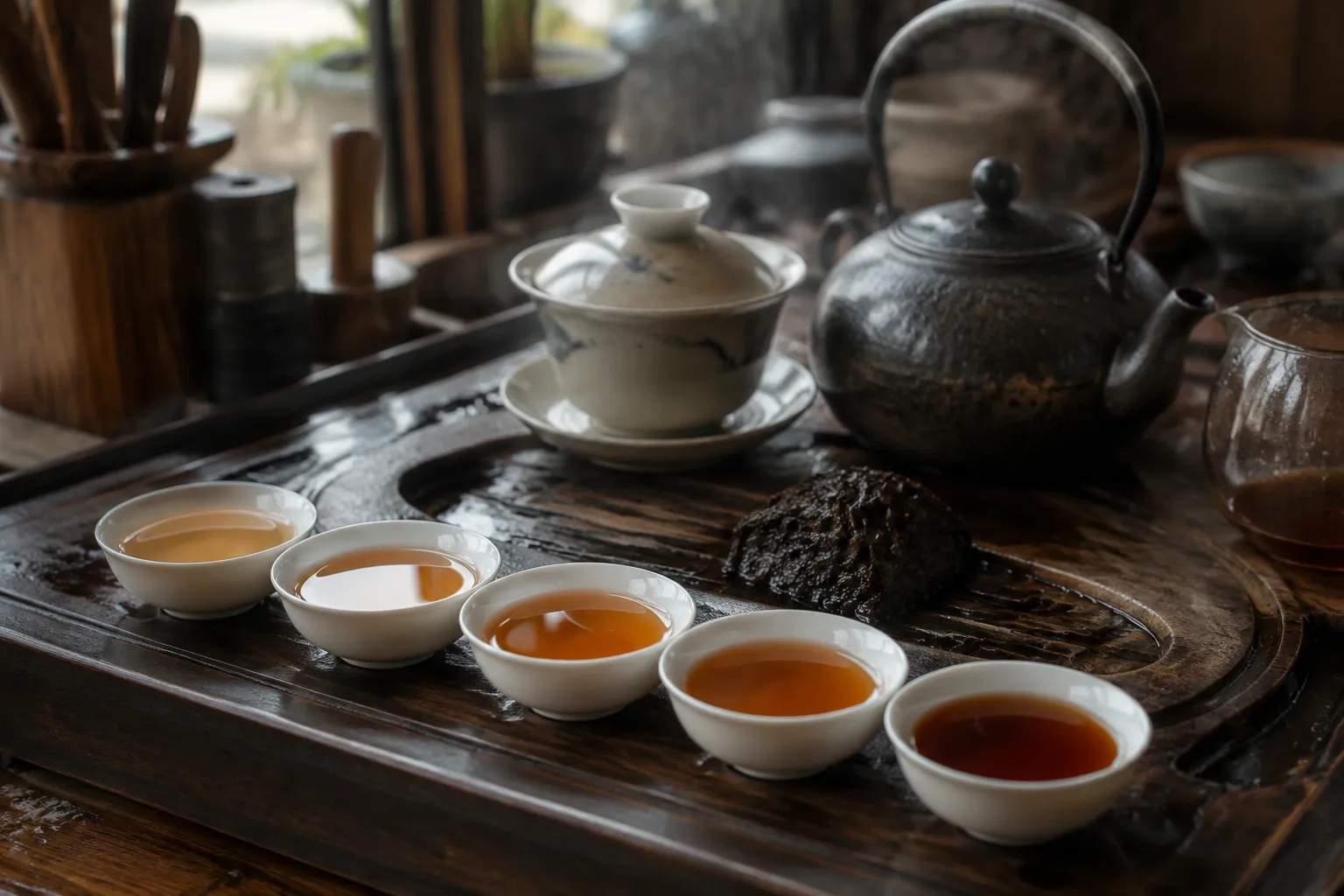
Compression, broken edges, water temperature, steeping time, vessel size, leaf amount, and storage condition all shape the order of release. Aroma can open before body. Liquor color can deepen before sweetness. Aftertaste can appear after the strongest sip has already passed.
Gongfu brewing makes those changes easier to notice because it divides one brew into many small readings. It does not give every tea the same stage map. The useful question is not “Which infusion is the true taste?” but “What is this cup showing, and what should I adjust next?”
upward
Read the full overview first
Use the broader guide first if you need the full scope before this page.
What Changes From One Infusion to the Next
Across gongfu dark tea infusions, the cup usually changes in four places: aroma, liquor color, mouthfeel, and aftertaste.
Aroma
Aroma often moves first. Warm leaf and a quick rinse can loosen surface notes such as wood, earth, paper, mineral, dry storage, or aged-leaf impressions. A compressed brick may start closed because water has not reached the center. Loose leaf may show its main aroma sooner because more surface area is exposed. A quiet first cup is not automatically a problem; it may only mean the leaf needs another short steep to separate.
Liquor Color
Liquor color can shift just as quickly, but color is only a cue. A tight piece may give a pale first drinking steep, then darken once the inner layers soften. A broken piece may produce a dark cup early and fade sooner. If the liquor looks strong but tastes hollow, the cup may be giving more color than satisfying flavor.
Mouthfeel
Mouthfeel is where many drinkers notice the clearest turn. One infusion may feel thin and quick; the next may feel rounder, heavier, or more coating. If a cup suddenly feels rough, sharp, or muddy, the steep may have gone too long for that moment. If it feels watery while the aroma is pleasant, try a slightly longer steep, hotter water, or a smaller pour before changing the whole setup.
Aftertaste
Aftertaste often lags behind the front flavor. A cup may taste simple at first, then leave sweetness, dryness, wood, or a cooling impression after swallowing. When taking gongfu dark tea tasting notes, wait ten or twenty seconds before deciding what the cup actually left behind.
The Brewing Variables Behind Most Shifts
The best way to read multiple infusions dark tea flavor is to separate the tea form from the brewing method. A cake, brick, and loose leaf can behave very differently in the same gaiwan.
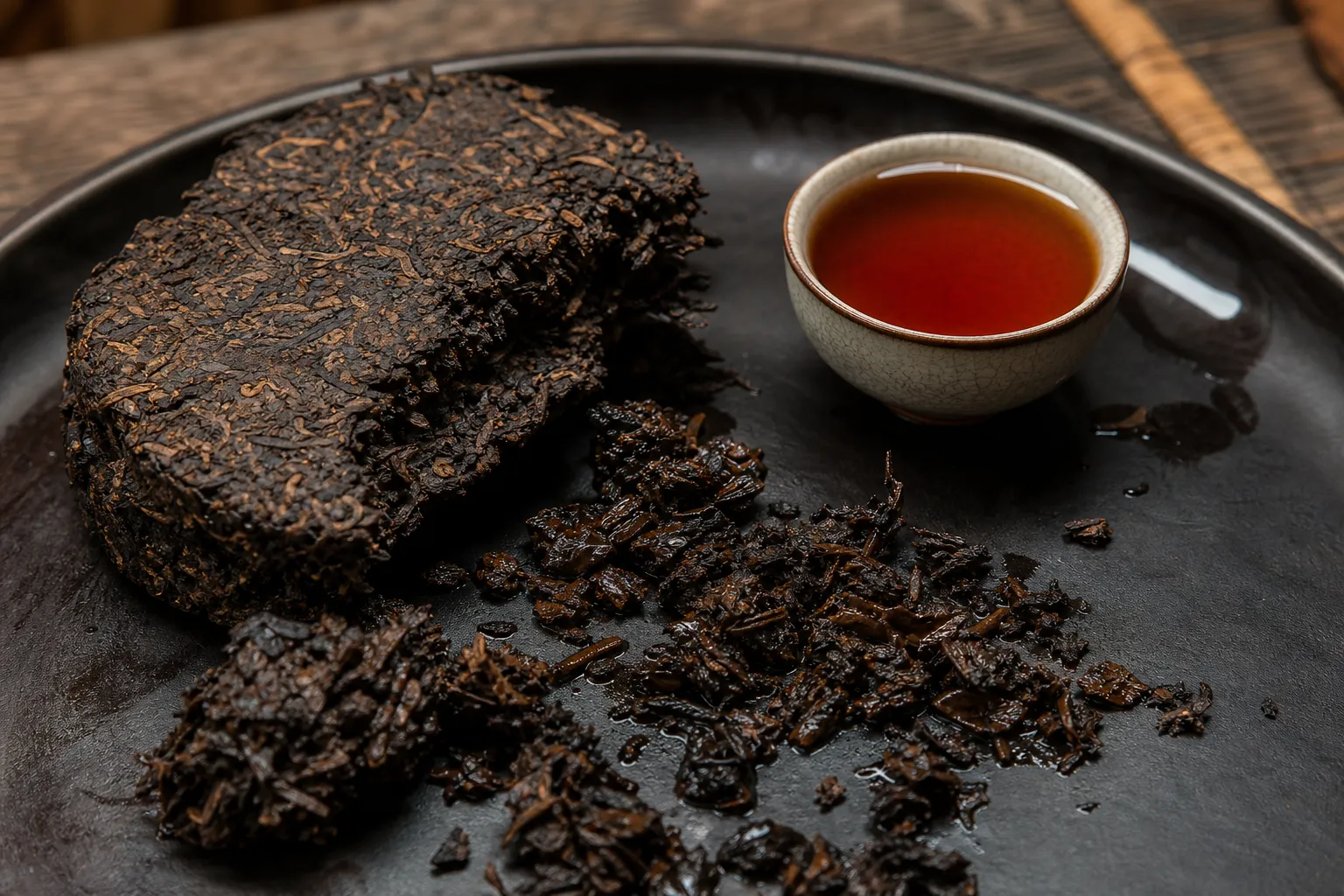
Compression is the first variable. A tight chunk from a cake or brick releases slowly because water has to move through layers. The outside may brew before the center has opened, which can make early cups lighter and later cups fuller. A loose flake or broken piece extracts faster and may need shorter steeps to avoid a heavy, flat cup.
The rinse changes the starting point. A dark tea rinse warms the vessel, wets the leaf, and loosens small fragments. If the rinse is very quick, the first drinking infusion may still act like an opening cup. If the rinse is longer, the first cup may already show stronger body. The rinse is not a separate rule; it is one small control that changes how soon the tea begins to speak clearly.
Water temperature affects how quickly flavor enters the liquor. Hotter water can bring more body and darker notes; cooler water may make the cup gentler but thinner. Rather than treating one temperature as correct for every tea, read the cup: if it is muted and pale, increase heat or time slightly; if it turns harsh or heavy, shorten the next steep before changing several things at once.
Steeping time is the easiest adjustment during a session. Gongfu brewing works through repeated short infusions, so small changes matter. If infusion three tastes flatter than infusion two, add a little time. If infusion two becomes too strong too quickly, shorten infusion three or pour more decisively. The goal is not to make every cup identical; it is to keep each cup readable.
Vessel size and leaf amount shape the whole curve. A small vessel with a generous amount of leaf can move fast: aroma opens quickly, body rises quickly, and over-steeping becomes easier. A larger vessel with less leaf may give slower, softer transitions. If you are comparing two teas, keep the vessel and leaf amount close enough that the difference comes from the tea, not only from the setup.
Storage condition can also show up across infusions. A tea stored in a dry, clean-smelling place may open differently from one carrying stronger storage notes. If the first cups are dominated by storage aroma, later infusions may reveal more sweetness, or they may not. Let the session show you before turning one aroma into a broad judgment.
A Practical Way to Read Dark Tea Infusion Stages
Instead of memorizing a fixed sequence, use three loose stages: opening, middle, and fading. These are not formal grades. They are a practical way to notice dark tea infusion stages without forcing every leaf into the same pattern.
Opening Cups
Watch rinse aroma, first liquor color, and surface notes. The leaf may be warming, separating, or still closed. Keep steeps short if flavor is already strong; extend slightly if thin.
Middle Cups
Watch body, sweetness, earth, wood, and thickness. The leaf is often releasing more evenly. Hold timing steady if balanced; shorten if rough.
Later Cups
Watch fading aroma, lighter color, and aftertaste. Flavor may be declining or shifting. Add time gradually; stop when cups feel hollow.
The opening cups show how the leaf is behaving. In compressed dark tea brewing, a quiet first cup can mean the chunk is still opening. With loose leaf, a powerful first cup may mean the tea is extracting quickly. Neither pattern proves the tea is better or worse; it tells you how to steer the next infusion.
The middle cups often carry the clearest balance of aroma, body, and aftertaste. This is the best place to note liquor color, whether the mouthfeel is smooth or drying, whether the finish is short or lingering, and whether storage notes are settling or becoming louder.
The later cups are not always weak copies of the earlier ones. Sometimes they reveal a cleaner sweetness or softer wood note. Sometimes they simply thin out. If a late cup tastes empty but still dark, you may be extracting color more than flavor. If it looks pale but leaves a pleasant finish, it may be worth one more longer steep.
Common Confusion When the Cup Keeps Changing
Darker liquor does not always mean a better cup. Dark tea liquor color helps you read extraction, but it can mislead. Small fragments may darken the cup quickly without giving much aftertaste. A tightly compressed piece may begin pale and become more expressive later. Treat color as a signal, not a verdict.
Earthy notes also need care. They can come from tea material, processing, storage condition, or brewing strength. If the earthiness feels clean, integrated, and followed by sweetness or body, you may enjoy it. If it feels stale, flat, or distracting, shorten the steep and see whether the next cup becomes clearer.
Changing too many variables at once makes the session harder to read. If a cup tastes thin, do not immediately change leaf amount, water temperature, and steeping time together. Add a little time first. If that does not help, use hotter water in the next round. If the whole session stays weak, the leaf-to-water balance may be too light for the vessel.
The rinse is easy to over-read. A rinse can help a compressed tea open, but it can also carry away some early flavor. If your first drinking cup feels too quiet, try a shorter rinse next time. If the first cup is too dense after a long rinse, start with a faster rinse or a shorter first steep.
What This Page Can and Cannot Support
This article stays with observable brewing variables: leaf form, water temperature, steeping time, vessel size, leaf amount, liquor color, aroma, mouthfeel, aftertaste, and storage condition. Those are enough to explain many dark tea aroma changes, mouthfeel changes, and aftertaste changes without turning one session into a universal rule.
It would be too strong to say that every dark tea moves from earthy to sweet, from rough to smooth, or from dark to pale in a fixed order. It would also be too strong to treat stronger, sweeter, older-smelling, or smoother cups as automatic signs of rank, source, or value. The narrower and more useful reading is this: each infusion shows how this leaf, in this vessel, with this water and timing, is releasing flavor now.
That does not make tasting vague. It makes the notes more honest. Write down the form of the tea, whether you rinsed, how quickly the liquor darkened, when the body peaked, when the aftertaste appeared, and what changed after you adjusted time or temperature. Those notes will help you brew the same tea more clearly next time.
A Simple Adjustment Path for the Next Cup
If the cup tastes thin
Lengthen the steep a little before changing the setup. If the aroma is present but the body is missing, time is often the easiest first adjustment. If the cup stays pale and quiet, consider hotter water or a slightly higher leaf amount in a future session.
If the cup tastes harsh
Shorten the next steep. Pour cleanly and avoid leaving the leaves sitting in leftover liquor. If the roughness continues, use slightly cooler water or reduce leaf next time. With compressed tea, also check whether many small fragments broke off; dust and tiny pieces extract faster than intact flakes.
If storage dominates
Give the leaf a little room to open before deciding. A rinse and one or two short cups may separate storage aroma from deeper flavor. If the same note remains loud through the session and the cup feels flat, record it as part of that tea’s character rather than trying to brew it away completely.
If aftertaste is best
Do not chase only stronger liquor. Keep the steep short enough that the finish stays clear. A dark, forceful cup can cover the quieter return flavor that made the tea interesting.
The next time you brew, choose one thing to watch: color, aroma, body, or finish. Dark tea changes across gongfu infusions because the leaf opens unevenly and your brewing choices keep moving with it. A good session is not a fixed sequence; it is a series of small readings, followed by one small adjustment.