
Brewing Method
How to Brew Dark Tea Gongfu Style
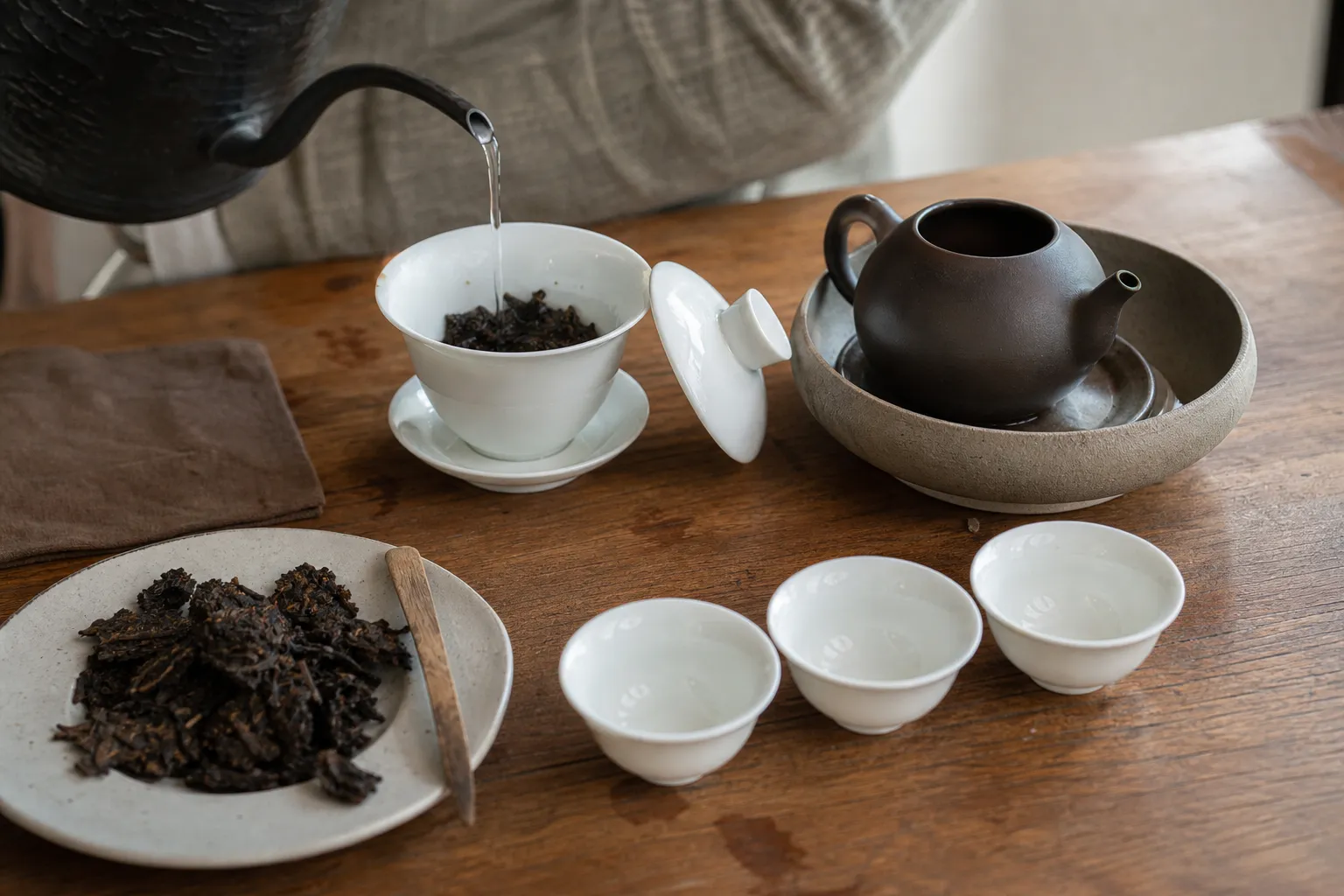
Gongfu brewing dark tea is useful when you want to watch a tea change across small cups instead of turning it into one large, heavy pot. A compressed piece, a loose handful, and an aged-looking leaf can all behave differently once hot water reaches them. The value of the method is control: leaf amount, vessel size, water heat, steep length, and pouring rhythm can all be adjusted before the session becomes too thin, too rough, or too dense.
There is no single dark tea gongfu method that fits every tea. A tight fragment from a brick may open slowly, then deepen suddenly. Loose leaf may release color and flavor quickly. A stored tea may show aroma early, settle in the middle, and fade into a softer finish. A good session begins with a practical setup, then uses the cup as feedback.
upward
Start with the broader guide
Use the broader guide first if you need the full scope before this page.
What Gongfu Brewing Changes for Dark Tea
Gongfu brewing uses more leaf in a smaller vessel than a casual mug or large teapot method, then relies on short infusions. Instead of extracting everything into one long steep, you make a sequence of small pours. Each cup gives a slightly different view of the tea.
That structure matters because many dark teas are compressed, fermented, aged, or stored in forms that do not release evenly at first contact with water. The outside of a brick piece may color the water while the center is still tight. Small flakes may extract quickly. Larger leaves and stems may need more time before they give much body.
How the cups often move
- Early cups: may show aroma, storage character, surface dust, or the first signs of sweetness.
- Middle cups: usually bring more body, darker color, and deeper earthy, woody, grainy, or mellow notes.
- Later cups: can become softer, thinner, sweeter, woodier, or flat, depending on the tea and setup.
This is why gongfu brewing dark tea can be more informative than one large steep. If the cup is thin, you can lengthen the next infusion. If it is already too dense, you can shorten the pour, use slightly less leaf next time, or pause briefly between rounds. The goal is not maximum intensity. The goal is to notice what the leaf is doing while you still have room to respond.
A Practical Starting Setup
Use a small gaiwan or small teapot, cups that let you read the liquor, and a simple pouring setup you can repeat without guessing. A sharing pitcher is helpful if you want each cup to taste the same, but the key is a clean, full pour.
Vessel Size
Start with: small gaiwan or small teapot.
Adjust when: the cup feels too strong or too weak for the volume.
Leaf Amount
Start with: moderate to generous, with room for expansion.
Adjust when: the liquor is thin, harsh, or too heavy.
Water
Start with: hot water, adjusted by taste.
Adjust when: aroma feels muted, or roughness dominates.
Infusion Length
Start with: short first pour, then gradual changes.
Adjust when: the tea opens slowly, collapses early, or thickens too fast.
Rinse
Start with: optional and tea-dependent.
Adjust when: compression, dust, or storage aroma affects the first cup.
Exact numbers can be useful in your own notes, but they should not be treated as fixed standards. Loose leaf dark tea may need shorter early infusions than a tight piece from a brick. A compact cake fragment may need more time to separate. A clay teapot may hold heat differently from a thin gaiwan. Water, cup size, and personal taste all change the result.
If you like precision, weigh the leaf for a few sessions and write down the vessel size. If you prefer a visual habit, begin with enough leaf to cover the base of the vessel without packing it tightly. Either approach works when you compare the cup to the setup and make small adjustments.
Gaiwan or Teapot for Gongfu Brewing Dark Tea
Gaiwan
A gaiwan gives visibility and fast control. You can see whether a compressed piece is loosening, whether the liquor is darkening quickly, and whether small fragments are escaping into the pour. It also cools a little faster, which can help when a tea gets heavy.
Small Teapot
A small teapot gives steadier heat and a more contained pour. It can suit teas that need warmth to open or drinkers who prefer a rounder, softer cup. The tradeoff is that you see less of the leaf and may have less immediate feedback.
Choose by the problem you want to solve
- Use a gaiwan when learning a tea, comparing infusions, or trying to avoid overextracting.
- Use a small teapot when the tea feels slow, compact, or better with sustained heat.
- Use either one if you can pour fully and promptly.
Leftover liquor sitting on the leaf can make the next cup heavier than intended. A vessel that lets you pour cleanly is more useful than one chosen only for appearance.
Leaf Form: Loose Leaf, Cake, Brick, and Compression
Leaf form changes extraction more than many beginners expect. Two sessions can use the same water and vessel yet behave differently because one tea is loose and the other is pressed.
Loose leaf dark tea exposes more surface area to water. It can release color and flavor quickly, especially if the leaves are small or broken. To keep loose leaf dark tea gongfu brewing from becoming too strong, start with brief early infusions and pay attention to texture. If the first cup already feels thick and drying, reduce steep time before changing anything else.
A small piece of dark tea cake or brick behaves differently. The outside may release quickly while the inside remains tight. The first infusion may seem light, then the third or fourth may deepen sharply. This delayed opening is a common reason people misread compressed dark tea: they add too much time too early, then the session becomes heavy once the piece finally loosens.
Before brewing compressed tea, look at the piece
- Dense, layered pieces usually open more slowly.
- Flakes and crumbs usually extract faster.
- Thick centers often do better when separated into natural layers rather than crushed into dust.
- Many tiny particles call for careful pouring and shorter early infusions.
Compression also affects rinsing. A brief rinse can warm the vessel, wet the tea, and loosen the first surface layer. It is not required for every dark tea. If the leaf looks clean, smells open, and is already loose, you may drink the first infusion. If the piece is tight or the first aroma feels closed, a quick rinse can make the next pour more even. Treat the rinse as a brewing choice, not a rule.
How to Run the First Infusions
Begin by warming the vessel if that is part of your routine. Add the leaf and smell it dry. You may notice wood, earth, grain, old paper, dried fruit, herbs, or a more muted stored-leaf character. These notes are starting clues, not final judgments.
Add hot water and decide whether the first contact will be a rinse or a drinkable infusion. If you rinse, keep it brief and pour it away fully. If you drink the first infusion, keep it short enough that you can still read the tea as it opens.
For the first drinkable cup, ask for information
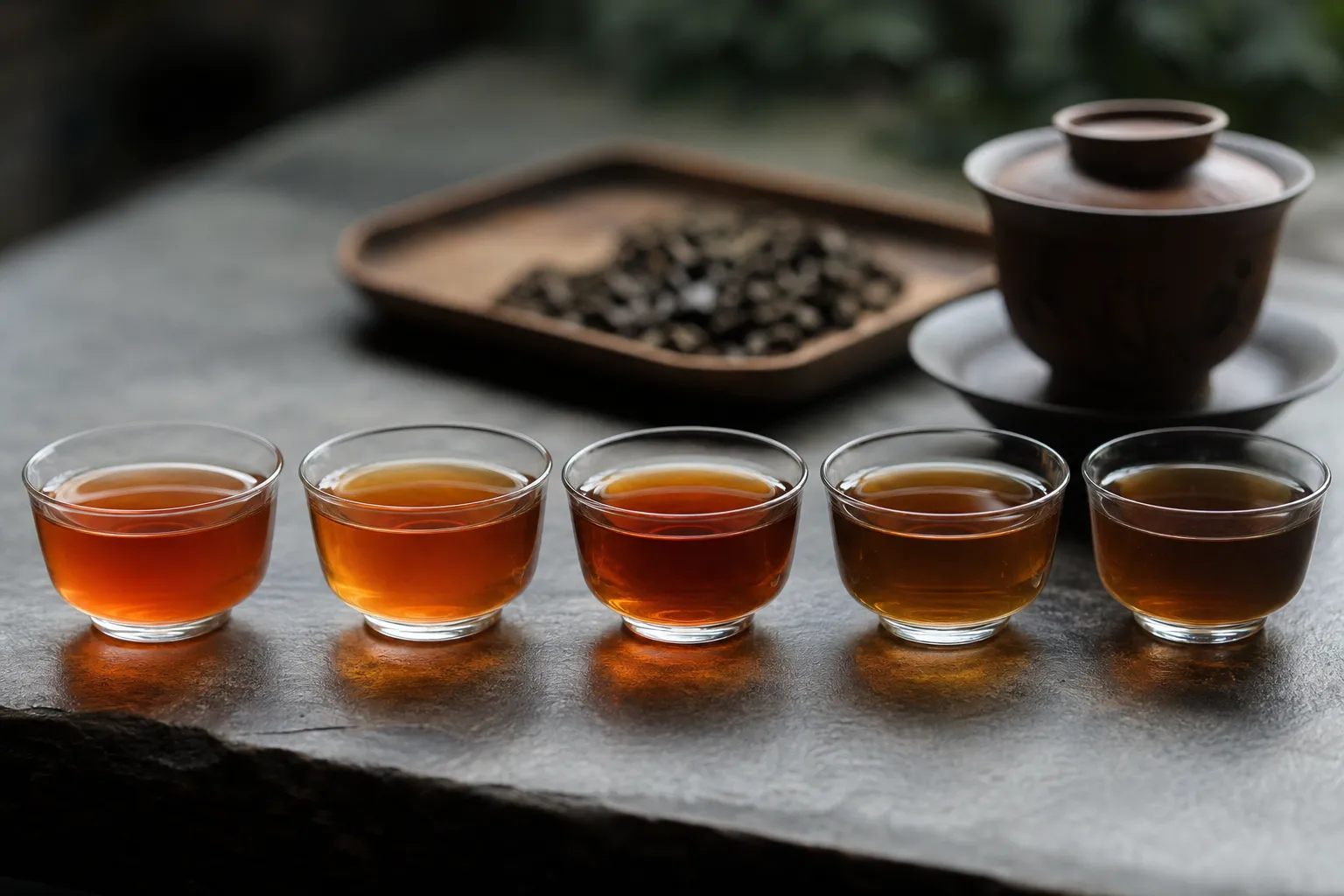
- Is the liquor pale, amber, reddish-brown, dark brown, or nearly opaque?
- Does the aroma rise from the cup, or stay low and muted?
- Is the texture thin, smooth, thick, gripping, or heavy?
- Does sweetness appear after swallowing, or does earthiness dominate?
- Does the finish feel clean, flat, rough, or lingering?
Do not judge the first gongfu infusion as the whole session. With compressed tea, it may only show the outer layer. With loose tea, it may already show much of the profile. With a tea that has strong storage aroma, early cups may carry more of that character before the session settles.
If the first cup tastes thin, the tea may simply not be open yet. Try a slightly longer second infusion. If the first cup is already too dense, shorten the next pour and consider using less leaf in the next session.
Adjusting Dark Tea Infusions as the Leaf Opens
Adjusting dark tea infusions is the central skill in this method. A timer can help you learn, but the cup decides whether the next pour needs more extraction, less extraction, or patience.
Thin, watery, little aroma
Lengthen the next infusion or use a little more leaf next time.
Harsh, rough, drying
Shorten the next infusion, pour more fully, or reduce leaf next session.
Flat, dull, no lift
Try hotter water, slightly more time, or a cleaner pour rhythm.
Too earthy or heavy
Shorten infusions, use less leaf next time, or give the tea a brief pause.
Sweet but fading
Lengthen gradually and enjoy the softer later cups.
Dark color but weak taste
Check compression, water, leaf condition, and whether the tea is simply quiet.
Liquor color helps, but it is not enough by itself. A deep brown cup can taste smooth and sweet, while a lighter cup can feel sharp. Color shows extraction and particle release; aroma, texture, and finish tell you whether that extraction is pleasant.
A useful rhythm is to keep the first few infusions short, then add time gradually as the tea softens. During the strongest middle phase, avoid large jumps. If the fifth cup is thick and balanced, the sixth does not need a dramatic increase. When the tea begins to fade, longer steeps can pull out remaining sweetness and body.
The session may not follow a neat curve. A compressed piece can move from quiet to strong quickly. Loose leaf may start vivid and fade sooner. A stored tea may show more aroma once heat has moved through the leaves. Let the sequence teach you instead of forcing it to match a chart.
Why Dark Tea Tastes Different Across Gongfu Infusions
Dark tea changes across gongfu infusions because water reaches different parts of the leaf at different times. Surface material, broken edges, compressed layers, stems, and larger leaves do not release at the same pace. Heat also changes how aroma rises from the wet leaf and cup.
In early infusions, you may notice storage aroma, surface character, lighter body, quick color from small fragments, or the first hint of sweetness.
In middle infusions, the tea often becomes fuller. Color deepens, mouthfeel thickens, and earthy, woody, grainy, or mellow notes may feel more integrated. This is usually where you learn whether the tea is smooth, heavy, rough, sweet, or balanced for your taste.
In later infusions, the cup may become softer and simpler. Sweetness or woody notes can remain after the deeper body fades. If the cup becomes mostly color without aroma or finish, the tea may have given most of what it can offer in that setup.
Many brewing mistakes begin with reading only one cue. A quiet first cup does not always need a long steep; the leaf may still be opening. Dark liquor does not always mean the tea is overdone; the texture may be smooth and the finish clean. Judge color, aroma, thickness, aftertaste, and leaf opening together.
Avoiding a Cup That Feels Too Heavy
A heavy dark tea session usually comes from one or more of four controls: too much leaf, too much time, too much heat for that tea, or incomplete pouring.
Start with leaf amount. Gongfu brewing uses more leaf than a large-pot method, but the expanded leaf still needs room. If it fills the gaiwan too tightly, water cannot move cleanly and the cup may become dense or rough. A compact piece can expand more than it appears before brewing.
Steep length is often the easiest fix. Short infusions work because you can stop extraction before the cup turns muddy. If the tea becomes heavy, reduce time before changing several variables at once. Many disappointing cups come from too much time on too much leaf.
Water heat also changes the feel. Hotter water can help a compact tea open, but it may emphasize roughness in some teas. Slightly cooler water can soften a strong cup, though it may also mute aroma. Use heat as a tuning tool.
Finally, pour completely. Liquor left in the vessel continues extracting between rounds. The next infusion then begins from an already-heavy base. A clean, full pour is one of the simplest ways to keep a gongfu session readable.
How Many Times Can You Reinfuse Dark Tea Gongfu Style?
There is no single infusion count for every dark tea. The number of satisfying steeps depends on leaf amount, compression, vessel size, water, tea age, storage, and what you consider satisfying. Some teas give several focused cups and fade quickly. Others stretch into lighter, sweeter later rounds.
Instead of chasing a number, stop when the cup no longer gives enough aroma, texture, or finish for your taste.
A practical decision frame
- Continue if the liquor still has aroma, sweetness, or texture.
- Lengthen if the tea is fading but still pleasant.
- Stop if the cup is mostly color without flavor, or warmth without character.
- Note where the tea peaked so you can adjust leaf amount or timing next time.
Late infusions can still be worthwhile when they are simple. A pale, sweet, woody cup may be pleasant. A flat cup with little aroma may not be worth extending.
A Compact Gongfu Brewing Checklist
Before the session, check the tea form. Loose leaf, crumbly pieces, and tight chunks will not behave the same. Choose a vessel that lets you pour fully and observe the leaf. Use a moderate-to-generous leaf amount, but leave enough room for expansion.
During the session, keep the first infusions short. Decide whether to rinse based on compression, aroma, and preference. Watch the dark tea liquor color, but do not judge by color alone. Smell the wet leaf and cup. Notice whether the texture is thin, smooth, thick, rough, or heavy.
After each cup, make one small adjustment
- Thin cup: slightly longer next infusion.
- Harsh cup: shorter next infusion or less leaf next time.
- Flat cup: more heat, more time, or a cleaner pour.
- Too heavy: shorter steeps, less leaf next session, or a brief pause.
- Pleasant but fading: lengthen gradually and enjoy the softer end of the session.
Gongfu brewing dark tea works as a feedback loop. The leaf shows how fast it opens. The cup shows whether your timing is working. Your next pour becomes the adjustment. Over time, you do not need a rigid formula; you need a reliable way to notice what changed and a small set of choices for what to do next.