
Practical tasting guide
Regional Dark Tea Traditions in China: What Drinkers Should Notice
Regional dark tea traditions can help you notice the tea in front of you more carefully: its form, brewing behavior, aroma, liquor color, body, finish, and the way it may be served. They should not be treated as a rulebook. Without strong public references for this page, the most useful answer is practical: use regional identity as a clue, then let the cup confirm or correct your expectations.
Start with what you can see and taste. Is the tea loose, broken, or compressed? Does it open quickly or need time? Is the dry aroma clean, woody, grainy, smoky, cellar-like, earthy, sweet, or flat? Does the liquor darken fast while staying thin, or does it build body over several steeps? These observations will guide your brewing better than assuming every tea connected to a named place behaves the same way.
upward
Read the full overview first
Use the broader guide first if you need the full scope before this page.
Read the Tea Before the Map
A regional name can point toward a tradition, but the cup still depends on leaf material, processing, compression, age, storage, water, vessel, and personal taste. Two teas described through the same broad regional frame can behave differently if one is tightly pressed, one is more broken, one has been stored drier, or one has a stronger storage note.
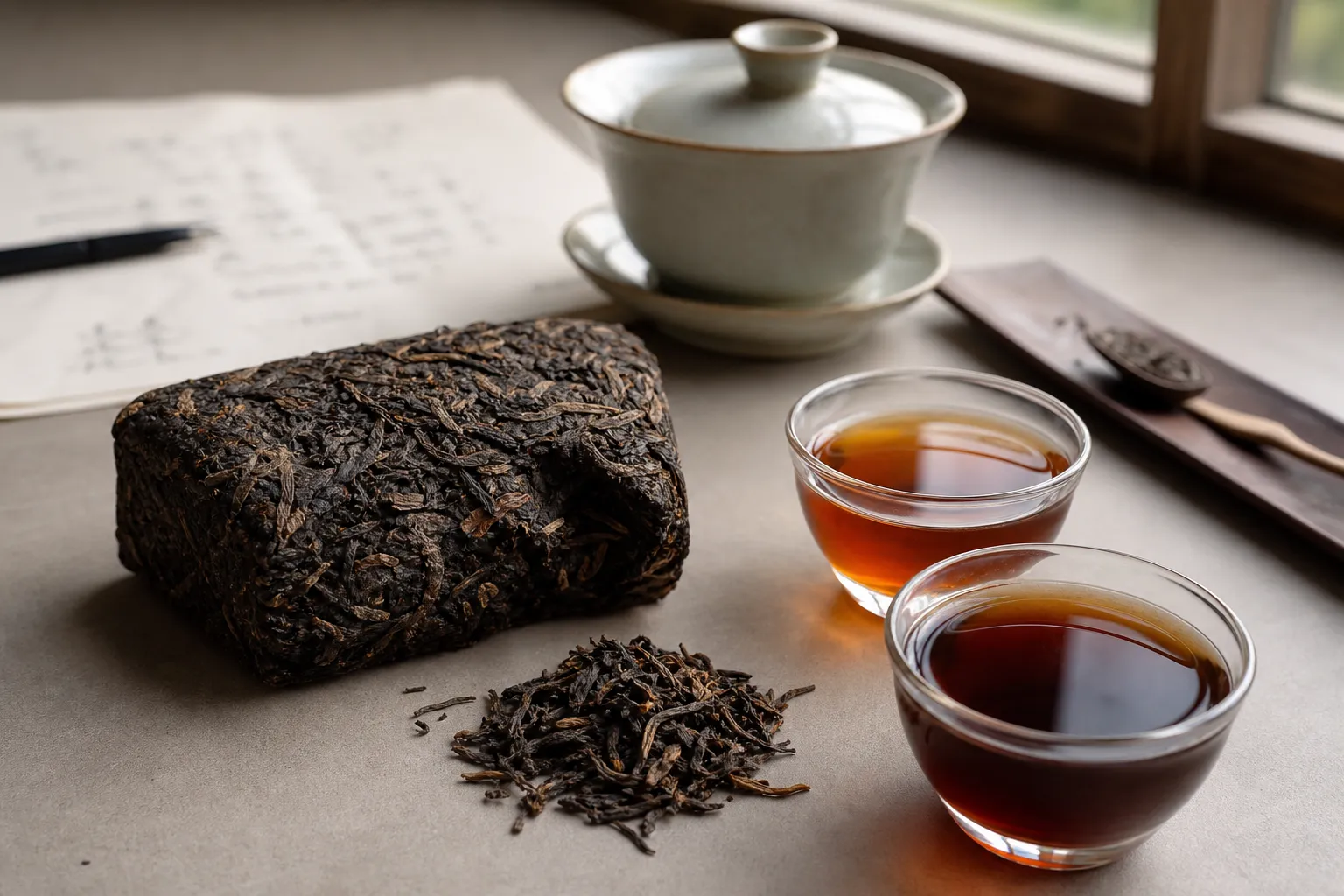
Begin with form. A tight piece from a cake or brick often needs time before the leaf opens evenly. A loose or broken tea may release color and strength quickly. A larger intact piece may start slowly, then become steadier after the first few infusions.
Then check the dry leaf and aroma. You are not trying to prove a regional story from appearance alone. You are gathering brewing cues. Dusty material, glossy chunks, fibrous stems, reddish-brown leaf, dark compact pieces, or a strong storage aroma can all affect how you set the first cup.
Treat the first infusion as calibration. In many everyday brewing setups, near-boiling water works well for dark tea, especially compressed material. Keep the first steep modest and watch how fast the liquor darkens. If the cup turns heavy or drying quickly, shorten the next steep. If it tastes thin, extend time slightly before adding much more leaf.
How Region Can Shape Expectations
Chinese dark tea traditions are often discussed through place, form, production habit, storage, and local drinking customs. That context can be useful when it helps you ask better questions. It becomes less useful when it turns into a fixed flavor promise.
Compressed form
Check whether it needs time to loosen before the flavor becomes even.
Loose or broken material
Check whether it releases strength quickly.
Dark liquor
Check whether the body is smooth, heavy, drying, muddy, or clear.
Storage-forward aroma
Check whether the note is clean and integrated, or whether it dominates.
Serving custom
Check whether that method suits your vessel, water, and taste.
This keeps regional dark tea traditions in the right place: they guide attention, but they do not replace tasting. A regional label may suggest what people often value in a tea, such as depth, warmth, sweetness, wood, grain, mineral edges, mellow texture, or a long finish. Those are tasting prompts, not automatic conclusions.
A useful note might be: “The first infusion is dark but light-bodied; the second brings more wood and soft sweetness; longer steeps make the finish heavier.” That kind of note helps you brew the next cup. A less useful note forces the tea into a regional stereotype before it has shown enough.
Brewing Adjustments That Matter More Than the Label
Regional dark tea context may suggest a habit, but brewing still comes down to extraction. Start with the tea’s behavior and adjust from there.
- For a tight compressed piece, use hot water and allow the leaf time to open before judging the tea too quickly.
- For loose or broken tea, start shorter than expected because small fragments can release strength fast.
- For a strong storage aroma, use a brief rinse if that is already part of your practice, then check whether the next cup smells cleaner or only weaker.
- For a thin cup, increase steeping time before increasing leaf heavily.
- For a rough or drying cup, shorten the steep, reduce leaf, or let the liquor cool slightly before judging texture.
The vessel changes the result. A small gaiwan or teapot makes it easier to adjust through several short steeps. A larger mug or pot can be comfortable for daily drinking, but a fast-releasing tea may become too strong if the leaf sits too long. Neither method is the single correct way to drink a regional tea. The better question is whether the vessel lets you taste clearly.
Water also matters. Very hot water can help compressed or mature-tasting dark teas open, but if the cup turns harsh or muddy, shorter contact is usually the first adjustment to try. If the tea tastes flat, the cause may be stale storage, too little leaf, a weak first steep, or water that does not bring out texture well. Do not blame region first.
Drinking Customs Are Context, Not Instructions
Dark tea drinking customs can involve sharing, stronger or lighter preparation, casual daily brewing, repeated infusions, larger vessels, or compressed forms that are easy to divide. These customs are part of tea culture and deserve more care than a quick slogan. A home drinker, though, should not treat a short description of a custom as complete instruction.
If a tea is associated with a particular serving style, treat that as a practical clue. It may suggest that the tea can handle longer steeping, larger portions, repeated brewing, or a stronger cup. But unless the custom is well documented, keep the claim modest and test it in your own setup.
Questions to ask before copying a serving style
- Does the tea taste better light and repeated, or stronger and more casual?
- Does the form make it easy to break off, measure, or brew in a larger vessel?
- Does the flavor hold through several infusions, or give most of itself early?
- Does the cup suit food, sharing, quiet tasting, or simple daily use?
A good approach is to taste the tea plainly once before trying to imitate a regional preparation. Use a simple vessel, keep notes, and find the tea’s balance. After that, experiment with more leaf, longer steeps, a larger pot, or a thermos-style brew. If the method improves the cup, keep it. If it makes the liquor muddy or heavy, return to the simpler setup.
Where Regional Labels Mislead
The common mistake is treating Chinese dark tea regions as flavor guarantees. A regional name may be meaningful, but it does not tell you everything. Storage can change aroma. Compression can slow extraction. Broken material can intensify strength. Age can soften some edges while making other notes more noticeable. A humid room, dry cabinet, paper wrapper, sealed bag, or mixed storage space can affect the tea before the kettle is even filled.
Another mistake is assuming darker liquor means a better or deeper cup. Liquor color is useful, but it is not enough. A dark cup can be smooth, sweet, heavy, flat, sharp, or unclear. A lighter cup can still have structure and aftertaste. Watch how color connects to body, aroma, and finish.
A third confusion is treating one person’s method as the regional standard. Dark tea form and brewing can vary by household, vendor, tea age, storage condition, and preference. Even when a preparation style has cultural roots, a short summary may leave out the details that make it work: leaf amount, water, vessel, meal context, climate, and local taste expectations.
The correction is simple: let region guide attention, not judgment. If the label names a place, ask what you should notice more carefully. Is compression affecting the first steeps? Is the storage note clean? Does the cup become sweeter with shorter infusions? Does the finish improve after the leaves open? These questions turn regional dark tea traditions into a tasting aid rather than a fixed belief.
Scope Limit for This Page
The available material for this article does not include usable public references, named regional records, agricultural sources, cultural documentation, or curated firsthand tasting reports. For that reason, this page avoids precise claims about named Chinese dark tea regions, production histories, local customs, or classification systems.
That limit still leaves a useful drinking method: observe the tea, brew it carefully, compare cup behavior, and avoid treating regional identity as a universal rule. For exact regional histories or named local preparations, stronger source coverage would be needed.
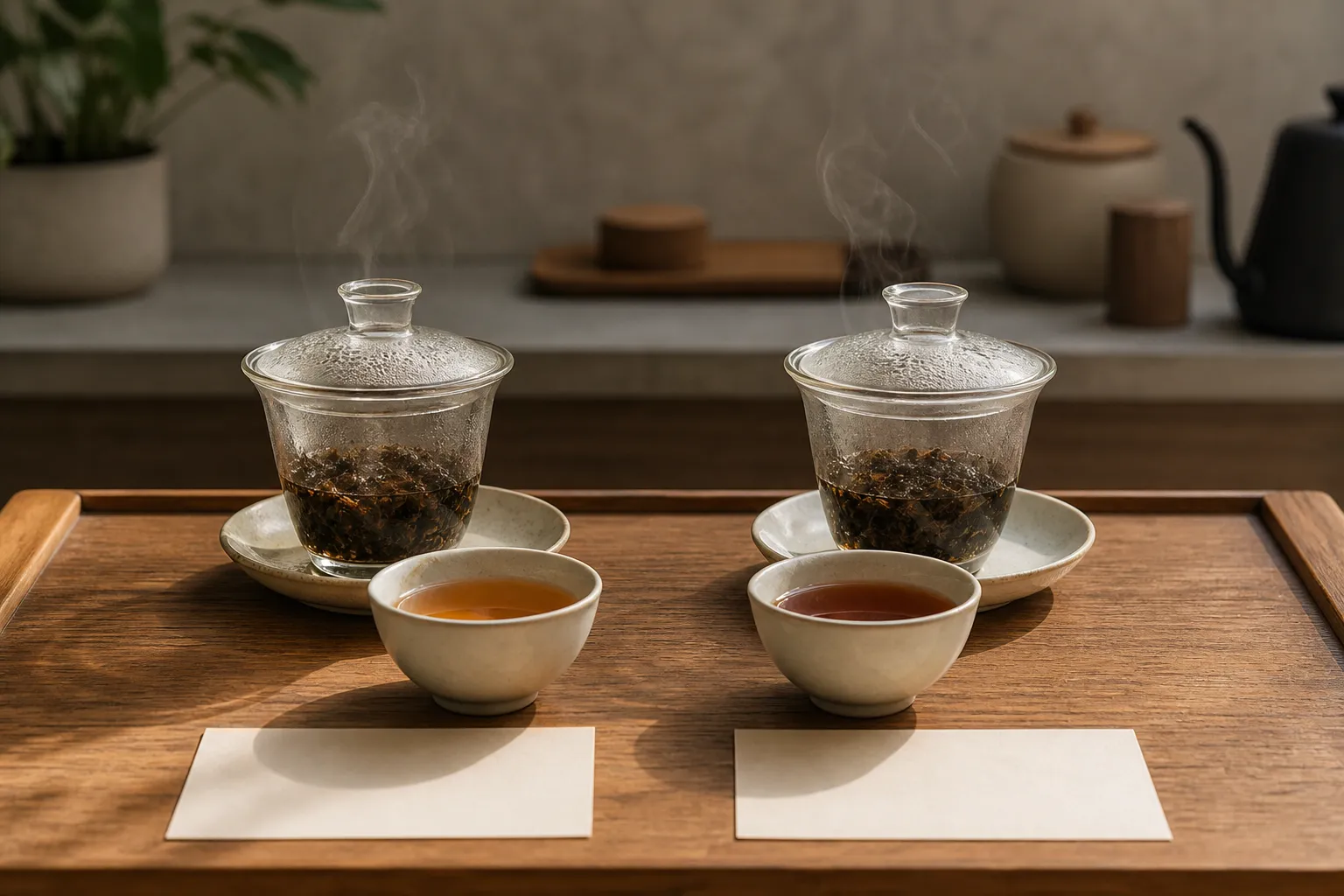
For now, try a small comparison. Brew two dark teas with different regional labels in the same vessel, using the same water and a similar leaf weight. Keep the first few steeps short. Note form, dry aroma, opening speed, liquor color, body, storage character, and finish. If the differences remain clear under the same conditions, you have something worth exploring. If they blur, age, storage, compression, or brewing method may matter more than the label.
FAQ
Are regional dark tea traditions useful for beginners?
Yes, if they are used as prompts rather than rules. A regional label can remind you to check form, storage aroma, brewing strength, and serving context. It should not replace direct tasting.
Should I brew dark tea according to its region?
Start with the tea’s form and behavior first. If it is tight, broken, storage-forward, thin, or rough, adjust steeping time, leaf amount, and vessel size before assuming the regional method is the answer.
Does a darker cup mean the tea is better?
Not by itself. Dark liquor can be smooth and rich, but it can also be heavy, flat, or unclear. Judge color together with aroma, body, finish, and how the tea changes across infusions.
What is the safest way to compare two regional dark teas?
Use the same vessel, water, and similar leaf weight. Keep notes on form, aroma, liquor color, body, storage character, and finish. The comparison is more useful when brewing conditions stay consistent.