
Everyday Tea Table
Dark Tea and Meals: Why It Is Often Drunk With Food
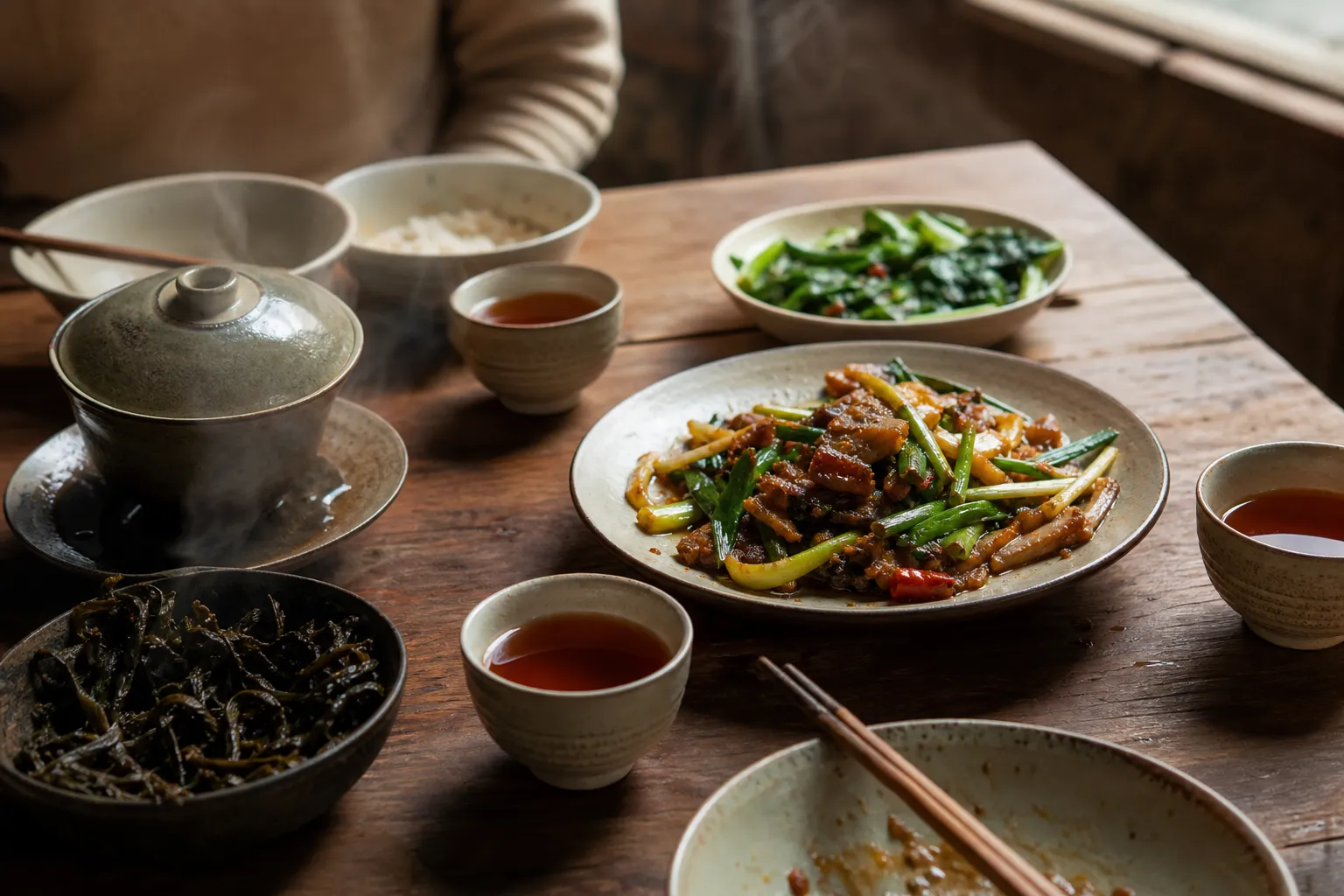
Dark tea is often drunk with food because it can behave like a steady table tea: warm, mellow, refillable, and easy to adjust between bites. For many drinkers, dark tea with meals is not a formal rule or one single Chinese custom. It is a practical habit built around taste, comfort, and the way the cup changes beside food.
A darker brew can sit well with savory dishes, salty food, richer textures, or meals with oil, especially when the tea is brewed smoothly instead of thick and harsh. But the fit is not automatic. It depends on the tea, storage, age, compression, water, vessel, steeping strength, and the food in front of you.
The useful question is simple: does this cup make the meal feel more balanced and easier to continue, or does it get in the way?
upward
Start with the broader guide
Use the broader guide first if you need the full scope before this page.
Why Dark Tea Can Fit a Meal
Dark tea often works best at the table when it is brewed with restraint. Many cups lean toward darker liquor, soft earthiness, aged wood, grain, gentle sweetness, date-like depth, or a rounded finish. Those notes can sit comfortably beside food because they are less likely to compete with strong seasoning than a very floral, sharp, or highly fragrant tea might.
With savory food, a mellow dark tea can act as a warm background. It does not need to dominate the plate. It can provide aroma, body, and a pause between bites while the meal stays the main focus. That is why the habit often feels everyday rather than ceremonial.
Food also changes how tea is perceived. A cup that tastes plain on its own may feel more useful beside salty or oily food. A tea that seems earthy alone may feel softer when the palate is already occupied with roasted, fried, braised, fermented, or heavily seasoned flavors. This is not a universal pairing rule, but it is a common sensory pattern worth noticing.
Repeated steeping matters too. Many dark teas can handle several infusions if the leaf is not pushed too hard at the start. At a meal, that lets the tea move with the food: fuller early if the dishes are rich, lighter later when the table slows down, or shorter if the cup starts to feel heavy.
The Practical Side of a Chinese Dark Tea Meal Habit
When people talk about Chinese dark tea meals, the language can sound bigger than the evidence available for this page. It is safer to treat the habit as a practical pattern rather than a single fixed tradition. In many everyday settings, tea may be served with or around food because it is warm, shareable, refillable, and familiar.
That is different from saying all Chinese drinkers use dark tea with meals, or that there is one correct Chinese method.
The appeal is easy to understand in cup-in-hand terms. A pot or gaiwan can sit near the table. Small cups can be refilled as people keep eating. Leaves can be steeped again. The flavor can be adjusted by changing time, water temperature, leaf amount, or dilution. This makes dark tea table brewing flexible.
A compressed piece may be brewed more lightly for a family-style meal. Loose leaves may open faster and need shorter steeps. A tea with a heavy storage aroma may need a cautious rinse and a gentler first drinking infusion. A cleaner, sweeter tea may tolerate a slightly stronger brew. These small choices decide whether the tea supports the food or distracts from it.
Dark tea also does not have to be treated as precious in every cup. Some teas reward close tasting, but many everyday brews work best when they are simply warm, rounded, and available. The point is not to identify every note. The point is to keep the cup comfortable as the meal changes.
What Changes the Answer
The same tea can feel smooth beside one meal and too heavy beside another. These variables matter most:
Tea form
Loose leaf opens faster; compressed pieces may release more slowly or unevenly.
Try: start lighter, then lengthen steeps if the cup feels thin.
Storage condition
Clean, dry storage may taste calmer; stale or unpleasant notes can become more obvious with food.
Try: air the tea briefly and avoid forcing a strong brew.
Age and style
Some teas taste mellow and rounded; others may be sharper, woody, smoky, or earthy.
Try: match stronger cups with stronger food, or brew lighter.
Water temperature
Hotter water can bring body but may also pull roughness.
Try: use hot water for many dark teas, but shorten the steep.
Vessel size
A large pot can make a softer shared brew; a small vessel can concentrate flavor quickly.
Try: use less leaf or shorter steeps for meal drinking.
Food intensity
Oily, salty, or savory food can welcome a fuller cup; delicate food may be covered up.
Try: brew lighter when the food is subtle.
Personal taste
Some drinkers enjoy earthy depth; others prefer cleaner sweetness.
Try: adjust strength before judging the pairing.
A good starting point is a moderate brew. If using a small vessel, keep early steeps short. If using a larger pot, avoid loading in too much leaf. If the tea tastes muddy, woody, or drying with food, reduce the leaf, shorten the steep, or pour the next infusion sooner.
For darker, richer meals, a slightly fuller cup can work. For lighter meals, a thinner and cleaner infusion usually feels more natural. For salty food, watch the finish: if the tea turns too drying, it may make the meal feel harsher. For oily food, a warmer and more rounded cup may feel welcome, but that is a taste preference, not evidence of a body effect.
Brewing Dark Tea Lighter or Stronger With Food
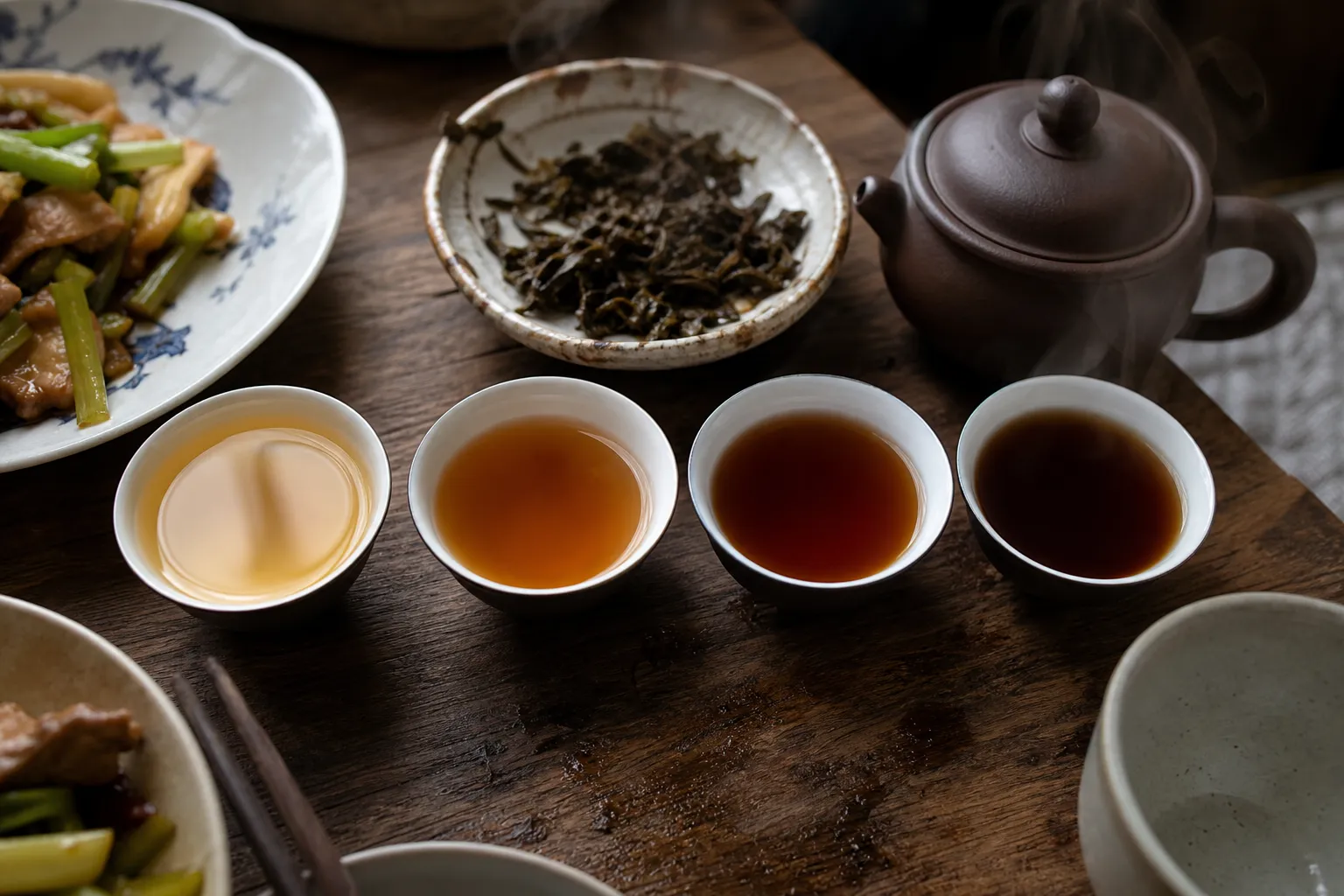
Meal brewing is usually more forgiving when the tea is not too concentrated. Dark tea can become heavy if a compressed chunk is steeped too long, if very hot water sits on the leaves without attention, or if too much leaf is used in a small vessel. A heavy cup may still be enjoyable, but it can tire the palate during a meal.
For a lighter meal brew
- Use a little less leaf than you would for focused tasting.
- Keep the first drinking steep short after any rinse you choose.
- Pour when the liquor is clear and warm-colored rather than waiting for maximum darkness.
- Add time slowly over later infusions.
- Stop pushing the leaves if the cup becomes flat, stale, or rough.
For a stronger meal brew
- Use a slightly larger piece of tea or a little more loose leaf.
- Keep the water hot enough to bring out body.
- Let the middle steeps run longer when the food is rich or strongly seasoned.
- Watch for bitterness, dryness, or storage notes becoming too loud.
- Return to shorter steeps if the tea begins to dominate the meal.
This adjustable style is one reason dark tea repeated steeping works well at the table. The tea does not have to remain identical from the first bite to the last. It can begin round and clear, become deeper in the middle, then fade into a softer cup as the meal ends.
If you are trying hei cha with food for the first time, avoid judging it from one over-steeped mug. A dark, earthy tea may seem too strong when brewed like a long black tea infusion. It may feel much calmer with less leaf, shorter contact, and repeated pours.
Common Confusion Around Dark Tea and Food
One common misunderstanding is that dark tea is drunk with meals because it has a specific body effect. This page does not have source coverage to support that kind of claim. In everyday speech, people may describe tea as comforting after rich food or pleasant with heaviness, but that should be read as personal or cultural language, not as proof of a physiological result.
Another confusion is treating “Chinese dark tea meals” as one fixed tradition. China has many tea habits, food habits, regions, households, restaurants, and personal preferences. Without stronger source coverage, it would be careless to claim a single origin, region, or standard meal practice. The more useful view is that dark tea can be part of an everyday table habit in some contexts because it is warm, refillable, and sensory-compatible with many savory foods.
A third confusion is assuming darker liquor always means better meal pairing. Dark liquor can look satisfying beside food, but color alone does not tell you whether the cup will taste balanced. A pale infusion may be sweeter and cleaner. A very dark infusion may be smooth, or it may be muddy and tiring. Taste the cup, not just the color.
It is also easy to overstate earthy flavor. Some dark teas are earthy; others lean woody, sweet, mineral, grain-like, herbal, smoky, or gently aged. The better approach is to notice what the tea actually brings: softness, warmth, aroma, body, sweetness, dryness, storage note, or aftertaste.
When Dark Tea May Not Be the Best Meal Tea
Dark tea is not always the right choice. With very delicate food, a strong dark tea may cover subtle flavors. With desserts, some earthy teas may feel too heavy unless the brew is clean and lightly sweet. With very spicy food, a hot and concentrated cup may increase the feeling of intensity for some drinkers. With food that already has deep fermented or roasted flavors, an assertive tea can fit well or become too much.
Storage is another boundary. If a tea smells musty, sour, stale, or unpleasant before brewing, food will not reliably hide that problem. A meal can soften some rough edges in perception, but it cannot turn poor storage into a clean cup. Brew a small test infusion first if the aroma is uncertain.
Age and compression can also complicate meal brewing. A tightly compressed piece may release slowly at first, then suddenly become strong. Broken material may release quickly and turn dark before the flavor is balanced. If the tea changes too fast, use shorter steeps and smaller pours rather than trying to make one large pot behave perfectly.
Personal preference remains the final limit. Some drinkers enjoy mellow dark tea with food every day. Others prefer green tea, oolong, jasmine tea, plain water, or no drink with a meal. Dark tea is an option, not an obligation.
A Simple Way to Try It
To understand the habit, try a modest setup rather than a dramatic one. Choose a dark tea that smells clean and comfortable dry. Brew it lighter than you would for a dedicated tasting. Put it beside a savory meal rather than a very delicate one.
Notice three things:
- Whether the tea feels smoother with food.
- Whether the food makes the tea seem sweeter, duller, or rougher.
- Whether later steeps remain pleasant.
If the cup feels too thin, increase steeping time slightly. If it feels too heavy, shorten the next infusion or dilute with hot water. If the tea tastes harsh beside salty food, reduce strength. If it disappears beside oily or strongly seasoned food, brew the middle infusions a little deeper.
This is the most useful explanation for dark tea and food: the habit works when the cup stays warm, steady, and adjustable. It is not about proving a universal rule. It is about finding a brewing strength that lets the tea sit naturally at the table.
The Short Takeaway
Dark tea is often drunk with food because its mellow body, darker liquor, aged or earthy aroma, and repeated-steeping flexibility can make it practical beside savory, oily, salty, or richer meals. The habit is best understood as everyday table comfort rather than a fixed cultural law or an effect promise.
Start with a lighter brew, adjust by taste, and let the meal decide how strong the next steep should be. If the tea supports the food without becoming dull, rough, or overpowering, it is doing its job.