
Aged dark tea culture
Why Aged Dark Tea Matters in Chinese Tea Culture
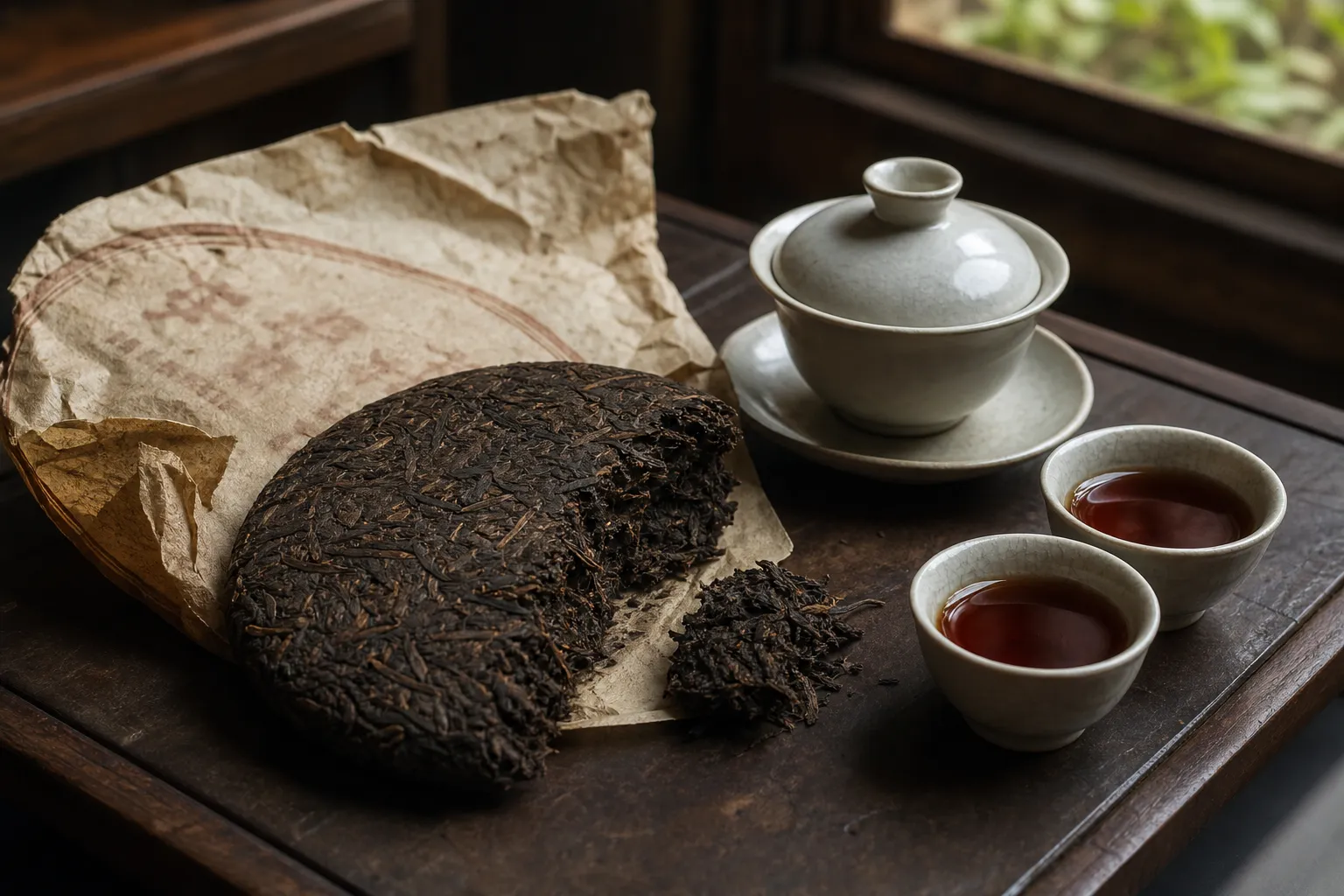
Aged dark tea matters in Chinese tea culture because it makes time visible in the cup. It carries process, place, storage, handling, and shared drinking into the way people judge aroma, liquor color, mouthfeel, and aftertaste. In aged dark tea culture, a date on a wrapper is only one clue. The better question is what the tea shows: clean storage or tired storage, mellow depth or flat heaviness, sweetness or harshness, balance or fatigue.
Age alone does not make a dark tea better. A younger tea kept well can be more enjoyable than an older tea with dull, sour, stale, or unpleasant storage notes.
upward
Read the full overview first
Use the broader guide first if you need the full scope before this page.
The meaning is practical, not mystical
Aged dark tea is often surrounded by evocative language: old cakes, stored bricks, mountain names, family batches, warehouse character, inherited habits, and tea shared across years. That language has a place, but it should stay connected to what the drinker can actually notice.
For a practical tea drinker, the meaning begins with visible and sensory cues:
- A cake, brick, tuo, basket, or other compressed form that has held its shape over time
- Dry-leaf aroma that may suggest wood, earth, sweetness, paper, herbs, smoke, or storage
- Liquor color that can deepen with processing style, age, and brewing strength
- Mouthfeel that may become smooth, heavy, round, thin, drying, or flat
- Aftertaste that may linger cleanly or fade into dullness
Chinese tea traditions include both processing techniques and social practices around preparing, serving, and sharing tea. UNESCO’s cultural heritage listing supports that broad frame: tea is not only a finished product, but also a practice shaped by making, serving, and drinking. That does not tell you whether one particular aged dark tea is good. It does help explain why people read aged tea through material signs, memory, and use.
A cake is not just “old.” It has a process memory. It was picked, processed, compressed or packed, stored, moved, opened, brewed, and interpreted by people. That layered path is why age can matter culturally.
Aging, fermentation, and storage are connected but different
A common misunderstanding is to treat aging, fermentation, and storage as the same thing. They overlap, but they are not interchangeable.
Fermentation is part of the process context for dark tea. It helps explain why dark tea is discussed differently from many green, white, or lightly oxidized teas. The details can be complex, so it is better not to turn fermentation into a promise about flavor. For this page, it is enough to say that dark tea’s processing makes time and later change especially important to how people talk about it.
Aging is the passage of time after production. It can soften some impressions, bring out deeper aromas, or make storage character more noticeable. It can also reveal weakness. A tea that began thin may not become rich simply because years have passed.
Storage is the memory of environment. This is where culture becomes very practical. When people ask about dark tea storage history, they are often asking: Was the air clean? Was the tea kept dry or humid, sealed or airy, hot or cool, stable or shifting? Was it stored in a home, warehouse, shop, or moved between regions?
A simple way to separate the clues:
Wrapper age and compressed shape
May relate to: form, handling, storage path.
Do not assume: that the date alone shows quality.
Dry-leaf aroma
May relate to: storage, tea type, compression.
Do not assume: that every earthy note is desirable.
Dark liquor
May relate to: processing, age, leaf material, brew strength.
Do not assume: that darker always means better.
Mellow mouthfeel
May relate to: material, storage, brewing method.
Do not assume: that smoothness proves good storage.
Woody or sweet aftertaste
May relate to: tea character and preparation.
Do not assume: that all aged tea should taste alike.
This is why aged dark tea rewards attention. The useful question is not only “How old is it?” but “What does this tea show from its process and storage, and do I enjoy what it shows?”
Place gives aged tea a story, not a shortcut
Pu’er is one of the most visible examples of Chinese aged tea culture. It is strongly tied to place, landscape, farming practice, processing knowledge, and long-term exchange. The FAO profile of the Pu’er Traditional Tea Agrosystem supports Pu’er as a place-based example where tea cultivation, local environment, and inherited knowledge intersect.
That makes Pu’er useful for understanding why origin stories matter. A tea can carry the identity of a region, a style of making, and a pattern of trade and drinking. Mountain names, village names, factory histories, routes, and storage locations often become part of how people describe aged tea.
But Pu’er should not stand in for all aged dark tea. Dark tea culture is broader than one famous example. Other compressed dark tea forms and regional styles have their own processing histories, storage habits, and drinking contexts.
Place also cannot replace tasting. A known origin or older date may set expectations, but the cup still has to answer:
- Does the aroma feel clean and integrated?
- Is the liquor deep, or just dark?
- Does the tea become more balanced after a rinse or shorter steep?
- Does the aftertaste stay pleasant, or turn muddy, sour, dusty, or sharp?
- Do you want another infusion, or does the tea feel tiring?
These questions keep aged tea cultural context close to drinking, not status language.
Why compressed forms carry memory
Many aged dark teas are encountered as cakes, bricks, tuos, baskets, logs, or other compact forms. Compression matters because it affects storage, trade, handling, opening, and brewing. It also gives the tea a visible relationship to time: wrappers age, edges loosen, surfaces darken, and inner leaves may differ from outer leaves.
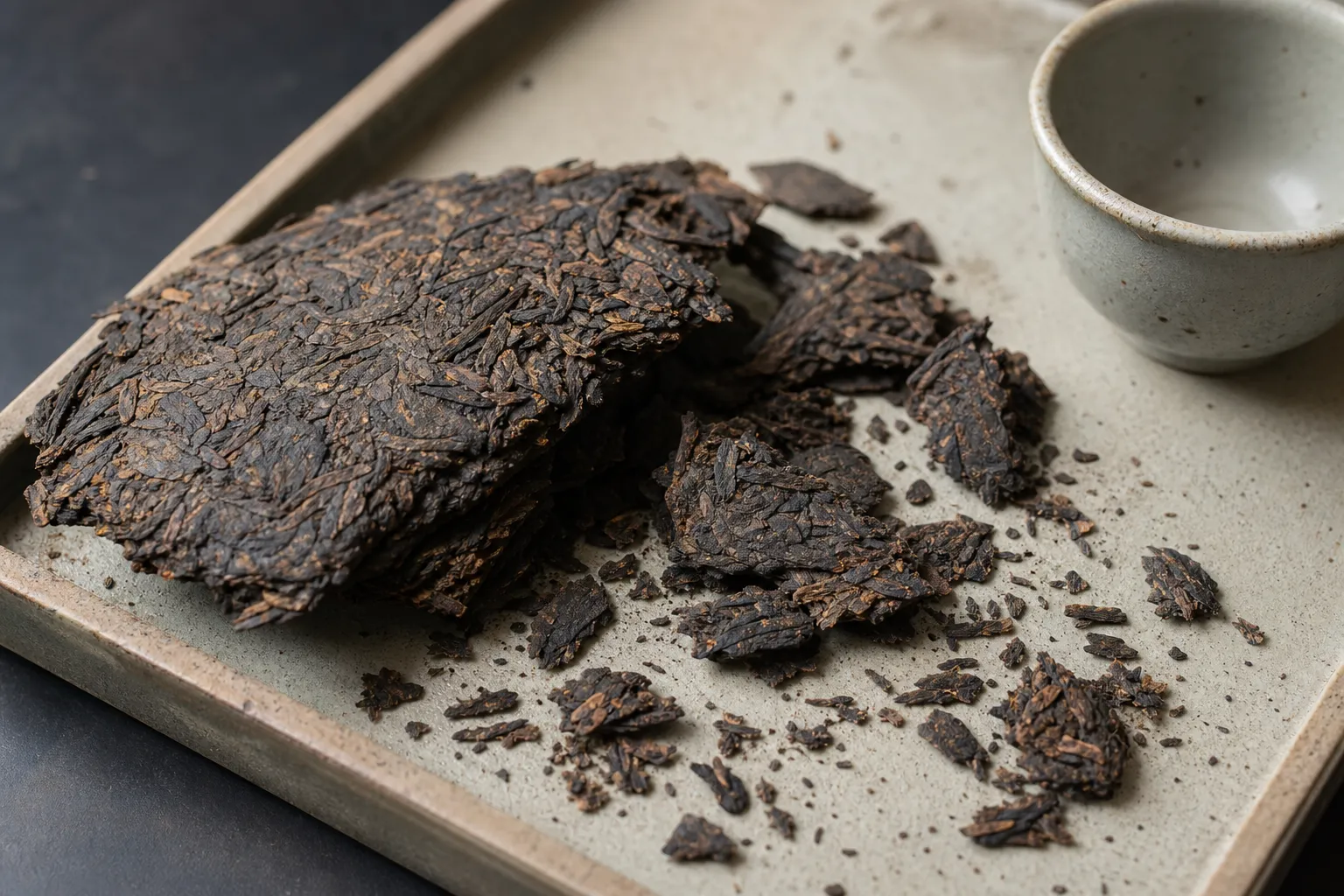
A compressed tea is not always uniform. The outer layer may show more contact with air and storage conditions, while the inner portion may open more slowly. That does not mean one part is automatically better. It means the drinker should treat a compressed tea as a small archive.
When brewing a piece from a compressed tea:
- Use a mix of larger flakes and smaller fragments if possible.
- Avoid crushing everything into dust unless you want a fast, heavy extraction.
- Smell the dry piece, then smell the warmed leaf after a rinse.
- If the cup feels too heavy, shorten the next steep or use slightly less leaf.
- If the cup feels thin, extend the steep or use a little more leaf next time.
This is where dark tea process memory becomes practical. Form, compression, storage aroma, and brewing response all become part of how the tea is understood.
Social drinking gives aged tea its place
Aged dark tea matters not only because of what happens to the leaf, but also because of how people use it. In Chinese tea life, tea can mark hospitality, routine, conversation, respect, comparison, and quiet attention. Processing and social practice belong together.
Aged dark tea fits naturally into shared settings because it often supports repeated infusions. A compressed tea can be opened, rinsed, brewed, adjusted, and revisited. People can compare early and later cups, notice whether the tea becomes sweeter or flatter, and decide how much strength they want in the next pour.
This social side explains why aged tea often carries stories. Someone may remember where a cake was bought, who stored it, when it was opened, or how it tasted years earlier. Those stories can enrich the cup, but they should not replace sensory judgment.
For everyday drinking, the best use of this cultural context is simple: let it slow down the tasting. Instead of asking whether a tea is impressive, ask what it gives you across several brews.
What changes the answer
The answer to why aged dark tea matters depends on the tea in front of you. Time interacts with material, storage, compression, water, vessel, and personal taste.
Starting material matters. Aging can soften edges, but it cannot create endless body, aroma, or sweetness from weak material.
Storage matters. Clean, stable storage can allow aged character to remain readable. Poor storage can dominate the tea. If a tea smells sharply musty, sour, chemical-like, stale, or damp in a way that does not clear after airing and rinsing, treat that as a real sensory warning.
Compression matters. A tightly compressed brick may open slowly. Loose or broken pieces may release flavor quickly and become heavy if steeped too long.
Water and vessel matter. A small pot, gaiwan, or mug can pull different strength from the same leaf. Hotter water, more leaf, smaller vessels, and longer steeps generally increase intensity. If an aged tea tastes muddy or harsh, the brewing may be part of the problem.
Preference matters. Some drinkers enjoy deep earthy notes and thick body. Others prefer cleaner sweetness, woody aroma, or a lighter cup. Aged dark tea culture gives room for comparison without requiring one correct preference.
Common misunderstandings about aged dark tea
The biggest misunderstanding is that older means better. A better statement is: age gives a dark tea more history to evaluate. Sometimes that history is beautiful; sometimes it is not.
Another misunderstanding is that fermentation language means the tea will taste complex. Fermentation is part of the background, but flavor still depends on tea type, origin, storage, compression, and brewing.
A third misunderstanding is that cultural recognition validates a specific cake or brick. Heritage references can support the importance of tea practices in cultural life. They do not judge an individual tea’s storage, taste, or drinking quality.
Finally, market language can turn aged tea into a status object. That distracts from the better question: would you want to drink this tea again? If the aroma is clean, the liquor has balance, the body suits your taste, and the aftertaste remains pleasant, the tea has practical value in your cup. If the date looks impressive but the brew feels flat or unpleasant, the age has not helped much.
A simple way to taste aged dark tea with cultural context
To understand aged dark tea without overcomplicating it, taste one tea across several infusions and write down five observations:
- Form: loose leaf, cake, brick, tuo, basket, or broken piece
- Storage aroma: clean, woody, earthy, sweet, stale, damp, smoky, or mixed
- Liquor: light, red-brown, dark, clear, cloudy, bright, or dull
- Mouthfeel: thin, smooth, thick, drying, heavy, soft, or rough
- Change: sweeter, calmer, stronger, flatter, sharper, or more tiring
This small practice connects culture to the cup. You are not treating aged dark tea as a mystery object. You are reading the signs that make it culturally meaningful: process, place, storage, time, and shared use.
That is the real aged dark tea meaning for a careful drinker. It matters because it asks you to notice what time has changed, what storage has preserved, what origin and form suggest, and how the tea behaves when brewed. It does not ask you to believe that age alone is enough.
Sources
Sources and further reading
Reference links are limited to sources considered suitable for public citation in this page.