
Everyday Dark Tea Guide
Chinese Dark Tea Culture: What Everyday Drinkers Should Know
Many people look up Chinese dark tea culture after seeing a brick, cake, basket, or loose pile of dark leaves and realizing that the usual “green tea versus black tea” map is not enough. For everyday drinkers, the useful question is not “Which tradition is the correct one?” It is more practical: what is this tea, how should I brew it, and how do I read the cultural language around it without turning every label or story into a rule?
This guide keeps the focus on what a drinker can observe: leaf form, fermentation language, brewing strength, meals, storage aroma, aging talk, gift presentation, and the common confusion between Pu-erh and the wider dark tea category.
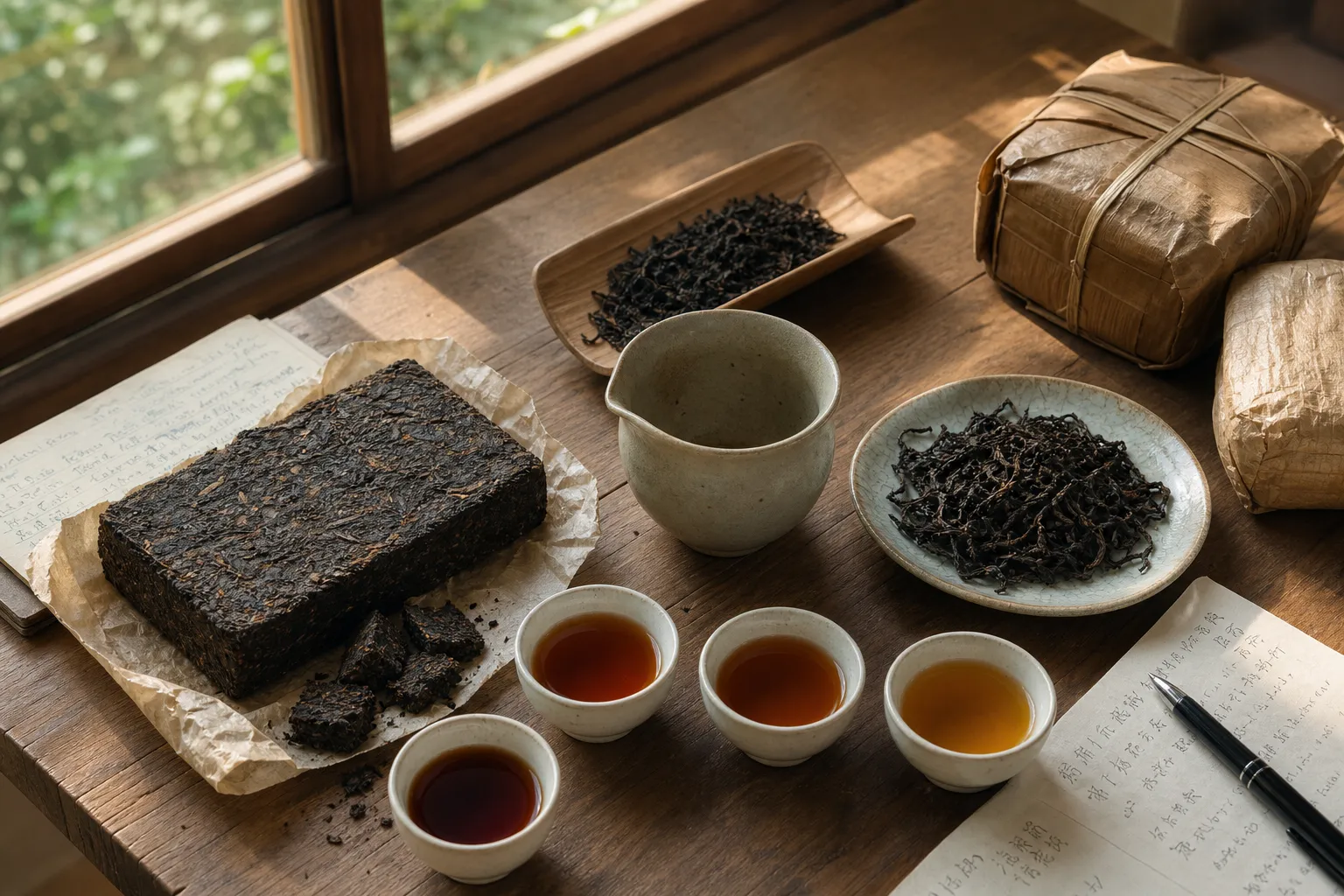
upward
Read the full overview first
Use the broader guide first if you need the full scope before this page.
What Chinese Dark Tea Culture Means in Daily Drinking
At the table, Chinese dark tea culture is best approached as a set of habits around post-fermented tea rather than a single ceremony or fixed rulebook. The tea may be loose, pressed into bricks or cakes, packed for storage, brewed in small vessels, steeped in larger pots, or prepared stronger for sharing with food.
For an everyday drinker, three questions usually matter first:
- Form: Is the tea loose, compressed, broken from a brick, or aged as a larger piece?
- Preparation: Is it being steeped lightly, brewed repeatedly, or cooked into a stronger drink?
- Context: Is it served alone, with food, as a gift, or as part of a comparison?
This page does not present a full cultural history. The available material for this draft does not include strong public references for regional history, terminology, or industry standards, so the article stays with cautious practical guidance: observe the tea, name the variables, and avoid turning market language into fact.
That restraint fits dark tea well. A cup can change with compression, storage, age, water temperature, rinsing, leaf amount, and steeping time. Culture here is not only what people say about tea. It is also what the tea asks you to notice.
Hei Cha Meaning: The Useful Distinction
The term often rendered as hei cha is commonly used in English tea writing for “dark tea,” a category associated with post-fermented tea. The useful point is not the literal translation alone. “Dark tea” in this context does not mean Western “black tea.” English labels can mislead because “black tea” and “dark tea” point to different processing ideas.
| Term Drinkers See | Practical Reading |
|---|---|
| Dark tea / hei cha | Usually points toward post-fermented tea traditions |
| Black tea | Usually points toward fully oxidized tea in English-language tea use |
| Pu-erh | A famous tea often discussed within dark tea conversations, but not the whole field |
| Aged tea | A storage-related description, not proof of quality by itself |
Many dark tea misconceptions begin with the word “dark.” A new drinker may assume it means higher strength, a darker liquor, a heavier taste, or one specific region. The cup may not follow those assumptions. Some dark teas brew reddish-brown and dense; others are softer, woody, mineral, sweet, clean, earthy, or muted. Some compressed teas open slowly over several infusions. Some loose teas release flavor quickly. Some aged teas smell settled and pleasant; others may seem flat, dusty, smoky, sour, or dominated by storage.
The category gives you a starting point, not a final judgment.
Why Compressed Tea Bricks Shape the Experience
Compressed tea bricks are one of the most recognizable objects in dark tea traditions. Even without making broad historical claims, a drinker can see why compression affects the culture around the tea: a brick changes how tea is handled.
Loose leaves invite scooping. A brick asks you to pry, flake, loosen, or break. You see layers, stems, leaf fragments, darker patches, and sometimes a difference between the surface and the inner portion. Preparing the leaf becomes part of the cup.
Compression also changes brewing behavior. A tightly pressed piece may need time to open. A loosely broken chunk may release strength faster. Fine crumbs can darken a cup quickly and may taste heavy if steeped too long. Larger flakes may start gently and become rounder after the first infusion.
| If the Tea Looks Like This | Start by Watching |
|---|---|
| Tight brick chunk | Whether it opens slowly and needs slightly longer early steeps |
| Loose dark leaf | Whether flavor arrives quickly and needs shorter control |
| Many small fragments | Whether the cup turns heavy, rough, or too dark fast |
| Mixed stems and leaves | Whether sweetness, woodiness, or texture changes over infusions |
Compressed tea also affects gifting and display. A wrapped brick, cake, or boxed dark tea can look formal, but presentation is not proof of better taste or better storage. The better questions remain practical: does the dry tea smell clean, does it brew clearly for its style, does the texture feel pleasant, and does the flavor stay interesting after the first cup?
Dark Tea With Food: Why the Pairing Often Works
Dark tea is often treated as an everyday tea partly because it can sit comfortably beside meals. The sensory reason is enough: many dark teas can have roasted, woody, earthy, grain-like, mineral, or mellow notes that do not fight food as sharply as a highly floral or very delicate tea might.
With food, the brew style often changes. A quiet tea session may highlight aroma and aftertaste. A meal setting may favor a fuller cup, a larger pot, or a more forgiving steep that can be poured for several people. The goal is not always to extract every subtle note. Sometimes the goal is a warm, steady drink that refreshes the palate between bites.
Useful pairing cues:
- With rich food: Try a slightly stronger cup, but stop before the liquor turns muddy or harsh.
- With simple grains or bread: Look for sweetness, toasted notes, or a soft finish.
- With salty dishes: Avoid oversteeping if the tea starts to feel drying.
- With snacks: A medium brew can make woody, date-like, or mineral notes easier to notice.
Some boiled dark tea traditions make sense in this food context. Boiling, simmering, or preparing a stronger pot can create a shared drink with body. It is not the only way to enjoy dark tea, and it is not automatically better than steeping. It is one preparation style that may suit certain leaves, settings, and drinkers who prefer a more substantial cup.
If you try a stronger preparation, keep the adjustment visible: use less leaf if the result becomes too dense, shorten the simmer if it turns bitter or flat, and notice whether the aroma remains clean after heat.
Regional Dark Tea Traditions: What Drinkers Should Notice
Regional dark tea traditions are easy to oversimplify. Without stronger source material, this page should not make firm claims about specific regional histories, timelines, or ranking systems. Everyday drinkers can still learn how to read regional language responsibly.
When a tea is presented as regional, ask what the label or seller is asking you to value. Is the emphasis on leaf origin, processing style, shape, age, storage, wrapping, or a local name? Those are different claims. A regional name can be useful, but it does not replace sensory judgment.
A careful tasting note might ask:
- Does the tea smell clean before brewing?
- Is the aroma woody, earthy, smoky, grain-like, sweet, herbal, mineral, or storage-heavy?
- Does the liquor feel thin, smooth, thick, drying, soft, or rough?
- Does the taste fade quickly, open gradually, or become more balanced after several infusions?
- Does the storage character support the tea, or dominate it?
Fermented tea culture can confuse new drinkers because “fermented” is used broadly in tea conversations. “Post-fermented tea culture” can also point to different processing and storage ideas. At the table, the first useful move is not to argue terminology. It is to ask what the tea does in the cup.
If a label sounds impressive but the brewed tea smells stale, unpleasantly damp, overly smoky, sour, or lifeless, pause. If the tea opens cleanly, carries a stable aroma, and gives you something to compare across infusions, the cup is more useful than the romance on the wrapper.
Pu-erh and Dark Tea: Same Conversation, Not Always the Same Thing
Pu-erh and dark tea are often discussed together, and that is understandable. Pu-erh is one of the most visible names for English-language drinkers exploring aged and fermented tea. But treating Pu-erh culture as identical to all Chinese dark tea culture narrows the view.
The practical distinction is simple: Pu-erh may be part of the conversation, but the broader world of dark tea includes other forms, naming habits, storage expectations, and preparation styles. A drinker who learns only through Pu-erh language may start applying the same assumptions everywhere: aging must be central, cakes must be the default, certain tasting vocabulary must apply, or market value must be the main lens.
Those assumptions can distort the cup. Some dark teas are more everyday and direct. Some are appreciated for body, warmth, texture, or compatibility with food. Some are sold in bricks or baskets rather than cakes. Some may be brewed casually rather than tasted in a highly structured session.
| Question | Pu-erh-Focused Assumption | Broader Dark Tea Reading |
|---|---|---|
| Is age always the main point? | It may be treated as central | Age matters only if storage and taste support it |
| Is compression always a cake? | Cakes may dominate the image | Bricks, chunks, baskets, and loose forms can appear |
| Is the session always formal? | Small-vessel tasting may be emphasized | Everyday pots, strong brews, and meal tea also fit |
| Is market value the goal? | Some discussions lean that way | Drinking quality is still judged in the cup |
This does not reduce Pu-erh. It simply keeps one famous pathway from becoming the whole map.
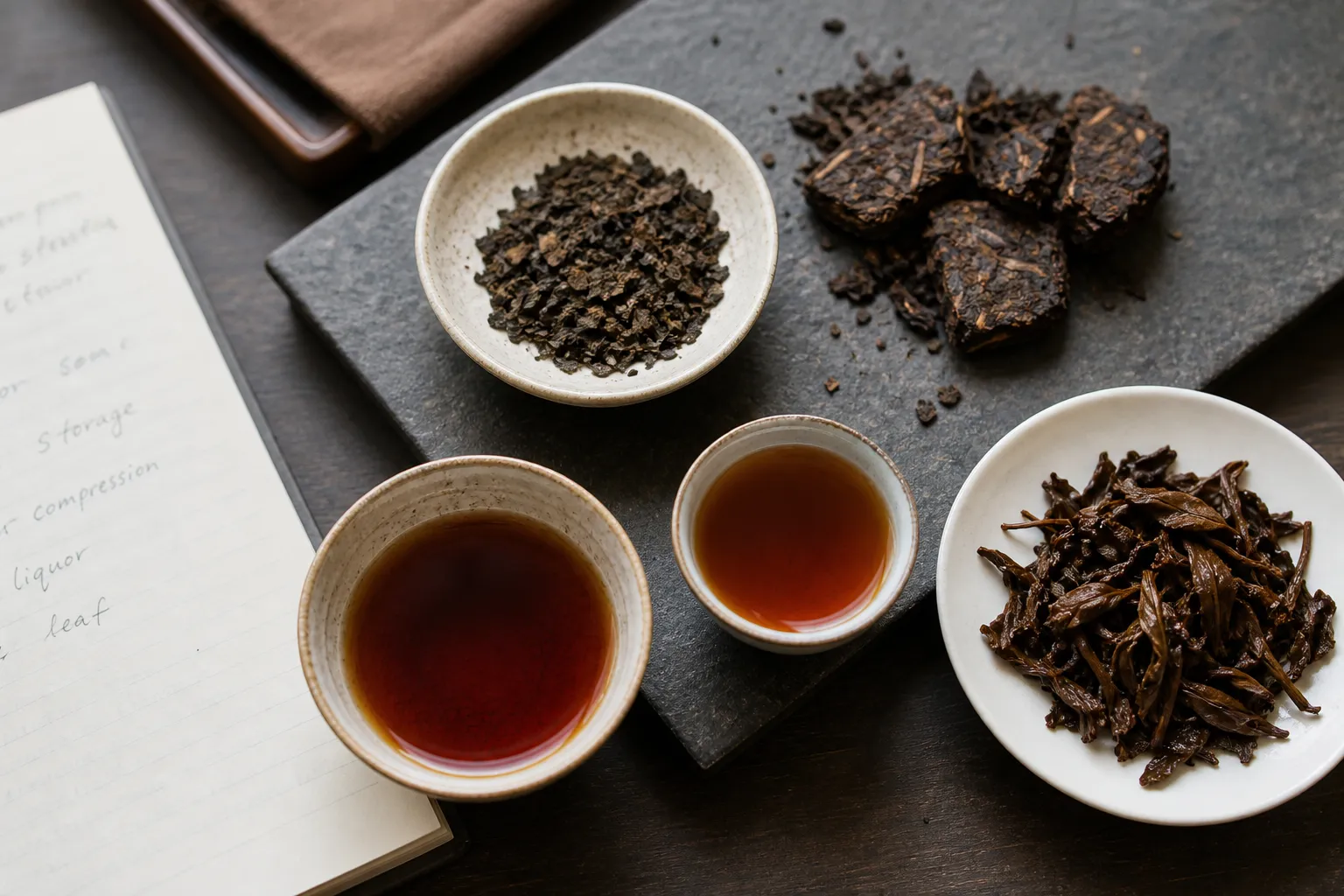
Aged Dark Tea Culture Without the Hype
Aged dark tea culture can be fascinating, but it is also where overstatement grows quickly. Age alone does not tell you whether a tea will be enjoyable. Storage conditions, original material, compression, humidity, airflow, packaging, and handling can all affect the result. A very old label is not a tasting note.
For everyday drinkers, age is best treated as a variable, not a trophy. Older dark tea may show softer edges, deeper aromas, or a more settled profile, but it may also taste dull, dusty, overly stored, or unbalanced. Younger dark tea may be sharper or simpler, but it may also be lively, clean, and easier to understand.
Use sensory checks before cultural assumptions:
- Dry aroma: Clean wood, grain, earth, or gentle sweetness can be encouraging; stale or unpleasant damp notes deserve caution.
- First infusion: A rinse or short first steep may help you see whether the tea opens cleanly.
- Middle infusions: Body, sweetness, and storage character often become clearer here.
- Aftertaste: Notice whether the finish feels pleasant, drying, flat, sour, or heavy.
- Leaf behavior: Compressed pieces that slowly open can change across the session.
Aging should not be treated as a promise of better drinking or future value. It is a condition that may change aroma and texture. The cup still has to earn your attention.
Reading Dark Tea Gift Culture Without Overthinking It
Dark tea gift culture can be difficult for new drinkers because the object itself may look important: a brick in a box, a wrapped cake, a decorative package, or a presentation set. The safest way to read it is with two lenses at once.
First, respect the social function. Tea can be shared, offered, displayed, stored, and compared. A gift does not have to be rare or expensive to be meaningful. It may simply be a way to invite someone into a shared drink.
Second, separate presentation from drinking judgment. Packaging can tell you how the tea is being positioned, but it cannot promise that the storage, flavor, or texture will suit you. A modest-looking tea can be pleasant; a formal-looking package can disappoint.
If you receive dark tea as a gift, start gently:
- Smell the dry tea before brewing.
- Break or loosen a small amount rather than dismantling the whole piece.
- Use a moderate leaf amount and short first steep.
- Taste before deciding whether it needs stronger extraction.
- Store the remaining tea away from strong odors, direct light, and damp conditions.
That approach lets you honor the object without turning it into a puzzle.
Common Misconceptions About Chinese Dark Tea Culture
The most common misunderstandings come from applying one shortcut to every tea. Dark tea is flexible enough that shortcuts can help, but only when they stay small.
Misconception: Dark tea is always heavy and earthy.
Some cups are deep and earthy, but others can be mellow, woody, sweet, mineral, clean, or surprisingly light depending on tea type and brewing.
Misconception: Stronger brewing is more traditional.
Some settings favor boiled or strong tea, but that does not make every dark tea better when pushed hard. If the cup becomes rough, muddy, or tiring, reduce leaf, time, or heat.
Misconception: Old tea is automatically better.
Age can change a tea, but storage and material matter. Taste the result instead of trusting the number.
Misconception: Pu-erh explains all dark tea.
Pu-erh is important in many English-language discussions, but it should not erase other dark tea forms or drinking habits.
Misconception: Cultural language proves quality.
Regional names, gift boxes, aged claims, and fermentation language can provide context, but the brewed tea still needs clean aroma, balanced texture, and a finish you want to return to.
A Practical First Session for Everyday Dark Tea Drinkers
If you are new to Chinese dark tea guidance, begin with a session that gives you room to adjust. You do not need a perfect vessel or formal setup. Use what lets you control leaf, water, and time.
| Variable | Gentle Starting Point |
|---|---|
| Leaf | Use a modest amount, especially with broken compressed tea |
| Water | Hot water is common for dark tea, but adjust if the cup feels harsh |
| First steep | Keep it short to check strength and storage aroma |
| Later steeps | Add time gradually as the leaf opens |
| Vessel | A small pot, gaiwan, or heat-safe mug with a strainer can work |
| Storage after opening | Keep away from strong smells, direct light, and damp conditions |
As you taste, ask one question at a time. Is the cup too thin? Add time or leaf. Too heavy? Shorten the steep or use less leaf. Pleasant but quiet? Try a slightly hotter or longer infusion. Rough or drying? Pull back. Flat after one infusion? The tea may not have much depth, or the brewing may need adjustment.
The point is not to perform culture perfectly. It is to become a more attentive drinker. Chinese dark tea culture becomes easier to understand when you connect the words on the wrapper to the leaf in your hand, the aroma in the cup, and the changes you can actually taste.