
Cup-side decision
Should Dark Tea Get One Rinse or Two
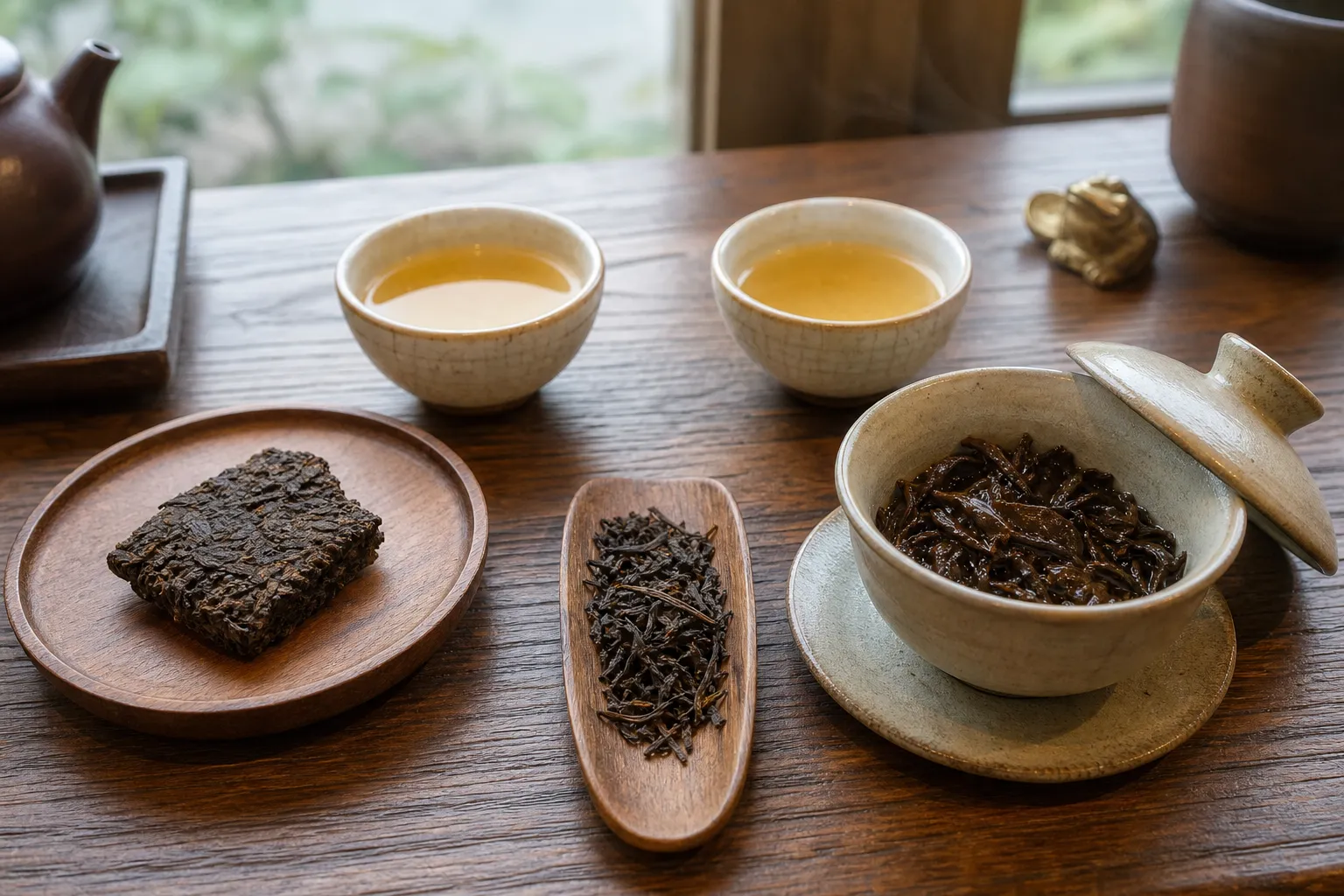
A tight piece of dark tea and a loose scoop of leaves do not need the same rinse. For most everyday brewing, start with one short rinse. Then decide whether a second rinse is useful by checking the wet-leaf aroma, the rinse liquor, and how much the tea has opened.
That is the practical answer to “one rinse or two dark tea”: one rinse often suits loose or lightly compressed tea with a clean aroma. Two short rinses can help with dense bricks, tight cake pieces, dusty fragments, a heavy storage note, or a cloudy first rinse.
The rinse is not a test of worth. It is a small brewing adjustment before the first drinkable infusion.
upward
Start with the broader guide
Use the broader guide first if you need the full scope before this page.
The Quick Decision Rule
Use the first rinse to read the tea, not to follow a fixed ritual. Add hot water, keep the contact brief, pour it out fully, then check four things: form, aroma, liquor, and leaf movement.
A single rinse tea approach keeps more early sweetness, warmth, and body in the first cup. A double rinse dark tea approach can make the first drinkable infusion feel clearer when the material is dense, dusty, or slow to wake.
Keep both rinses short. Once the rinse becomes a long steep, you are spending part of the brew.
When One Rinse Is Enough
One rinse is usually a good starting point for loose dark tea, broken pieces that separate easily, and lightly compressed material that begins to open as soon as hot water touches it. If the wet leaves smell clean, woody, mellow, grainy, or gently sweet, there may be little reason to rinse again.
A loose dark tea rinse is mostly about warming the leaf, clearing small surface dust, and helping the first steep arrive evenly. Because the leaves are already separated, water reaches them quickly. A second rinse can make the first cup thinner than expected, especially if you enjoy the tea’s early sweetness or soft aged aroma.
Dark tea rinse liquor does not need to be pale to be usable. Many fermented teas release color quickly. A reddish-brown or amber rinse can be normal in the cup. The better question is whether the liquid looks dusty, opaque, or muddy in a way that suggests the first drinkable infusion may taste rough or dull.
Choose one rinse when
- The leaves are loose or only lightly pressed.
- The first rinse smells clean and settled.
- The rinse liquor is not unusually cloudy.
- The tea begins to loosen during the rinse.
- You prefer a fuller first cup.
- The piece is small enough for water to reach the center quickly.
After one rinse, keep the first steep controlled. If it tastes too sharp, heavy, or earthy for your preference, shorten the next steep or try a second rinse next time. If it tastes thin, do not blame the rinse count first; the tea may need a longer steep, more leaf, hotter water, or a smaller vessel.
When Two Rinses Help
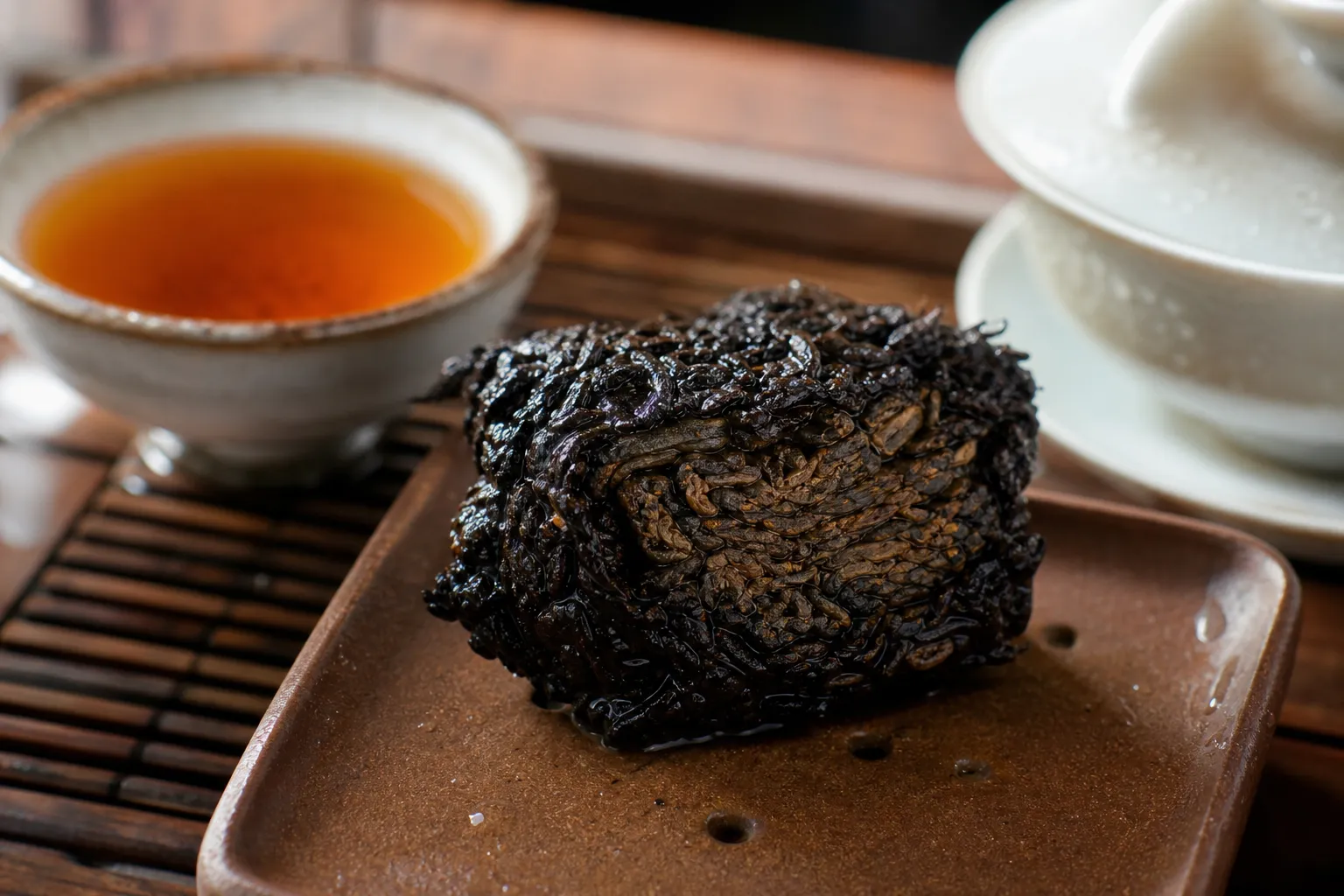
Two rinses are most useful when water has trouble reaching the leaf evenly. This often happens with tight compressed dark tea, especially dense chunks from bricks or cakes. The first rinse wets the surface; the second gives the piece another chance to loosen before the first cup.
Rinsing compressed dark tea is different from rinsing loose leaf. A tightly packed corner can look wet outside while staying firm inside. If the tea remains closed after the first pour, a second quick rinse can help the first drinkable infusion taste less uneven: not watery at the edges, then suddenly heavy as the center opens.
Two rinses can also help when the opening aroma is strong. Storage aroma in dark tea can show woody, cellar-like, earthy, paper, basket, or humid notes depending on the tea and the conditions it has lived in. Some of these notes may settle after a short rinse. If the wet leaves smell pleasant and integrated, one rinse may be enough. If the aroma feels heavy and covers everything else, a second rinse can soften the first cup.
Consider two short rinses when
- You are rinsing dark tea bricks with dense, hard corners.
- You are rinsing dark tea cakes and the chunk stays tight after one rinse.
- The dry surface looks dusty or broken into many fine fragments.
- The first rinse is notably cloudy.
- The wet-leaf aroma feels heavy, stale, or too forceful for your taste.
- The first drinkable infusion would otherwise be too thick or muddy.
The tradeoff is simple: a second rinse can smooth the opening cup, but it may also remove some early flavor. If the tea is delicate, already loose, or prized for first-steep sweetness, two rinses may be more than it needs.
How To Read The First Rinse
The first rinse gives you a quick preview. Do not overread it as proof of origin, age, storage quality, or rank. Use it only as a brewing cue.
Start with hot water and a short pour. In a small gaiwan or teapot, many drinkers keep the rinse brief: pour in, cover, swirl or wait a few seconds, then pour out. The exact time depends on leaf amount, vessel size, compression, and how strong you want the first cup. A tight piece may need a little more contact than loose leaf, but the rinse should still feel like preparation, not full extraction.
Look at the liquor first. Clear, bright, or lightly hazy rinse liquor points toward one rinse. A cloudy first rinse with visible dust, fine particles, or a dull heavy look may point toward two. Color alone is not enough; a dark rinse is not automatically a problem.
Smell the wet leaves next. Clean aged wood, warm grain, dried fruit, mellow earth, or a sweet fermented note can move you toward one rinse. A storage aroma that feels too dominant can move you toward a second. The useful question is practical: will the first cup taste better if that opening layer is softened?
Then watch the leaf. If a compressed piece separates at the edges, opens between layers, or loosens when touched with the lid, the tea is ready for the first steep. If it remains a hard lump, a second rinse may help water reach the inner material.
Finally, decide how much first-cup strength you want. One rinse usually keeps more body in the first drinkable infusion. Two rinses may make the first cup cleaner but lighter. Neither choice is automatically better; each serves a different cup.
Common Misunderstandings
Rinse count is not correctness
Two rinses are not always more proper. One rinse is not always more skillful. Rinse count should follow the tea in front of you: loose or compressed, clean or heavy in aroma, open or stubborn, clear or cloudy in the rinse.
The rinse proves less than it seems
A cloudy rinse may come from fine broken leaf, dust, compression, or handling before brewing. A clear rinse does not settle questions of origin or storage history. The rinse helps you adjust the brew; it does not carry more meaning than that.
A long opening steep is different
Some brewers call a long opening steep a rinse, then wonder why the first cup feels weak. If you want the rinse to prepare the leaves without spending too much flavor, keep it short.
The vessel changes the effect
In a small gaiwan with a high leaf ratio, even one rinse can take away noticeable strength. In a larger pot with less leaf, the effect may be gentler. Include the vessel and leaf ratio, not only the tea form.
For a very tight piece, use two short rinses rather than one long wash that extracts unevenly.
A Simple Cup-Side Method
Repeatable sequence
- 1. Place the dry tea in the warmed vessel and smell it.
- 2. Rinse once with hot water, briefly.
- 3. Pour the rinse out completely.
- 4. Smell the wet leaves.
- 5. Look at the rinse liquor and opened leaf.
- 6. Choose either the first drinkable steep or a second short rinse.
Use one rinse if the tea smells ready, looks reasonably clear, and has begun to open. Use two rinses if the piece is still tight, the rinse is dusty or cloudy, or the storage aroma is too strong for the cup you want.
For the first drinkable infusion after one rinse, steep with restraint and adjust by taste. If it is too heavy, shorten the next steep. If it is too thin, lengthen the next steep or use slightly more leaf next time. After two rinses, expect the first cup to be a little lighter; give it enough time to show body without pushing it into roughness.
The useful boundary is this: rinse count is part of the brew, not a separate rule. A clean loose leaf and a dense stored brick should not be forced into the same answer.
Small Adjustments After The First Cup
Sweet but thin
The rinse may have taken too much from the opening infusion, or the steep may have been too short. Next time, use one rinse, shorten the rinse, add a little more leaf, or extend the first steep.
Heavy, flat, or muddy
The tea may have needed a second rinse, a shorter first steep, or less leaf. This can happen when a compressed piece opens suddenly after the rinse and releases more than expected.
Harsh at the edges
Do not assume the rinse count is the only cause. Water temperature, broken leaf, steep time, and leaf amount can all sharpen the cup. A second rinse may help with dusty fragments, but it will not fix every brewing imbalance.
Clean but too light
After two rinses, keep the next infusion slightly longer. Dark tea often builds across the early steeps, especially when a compressed piece continues to loosen. The better adjustment may be patience, not a new rule.
Short FAQ
Should all dark tea be rinsed twice?
No. Loose leaf and lightly compressed pieces often need only one brief rinse, especially when the wet aroma is clean and the first rinse is not unusually cloudy.
Is one rinse better for first-cup strength?
Often, yes. One rinse usually keeps more early body in the first drinkable infusion. If the tea is clean, open, and not too dusty, that fuller first cup may be exactly what you want.
When is a second rinse worth it?
Use a second short rinse when the tea is tightly compressed, still closed after the first rinse, dusty, cloudy in the first pour, or carrying a storage aroma that feels too strong for your taste.
Does a dark first rinse mean the tea needs another rinse?
Not by itself. Many dark teas release deep color quickly. Look for cloudiness, dust, heavy aroma, and whether the leaf has opened; color alone is a weak cue.
The Practical Answer
Choose one rinse for loose or lightly compressed dark tea when the wet aroma is clean, the rinse liquor is not especially cloudy, and you want the first cup to keep its early strength. Choose two short rinses for tight compressed pieces, bricks or cakes that stay closed, dusty fragments, heavy storage aroma, or a first rinse that looks and smells too forceful for the cup you want.
Do not make the rinse count carry more meaning than it can. It does not establish origin, rank, storage history, or any larger promise. It only helps you decide how the next steep should begin.
At the tea table, the best answer is visible: leaf form first, aroma second, rinse liquor third, first-cup preference last. Then pour the first drinkable infusion and let that cup decide the next adjustment.