
Rinse reading
How to Tell When Dark Tea Leaves Have Opened After Rinsing
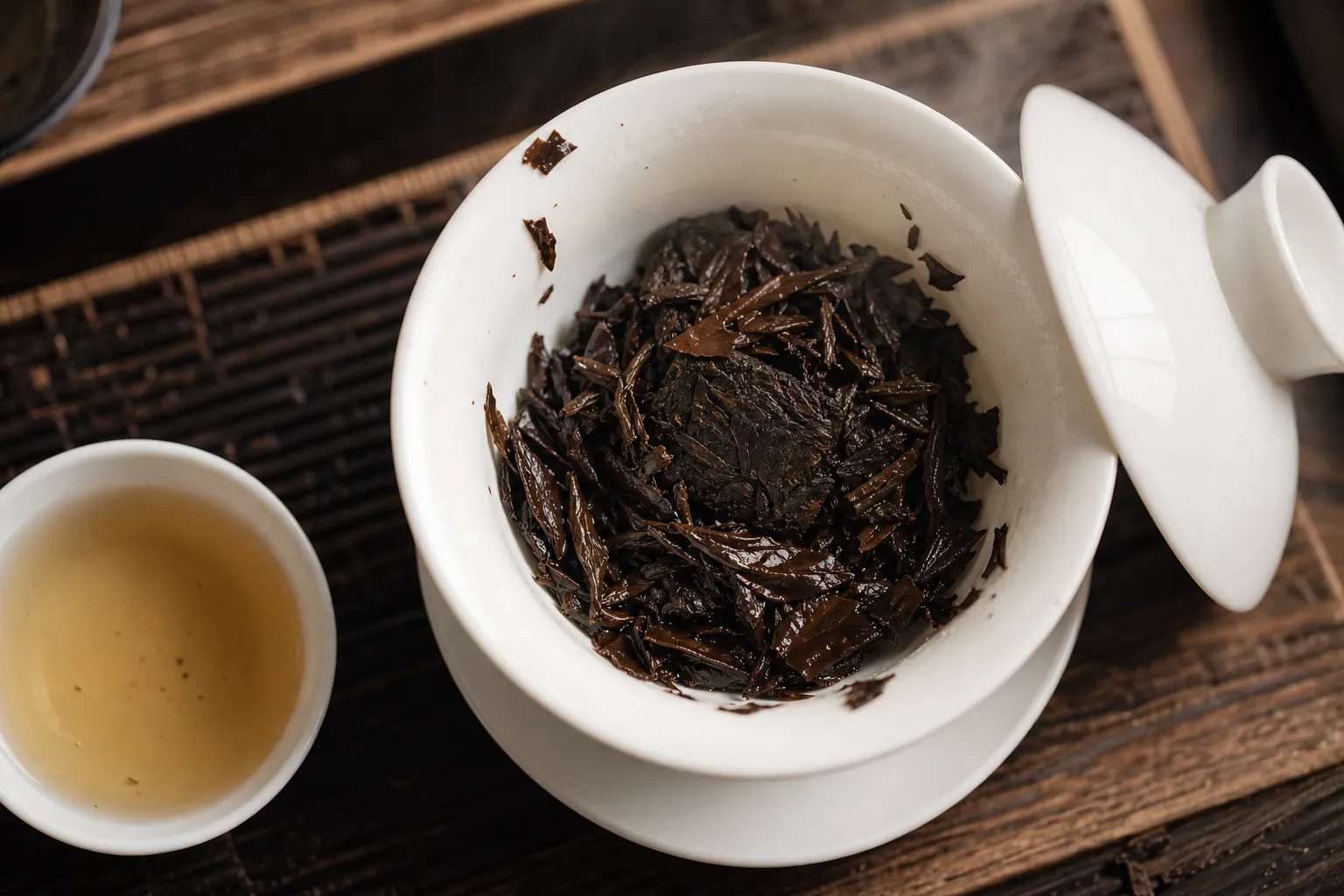
A rinsed dark tea is usually ready for the first meaningful steep when the wet leaves look evenly hydrated, the tightest clusters have begun to separate, the compressed edges have softened, and a warmer leaf aroma rises from the vessel. The leaves do not need to spread flat. For many cakes, bricks, and aged pieces, “opened” means water can now move through the leaf mass, not that every leaf has fully unfolded.
If you are judging whether dark tea leaves opened after rinse, read the tea in this order: surface, center, texture, aroma. If the outside looks wet but the core still looks dry, stiff, and sealed, give the tea a brief rest under the lid or use one more quick rinse before starting the first cup.
upward
Read the full overview first
Use the broader guide first if you need the full scope before this page.
The Signs That Dark Tea Leaves Have Opened Enough
Even wetness is the first sign. After the rinse, the outer leaves should no longer look dusty, pale, or resistant to water. The surface may darken, loosen, and take on a soft sheen. If a compressed piece still has a dry-looking center, the first steep can taste thin at the beginning and then become heavy later as the inner material finally opens.
Leaf clusters separating are another useful cue. You do not need every leaf to float apart, but the mass should stop behaving like one hard pebble. When you tilt the gaiwan or teapot, the wet leaves may shift slightly instead of moving as a single block. If you touch the edge gently with a lid, spoon, or tea pick, the outer layers should give a little.
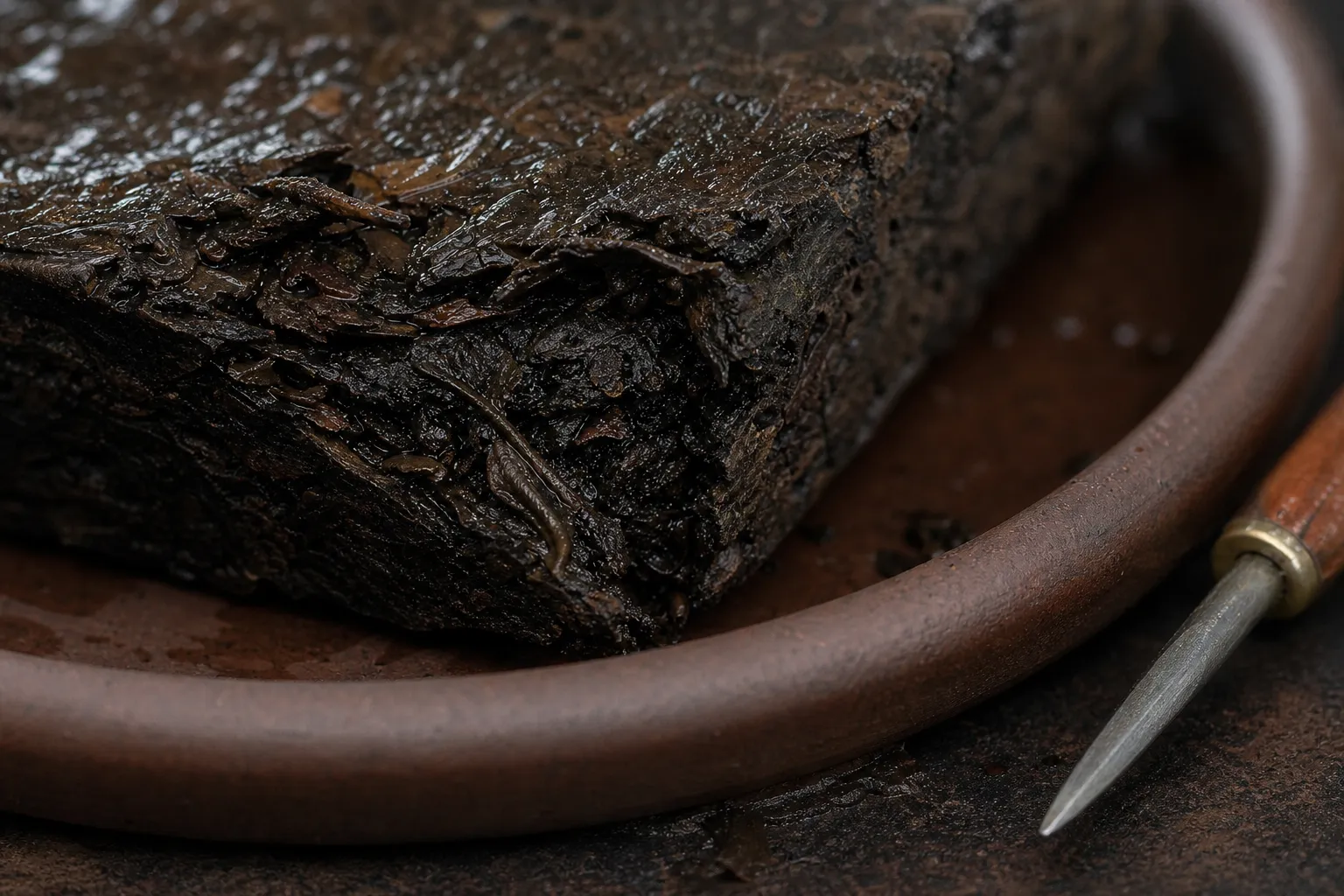
Compressed edges matter more than perfect unfolding. A brick corner may still keep its shape after one rinse, but the sharp rim can soften, swell, and loosen. A broken cake flake may open along its layers while the inner fold remains tight. That is often enough to begin, as long as water can now reach more than the outer surface.
Aroma is the fourth cue. Warmed wet leaves often release a clearer smell after the rinse: woody, earthy, sweet, grain-like, dried-fruit-like, or cellar-like depending on the tea and storage. Aroma alone does not prove the tea is ready, but it suggests the rinse has warmed and hydrated the material enough to start extraction.
A Quick Reading of Wet Leaves After Rinse
Leaves look evenly wet and slightly loosened
This usually means the tea is ready for a normal first steep. Start short and taste.
Outer leaves are wet, but the center looks dry
The rinse has not reached the core. Add a brief rest or second quick rinse.
The piece stays hard and moves as one lump
Compression is still limiting water flow. Extend the rinse slightly next time.
Strong color appears in the rinse, but leaves remain rigid
Liquor color is not the same as opening. Judge the leaves, not only the rinse water.
Aroma rises, but clusters are still tight
The tea has warmed, but may open slowly. Start gently and expect later steeps to deepen.
Loose leaves separate almost immediately
The tea needs less waking time. Keep the first steep controlled.
Use the table as a reading aid, not a fixed rule. Dark tea opening up depends on form, storage, water temperature, rinse length, and vessel size. A small gaiwan with hot water and a thin cake flake will behave differently from a larger teapot holding a dense brick corner.
Loose Leaf, Cake, and Brick Open Differently
Loose-leaf dark tea often shows readiness quickly. After a short rinse, the leaves may darken, sink, separate, and release aroma without much resistance. If the leaves are already separated before water touches them, your job is mostly to warm them and wet them evenly. A long rinse can make the first steep flatter than you want.
Compressed dark tea asks for a closer look. Cake flakes, brick chunks, and tightly pressed nuggets may need more time for water to enter the layers. The outside can look ready while the inner fold remains dry. In that case, the tea may taste uneven: light and watery at first, then suddenly dense, earthy, or rough as the center opens during later infusions.
For tight cake rinse cues, watch the edge of the piece rather than the whole chunk. If the rim swells, the layers start to lift, and the broken face no longer looks chalky or dry in the cracks, it is usually open enough to begin. If the edge stays sharp and the inner face looks sealed, the rinse has mostly wetted the surface.
Broken fragments are the exception. Small crumbs and thin flakes can open very fast because water reaches many surfaces at once. They may produce a dark rinse and a strong first cup even when larger pieces from the same tea would still be slow to loosen. When a serving contains both dust and dense chunks, judge the bigger pieces before deciding whether to lengthen the rinse.
Rinse Temperature and Length Change the Answer
Hotter water usually wakes compressed dark tea faster because it warms the leaf mass and helps the layers relax. Cooler water may be gentler, but it can leave a tight piece under-opened after a very short rinse. The goal is not to force the tea open; it is to hydrate it enough for the first steep to extract more evenly.
Rinse length should stay flexible. In many everyday brewing setups, loose dark tea may need only a brief rinse. A broken cake flake may need a little more contact. A tight brick corner may benefit from a longer rinse, a short wet rest, or a second quick rinse if the core still looks dry. The exact timing depends on leaf amount, vessel size, water heat, and how tightly the tea was pressed.
A wet rest can be more useful than simply rinsing longer. After pouring off the rinse, leave the lid on for a short moment and let the warmed moisture move into the leaf mass. When you open the vessel again, check whether the surface has softened and whether the aroma is clearer. If the piece looks less rigid, you can start the first meaningful steep without turning the rinse into a full extraction.
Vessel size also changes what you see. In a small gaiwan, the rinse reaches the leaves quickly and the aroma is easy to read under the lid. In a larger pot, a dense chunk may sit in a cooler pocket if water movement is weak. If your first steep often tastes uneven, try breaking the piece slightly smaller or pouring the rinse more directly over the compressed area.
What People Mean by “Woken Tea Leaves”
Phrases like woken tea leaves, leaves opened after rinse, and wet leaves after rinse are useful tea-table language, but they are not strict grading terms. In practice, they usually describe a simple change: the dry tea has been warmed, hydrated, loosened, and made ready to release flavor more evenly.
The phrase can mislead when it suggests the tea must fully unfold before brewing. Many dark teas, especially compressed or older stored pieces, open gradually across several steeps. A first cup can still be meaningful even if some inner leaves remain folded. The better question is whether water can circulate and whether the aroma has started to show.
Another common misunderstanding is judging by rinse liquor alone. A dark rinse does not always mean the leaves are ready. Fine particles, broken edges, or surface material can color the water quickly while the main leaf mass remains tight. The opposite can also happen: a gentle rinse may look pale, yet the wet leaves may be soft, fragrant, and ready for a controlled first steep.
A strong earthy smell is not a complete answer either. Aroma helps, but it should be read with texture and separation. If the smell rises but the tea still feels like a hard lump, expect the first steep to need either a little more time or a gentler reading of the early cup.
When To Rinse Again, Rest, or Start Brewing
Start brewing when the wet leaves are evenly moistened, the edges have softened, and the aroma is present enough to read. Keep the first steep modest if you are unsure. A shorter first steep lets you learn how quickly the tea is opening without overloading the cup.
Rinse again if the center still looks dry and the piece remains rigid. This is most common with tight bricks, thick cake chunks, or pieces taken from a very compressed area. Keep the second rinse brief. You are trying to help water enter the leaf mass, not wash away the first cup.
Rest instead of rinsing again if the leaves are wet on the outside but only slow to loosen. Pour off the rinse, cover the vessel, and wait briefly. This lets heat and moisture move inward while preserving more of the early flavor for the first steep. After the rest, check whether the leaves look less rigid and whether the aroma has opened.
Start brewing carefully if the tea is loose, broken, or already separating. In that case, another rinse may make the first steep feel thin. Let the wet leaves guide the decision: if they move freely, smell present, and show no dry core, the next useful step is tasting, not more rinsing.
Open Enough Is Not Fully Open
For dark tea, “open enough” is a brewing judgment, not a finish line. The wet leaves may still be folded, layered, or partly compressed when you begin. That is normal for many cakes and bricks. The first meaningful steep begins when the tea can extract in a reasonably even way, not when every leaf has displayed its full shape.
The most practical test is simple: look for evenly wet tea leaves, gently loosened clusters, softened compressed edges, and aroma rising from the warmed material. If those signs are present, brew the first cup and let taste confirm the decision. If the cup is thin and the wet leaves still show a dry core, lengthen the next rinse or give the leaves a short rest. If the cup is heavy or rough from the start, shorten the rinse or first steep next time.
Let the leaf form make the call. Loose versus compressed dark tea is the main difference; temperature, rinse length, vessel size, and storage condition refine it. Once the leaves have moved from hard material to responsive wet leaf, your next decision belongs in the cup: steep briefly, taste, and adjust the second infusion from what the tea actually gives.
FAQ
Do dark tea leaves need to fully unfold after rinsing?
No. Many dark tea cakes and bricks open gradually. After the rinse, they only need to be hydrated and loosened enough for water to move through the leaf mass during the first meaningful steep.
Is a dark rinse a sign that the leaves have opened?
Not by itself. Broken edges and fine particles can color the rinse quickly while the main piece stays tight. Check the wet leaves, the center of the piece, the softened edges, and the aroma before deciding.
Should I rinse twice if the leaves still look tight?
Sometimes. Use a second quick rinse if the center looks dry and the piece remains rigid. If the outside is wet and the tea is only slow to relax, a short covered rest may be better than another rinse.
Can loose dark tea skip the long waking step?
Often, yes. Loose leaves usually hydrate and separate faster than compressed tea. Keep the rinse short, then use the first steep to judge whether the tea needs more time or a lighter hand.