
Brewing Decision Guide
Rinsing and Waking Dark Tea: When the First Pour Matters
The first pour of dark tea can be a small decision point. Should you drink it, pour it away, or use it mainly to help the leaves open before the cup you judge?
There is no rule that fits every brick, cake, basket, loose-leaf handful, or aged piece of tea. The better question is what that first contact with hot water is doing in your vessel. It may loosen compressed material, carry off visible surface dust, soften a storage-heavy opening, warm the pot or gaiwan, or produce a cup that already tastes worth drinking.
Once you look at leaf form, aroma, liquor color, and your own taste preference, rinsing dark tea becomes a practical choice rather than a ritual you have to perform.
upward
Read the full overview first
Use the broader guide first if you need the full scope before this page.
What Does Rinsing Dark Tea Actually Mean?
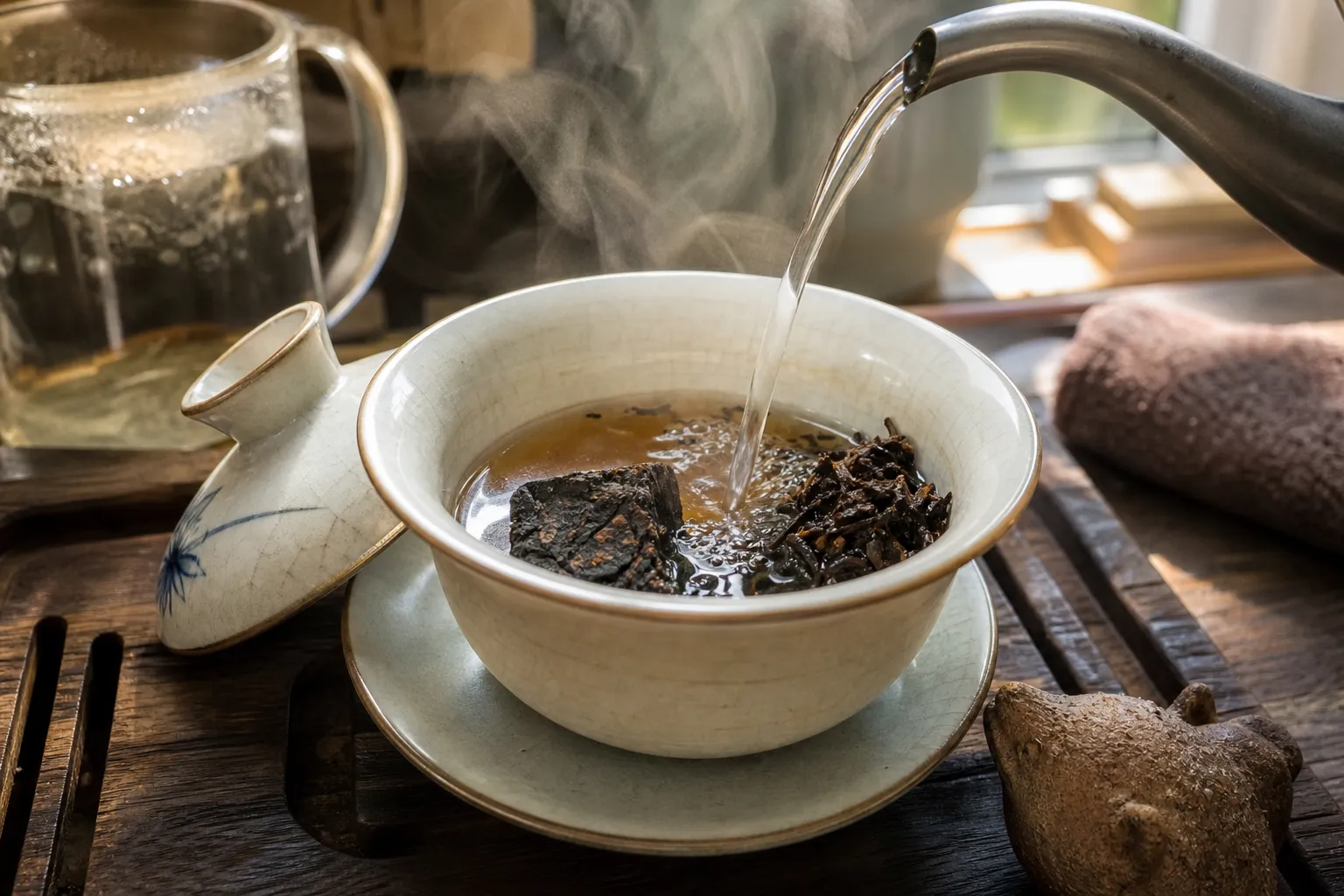
In everyday brewing language, a rinse is a brief first pour of hot water over the leaves before the first cup you plan to drink. The water is usually drained quickly and poured away, or occasionally set aside for a small taste.
For dark tea, a rinse can be useful because the category often includes compressed, stored, or tightly settled material. A brief pour may help loosen compressed tea leaves, warm a small brewing vessel, reduce visible loose particles, and bring out the first clear signs of aroma. It can also soften an opening note that feels too heavy at the start of a session.
That does not mean a rinse is required. It is not proof that the tea is better, safer, or more authentic. It is one optional brewing move. If the tea is loose, clean-looking, aromatic, and quick to open, the first pour may be pleasant enough to taste. If the tea is compact, dusty, closed, or strongly stored, a rinse may make the next infusion easier to read.
Tight chunk from a brick or cake
The first pour begins loosening the layers, so a short rinse followed by brewing often makes sense.
Loose dark tea with clear aroma
The tea may start extracting quickly, so tasting the first pour can be worthwhile.
Heavy storage aroma
A rinse or brief wake-up pour may soften the first impression before the cup you judge.
Cloudy water with visible particles
The pour may carry off surface material, so discarding the rinse can be practical.
Thin liquor but closed leaves
The first contact may only warm and open the tea slowly; rest the leaves, then brew again.
The rinse is not a test of seriousness. It is a small adjustment before the cup you want to understand.
What It Means to Wake Up Tea Leaves
To wake up tea leaves is a softer phrase than “rinse,” and it points to a slightly different intention. Rinsing sounds like removing something. Waking dark tea leaves is more about helping the material respond to water.
Compressed dark tea may need a little time before it behaves like loose leaf. A dense corner from a brick can resist water at first. The outer surface may darken while the inner layers remain tight. A short hot pour can begin to separate the edges, warm the mass, and let aroma rise from the vessel. After that, the first drinkable infusion may extract more evenly.
This matters most when the tea looks compact or layered. If the leaves stay clumped after the first pour, the next infusion may taste uneven: watery at the front, then suddenly heavy or woody as the chunk opens later. A wake-up pour can reduce that jump.
Waking does not need special language. It is not a hidden step that reveals the only true taste of the tea. It is a practical way to check whether the leaves are ready to brew evenly.
Look for these signs after the pour
- The compressed piece begins to separate at the edges.
- The dry or storage-heavy smell becomes warmer and more leaf-like.
- The leaves look hydrated rather than sealed and shiny only on the outside.
- The next pour darkens more evenly instead of releasing color in streaks.
- The aroma from the warmed vessel is clearer than the dry-leaf aroma alone.
If those changes do not matter in your cup, waking may not be necessary. Some teas are ready quickly, and some drinkers enjoy the directness of the first infusion dark tea gives them.
Rinse vs First Infusion in Dark Tea
The difference is not only timing. It is intention.
A rinse is brief, usually not judged as the main cup, and often discarded. A first infusion is brewed to drink, taste, and evaluate. The confusing part is that both are technically the first water touching the leaves. What changes is how you treat the liquid.
If you pour hot water over a compact tea chunk for a few seconds, swirl the vessel lightly, and discard the liquid because the leaves are still closed, that pour is functioning as a rinse or wake-up step. If you pour hot water, wait long enough for aroma, color, and body to develop, then drink it with attention, that is your dark tea first infusion.
The same tea can sit on either side of the line depending on the setup. In a small vessel with a high leaf-to-water ratio, even a short first pour may become flavorful. In a larger mug or casual pot, the first contact may be slower, lighter, and more drinkable as part of the normal brew.
Ask what the liquid is doing
- Is it mostly pale, dusty, woody, or storage-heavy?
- Does it taste thin because the leaf has not opened?
- Is it already sweet, rounded, and pleasant?
- Does the aroma feel clearer after the pour than before it?
- Would discarding it improve the next cup, or remove something you enjoy?
If the liquid tastes rough, flat, or mostly like storage, discarding it may make sense. If it tastes gentle, clean, and expressive, tasting it may teach you something about the tea’s opening character.
How Long Should a Dark Tea Rinse Be?
Treat timing as a starting point, not a rule. In many everyday brewing setups, a short dark tea rinse is just long enough to wet the leaves thoroughly, warm the vessel, and begin aroma release.
For loose dark tea, that may mean a quick in-and-out pour. For compressed tea, it may need slightly more contact, especially if the piece is dense or cool from storage. The aim is not to extract a full cup. The aim is to prepare the leaf for the next infusion without turning the rinse into the brew you meant to drink.
Use cues more than a stopwatch
Loose leaf, open texture
Start with very brief wetting, and drink it if the aroma is already appealing.
Small compressed chunk
Use short contact, then drain; extend slightly if the center remains dry.
Dense brick piece
Wet, pause, and watch the edges; break smaller next time if it stays sealed.
Strong storage aroma
Briefly rinse, then smell the warmed leaves; repeat only if the aroma still dominates.
Delicate or mild tea
Consider tasting first, and skip the rinse if the first cup is balanced.
Water temperature, vessel size, and leaf amount all change the result. A small gaiwan with plenty of leaf extracts quickly. A large pot with less leaf may extract slowly. Hotter water tends to wake compressed material faster, but it can also draw out intensity sooner.
If the first drinkable infusion tastes too heavy after a rinse, shorten the rinse next time or reduce the early steep. If it tastes thin and closed, give the leaves more time to open or rest after wetting.
One Rinse, Two Rinses, or None?
One rinse is often enough when the goal is simply to wet the leaves and soften the first impression. Two brief rinses may make sense when the tea is especially compressed, visibly dusty, or carrying a storage aroma that distracts from the cup. No rinse can be the better choice when the tea is loose, fragrant, clean-looking, and ready to brew.
Choose one rinse when
- The tea is compressed but begins opening after the first wetting.
- The rinse water shows contact but does not feel like a full brew.
- The warmed leaves smell clearer and more inviting.
- You want the first drinkable infusion to start smoother and more even.
Consider a second brief rinse only when
- The compressed piece remains tight after the first pour.
- The first rinse carries a storage note you do not want in the cup.
- Visible surface dust or loose particles still dominate the water.
- The next infusion would otherwise be mostly about opening the tea, not drinking it.
Skip the rinse when
- The tea is loose and opens immediately.
- The first pour smells pleasant and tastes balanced.
- You want to understand the tea from its very first extraction.
- You are brewing casually and do not mind a lighter opening cup.
- The tea is mild enough that discarding the first pour would remove aroma you enjoy.
Two rinses should not become an automatic display of seriousness. Each rinse removes some soluble material. With gentle, softly aged, or lightly leafed tea, repeated rinsing can make the first drinkable infusion feel thinner than expected. With strong, dense, or heavily stored tea, an extra short rinse may make the session more comfortable.
Should You Let Dark Tea Rest After the Rinse?
A short rest after rinsing can help compressed dark tea absorb moisture more evenly. Wet leaves continue softening after the water is poured away. A dense chunk may open better if it sits briefly in the warm, humid vessel before the next infusion.
This is especially useful when rinsing compressed dark tea. If you pour again immediately, the outer leaves may brew while the inner leaves are still tight. If you wait a little, the tea may release more evenly in the next pour.
The pause does not need to be long. During that moment, smell the vessel. The aroma can tell you whether the tea is becoming clearer, sweeter, earthier, woodier, or still dominated by storage.
Resting after the rinse may help when
- The tea chunk is thick or tightly pressed.
- The leaves are slow to separate.
- The rinse water was pale but the warmed leaves smell promising.
- The first drinkable infusion often tastes thin at first and heavy later.
Skip the rest when
- The leaves are already loose and hydrated.
- You are brewing a light, quick-opening tea.
- The vessel is large and cooling fast.
- You prefer a brisker, less rounded first cup.
As with the rinse itself, the rest is a tool. If it improves the cup, keep it. If it makes the first infusion dull or overly soft, shorten it or leave it out.
What the Rinse Water Can Tell You
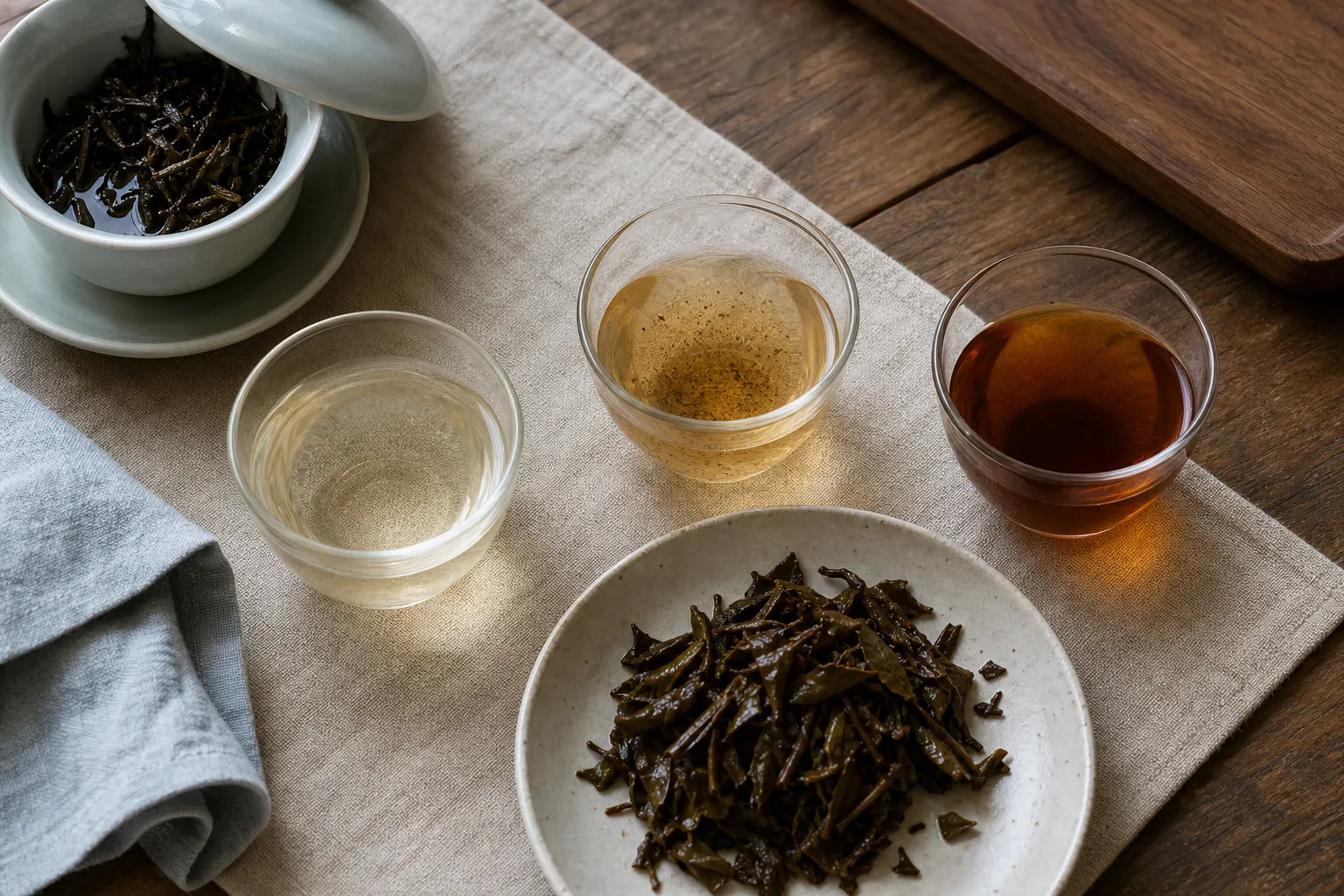
Dark tea rinse water is not a quality test. Still, it can give practical clues about what is happening in the vessel.
Color is one clue. A very pale rinse from compressed tea may mean the water mostly touched the outside and the leaves are still closed. A quick dark rinse may mean the tea extracts easily, the leaf ratio is high, or fine particles are present. Cloudiness can come from small broken material or surface dust, but it does not settle every question about the tea.
Aroma is often more useful than color. If the rinse smells mostly like storage, damp wood, old paper, or a heavy closed note, you may prefer not to drink it. If it smells sweet, clean, woody, fruity, or mellow in a way you enjoy, the first pour may be worth tasting next time.
Texture matters too. If you taste the first pour and it feels thin, sharp, or flat, the tea may not have opened yet. If it already has body and a pleasant aftertaste, treating it as drinkable can be reasonable.
Use the rinse water as a signal
- Pale and quiet: the leaves may need more time or a rest.
- Dark and harsh: shorten the next steep or reduce leaf next session.
- Cloudy with particles: decant carefully or rinse briefly.
- Aromatic and balanced: consider drinking the first pour in the future.
- Storage-heavy: rinse, rest, and judge the next infusion.
The goal is not to make every first pour disappear. The goal is to learn whether that specific tea benefits from being opened before drinking.
When to Taste the First Pour Instead of Discarding It
Tasting the first pour is useful when you are learning a tea. Even if you usually rinse, you may occasionally taste the opening liquid to understand what you are giving up. This is especially helpful with loose dark tea, lightly compressed pieces, or teas that smell inviting as soon as hot water hits the leaf.
Taste the first pour when the liquor is clear, the aroma is pleasant, and the mouthfeel is not dominated by roughness or storage. You might also taste it when comparing two teas, because the way each one opens can reveal differences in compression, particle size, and early aroma.
Tasting does not mean finishing the cup. A small sip can answer the question. If it tastes closed, dusty, or heavy, discard the rest and continue. If it is already enjoyable, you have learned that skipping the dark tea rinse may suit that tea and your palate.
Dark tea taste preference is personal and situational. Some drinkers like a clean, rounded first drinkable infusion after a rinse. Others enjoy the changing arc from the first contact with water. A tea that benefits from rinsing in a small, concentrated session may be fine unrinsed in a larger casual pot. A tea that feels too strong unrinsed today may taste better that way with less leaf tomorrow.
A simple tasting check
- Smell the warmed leaves before deciding.
- Pour a small first infusion rather than a large cup.
- Taste only enough to judge aroma, body, and finish.
- Discard or continue based on the cup, not the rule.
- Notice whether the next infusion improved after the first pour.
Over time, this builds a brewing memory for the tea in front of you.
Common Misconceptions About Rinsing Dark Tea
Rinsing is mandatory
It is not. Some dark teas benefit from a rinse, some do not need it, and some sit in the middle depending on vessel, leaf amount, and preference.
Rinsing broadly proves the tea is cleaner
Without specific evidence for a particular tea, source, or condition, that claim goes too far. A rinse can reduce visible surface dust or loose particles in the cup, which is an observable brewing effect.
Waking tea leaves is a formal requirement
The phrase can be useful, but it should not become a performance. If the leaves are already open and fragrant, there may be nothing special to wake.
Rinsing always improves taste
It can help when the opening pour is dominated by storage aroma, tight compression, or surface material, but it can make a mild tea feel less expressive if the first pour was already pleasant.
Dark tea often asks for a middle path. Sometimes the first pour is preparation. Sometimes it is information. Sometimes it is a cup.
How Rinsing Changes the First Drinkable Infusion
A rinse can change the first drinkable infusion in several practical ways. It may make the liquor appear more even because the leaves have already been wetted. It may soften a storage-heavy opening. It may help compressed material release aroma and color more steadily. It may also quiet the early cup, which can be welcome or disappointing depending on the tea.
If your first drinkable infusion tastes flat after rinsing, the rinse may have been too long, the rest too extended, or the tea too mild for that approach. If it tastes harsh even after rinsing, the issue may be leaf amount, water temperature, steeping time, or the tea’s own character. If it tastes thin at first and then suddenly strong in later infusions, the compressed leaves may not have opened fully; try a smaller piece, a warmer vessel, or a brief rest after the rinse.
Match the adjustment to the result you want
Clearer first cup
Try one quick rinse and watch for less storage-heavy aroma.
More even extraction
Rinse, then briefly rest while watching the leaves open at the edges.
Stronger opening flavor
Taste the first pour and look for pleasant body, not just color.
Less heaviness
Use a short rinse before brewing and look for cleaner aroma in the next cup.
Less thinness
Shorten or skip the rinse if you want more aroma in the first cup.
The first pour matters because it sets the rhythm of the session. It can be a discarded rinse, a wake-up step, or the first cup you drink. The right choice depends on what the leaves show you: how tightly they are held, how they smell when warmed, how the liquor behaves, and whether the taste in the cup is something you want to keep.
Start with a short, cautious rinse when the tea is compressed, dusty, or storage-heavy. Taste the first pour when the tea opens quickly and smells ready. Rest the leaves when the center is still tight. Skip the rinse when the first infusion is already the cup you want.