
Brewing Guide
How Long Should a Dark Tea Rinse Be
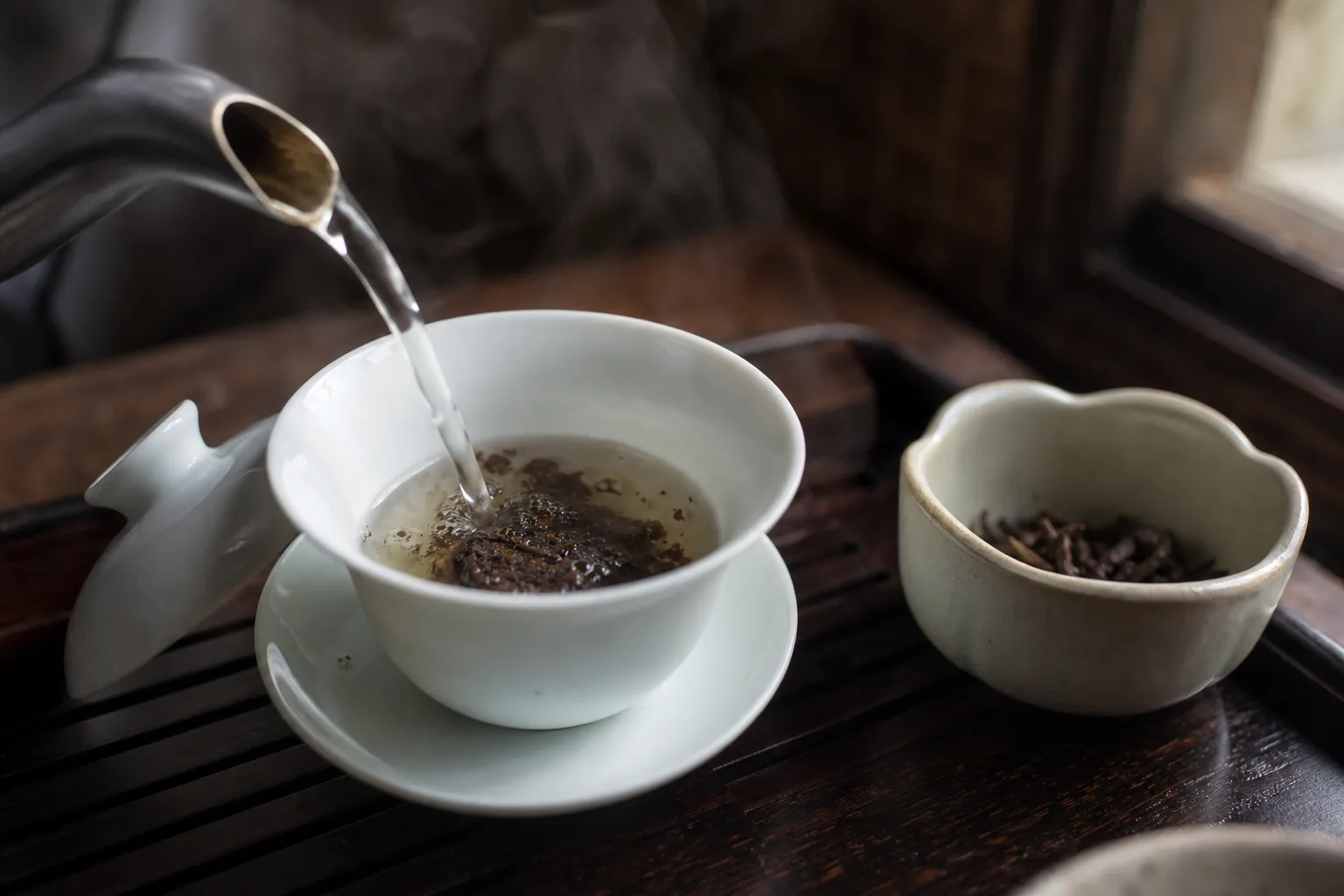
For most everyday brewing, start with a dark tea rinse time of about 5 to 10 seconds. Pour hot water over the leaves, let the water make full contact, then discard it. Loose or already-opened leaves often need only 3 to 6 seconds. A tight piece of compressed dark tea may need 10 to 15 seconds, or one short rinse followed by a brief rest.
The rinse should prepare the tea, not spend the first real cup. It moistens the leaf, warms the vessel, loosens compression, moves away loose dust, and softens the first impact of storage aroma. If the rinse turns very dark right away, avoid making it longer; use a faster pour or, for a heavy stored tea, two quick rinses instead of one long soak.
upward
Read the full overview first
Use the broader guide first if you need the full scope before this page.
A Practical Starting Range
Loose dark tea
Start with 3 to 6 seconds. Leaves wet quickly and aroma releases fast.
Small broken piece from a cake or brick
Start with 5 to 10 seconds. Edges soften and separate slightly.
Tight compressed chunk
Start with 10 to 15 seconds. Water starts reaching the center.
Strong cellar, woody, or earthy storage aroma
Start with 5 to 10 seconds, possibly repeated. Aroma softens without flattening the tea.
Very small leaf bits or dusty material
Start with 2 to 5 seconds. Liquor colors fast; avoid pulling too much early.
Treat these times as starting points. A larger vessel, cooler water, dense compression, or a very full leaf load can push the rinse a little longer. A small gaiwan, boiling water, and broken leaf can make even a few seconds enough.
A useful test is simple: the rinse should wet and wake the tea, but it should not smell more interesting than the first drinkable infusion. If the discarded water has the best aroma of the session, the rinse was probably too long.
What Changes the Rinse Time
The best answer to how long to rinse dark tea depends on the tea in front of you: loose or compressed, clean-smelling or storage-heavy, broken or dense, fast to color or slow to open.
Leaf Form
Loose dark tea usually needs the shortest rinse because water reaches the leaf surface immediately. If the leaves are separate and easy to wet, a quick rinse of a few seconds is often enough.
Compressed dark tea behaves differently. A brick, cake, basket-packed tea, or tight chunk may wet on the outside while staying dry in the middle. In that case, a 10-second rinse can be more useful than a flash pour. If the piece is especially dense, rinse briefly, let the wet leaves rest for about half a minute, then begin the first infusion. Resting lets heat and moisture move inward without turning the rinse into a long extraction.
Broken compressed tea sits between those two cases. Thin flakes open quickly; a thick nugget needs more patience.
Storage Aroma
Dark tea can carry notes of wood, earth, dried leaves, old paper, basket, cellar, grain, or warm fermentation. Some of these aromas are part of the tea’s character. A rinse can soften the first impact, but it should not be expected to erase the tea’s history.
If the dry leaf smells clean and inviting, keep the rinse short. If the first wet aroma feels heavy or closed, try a slightly longer rinse or two short rinses. If the aroma remains unpleasant after that, the issue may be storage condition, leaf material, or personal tolerance rather than rinse length.
Water, Vessel, and Pour Speed
Hotter water extracts faster. Many dark tea sessions use near-boiling water because compressed and fermented teas can be slow to open, but that also means the rinse should stay modest. Five seconds in a small gaiwan can be more active than fifteen seconds in a larger pot with cooler water.
Pour speed matters too. If it takes several seconds to fill the vessel and several more to pour out, the tea has already had meaningful contact with water. In a fast gaiwan, “5 seconds” may be a true flash rinse. In a heavy teapot with a slow spout, the same counted time can become a longer soak.
Leaf Load
A strong leaf-to-water ratio makes the rinse more active. More leaf means faster concentration in the water, so keep the rinse short and judge the first drinkable infusion. If that cup is thin, lengthen the first steep before assuming the rinse needs more time.
A lighter leaf load can tolerate a slightly longer rinse, especially with compressed tea, but the same rule still holds: the rinse should prepare the tea, not drain its early sweetness and aroma.
Rinse Cues You Can Use
Instead of chasing one exact number, watch the tea.
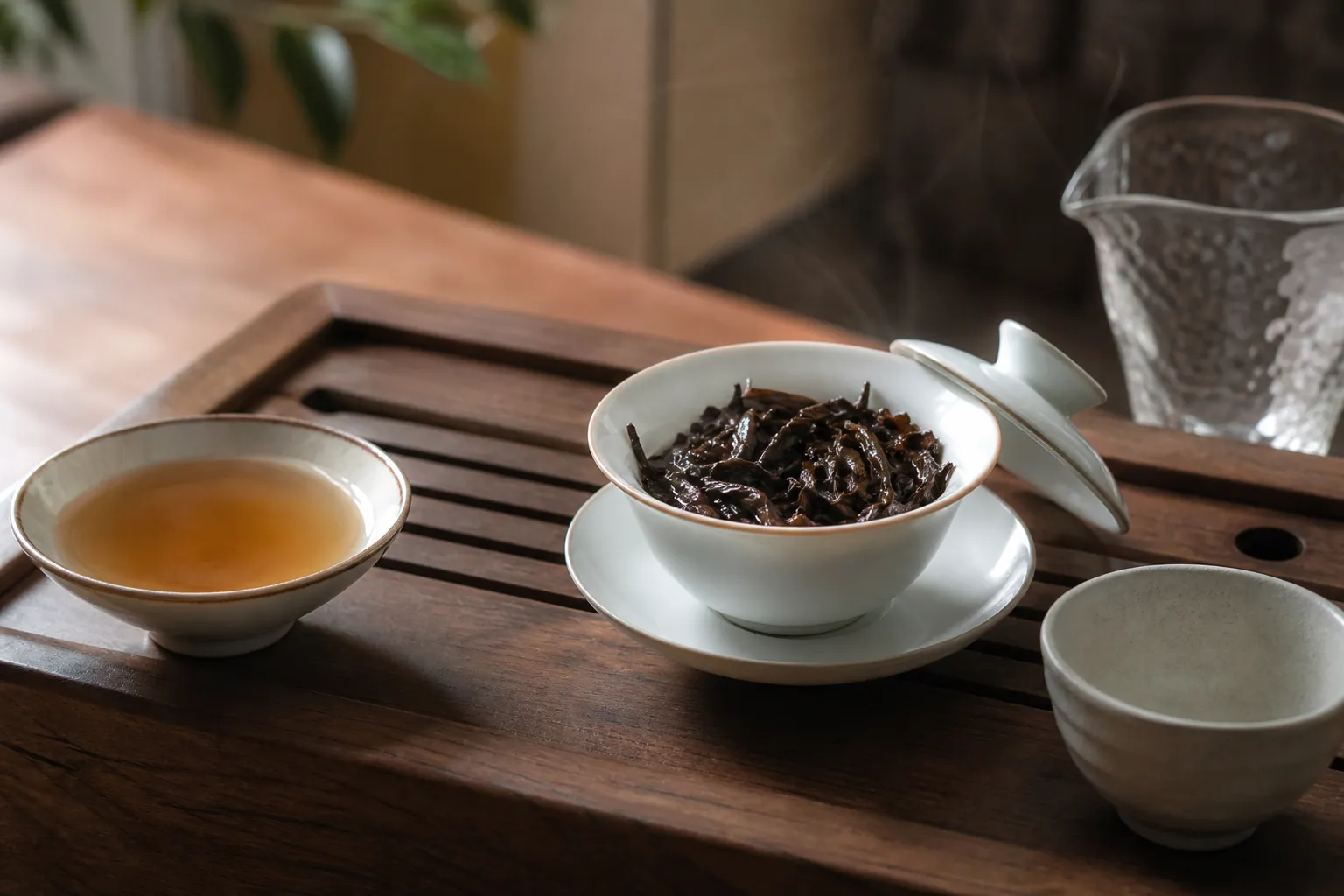
First, look at the liquor color. A pale amber, reddish-brown, or light brown rinse can be normal depending on the tea. If the water turns very dark almost immediately, the tea is releasing fast; next time, shorten the rinse or pour out faster. If the water stays nearly clear around a dense chunk, the rinse may not have reached the inner leaf; use a short rest or a second brief contact.
Second, watch leaf opening. Loose leaves should look wetted and relaxed. Compressed flakes may separate at the edges. A tight chunk does not need to fully open during the rinse, but it should no longer look completely dry on the outside.
Third, smell the wet leaf after discarding the rinse. Look for a clearer version of the tea’s own aroma: wood, grain, date-like sweetness, mild earth, warm fermentation, or a cool camphor-like note, depending on the tea. If the wet leaf smells flat after a long, dark rinse, shorten it next time. If it still smells closed, adjust the first steep rather than forcing the rinse to do all the work.
Finally, taste the first drinkable infusion. If it is thin, watery, and missing aroma, the rinse may have been too long or the first steep too short. If it is harsh, muddy, or too heavy right away, use a shorter rinse, a shorter first steep, or less leaf. If it is clean but quiet, keep the rinse the same and adjust steeping time.
When a Quick Rinse Works Better
A short rinse works well when the leaves are already loose, broken, or easy to wet. It also protects early aroma. Some dark teas give much of their fragrance in the first few contacts with water, so a long rinse can remove the most expressive part of the session.
Use a quick rinse when:
- The dry leaf smells clean and open.
- The pieces are small or loosely arranged.
- The rinse water colors immediately.
- You are using a high leaf amount.
- Your first infusions often taste too light after rinsing.
In this case, pour in hot water and pour out almost at once. The total contact may be only a few seconds, including the pour.
When a Slightly Longer Rinse Makes Sense
A longer rinse is most useful for structure. Tight compression, large chunks, and slow-opening tea may need more contact before the first infusion tastes even. If the rinse is too brief, the first cup may be weak while later cups become suddenly heavy as the center opens.
Use the longer end of the dark tea rinse range when:
- The tea is a dense piece from a brick or cake.
- The outside wets but the center stays dry.
- The first infusion tastes hollow, then the second becomes much stronger.
- Storage aroma dominates the first cup.
- The vessel pours quickly, so a counted 10 seconds is still brief.
For compressed dark tea rinse adjustment, move gradually. Try 10 to 15 seconds before jumping to a much longer soak. Often, a short rinse plus a covered rest is more useful than one extended rinse.
Common Misunderstandings
One common misunderstanding is that rinsing has one correct duration. It does not. A practical rinse is chosen from the tea’s shape, storage aroma, water, vessel, and the first cup you want.
Another misunderstanding is treating rinse color as a quality judgment. Dark rinse liquor does not automatically mean something is wrong. Broken material, hot water, high leaf load, and fast-releasing tea can all color the water quickly. Use color as a brewing signal, not a verdict.
A third mistake is making the rinse too responsible. If a tea tastes unpleasant, a longer rinse may reduce the first impact, but it cannot change the underlying leaf or storage condition. If a tea tastes thin, a shorter rinse may help, but leaf amount, water temperature, and steeping time may matter more.
It also helps to separate rinsing from heavy washing language. In this brewing context, rinsing means wetting, warming, opening, and moderating the first infusion. It is not a guarantee of cleanliness or a replacement for judging the tea itself.
A Simple Adjustment Path
If you want one repeatable method, start here:
- Use hot water and a small brewing vessel.
- Rinse loose tea for 3 to 6 seconds, broken compressed tea for 5 to 10 seconds, and dense compressed tea for 10 to 15 seconds.
- Discard the rinse and smell the wet leaf.
- Brew the first drinkable infusion shorter if the rinse was dark, or a little longer if the leaves are still tight.
- Judge the first cup, then adjust only one variable next time.
If the cup is thin, shorten the rinse or lengthen the first steep. If the cup is rough or too dense, shorten the rinse and first steep, or use less leaf. If the cup tastes closed, keep the rinse moderate and add a short rest after wetting the leaves.
For most dark tea, that is enough: begin with a short rinse, watch the leaf and liquor, then let the first drinkable infusion tell you whether the rinse helped or took too much.