
Brewing Decision
When Skipping the Dark Tea Rinse Makes Sense
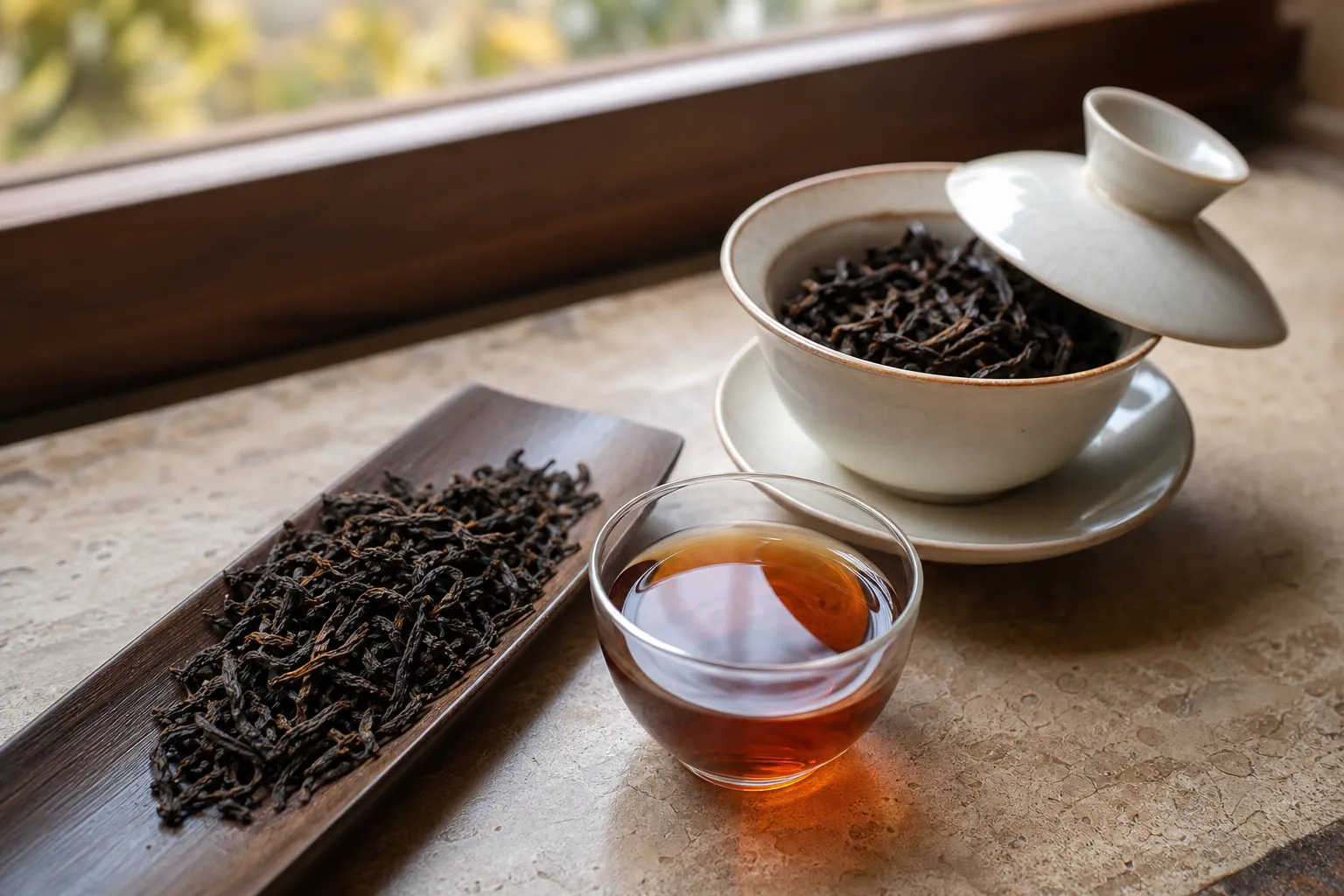
You can skip dark tea rinse when the leaf already gives clean, inviting signs before the first steep: a calm storage aroma, loose or lightly compressed material, little visible dust, and a first liquor that looks clear rather than muddy. In that setting, drinking the first infusion dark tea can make sense if you enjoy a fuller, earthier opening cup and do not need the first pour to loosen a tight piece.
This is not a rule for every dark tea. It is a brewing choice based on what you can see, smell, and taste in the moment. If the tea smells musty, looks dusty, opens slowly, or gives a harsh first cup, a rinse is still the more useful first move.
upward
Start with the broader guide
Use the broader guide first if you need the full scope before this page.
When the First Infusion Is Worth Drinking
A good no rinse dark tea situation is usually simple: the leaves look ready, smell clean, and do not need much help from hot water before they begin giving flavor.
Loose dark tea leaves are the easiest candidate. They have more exposed surface area, so the first pour can extract aroma and liquor quickly. If the dry leaf smells settled rather than stale, and the wet leaf aroma after the pour is pleasant, there may be no practical reason to throw that first cup away.
Lightly compressed dark tea can also work, especially when the piece has already loosened into flakes or thin layers. Small broken dark tea pieces often open faster than a dense chunk from the middle of a brick or cake. When the material is already separated, the first infusion can behave like a real cup rather than a warm-up.
Look for these signs before deciding
- The dry leaf has a clean storage aroma, without sour, musty, or closed notes.
- The surface looks reasonably tidy, not coated with obvious dust or debris.
- The tea is loose, chipped, flaked, or only lightly compressed.
- The first liquor is clear for its style, not murky or muddy.
- The wet leaf aroma is appealing enough that you want to taste it.
- You enjoy early earthy storage notes rather than only later sweetness or softness.
Clear dark tea liquor does not prove anything beyond what is in the cup, but it is a useful brewing cue. If the liquor looks clean and the aroma is agreeable, the first sip can tell you whether dark tea without rinsing suits that tea and your taste.
What Changes the Answer Before You Pour
The decision is made before and during the first steep, not from a fixed belief about rinsing. A few practical variables change the answer quickly.
Leaf form
Skipping the rinse may make sense when loose leaves, flakes, or small broken pieces open quickly. Keeping the rinse may help when tight compressed dark tea needs time to loosen.
Dry aroma
Skipping the rinse may make sense when storage smells clean, woody, earthy, or mellow. Keeping the rinse may help when aroma is musty, sour, stale, or unclear.
Surface
Skipping the rinse may make sense when leaf looks tidy enough for direct brewing. Keeping the rinse may help when a dusty dark tea surface makes the first pour less appealing.
First liquor
Skipping the rinse may make sense when the cup looks clear and smells drinkable. Keeping the rinse may help when liquor looks muddy or smells flat.
First sip
Skipping the rinse may make sense when the first sip is earthy, full, or gently rough in a pleasant way. Keeping the rinse may help when a harsh first cup overwhelms the tea.
Brewing goal
Skipping the rinse may make sense when you want the whole early profile. Keeping the rinse may help when you want to wake the leaf before judging it.
Compression is one of the biggest reasons to pause. A tight piece can give a weak, uneven first cup because only the outside has opened. In that case, a short rinse may be less about discarding flavor and more about letting water enter the layers. The next infusion may then show the tea more evenly.
Storage condition matters too. If you know how the tea was stored and the aroma is clean, skipping the rinse is easier to consider. If storage is uncertain, treat the first pour as a check rather than a cup you automatically drink. Smell the wet leaf, inspect the liquor, and decide slowly.
Your own preference matters as much as the leaf. Some drinkers like the heavier first cup because it carries more early storage character. Others find the same cup too earthy, flat, or rough. Neither reaction makes the method right or wrong. It only tells you how that tea behaves in your vessel, with your water, at that steeping time.
A Simple No-Rinse Check at the Table
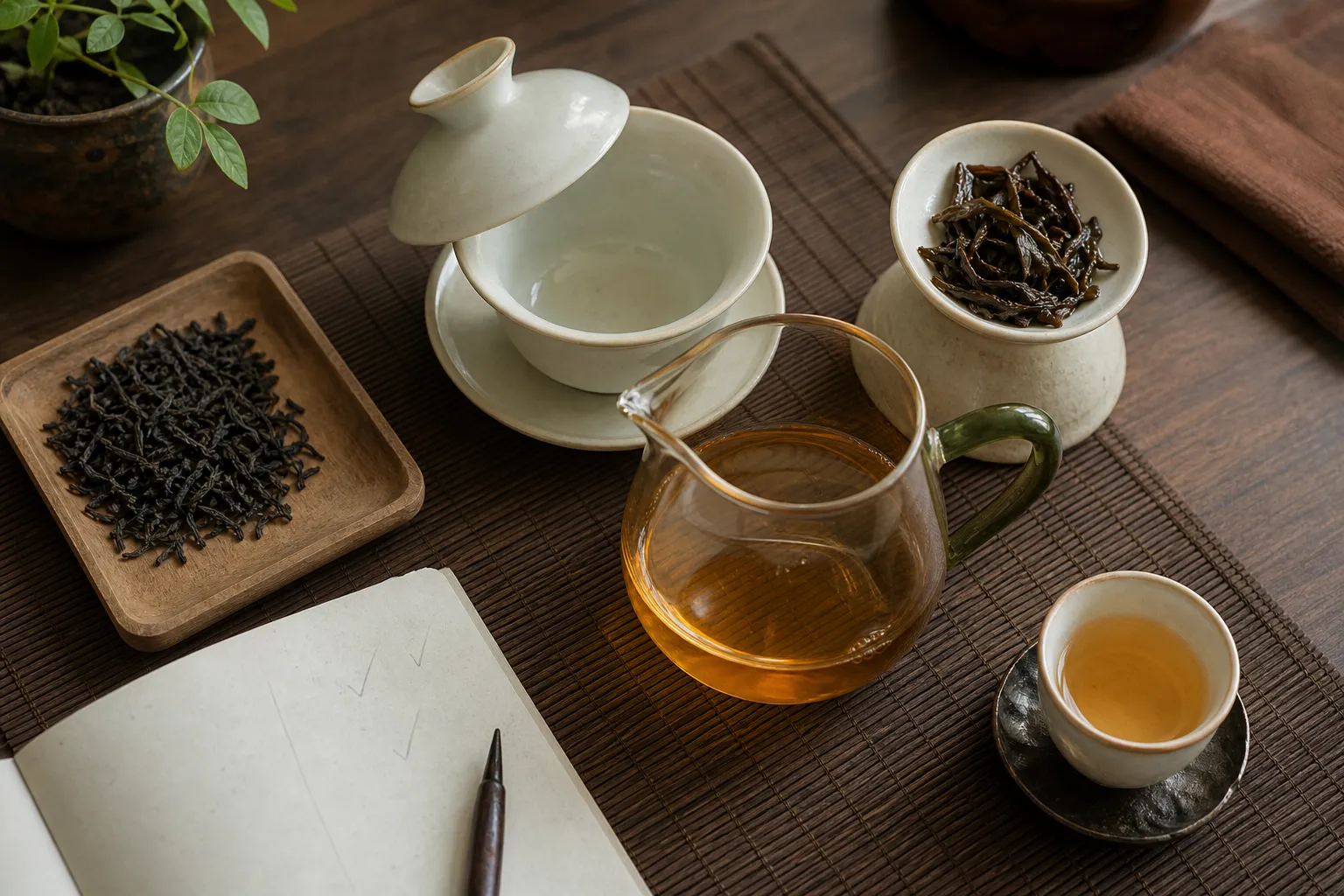
If you want to try dark tea without rinsing, keep the first attempt controlled. Do not make the first steep long just to “get everything.” Use the same leaf amount and vessel you normally use, pour hot water as usual for your setup, and keep the first infusion short enough that you can still read the tea.
A practical sequence
- Smell the dry leaf before water touches it.
- Check whether the tea is loose, lightly compressed, or tightly packed.
- Pour the first infusion and watch how quickly the liquor colors.
- Smell the wet leaf before drinking.
- Taste a small sip before committing to the cup.
- Rinse next time if the first cup feels muddy, harsh, stale, or closed.
This keeps the decision flexible. You are not declaring yourself a “rinse” or “no rinse” brewer. You are learning whether this specific tea gives a worthwhile first cup.
For loose leaves and broken pieces, the first infusion may already show aroma, body, and storage character. For tighter chunks, the first pour may taste thin at first, then suddenly become heavy if the outer layers release quickly. If that unevenness bothers you, a rinse can make the next infusion easier to judge.
Water, vessel size, and steep time also shape the result. A small pot or gaiwan with a high leaf-to-water ratio will make the first cup more concentrated. A larger mug or casual bowl may soften the same tea. If the first infusion tastes too strong without a rinse, shorten the steep before deciding that the tea itself needs rinsing every time.
When the Rinse Is Still the Better Choice
Skipping the rinse makes the most sense when the first cup looks and smells like something you actually want to drink. When the early signs are poor, rinsing remains a sensible brewing adjustment.
Keep the rinse when the tea is tightly compressed and slow to open. A dense piece may need brief contact with hot water before it brews evenly. If you drink that first pour, you may get a cup that is both weak inside and rough outside.
Keep the rinse when the surface looks dusty. A dusty dark tea surface does not need a dramatic explanation; it simply makes the first pour less pleasant. If the first liquor carries visible cloudiness or a flat dusty smell, there is little reason to force it into the session.
Keep the rinse when storage is uncertain. Stay with observable signs: dry aroma, wet aroma, liquor clarity, and taste. A musty dark tea smell, a sour stale note, or an aroma that makes you hesitate is a reason to step back from the cup rather than treat the first infusion as something to preserve.
Keep the rinse when the first sip is harsh in a way you do not enjoy. Some dark tea opens with a firm earthy edge, and some drinkers like that. But if the first cup feels sharp, muddy, stale, or tiring, the rinse has done useful work by showing you that the tea needs a gentler start.
There is also a tasting reason to rinse: you may want to judge the tea after it has awakened. This is especially true with compressed pieces, older storage-heavy teas, or samples where you want to compare later infusions more clearly. In that setting, discarding the first pour is not a loss; it is a way to make the next cup more readable.
Common Confusion About the First Pour
The rinse is not always required
It is not helpful to treat every dark tea as if the first infusion must be discarded before the tea can be enjoyed. Some loose or lightly compressed teas give a clean, expressive first cup.
Skipping is not always better
Sometimes the first infusion does hold aroma and body. Sometimes it mostly carries dustiness, compression unevenness, or a rough storage edge. Preserving the first cup only matters if that cup is worth drinking.
A rinse has a practical role
In everyday tea practice, a rinse can clear the first pour, warm the leaves, and loosen compression. It should stay in that practical role rather than become a claim about what the tea is beyond the cup.
Liquor color can mislead
Dark tea can brew deep, pale, red-brown, amber, or dark depending on the material and method. What matters here is not whether the first liquor is light or dark. The useful cue is whether it looks clear for that tea and smells appealing enough to taste.
A Practical Rule for Next Time
Use the first infusion as a small decision point.
If the tea is loose or lightly compressed, smells clean, gives clear liquor, and the first sip is pleasant, skipping the rinse is reasonable. If the tea is tightly compressed, dusty, musty, muddy, flat, or harsh, rinse and begin judging from the next infusion.
That rule keeps the choice close to the leaf. It also leaves room for preference. A drinker who likes strong earthy storage notes may enjoy a first cup that another person would rather pour away. A drinker who wants a cleaner, softer start may rinse even when the tea looks drinkable.
The useful habit is not choosing one side forever. Smell first, pour carefully, look at the liquor, taste a small sip, and adjust. For dark tea, that small pause before the first cup often tells you more than any fixed rinsing rule.