
Brewing comparison
Morning vs Evening Dark Tea Ritual: What Changes in the Session
A rinsed piece of dark tea can behave differently at 7 a.m. and 8 p.m., but the clock is not doing the brewing. In a morning vs evening dark tea ritual, the main changes are pace, vessel size, leaf-to-water ratio, water heat, steep length, number of infusions, and how much attention you give to aroma and mouthfeel. Morning usually favors a repeatable brew with fewer decisions. Evening often works better as a smaller, slower, lighter session, especially for drinkers who notice caffeine later in the day.
The same cake, brick, or loose leaf does not need two identities. It needs two handling plans.
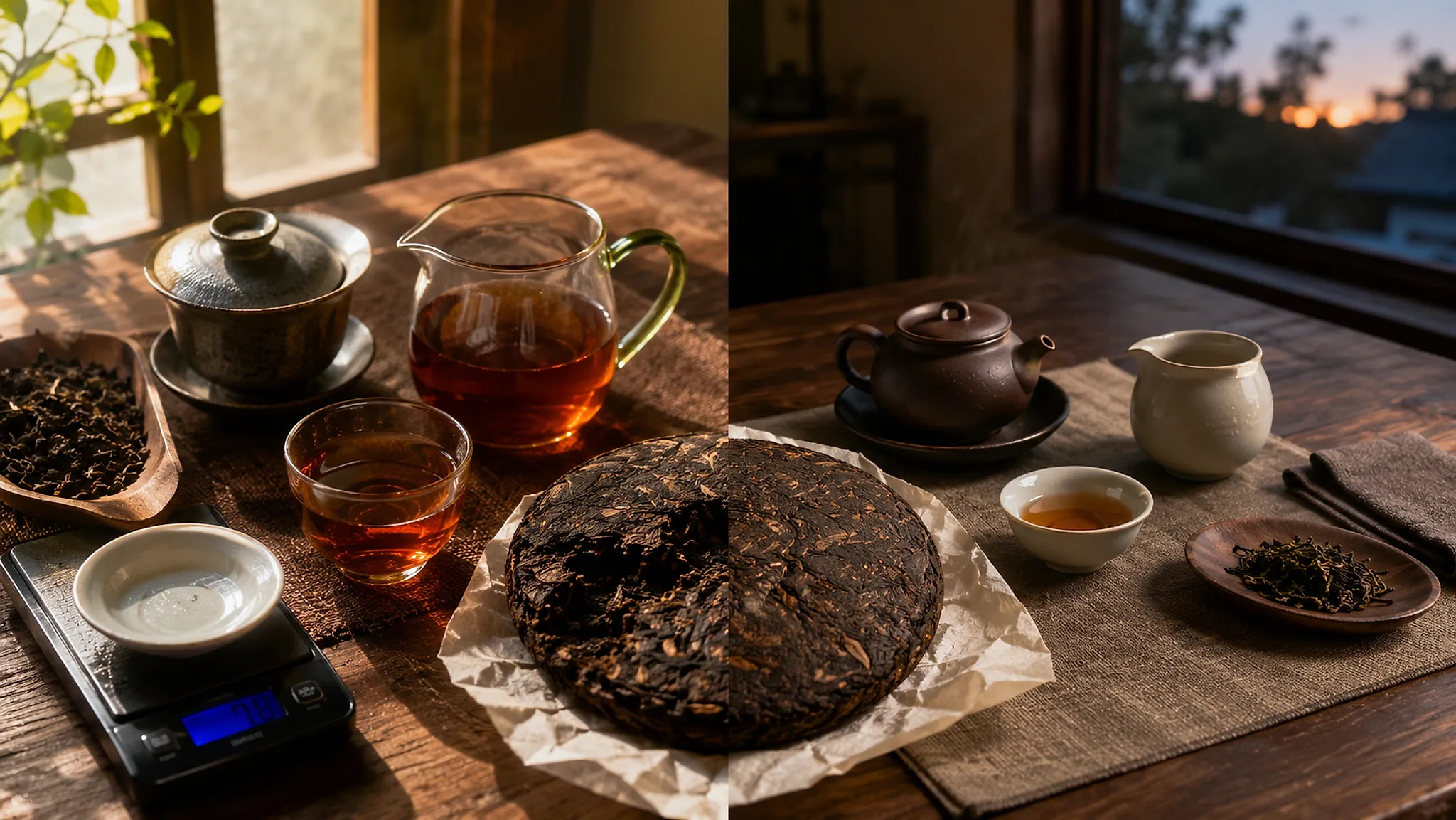
upward
Read the full overview first
Use the broader guide first if you need the full scope before this page.
What Changes Between Morning and Evening
A morning dark tea session is usually built around momentum. The useful setup is simple: a familiar vessel, a measured amount of leaf, hot water you can repeat, and a steeping rhythm that gives a clear cup without asking for long tasting notes. If the tea is compressed, the morning choice is often whether to use a loosened piece that opens quickly or a tighter chunk that needs more patience.
An evening dark tea session has a different problem. There may be more time to notice wet leaf aroma, liquor color, returning sweetness, or earthy depth, but there is also less room for an overly strong cup if caffeine or heaviness bothers you. Evening brewing is not about making dark tea into a promise of calm. It is about controlling intensity.
| Session choice | Morning tendency | Evening tendency |
|---|---|---|
| Vessel size | Moderate, familiar, easy to repeat | Smaller if you want less total liquor |
| Leaf amount | Standard daily amount | Slightly reduced if intensity matters |
| Water heat | Hot enough for body and clarity | Hot, or slightly softened if bitterness appears |
| Steep rhythm | Fewer, predictable infusions | Shorter or more spaced infusions |
| Tasting focus | Strength, warmth, clean finish | Aroma, texture, aftertaste, heaviness |
| Caffeine-aware limit | Usually less central | More important for sensitive drinkers |
The main adjustment is not ceremonial style. It is how much tea you extract, how quickly you drink it, and how many cups the session produces.
Morning Tea Practice: Keep the Variables Repeatable
For a morning tea practice, reduce the number of moving parts. Choose one vessel and keep the leaf amount steady for several sessions before changing anything. A small gaiwan, easy pot, or handled brewing vessel can all work; the important point is that the vessel volume matches the amount of tea you can actually drink.
For many compact daily sessions, a workable starting point is about 1 gram of leaf per 15 to 25 milliliters of water for short infusions, or a lighter ratio if you brew in a larger mug or pot. This is only a starting range. A loose fermented tea may open quickly, while a dense piece from a cake or brick may need a rinse and a little time before it gives a full cup.
Morning steeping should be legible. If the first drinkable infusion tastes thin, extend the next steep or use a slightly smaller vessel. If it tastes harsh, woody, or too heavy before breakfast, shorten the next infusion or use less leaf next time. The goal is not maximum complexity; it is a cup that lands cleanly in the time you have.
A rinse can help compressed tea warm and loosen. Keep that claim modest: a rinse changes the opening of the session, but it should not be treated as a dependable way to remove most caffeine. Tea infusion research, including work on Pu-erh, supports the narrower point that caffeine is present and that brewing conditions such as time and temperature matter. The better control is the whole session design, not a symbolic first pour.
Evening Tea Session: Reduce Total Intensity First
An evening tea session can be slower without becoming stronger. More attention does not require more leaf, longer steeps, or a large pot. If you want to keep the cup lighter, start by reducing total extraction: use a smaller vessel, a little less leaf, shorter early steeps, or fewer infusions.
For compressed dark tea, evening brewing often benefits from restraint. Break off a clean, modest piece rather than a thick chunk that keeps releasing strength long after you planned to stop. If the tea is already loose or broken, it may extract faster; shorten the first drinkable infusion and let the second cup tell you whether to build.
Watch the liquor strength, but do not let color decide everything. A deep red-brown or dark amber cup can be pleasing. Still, balance shows more clearly in aroma and mouthfeel. If the cup feels broad, sweet, and clean, you can continue with short infusions. If it feels muddy, drying, or heavy, adjust simply: shorter steep, more water, less leaf next time, or stop the session earlier.
Caffeine sensitivity belongs in the evening plan. A controlled caffeine timing trial supports a cautious point: caffeine taken later in the day can matter for some people. That does not turn dark tea into sleep advice. It only means an evening dark tea session should be designed around personal response. If you know caffeine keeps you alert, choose an earlier session, a smaller brew, or a tea you already understand well.
The Brewing Variables That Actually Move the Cup
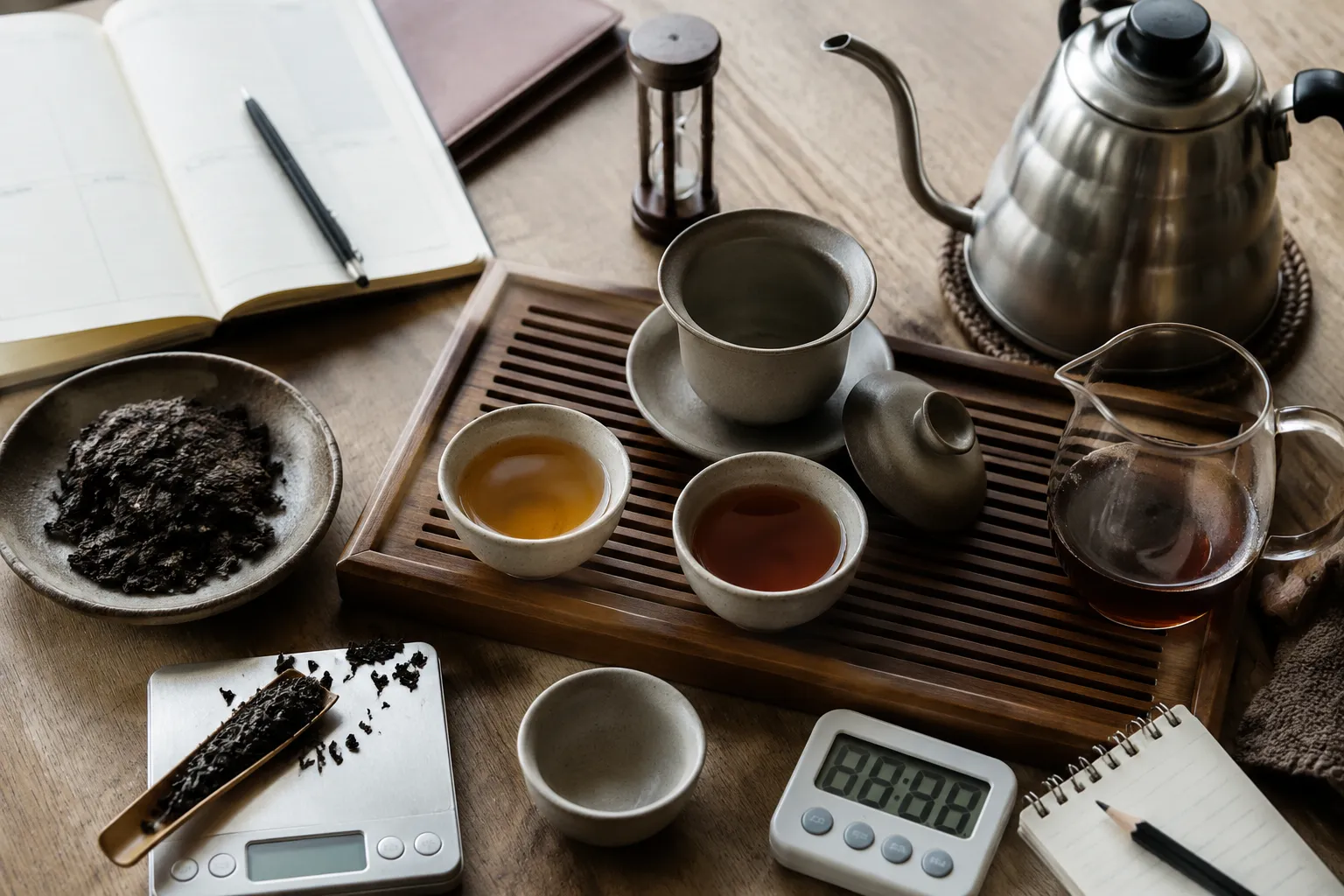
The most useful dark tea brewing variables are ordinary and visible: leaf amount, water volume, water temperature, steep length, vessel size, and number of infusions. Time of day changes the session mostly because you change those controls.
Leaf-to-water ratio sets the base strength. More leaf in a small vessel gives fast concentration and a strong series of infusions. Less leaf in the same vessel gives a quieter cup and more room to extend steeping. If your morning brew tastes flat, the ratio may be too light for the vessel. If your evening brew feels too forceful, ratio is the first place to soften.
Water heat changes extraction. Many dark teas tolerate hot water well, especially compressed or aged forms, but the result still depends on the material. Hotter water can pull body, aroma, and bitterness more quickly. Slightly cooler water or shorter contact can help when the cup becomes coarse. Let the cup guide the adjustment.
Steep length shapes each infusion. Short steeps show movement across cups: the first may be woody or quiet, the next rounder, later cups softer. Longer steeps are useful when the tea is slow to open, but they can also make a late evening cup heavier than intended. For a daily dark tea routine, keep the first few infusions short enough that you can correct the next one.
The number of infusions is part of strength. A small evening session with five concentrated cups may still be a large session in practice. If you are trying to keep the evening brew restrained, count total cups, not just the size of the first pour.
Common Confusion About Morning and Evening Dark Tea
Ritual is not the main control
A quiet tray, a favorite cup, or a neat kettle setup can make the session more pleasant, but they do not change the brew as much as vessel size and steeping rhythm. If the cup is too sharp, the answer is not a more elaborate arrangement. Change extraction.
Strong morning and faint evening are not rules
Some dark teas taste dull when brewed too weakly, and some drinkers prefer a fuller cup after dinner than before work. The better question is: how much total intensity fits this moment? Strength, pace, and attention can be adjusted separately.
Dark tea is not an herbal substitute
Herbal infusions are a different category. Dark tea, including Pu-erh as one familiar example, can contain caffeine, so a night session should be planned as tea, not as a herbal substitute.
There is no single correct steep length
A loose, small-leaf fermented tea may release flavor quickly. A dense brick piece may need a rinse, heat, and several short steeps before it rounds out. Storage, age, compression, water, and vessel all change the result. Let the next infusion answer the last one.
A Simple Way to Set the Session
For morning
Choose efficiency first. Use the same vessel, the same approximate leaf amount, and a steeping rhythm you can repeat. Aim for a clear cup with enough body, then adjust only one variable when the brew misses: steep longer for thinness, shorter for harshness, or change ratio if the problem repeats.
For evening
Choose limits first. Decide how much tea you actually want to drink, then set the vessel and leaf amount around that. Keep the first infusions short, smell the wet leaf before extending, and stop before the cup becomes heavier than you wanted. If caffeine sensitivity is part of your experience, move the session earlier or make it smaller rather than relying on a rinse to solve it.
The practical difference is this: morning brewing benefits from a stable pattern, while evening brewing benefits from a softer ceiling. Keep the tea itself at the center: leaf, water, vessel, liquor, aroma, mouthfeel, and the next steep you are willing to make.
Sources
Sources and further reading
Reference links are limited to sources considered suitable for public citation in this page.