
Dark tea brewing decision
Boiling Water vs Cooler Water for Dark Tea: What Changes in the Cup
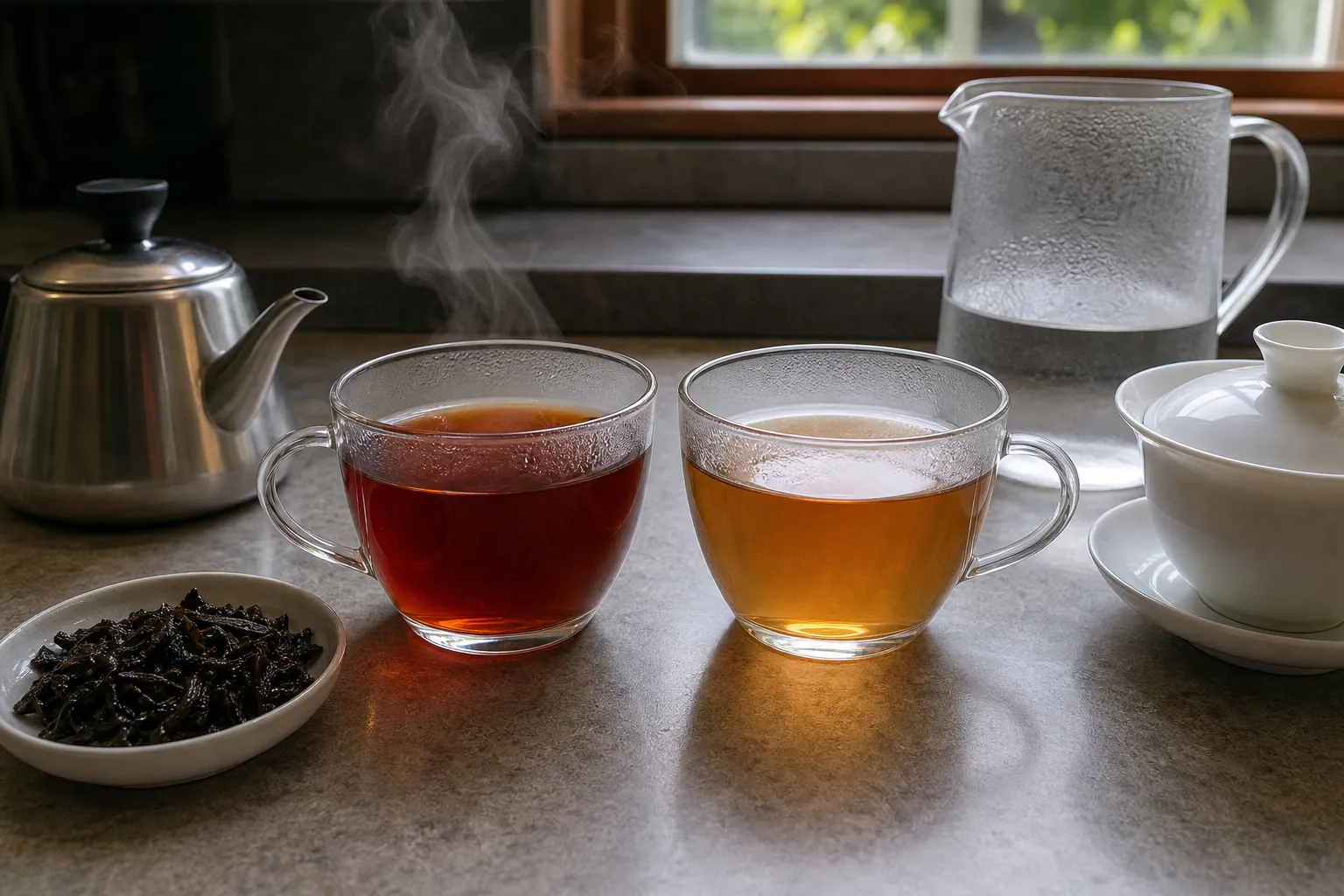
Boiling water usually makes dark tea extract faster: deeper liquor color, fuller body, stronger aroma, and more immediate earthy depth. Cooler water slows that extraction, which can make the cup feel softer and may reduce sharp bitterness or drying astringency.
That is the direct answer to boiling water vs cooler water for dark tea, but it is not a fixed rule. The result changes with leaf form, age, storage, compression, broken leaf content, vessel size, water, steeping time, and personal taste.
For everyday brewing, think less about one perfect dark tea brewing temperature and more about what the cup is doing. If the tea tastes thin, flat, or slow to open, use hotter water or a longer steep. If it tastes harsh, woody, overly dry, or muddy, shorten the infusion first; if the roughness remains, try slightly cooler water.
upward
Read the full overview first
Use the broader guide first if you need the full scope before this page.
What Boiling Water Often Changes
Boiling water is common for dark tea because many dark teas are dense, fermented, aged, compressed, or made from material that benefits from firm extraction. Hotter water can help a tight piece of brick, cake, or tuo loosen more quickly, especially in the first few infusions.
Aroma
Releases stored, earthy, woody, or sweet notes more quickly.
Liquor color
Deepens the color faster, especially with compressed or broken tea.
Body
Builds a thicker, heavier mouthfeel.
Flavor
Pulls out more earthy depth, dark sweetness, and mineral-like weight.
Bitterness
Can become more noticeable if the leaf is broken, young, or steeped too long.
Astringency
May create a drier finish when extraction runs too hard.
The advantage is force and clarity. A dark tea that seems sleepy in the first cup may open with water close to a boil. The liquor may darken, the aroma may rise more clearly from the lid or cup, and the body may feel rounder.
The tradeoff is speed. Boiling water does not only extract the pleasant parts of the tea. It can also bring rough edges forward. If the piece is small, heavily broken, loosely stored, or already open, a long steep with boiling water may turn the cup from full to heavy, from earthy to muddy, or from structured to drying.
“Use boiling water” is useful as a starting point, not as a command. The cup still needs watching.
What Cooler Water Often Changes
Cooler water changes the pace. Instead of pushing the leaf open quickly, it extracts more gently. This can help when the tea has a sharp edge, when the leaves are broken, or when the first boiling infusion tastes stronger than you want.
Cooler water may bring
- A softer opening aroma instead of an immediate strong rise.
- Lighter liquor color in the early infusions.
- Less aggressive body and sometimes a cleaner finish.
- More room for sweetness before heavier earthy notes dominate.
- Reduced bitterness or astringency in some brewing setups.
- A slower release from compressed tea, especially when the piece is dense.
Cooler water is not automatically smoother. If the water is too cool for the leaf form, the tea can taste hollow: dark in appearance but weak in structure, or aromatic on the surface but thin in the mouth. A dense chunk of compressed tea may simply sit there, giving a pale or flat cup until enough heat and time reach the center.
For many dark teas, cooler water works better as an adjustment than as a belief. If the first cup with boiling water feels too forceful, shorten the steep before making a large temperature change. If the cup still feels sharp, then step the water down slightly. The goal is not to make the tea timid; it is to keep useful depth while reducing the rough edge.
A Practical Dark Tea Temperature Comparison
Think in zones rather than exact promises. Kettles, vessels, room temperature, and pour distance all change the real temperature by the time water touches the leaf.
Near boiling
Useful for compressed pieces, dense bricks, older or slower-opening tea. Watch for darker liquor, fuller body, and faster aroma. Shorten if bitter, drying, or muddy.
Slightly cooler
Useful for broken leaf, sharp cups, and very strong first infusions. Watch for softer body, lighter color, and a gentler finish. Raise heat if thin, flat, or slow.
Cooler and longer
Useful when you want a mild cup and the tea is not too dense. Watch for rounded but lighter flavor. Stop if the cup becomes dull instead of smooth.
Boiling and very short
Useful when the tea needs heat but not long extraction. Watch for quick aroma, clean body, and controlled strength. Lengthen only if the cup feels weak.
A useful brewing habit is to change one thing at a time. If you lower the temperature and lengthen the steep together, it becomes harder to know which change helped. Start with a familiar leaf amount and vessel, then compare one hotter short infusion with one cooler slightly longer infusion.
With a small piece of compressed dark tea, a near-boiling rinse or first infusion may help the leaves loosen. After that, if the liquor becomes too heavy, keep the water hot but shorten the next steep. If the tea remains sharp even with shorter timing, try water that has cooled briefly after boiling.
With loose or broken dark tea, the opposite may be easier. Start a little cooler or brew shorter because more surface area is exposed. If the cup tastes weak rather than balanced, move hotter or add a few seconds.
Read the Cup, Not Just the Kettle
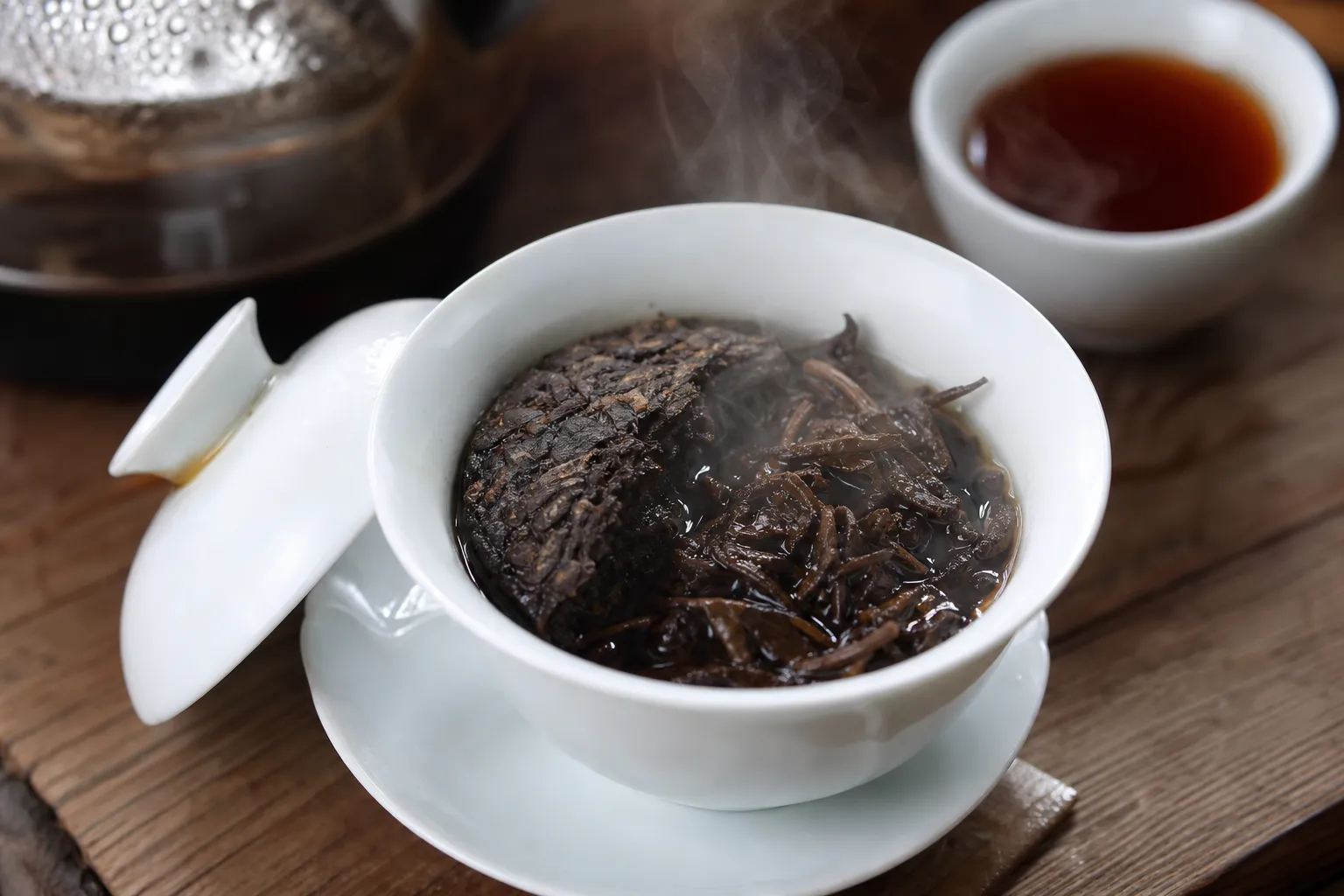
Dark tea aroma changes, liquor color, body, bitterness, astringency, sweetness, and finish all show whether your water is helping or pushing too hard.
If the aroma is muted, the liquor is pale, and the body is thin, the tea may need more heat, more time, or a smaller vessel with better heat retention. This is common with a compact piece that has not opened yet. Hotter water can help, but so can a brief rest after the first infusion, giving the compressed center time to soften.
If the aroma is strong but the taste is rough, water temperature may not be the only cause. Broken leaf, too much tea, a long steep, or a very small vessel can all intensify extraction. In that case, cooler water may help, but reducing steep time is often the cleaner first move.
If the liquor color turns dark quickly but the taste feels flat, the tea may be giving color faster than flavor. Some dark teas release a deep-looking brew before the cup has much sweetness or layered body. Do not judge by color alone. Taste the middle of the sip and the finish.
If earthy depth is pleasant but the finish dries the mouth, try a shorter infusion before lowering temperature. Drying astringency can come from steeping too long, especially once the leaves are open. If shorter timing still leaves a hard edge, cooler water may be worth trying.
If sweetness appears briefly and then disappears under heaviness, the brew may be over-extracting. Use less time, fewer leaves, or slightly cooler water. The aim is to keep the sweetness present enough that the dark, earthy parts do not flatten it.
What Changes the Answer
The same water temperature can behave differently with different dark teas. This is why a single rule fails.
Compression matters
A dense brick or cake fragment often needs more heat or time to open than loose leaf. The outside may brew first while the center stays tight, so early cups can be uneven. Boiling water can help the piece open, but once it loosens, the same timing may become too strong.
Leaf breakage matters
Small fragments and broken leaves extract quickly. They can give good color and aroma, but they can also become bitter or drying faster than intact material. Cooler water or shorter steeps can give more control.
Storage matters
A tea with clean, mellow storage may respond differently from one with a heavier musty or stale edge. Hot water can make stored aromas more obvious, both pleasant and unpleasant. If an aroma feels too heavy in the first cup, shorten the steep and see whether it clears before deciding that the tea needs cooler water.
Vessel size matters
A small gaiwan or pot with a lot of leaf extracts quickly. A large mug with fewer leaves extracts more slowly and loses heat faster. “Boiling water” in the kettle may not stay near boiling once poured into a cool, wide vessel.
Water itself matters
Some water makes body feel rounder; some makes edges feel harder. If the same tea keeps tasting sharp across several temperature changes, water and leaf ratio may also be part of the problem.
Personal taste matters too
One drinker may want a thick, dark, earthy cup. Another may prefer a lighter cup where sweetness and softness are easier to notice. Both can be reasonable if the tea is brewed cleanly and the result suits the drinker.
Common Confusion Around Hotter and Cooler Brewing
Hotter does not always mean stronger in a useful way. Hotter water often increases extraction, but strength can become coarse. A full-bodied cup should still have shape: aroma, middle flavor, texture, and finish. If it only feels heavy, the brew may be overdone.
Cooler does not always mean smoother. It can soften harshness, but it can also under-extract the tea. A cup can be gentle because it is balanced, or gentle because not enough has been drawn from the leaf. Thinness is not the same as smoothness.
Dark liquor color is not proof of a complete brew. Some cups darken quickly while still tasting simple. Others look moderate but carry good body and sweetness. Use color as one cue among several.
The first infusion is not the final judgment. Dark tea, especially compressed tea, may change across the session. The first cup may be tight, the second more open, and later cups softer or sweeter. If the first infusion with boiling water is too strong, adjust the next one; do not assume the whole tea must be brewed the same way from start to finish.
A Simple Adjustment Path
- 1. Brew the tea once with water near boiling and a short steep.
- 2. Notice aroma, liquor color, body, bitterness, astringency, sweetness, and finish.
- 3. If the cup is thin or slow, keep the heat and add a little time.
- 4. If the cup is full but rough, keep the heat and shorten the next steep.
- 5. If it remains sharp even when short, try slightly cooler water.
- 6. If cooler water makes it flat, return hotter and reduce leaf or time instead.
This path keeps the decision small. You are not trying to solve every dark tea with one temperature. You are asking what this leaf, in this vessel, with this water, is doing today.
The Bottom Line
Boiling water for dark tea often brings faster extraction, deeper color, fuller body, stronger aroma, and more earthy depth. Cooler water can slow extraction, soften rough edges, and make sweetness easier to notice in some cups. Neither choice is automatically right.
Use boiling water when the tea feels tight, thin, slow, or underpowered. Use cooler water when the tea tastes harsh, overly dry, or too forceful even with shorter steeps. Let the cup decide: aroma, liquor color, body, bitterness, astringency, sweetness, and finish will tell you more than a fixed temperature rule.