
Dark tea choice
Should You Choose a Milder or Stronger Dark Tea
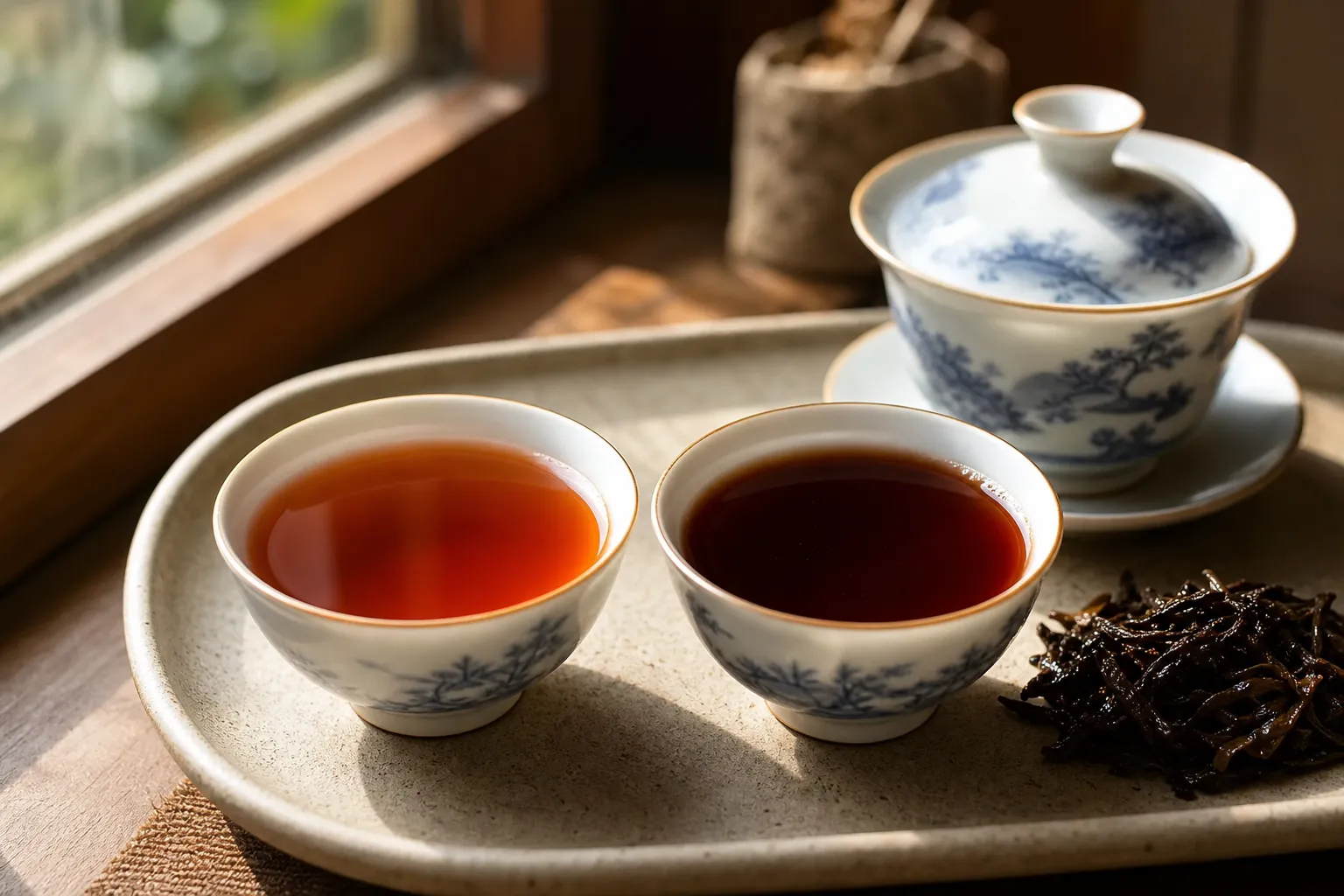
Choose a milder dark tea if you want a smooth, clean cup that stays easy to drink plain. Choose a stronger dark tea if you like deeper liquor, thicker body, more obvious earthy or woody notes, and a finish that lingers after swallowing.
The real choice in mild vs strong dark tea is not “Which one is better?” It is “What kind of strength do you want in the cup?” In dark tea, strength can come from the leaf, fermentation, storage, compression, brewing ratio, water temperature, and steeping time. A strong cup is not automatically better, and a mild cup is not a lesser one.
upward
Read the full overview first
Use the broader guide first if you need the full scope before this page.
First, decide what “strong” means to you
Many drinkers use “strong” to describe several different things. Separating them helps you avoid buying a heavier tea when the real problem is brewing, or avoiding a good tea just because one steep came out too dense.
A mild dark tea often has a softer entry, cleaner aroma, less bitterness, less drying astringency, and a body that feels comfortable rather than dense. A strong dark tea may show deeper color, heavier mouthfeel, more persistent aftertaste, and more pronounced earthy or woody notes.
These signs do not always move together. A tea can brew dark and still taste smooth. Another can look lighter but feel sharp. Liquor color is useful, but it is only one clue.
When a milder dark tea is the better fit
Choose a milder dark tea when you want the cup to stay easy. This often suits plain daily drinking, meals where the tea should not dominate, or moments when you want clean aroma more than heavy storage depth.
A milder direction may fit if:
- You prefer smoothness over density.
- You like soft wood, gentle sweetness, or mellow leaf notes.
- You dislike bitterness, dryness, or a muddy finish.
- You are still learning how much leaf to use with compressed dark tea.
- You want a tea that can sit quietly beside food.
- You enjoy dark tea, but not when it becomes too thick or damp-tasting.
Mild does not have to mean thin. A good mild cup can still have body, sweetness, and a pleasant aftertaste. The difference is that it does not push hard at the front of the mouth. It feels open, clean, and easy to keep drinking.
You can also make a dark tea milder without changing the tea. Start with a modest leaf ratio, use a short first infusion after a rinse if the tea is compressed or storage-heavy, and watch the first two cups closely. If the liquor turns murky, the aroma feels too damp, or the finish becomes rough, shorten the next steep instead of forcing the tea longer.
When a stronger dark tea makes more sense
Choose a stronger dark tea if you enjoy density. Some drinkers want a cup that feels rounded and full, with enough weight to stay present after swallowing. A stronger tea can be satisfying when you like deeper red-brown liquor, compact aroma, and a finish that does not disappear quickly.
A stronger direction may fit if:
- You want thicker dark tea body and mouthfeel.
- You enjoy earthy, woody, aged, or storage-influenced aromas.
- You like a tea that holds up through several infusions.
- You brew compressed pieces and enjoy watching them open gradually.
- You want a cup that can stand beside rich or savory food.
A stronger tea is not the same as an over-steeped tea. A well-suited strong dark tea may feel dense, mellow, and persistent. An over-pushed cup may taste harsh, flat, sour, muddy, or aggressively bitter. If the cup feels unpleasantly rough, the first move is usually to reduce leaf, shorten the steep, rinse once, or separate dusty fragments from larger pieces.
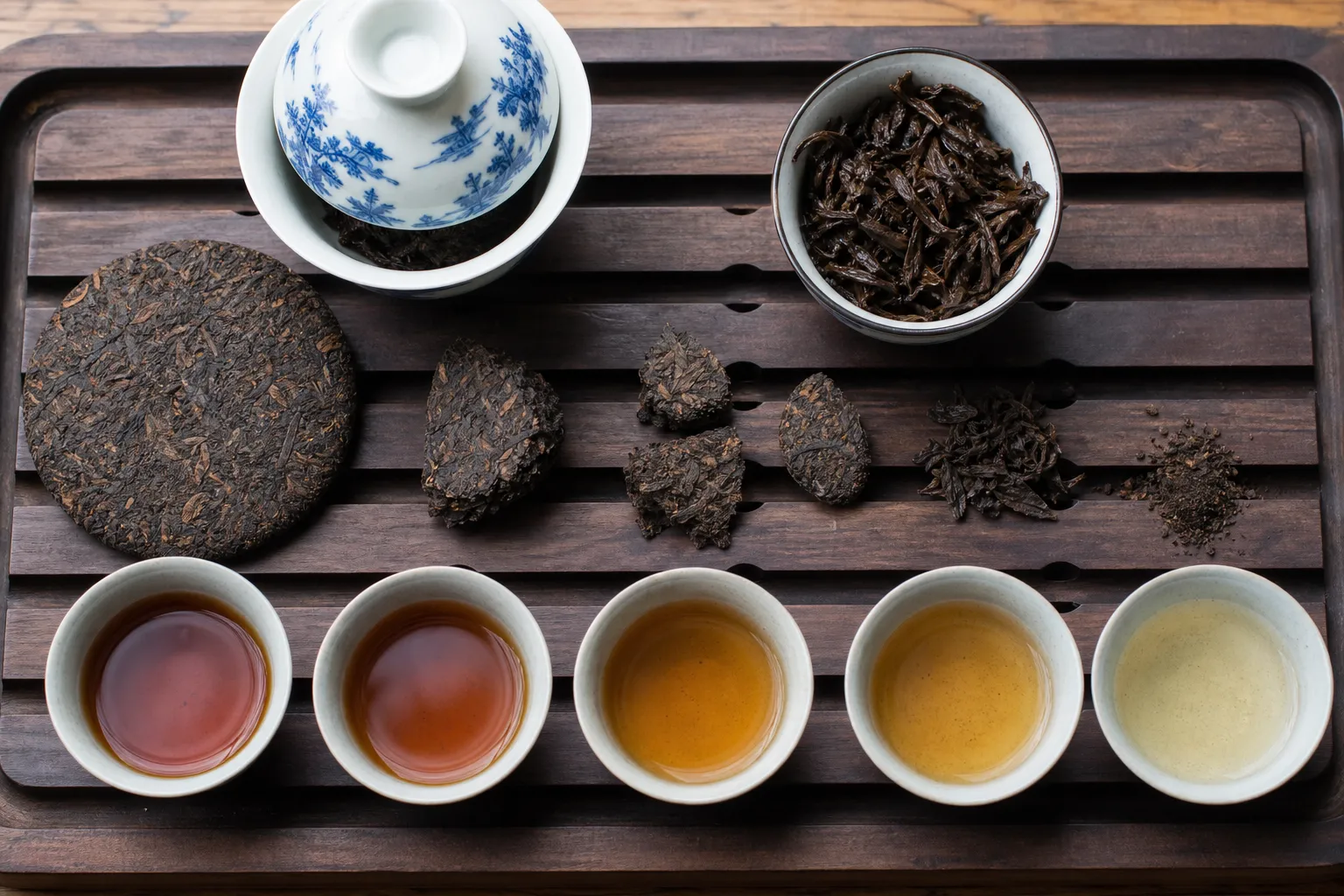
Compressed dark tea can change a lot from steep to steep. A small broken shard from the edge of a cake or brick may release quickly because more surface area is exposed. A dense inner piece may start quietly, then deepen later. Judge the pattern across several cups, not only the first infusion.
Brewing choices that change mild and strong
Dark tea taste strength is partly in the tea, but your setup can shift it more than expected. Research on dark tea processing and flavor formation supports a modest point: fermentation, microbial activity, tea type, aroma compounds, and taste compounds can all influence the finished cup. That does not create one fixed brewing rule for every dark tea. It simply explains why two teas, or even two pieces from the same compressed tea, may behave differently.
The everyday controls are simpler than the chemistry.
Leaf amount
More leaf usually gives more concentration, faster body, darker liquor, and a stronger finish. Less leaf gives the cup more room and often makes it milder.
If your tea tastes thin, increase the leaf slightly before greatly lengthening the steep. If it tastes heavy or muddy, reduce the leaf or use a smaller piece only if the current piece is not already releasing too fast.
Steeping time
Dark tea steeping time changes the cup quickly, especially with loose leaves, broken pieces, or dusty fragments. Longer steeps can bring body and depth, but they can also pull out bitterness, dryness, or dull heaviness.
If you want a stronger cup, extend in small steps. If you want a milder cup, keep the early steeps short and let later infusions lengthen naturally.
Water temperature
Hotter water often extracts more quickly. Near-boiling water is common for many dark teas, but that does not mean every steep should be long.
If the tea becomes sharp or too dense, keep the water hot and shorten the contact time first. If the cup stays flat and under-opened, a hotter pour or slightly longer steep may help.
Vessel size
A small vessel with a higher leaf-to-water ratio can make dark tea feel stronger even with short steeps. A larger mug or pot with less leaf can soften the same tea.
When comparing mild and strong dark tea, do not compare one tea brewed in a tiny concentrated setup with another brewed casually in a large cup and assume the tea alone caused the difference.
Loose leaf, broken pieces, and compressed tea
Loose or broken dark tea often releases faster. Compressed cakes, bricks, and tightly packed pieces may start slowly, then deepen as the material opens.
Dusty fragments can make a cup strong in a rough way because they infuse quickly. Larger intact pieces often give a slower, rounder kind of strength.
Rinse and first infusion
A brief rinse can help wake compressed tea and reduce some loose surface character. It is not a correction for every tea, and not every tea needs the same treatment, but it can make the first drinkable infusion feel cleaner.
If the first cup tastes too storage-heavy, try a rinse and a shorter first steep before deciding the tea itself is too strong for you.
Common confusion: strong, dark, bitter, and better are not the same
The biggest mistake is treating “stronger” as a quality rank. Stronger dark tea is not automatically more authentic, more aged, or more valuable. Milder dark tea is not automatically beginner-only or simple. They are different fits.
Dark liquor can also mislead. A clear, deep red-brown cup can still feel balanced and smooth. A lighter-looking cup can still be drying if the leaf material or brewing conditions pull out more bite than body.
Another confusion comes from English tea habits. Some readers arrive from black tea, breakfast blends, or milk tea and use “strong” to mean brisk, tannic, or suitable for additions. Dark tea is better judged by its own cup cues: body, storage aroma, earthy or woody depth, liquor clarity, smoothness, and finish.
A quick test before buying more tea
Use one dark tea you already own and brew it two ways.
First, make a milder version: use a moderate amount of leaf, rinse if the tea is compressed or storage-heavy, then keep the first steep short. Notice whether the cup feels smooth, clean, sweet, woody, thin, or too quiet.
Then make a stronger version: use slightly more leaf or extend the steep a little, but change only one variable. Notice whether the cup gains body and aftertaste, or whether it becomes harsh, muddy, or drying.
Read the difference:
- If the stronger version becomes satisfying, you may enjoy stronger dark tea.
- If the stronger version only becomes rough, you may prefer milder dark tea or a smoother strong style.
- If the milder version feels clean but too thin, adjust leaf amount before changing tea.
- If both versions taste flat, the issue may be the tea, storage condition, water, or brewing setup rather than your preference for mild or strong.
For most drinkers, the answer is not permanent. Choose milder dark tea when you want smooth, clean, easy plain sipping. Choose stronger dark tea when you want density, deeper aroma, thicker body, and a longer finish. Let the cup decide, and adjust one brewing variable at a time.
Sources
Sources and further reading
Reference links are limited to sources considered suitable for public citation in this page.