
How to Choose Dark Tea for Your Taste and Brewing Style
Choosing dark tea can feel harder than the name suggests. The category includes loose leaves and compressed bricks, clean and sweet cups, deep earthy teas, woody aged profiles, and pieces that open slowly over many infusions. If you are wondering how to choose dark tea, start with the cup you want to drink—not with a perfect category definition.
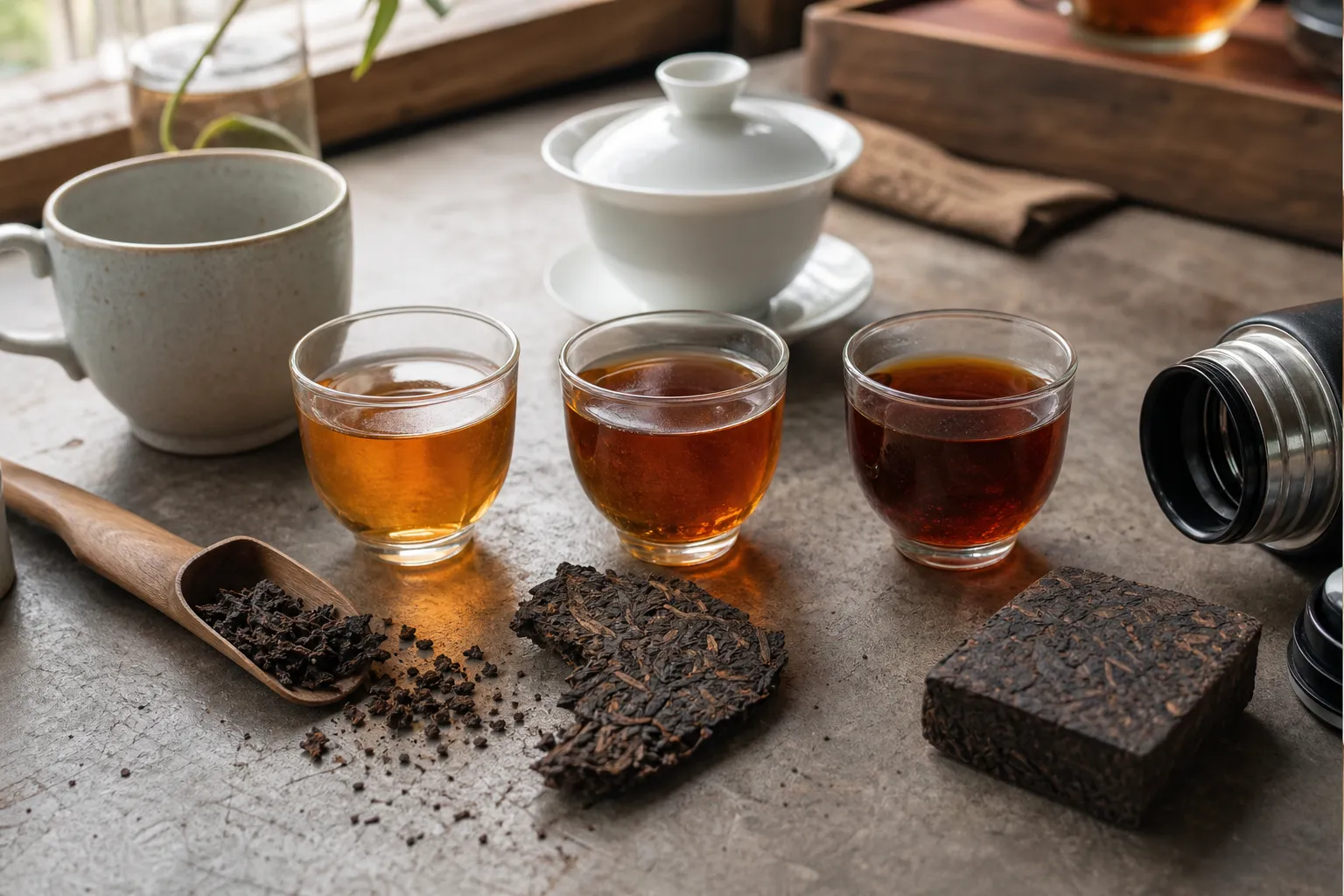
Ask a practical question first: do you want a mellow daily mug, a layered gongfu session, a forgiving grandpa-style cup, or a tea that will not become too heavy in a thermos? The answer changes with flavor direction, tea form, storage aroma, and how long the leaves stay in contact with water.
upward
Start with the broader guide
Use the broader guide first if you need the full scope before this page.
Start with the flavor direction you actually enjoy
Dark tea is generally understood as a post-fermented tea category. Processing, microbial fermentation, storage, raw material, pressing, and age can all shape aroma and taste. For the buyer, the useful point is simple: two dark teas with similar dark liquor can still brew very differently.
A better first question than “Which dark tea is best?” is “Which flavor direction sounds drinkable to me?”
If you want a soft daily cup
Look for mellow, smooth, sweet, clean, lightly woody notes.
Be careful with very dense pieces that brew too heavy in a mug.
If you want earthy depth
Look for ripe puer-style teas, Liubao-style profiles, and darker compressed teas.
Be careful with damp, sharp, or unpleasant storage smells.
If you want woody warmth
Look for aged or storage-influenced teas with dry wood, old book, nutty, or herbal edges.
Be careful with mistaking stale or dirty aroma for age.
If you want sweet aftertaste
Look for teas described as mellow, rounded, smooth, or sweet in the finish.
Be careful with using so much leaf that heaviness covers the sweetness.
If you want mineral or cleaner structure
Look for less heavy dark teas, younger examples, or lighter-stored teas.
Be careful with expecting dark tea to behave like green tea or oolong.
Academic work on dark tea processing often describes changes in aroma compounds and biochemical components during pile fermentation and related processing. You do not need to read those studies to shop well, but they help explain why “dark tea” is not one flavor. Storage, compression, and processing history all matter.
Earthy does not have to mean dirty
An earthy dark tea flavor can be pleasant when it suggests clean soil after rain, old wood, dried leaves, cocoa shell, walnut skin, or a rounded cellar-like depth. It becomes a problem when the aroma is sharp, sour-damp, visibly moldy, rotten, or unpleasant in a way that makes you hesitate before brewing.
If you dislike musty flavors, choose teas described as clean, sweet, mellow, woody, or lightly aged rather than heavily storage-forward. When possible, smell the dry tea before buying. A storage aroma should not require you to talk yourself into liking it.
Sweetness often shows after the swallow
When choosing dark tea by flavor, do not judge sweetness only from the first sip. Many darker teas show sweetness as a soft finish, a rounded body, or a returning aftertaste rather than a bright sugary note.
If you prefer a sweet aftertaste, start with moderate leaf. Too much tea can make the liquor thick and impressive while hiding the quieter sweetness. Brew lightly first, taste the tea plain, then adjust. Additions can be enjoyable in some preparations, but the first plain cup tells you whether the tea itself offers earth, wood, sweetness, mineral structure, or roughness.
Choose the form that matches your routine: loose versus pressed dark tea
Loose versus pressed dark tea is one of the most practical choices. It affects portioning, storage, brewing speed, and how much attention the tea asks from you.
Loose dark tea is easier for beginners and daily cups
Loose dark tea is often the friendlier starting point for beginners. It is easier to measure, quicker to wake up in water, and less likely to surprise you with an overly concentrated chunk. If you brew in a mug, small teapot, infuser basket, or office setup, loose tea gives you more control.
Choose loose dark tea if:
- You want a daily drink without prying apart a cake or brick.
- You brew western style in a mug or teapot.
- You are still learning how strong you like dark tea.
- You want to compare flavor directions before committing to a large compressed piece.
Loose tea is not automatically lower or higher quality. Its advantage is handling: you can portion it more easily and adjust the next cup without fighting the form.
Pressed dark tea suits slower exploration
Pressed cakes, bricks, tuos, and other compressed forms can be rewarding if you like repeated sessions, aging context, and the physical act of breaking tea. Compression can slow how the leaves open in water. A tight chunk may taste quiet in the first infusion and deepen later.
Choose pressed dark tea if:
- You enjoy gongfu brewing or repeated short infusions.
- You want to observe how a tea opens over a session.
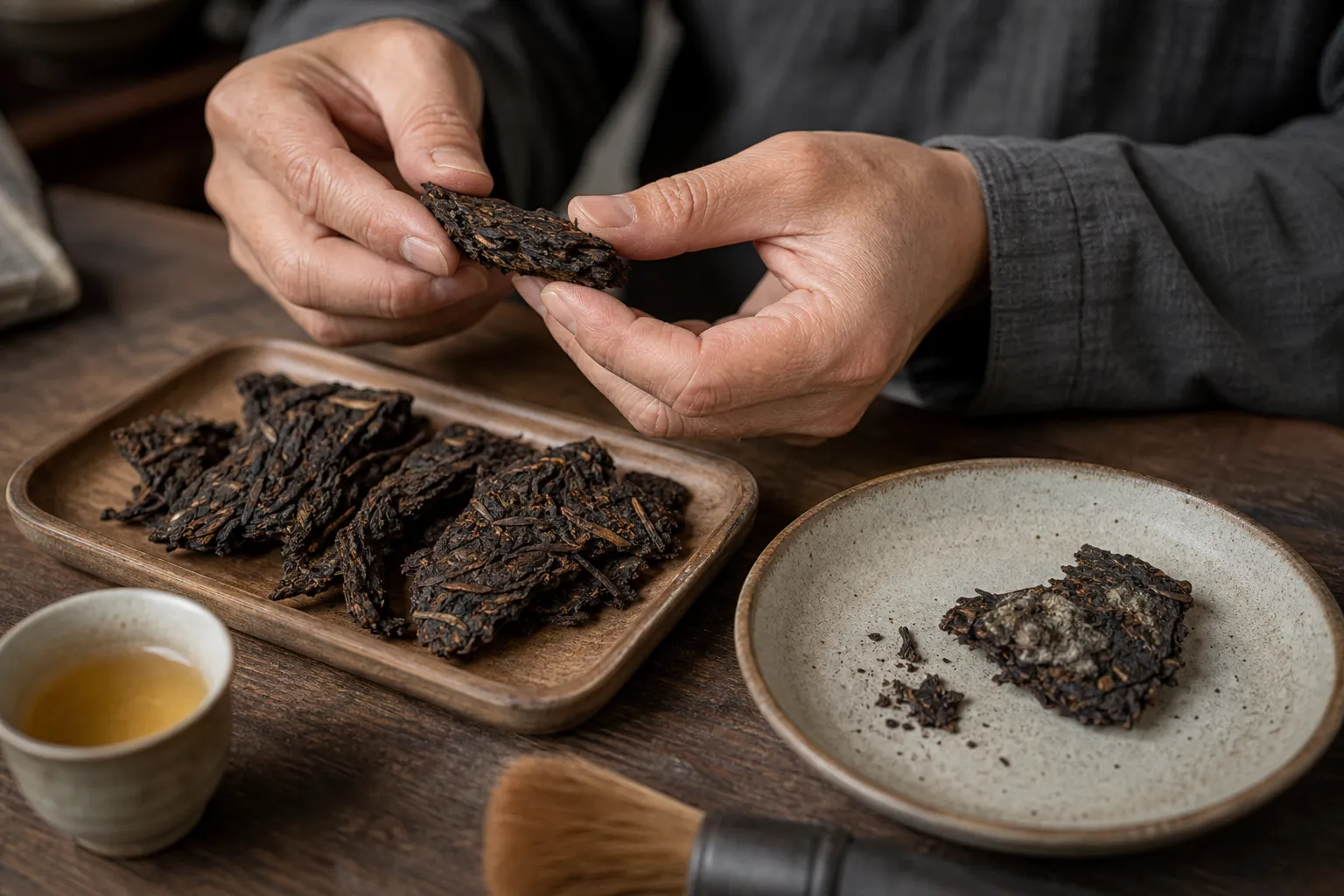
- You are comfortable breaking tea carefully.
- You do not mind small variation between edge pieces, center pieces, and different parts of a cake or brick.
For beginners, the risk with pressed tea is not the form itself. The risk is using too much dense leaf because a small-looking piece can contain more tea than expected. Start lower, especially if the tea is dark, tightly compressed, or unfamiliar.
Match the tea to your brewing style
The same dark tea can feel mellow, heavy, thin, or harsh depending on how you brew it. Water temperature, leaf amount, vessel size, heat retention, steep time, and whether the leaves stay in the water all matter. There is no single rule for every dark tea, but these ranges give you useful starting points.
Dark tea for gongfu brewing
Gongfu brewing suits dark teas that can handle repeated short infusions. Pressed teas, stronger loose teas, ripe puer-style teas, Fu brick, Liubao-style teas, and other darker post-fermented teas can work well, though each behaves differently.
A practical starting range:
- Use a small teapot or gaiwan, often around 90–120 ml.
- Start with about 5–7 g of tea for that size if you want a full session.
- Use near-boiling water for many dark teas.
- Keep early infusions short, often around 5–15 seconds after the tea has opened.
- Lengthen gradually as the liquor weakens.
For compressed tea, give the leaves time to separate. The first infusion may be quiet if the chunk is still tight. If the tea becomes too strong by the third or fourth infusion, reduce leaf next time before deciding the tea itself is too heavy.
Choose a dark tea for gongfu brewing if it has enough body and aftertaste to stay interesting across several infusions. Look for descriptions such as thick, mellow, woody, sweet, clean earthy, or layered. Be cautious with teas whose main appeal is only intensity; strength alone can become tiring over many cups.
Dark tea for grandpa style
Grandpa style means the leaves stay in the cup while you drink and refill with hot water. Because extraction continues, the best dark tea for grandpa style is usually forgiving rather than sharp.
Choose:
- Loose or loosely broken dark tea.
- Milder, sweeter, or cleaner profiles.
- Teas that do not become bitter, sour, or muddy when left in water.
Start with less leaf than you would use for a teapot. A small pinch may be enough in a large mug or glass. Refill when the cup is partly empty, so the remaining liquor softens the next pour. If the cup gets heavy or flat, use less leaf next time rather than simply drinking faster.
Pressed chunks can work, but they are less predictable. A compact piece may open slowly, then release a sudden wave of strength after several refills.
Dark tea for thermos brewing
Thermos brewing is convenient but unforgiving. Heat is retained for a long time, and leaves left inside continue extracting. A dark tea that tastes smooth in short infusions can become too dense, earthy, or drying in a sealed thermos.
For thermos brewing:
- Choose a mellow, low-roughness tea.
- Use less leaf than you think you need.
- Prefer loose tea or a very small broken piece.
- Consider brewing first, then pouring strained liquor into the thermos.
- Avoid unknown, very storage-forward teas for long sealed steeping.
If you want dark tea for a thermos without it getting too strong, control contact time. The common mistake is treating the thermos like a large teapot while leaving the leaves inside for hours. If the brew turns flat, muddy, or overly heavy, reduce the leaf amount before lowering water temperature.
Dark tea for western mug or teapot brewing
Western-style brewing works well for many loose dark teas and broken pieces of pressed tea. It is especially useful for daily drinking.
A starting range:
- Use about 2–3 g per 250 ml of water.
- Use hot to near-boiling water for many dark teas.
- Start around 2–4 minutes.
- Strain the leaves from the liquor.
Adjust by taste. If the cup is thin, add a little more leaf next time. If it is harsh, muddy, or too earthy, shorten the steep or use less leaf. Longer steeping is not always the best way to make dark tea fuller; some teas become flat or heavy before they become more satisfying.
Decide how much storage aroma you enjoy
Storage aroma is one of the biggest reasons people either love dark tea or back away from it. Storage can contribute aged, woody, mellow, or deeper notes, but not every old smell is a good sign.
A dry, pleasant aged character may suggest
- Old wood
- Dried leaves
- Warm earth
- Walnut shell
- Herbal depth
- Clean cellar-like coolness
- Soft sweetness after the sip
A stop signal may include
- Visible mold
- Dampness that seems active or wet
- Sharp, offensive moldy odor
- Sour, rotten, or dirty smell
- Unknown storage that makes you uncomfortable
For general food-safety reasons, visible mold and questionable spoilage are enough reason to avoid a tea. Do not try to identify mold species at home or rescue a tea that looks or smells wrong. The better buying choice is to walk away.
That is separate from ordinary aged aroma. A well-stored dark tea can smell old, woody, earthy, or mellow without smelling wet, rotten, or aggressive. If you are new, choose cleaner storage first. You can explore heavier aged character later after you know your own tolerance.
Should a beginner choose a milder or stronger dark tea?
For most beginners, a milder and cleaner dark tea is the better first step. That does not mean bland. It means the tea gives you room to notice sweetness, body, wood, earth, and aftertaste without overwhelming the cup.
Useful beginner dark tea recommendations are usually practical profiles, not single brand names:
- Loose ripe puer-style tea with clean earthy sweetness
- Lightly woody Liubao-style tea
- Broken pieces from a clean, mellow brick
- A daily dark tea described as smooth rather than aggressive
- A tea that tastes acceptable with both short and longer steeps
A stronger dark tea can be enjoyable if you already like bold, thick, earthy cups. It may suit gongfu brewing better than mug brewing because short infusions let you control intensity. If you are choosing dark tea for daily drinking, strength should not be the only attraction. A tea you can drink comfortably several times a week is more useful than a dramatic tea you avoid after one session.
Young versus aged dark tea for taste
Young versus aged dark tea is not a simple better-or-worse question. Younger examples can feel brighter, rougher, cleaner, greener, or more direct depending on the tea type. Aged examples can become more mellow, woody, sweet, or storage-forward, but age alone does not promise a better cup.
Choose younger or less-aged dark tea if you prefer:
- Cleaner aroma
- Less storage character
- More structure
- Lower risk of heavy mustiness
- A more direct taste
Choose aged or more storage-influenced dark tea if you enjoy:
- Woody depth
- Rounded body
- Mellow earthiness
- Softer edges
- Lingering aged aroma
The boundary is storage quality. Age can change aroma and body, but poor storage can make a tea unpleasant. Do not pay for age alone. Smell, inspect, brew lightly, and decide from the cup.
How much does leaf grade matter when choosing dark tea?
Leaf grade matters, but not in isolation. Finer leaves may brew faster and show more intensity early. Larger or coarser material may give a broader, slower, sometimes woodier cup. Stems are not automatically bad in dark tea; in some compressed teas they can be part of the structure and brewing character.
More useful than chasing one grade label is asking how the tea behaves:
- Does it brew cleanly?
- Does it become harsh too quickly?
- Is the sweetness present or buried?
- Does the aroma seem pleasant after warming the leaves?
- Does the body match your preferred brewing style?
If you brew gongfu, you may enjoy teas that change across infusions. If you brew grandpa style, you may prefer forgiving material that does not punish long contact. If you brew in a thermos, grade matters less than whether the tea stays smooth under long heat.
Choosing dark tea for milk tea or boiled tea
Dark tea is not the same as English black tea, even when both produce dark-colored liquor. English black tea traditions often use brisk oxidized teas, sometimes with milk and sugar. Dark tea is usually selected for post-fermented character: earth, wood, mellow body, and aged aroma.
Some dark teas can work with milk or boiling, especially if they are robust, earthy, and not too delicate. For boiled tea, choose a tea that can handle heat without turning sour, harsh, or muddy. Bricks and coarser material are often more practical than fragile loose leaves, but the result still depends on the tea.
Start gently:
- Use a small amount of leaf.
- Simmer briefly rather than aggressively at first.
- Taste before adding milk or sweetener.
- Increase strength slowly over later attempts.
If a tea has a subtle sweet aftertaste or mineral structure, boiling may flatten what makes it interesting. Save those teas for shorter brewing.
A simple decision frame for choosing dark tea
Use this sequence when comparing two teas or shopping without tasting first.
- Name your brewing style. Gongfu, mug, grandpa style, thermos, boiled tea, or milk tea will change the better choice.
- Choose a flavor direction. Clean and sweet, earthy and thick, woody and mellow, or mineral and structured.
- Decide your storage aroma tolerance. If you dislike musty flavors, choose cleaner storage and lighter aged character.
- Pick the form. Loose tea for convenience; pressed tea for slower sessions and repeated infusions.
- Start with less leaf. You can make the next cup stronger. It is harder to rescue a heavy, muddy brew.
- Judge the aftertaste. A good fit should leave something pleasant after the swallow: sweetness, warmth, wood, clarity, or calm depth.
- Reject suspicious tea. Visible mold, offensive dampness, or storage that seems wrong is not a tasting challenge.
The best dark tea for you is the one that fits your actual brewing habit. A deep compressed tea may be excellent in a small pot and tiring in a thermos. A loose mellow tea may be perfect for daily drinking and too simple for a long gongfu session. Choose by use, then refine by taste.
Small adjustments after the first cup
Your first brew is not a final verdict. Dark tea often needs one or two adjustments before it shows clearly.
If the cup is thin
- Add more leaf next time.
- Use hotter water.
- Preheat the vessel.
- Extend the steep slightly.
If the cup is too strong or heavy
- Use less leaf.
- Shorten the steep.
- Break compressed tea into smaller, more even pieces.
- Strain instead of leaving leaves in the cup.
If the tea tastes harsh
- Reduce steep time before lowering water temperature.
- Try a lighter leaf ratio.
- Avoid long thermos contact.
- Let compressed pieces open gradually over shorter infusions.
If the tea tastes flat
- Use fresher hot water.
- Avoid overlong steeping.
- Try gongfu-style shorter infusions.
- Check whether the dry or warmed tea already smells dull.
If the tea is too earthy
- Choose cleaner, sweeter profiles next time.
- Avoid strongly storage-forward descriptions.
- Use less leaf in grandpa style or thermos brewing.
- Try loose dark tea before dense compressed forms.
A good buying habit is to keep notes in plain language: “sweet aftertaste, too heavy in thermos,” “nice wood, better short,” “clean but thin,” “earthy, not for mug.” Over time, those notes become more useful than broad labels.
Quick answers for common choosing questions
Which dark tea should a beginner try first?
Start with a clean, mellow loose dark tea or a small sample of a lightly woody, smooth pressed tea. Avoid very damp-smelling or extremely strong teas until you know your storage aroma tolerance.
How do I choose dark tea if I dislike musty flavors?
Look for clean, sweet, woody, or mellow descriptions, and avoid teas promoted mainly for heavy storage character. Smell before brewing when possible. If the aroma is sharp, damp, visibly moldy, or unpleasant, do not treat it as normal aged character.
Is pressed dark tea better than loose dark tea?
Not automatically. Pressed tea can be enjoyable for slow sessions and repeated infusions. Loose tea is easier to portion and often better for daily mugs, office brewing, and beginners.
How do I keep dark tea from getting too strong?
Use less leaf first, especially in a thermos or grandpa-style cup. Strain the leaves when brewing in a pot. For gongfu brewing, keep early infusions short and increase time gradually only after the flavor begins to fade.
Sources
Sources and further reading
Reference links are limited to sources considered suitable for public citation in this page.