
Beginner choice
Which Dark Tea Should a Beginner Try First
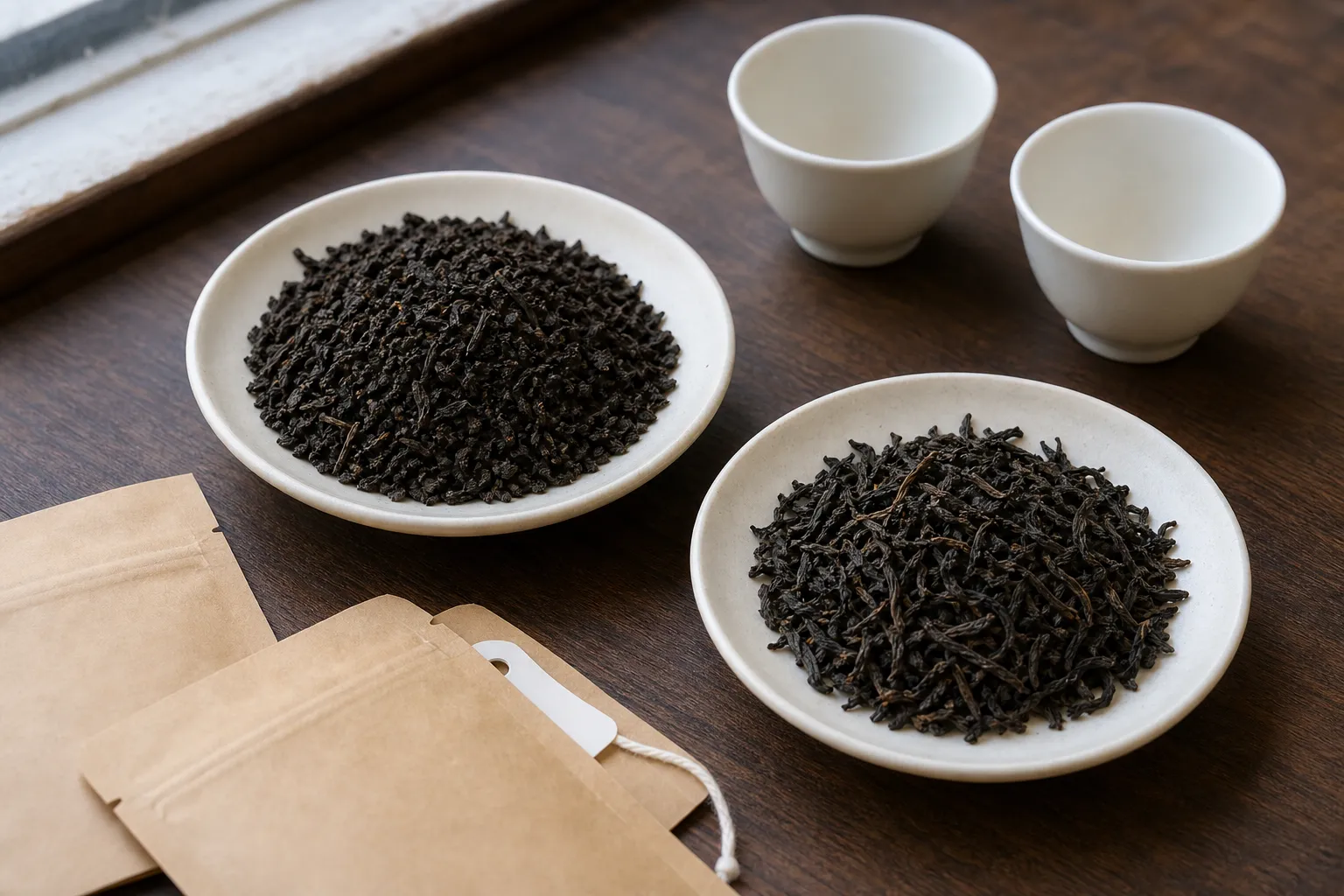
If you are choosing dark tea for beginners, start with a small, clean sample of either ripe pu-erh or Liu Bao. Do not begin with a full cake, brick, or basket unless you already know you like that style.
Choose ripe pu-erh first if you want a deeper, rounder, earthier cup with darker liquor and a heavier body. Choose Liu Bao first if you want something that may feel lighter, woody, nutty, mildly sweet, or a little brighter.
Neither category is automatically easy or difficult. The safer first purchase is a loose-leaf sample, a mini portion, or an easy-to-break piece with clear tasting notes and no aggressively musty storage aroma.
That answer is practical rather than absolute. Dark tea changes with processing, fermentation, compression, age, storage, water, and brewing style. A good first dark tea is not the most famous one. It is the one least likely to fight your palate on the first cup.
upward
Read the full overview first
Use the broader guide first if you need the full scope before this page.
Start with clean, small, and forgiving
For a beginner, the first question is not “Which dark tea is the best?” It is “Which tea lets me taste the category without spending too much money, storing a large cake, or learning too many skills at once?”
A beginner-friendly dark tea usually has four traits:
A clean aroma
Earthy, woody, nutty, bready, or mellow can be pleasant; clearly rotten, damp-basement, sharply unpleasant, or visibly moldy is a poor first experience.
A low-commitment format
Samples, loose leaf dark tea, mini portions, or small broken pieces are easier than a whole cake or brick.
A flavor profile you already understand
If you like dark roast coffee, cocoa, old wood, or earthy flavors, ripe pu-erh may feel familiar. If you prefer lighter wood, nuts, mild sweetness, or a cleaner mineral edge, Liu Bao may be easier.
Brewing forgiveness
The tea should still taste acceptable if your first steep is slightly too long or too short.
Dark tea is often described as a post-fermented tea category. Microbial fermentation, later storage, and moisture conditions can shape aroma, body, liquor color, and taste. For a first cup, you do not need the technical version of that story. The useful point is simpler: two teas with the same category name can taste very different.
That is why a sample matters. A small portion lets you test aroma, liquor color, body, and aftertaste before deciding whether you want more.
Pick ripe pu-erh first if you want depth, earth, and body
A clean ripe pu-erh is often the easiest first dark tea for someone who wants the “dark, smooth, earthy” experience. Ripe pu-erh, also written as shou or shu pu-erh, is a Yunnan dark tea style shaped by pile fermentation. Studies on ripe pu-erh often connect this processing with darker liquor, mellow taste, and thicker mouthfeel.
In everyday tasting language, ripe pu-erh can lean toward:
- Damp forest floor without smelling dirty
- Old wood or polished wood
- Cocoa, dark bread, or walnut-like notes
- Mellow sweetness
- A smooth, thick, rounded cup
- Brownish-red to very dark liquor
This makes ripe pu-erh a good first dark tea to try if you want a cup that feels substantial. It can also be forgiving because a moderate brew often stays rounded rather than sharply bitter, though this depends on the individual tea.
The risk is heaviness. Some ripe pu-erh can feel too dense, muddy, or storage-forward for a beginner. If a listing leans hard into very strong earth, heavy storage, deep cellar, smoke, or “funky” notes, save it for a later comparison. “Earthy dark tea” should still smell clean. Earthy is not the same as sour, fishy, rotten, or unpleasantly moldy.
For a first ripe pu-erh, look for words such as clean, smooth, mellow, woody, cocoa-like, sweet, or balanced. Do not make age the main attraction. Older tea is not automatically easier to enjoy; storage and cup cleanliness matter more than the date printed in a listing.
Pick Liu Bao first if you want wood, nuts, and a lighter entry
Liu Bao can be an excellent beginner dark tea when you want a cup that may feel less heavy than ripe pu-erh. Liu Bao is associated with Guangxi dark tea, and review material describes it as a microbial-fermented tea shaped by processing and aging. For the beginner, the cup-level question is simple: does the tea sound clean, woody, nutty, and approachable?
In market and tasting language, Liu Bao may be described with notes such as:
- Dry wood or old wood
- Nuts, grain, or bread crust
- Mild sweetness
- Clean aged aroma
- Mineral or slightly bright edges
- Sometimes dried fruit, citrus peel, or herbal-like hints
Liu Bao for beginners makes sense if you are curious about dark tea but nervous about a very thick, earthy cup. It can feel more open and less dense, especially when brewed lightly. It also often appears in loose or basket-stored forms, which can reduce the friction of prying a hard cake.
The caveat: Liu Bao is not always light, and ripe pu-erh is not always heavy. Some Liu Bao can be deeply fermented, strongly aged, or closer in feel to ripe pu-erh. Some ripe pu-erh can be clean, sweet, and gentle. The product-level description matters more than the category label.
For a first Liu Bao sample, look for clean, woody, nutty, mellow, mildly sweet, or not too musty. If the description centers on strong aged storage, smoke, or very old warehouse character, choose it later unless those notes already appeal to you.
Liu Bao vs ripe pu-erh: choose by comfort, not ranking
There is no universal beginner ranking that makes one dark tea the correct first choice. The better comparison is sensory comfort.
If this sounds appealing
Dark, smooth, earthy, round, heavier body
Try first: Clean ripe pu-erh. It often gives the recognizable post-fermented depth many beginners expect from dark tea.
If this sounds appealing
Woody, nutty, mildly sweet, less heavy
Try first: Clean Liu Bao. It may feel easier if you want dark tea character without a very dense cup.
If this sounds familiar
You are unsure
Try first: Small samples of both. Comparing two small portions teaches more than guessing from category names.
If this sounds familiar
You dislike strong earthy aromas
Try first: Liu Bao or a lighter-described ripe pu-erh. Avoid very heavy storage notes for the first round.
If this is your priority
You want the easiest brewing format
Try first: Loose leaf or easy-to-break pieces. Less prying, easier measuring, and fewer equipment decisions.
A beginner dark tea should not be selected only by origin, age, cake shape, or dramatic tasting claims. Choose the tea whose notes match something you already enjoy.
Also, remember that “dark tea” is not just another name for ordinary black tea. In common English tea-category use, black tea usually means oxidized tea such as Assam, Ceylon, Keemun, or breakfast blends. Dark tea usually refers to post-fermented tea, often connected with Chinese hei cha. That naming confusion is one reason beginners sometimes buy a cup much earthier than they expected.
How to buy the first sample without overcommitting
For the first purchase, small is wise. A 10–25 g sample, a few mini portions, loose leaf, or a small broken piece gives enough tea for several trials without locking you into a full compressed tea.
When reading a listing or label, pay attention to the practical details:
- Format: loose leaf is easiest; a lightly compressed piece is fine; a very hard brick or cake adds another skill before you even taste the tea.
- Aroma language: clean earthy, woody, nutty, mellow, sweet, and smooth are beginner-friendly signals.
- Storage hints: dry, clean storage is a better first bet than vague claims around old or mysterious storage.
- Leaf condition: broken leaf is not automatically bad for a first sample, but very dusty tea can brew heavy quickly.
- Sample access: choose small dark tea samples when possible instead of buying a full cake on reputation alone.
Do not worry about finding the most historically important example. A first dark tea should teach your palate what clean post-fermented tea can taste like. After that, you can compare regions, ages, compression styles, and storage profiles with more confidence.
Make the first brew gentle, then adjust
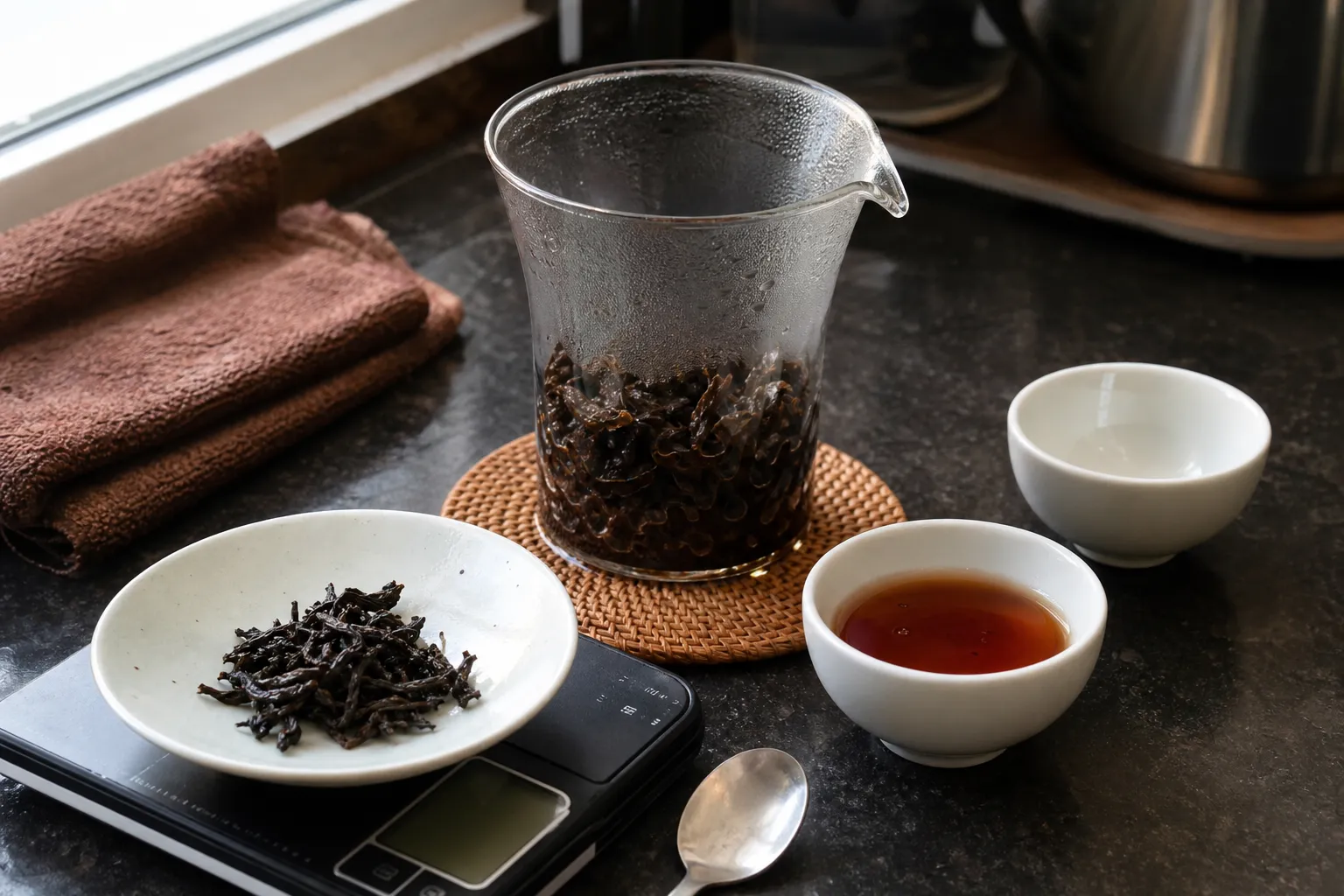
You do not need an elaborate tea table to learn how to make dark tea for a first tasting. Use a small pot, gaiwan, or mug infuser. Start with a modest amount of leaf and short steeps, then adjust by taste.
A simple first approach:
- Smell the dry leaf. It should be appealing or at least clean.
- Use hot water, close to boiling, especially for compressed or mature dark tea.
- If the tea is loose or broken, start with a shorter first steep.
- Taste the liquor before making the next steep stronger.
- Adjust one variable at a time: leaf amount or steep time.
Adjust by what the cup tells you
If the cup tastes too thin, use a little more leaf or extend the steep. If it tastes too heavy or muddy, use less leaf, shorten the steep, or pour sooner.
If it tastes harsh, reduce the steep time before blaming the tea. If it tastes flat, try slightly more leaf or hotter water. If the aroma is clearly unpleasant before brewing, do not force the session just because the tea is famous or old.
Dark tea can have a dark liquor and a strong aroma without being aggressive. A good first cup should give you something to notice: warmth of wood, depth of earth, mellow body, nut-like sweetness, or a clean aged note. It does not need to impress you with intensity.
This article focuses on flavor, brewing ease, and choosing a first dark tea, not health effects.
Common beginner confusion
Is dark tea the same as black tea?
Not in the usual English tea-category sense. English “black tea” usually refers to oxidized tea such as breakfast tea, Assam, Ceylon, or Keemun. “Dark tea” usually refers to post-fermented tea, often connected with Chinese hei cha. If you search for black tea for beginners, you may find a very different category from Liu Bao or ripe pu-erh.
Should a beginner buy a cake?
Not at first. A cake can be enjoyable later, but it adds commitment and requires breaking off pieces. For a first dark tea, loose leaf, samples, mini portions, or easy-to-break chunks are more practical.
Is an earthy smell bad?
Not automatically. Earthy, woody, nutty, bready, or forest-like notes can be part of the appeal. The warning sign is an aroma that is clearly rotten, sharply unpleasant, damp in a bad way, or visibly moldy. For a first tea, choose clean over dramatic.
The short answer
The best first dark tea is a small, clean sample that matches your flavor comfort.
Pick ripe pu-erh if you want a darker, smoother, earthier, fuller cup. Pick Liu Bao if you want a woody, nutty, possibly lighter and cleaner-feeling entry. If you are truly unsure, buy one small sample of each and brew both gently.
The first success is not finding the most prestigious tea. It is learning what clean dark tea tastes like, how heavy you like the cup, and which notes make you want a second steep.
Sources
Sources and further reading
Reference links are limited to sources considered suitable for public citation in this page.