
Flavor-first selection
How to Choose Dark Tea by Flavor: Earthy, Woody, Sweet, or Mineral
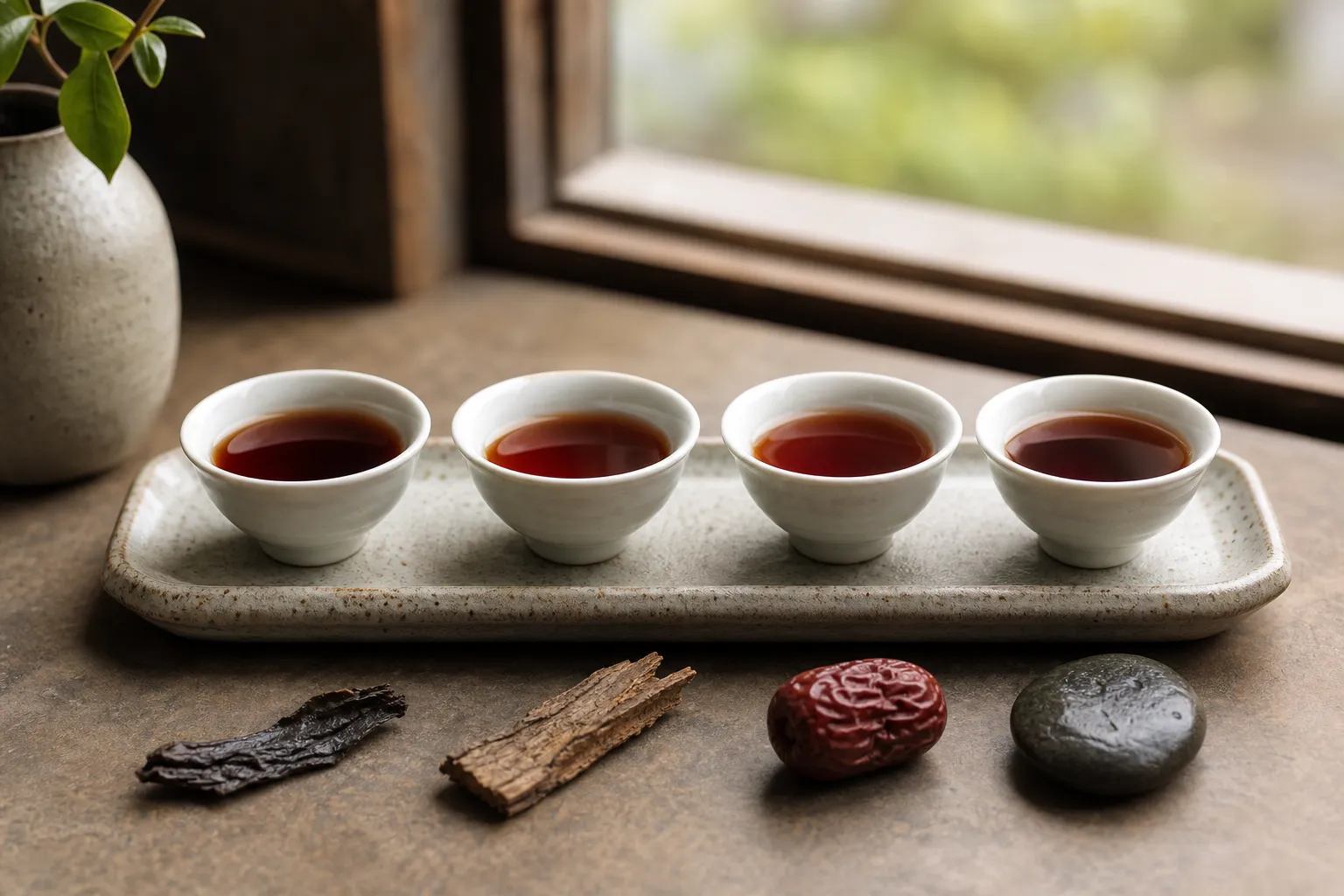
To choose dark tea by flavor, begin with the cup you want to drink again—not the most famous name on the wrapper. Pick an earthy direction if you like weight, low-toned depth, and a grounding cup. Pick woody if you prefer dry aromatic notes such as bark, old paper, stored wood, or a camphor-like lift. Pick sweet if you want roundness, date-like aroma, brown-sugar aftertaste, or a mellow finish. Pick mineral if you like a clearer cup with a dry edge, clean stone impression, and a finish that feels structured rather than thick.
Then taste a small sample across several infusions. Leaf size, compression, storage, water, vessel, and steeping time can move the same tea from pleasant to muddy, or from thin to quietly complex.
upward
Read the full overview first
Use the broader guide first if you need the full scope before this page.
A quick flavor match before you buy more
Use these four flavor families as a practical sorting tool. They are not grades, origin proof, age proof, or fixed categories. They are tasting directions that help you decide whether a sample belongs in your daily rotation.
If you want a heavier, grounding cup
Look for clean earth, damp leaf, forest floor, and dark grain.
Body and finish cues include a thick, low-toned, soft, lingering cup.
Be cautious if it smells moldy, sour, chemical, or like a stale basement.
If you want dry aromatic depth
Look for dry wood, bark, old book, aged cabinet, and camphor-like wood.
Body and finish cues include medium to full body, a dry finish, and aromatic lift.
Be cautious if it turns harsh, dusty, or sharply bitter too quickly.
If you want roundness and comfort
Look for date, raisin, molasses, brown sugar, honeyed finish, and soft grain.
Body and finish cues include a smooth, mellow, coating cup with a gently sweet aftertaste.
Be cautious if “sweet” appears only in marketing language, not in the cup.
If you want clarity and structure
Look for clean stone, wet rock, dry edge, and cooling finish.
Body and finish cues include a clear, less syrupy, crisp cup with a tidy finish.
Be cautious if it feels thin, flat, metallic, or empty rather than clear.
For a first purchase, a sample is usually more useful than a full cake, brick, or large basket. Dark tea flavor notes can shift between the dry leaf, the warmed leaf, the first infusion, and later cups. A tea that smells very earthy at first may become sweeter after a few short steeps. A tea that seems woody in the aroma may drink more mineral in the finish.
The point is not to force every tea into one label. It is to find the direction your palate wants to revisit.
How to taste a dark tea sample for flavor direction
A useful tasting session does not need to be formal. You only need enough control to tell whether you like the tea itself, or only the way it happened to brew once.
Start with the dry material. Loose pieces, cake crumbs, small broken fragments, and larger compressed chunks do not behave the same way. Smaller or more broken leaf material often extracts faster and can make the cup darker, heavier, and more intense. Larger chunks may need time to open and may show aroma more gradually. That does not make one form better than another; it changes how you read the first cup.
Warm the leaf if you can. Put the tea in a warmed gaiwan, small pot, or cup, then smell before adding full brewing water. This is where woody and earthy cues often separate. Clean earth may suggest damp leaves, dark soil after rain, or stored grain. Woody notes tend to feel drier: bark, old paper, aged cabinet, or a gentle camphor-like lift. If the aroma is aggressively sour, chemical, or unpleasant in a way that does not soften after warming, do not talk yourself into buying more because the wrapper says aged or mellow.
Use hot water and short early steeps as a starting point. In many everyday brewing setups, dark tea tolerates water near a full boil, especially compressed or fermented material, but steep length matters. A quick rinse or wake-up steep can help loosen tightly compressed tea, though not every loose tea needs it. For a small vessel, start with short infusions and lengthen gradually. For a mug or larger pot, use less leaf or a shorter steep when testing unfamiliar tea.
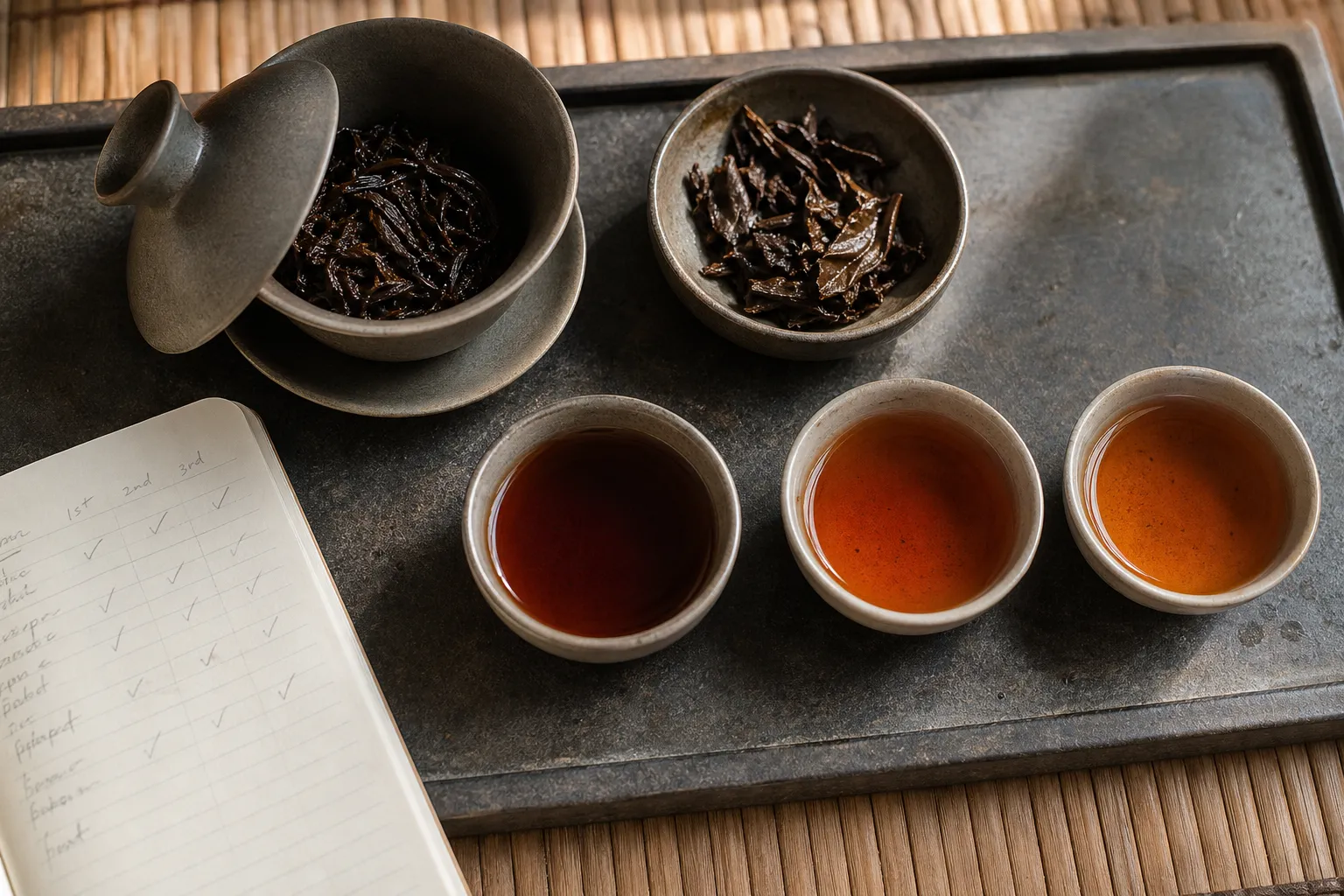
Taste the first three infusions separately
- The first infusion shows opening aroma and extraction speed.
- The second often shows body.
- The third can reveal whether sweetness, wood, or mineral finish remains after the initial heaviness settles.
If the tea becomes muddy by the second cup, reduce leaf, shorten the steep, or use a larger vessel next time. If it tastes thin but smells promising, increase the steep slightly or give compressed pieces more time to open.
Pay attention to finish, not only the first flavor on the tongue. Dark tea body and finish are often where preference becomes clear. An earthy tea may feel plush and low. A woody tea may dry the mouth slightly but leave aromatic warmth. A sweet dark tea may not taste sugary at all; the sweetness may appear as a rounded aftertaste. A mineral dark tea may feel clean, dry-edged, or cooling after you swallow.
Choosing between earthy, woody, sweet, and mineral
Earthy dark tea: choose it for weight, but keep it clean
Earthy is one of the most useful and most misunderstood dark tea words. A clean earthy dark tea can feel deep, rounded, and grounding. It may suggest damp leaf, forest floor, dark soil, or old stored grain. The cup should still feel coherent: low aroma without rotten heaviness, full body without muddy collapse, and a finish that does not turn sharply sour.
Clean earthiness versus mustiness is the key distinction. Earthy does not automatically mean flawed. But moldy, sour, stale-basement, chemical, or sharply unpleasant impressions are not the same as clean earth. If those notes dominate the dry leaf and remain after a careful steep, treat that as a reason to be cautious before buying a larger amount.
Brewing adjustment: if earthy notes feel too heavy, use less leaf, shorten early steeps, or pour sooner after the rinse. If the cup feels thin and dusty instead of deep, try a slightly longer second or third infusion rather than judging only the first.
Woody dark tea: choose it for dry aroma and depth
Woody dark tea suits drinkers who like a drier, more aromatic cup. The notes can be quiet: dry wood, bark, aged cabinet, old book, or a camphor-like edge. Some teas lean woody in the warmed leaf but become earthier in the liquor; others keep a dry wood finish across several infusions.
The risk with woody teas is mistaking dryness for complexity. A useful woody direction should still have body, aroma, or aftertaste. If the cup is only scratchy, harsh, or papery, it may be over-extracted, too broken, or simply not your style. Woody notes often show better when the early steeps are not pushed too long.
Brewing adjustment: keep early infusions short and smell the empty cup after pouring. If the aroma is pleasant but the liquor is rough, reduce steep time before reducing leaf amount. If it tastes hollow, give the compressed piece more time to open over later infusions.
Sweet dark tea: choose it for roundness, not sugar
Sweet dark tea is not sweet in the way a sweetened drink is sweet. In dark tea tasting, sweetness often means aroma, aftertaste, softness, or round body. Look for date, raisin, molasses, brown sugar, honeyed finish, or soft grain notes. A sweet tea may still have some dryness or earth, but the finish should feel rounded rather than sharp.
Research on dark tea processing often discusses changes in bitterness, astringency, sweetness, aroma, and mellow body during fermentation and storage-related transformation. That does not mean every older-looking tea will taste sweet. Processing, leaf material, storage, compression, and brewing all matter. Sweetness is a cup cue, not a promise printed on a label.
Brewing adjustment: if a tea smells sweet but tastes bitter or rough, shorten the first steeps and taste later cups before rejecting it. If sweetness appears only after the liquor cools slightly, note that too; some dark teas show more rounded aftertaste as the cup moves from very hot to warm.
Mineral dark tea: choose it for clarity and finish
Mineral is best treated as sensory language, not a claim about actual mineral content. In dark tea, a mineral direction may feel like clean stone, wet rock, a dry edge, or a cooling finish. It often appeals to drinkers who do not want a syrupy or very heavy cup but still want structure.
A mineral-leaning tea should not simply be weak. Clarity is different from emptiness. If the cup has a tidy finish, a clean edge, and enough body to hold your attention, mineral may be the right word. If it tastes watery, metallic, or flat, the tea may need a stronger brew—or it may not have enough depth for your preference.
Brewing adjustment: if the cup is too thin, increase steep time slightly before adding much more leaf. Too much leaf can turn a clear tea harsh and hide the clean finish you were trying to find.
What can change the answer in the cup
Leaf size matters
Cake dust, broken flakes, and loose fragments can brew dark and heavy quickly. Larger chunks from a brick or cake may need a rinse and several infusions before they show full body. If you compare a crumb-heavy sample with a larger piece from the same tea, the crumb may taste stronger and less layered.
Compression matters
A tight piece can under-brew at first and then open suddenly. If your first cup is thin, do not assume the tea is mineral or weak. Give it another short infusion, or gently separate the piece if it can be loosened without grinding it into dust.
Steep time matters
Steep time matters more than the tasting word on the package. Long early steeps can turn earthy tea muddy, woody tea harsh, and mineral tea flat. Very short steeps can hide sweetness and body. Start modestly, then adjust one variable at a time.
Water and vessel size matter
A small vessel with more leaf will reveal aroma and body quickly, but it can also exaggerate heavy dark tea notes. A mug or larger pot may soften the same tea while blurring some details. Neither method is wrong; use the one that helps you taste the direction you care about.
Storage impression matters, but flavor words should not be overread
Earthy, woody, sweet, and mineral notes do not prove age, origin, storage history, or value. They only describe what you notice in the cup. If the tea has visible mold-like growth, a strongly unpleasant odor, or persistent sour and chemical notes, it is reasonable to avoid buying more and choose a cleaner sample.
A simple buying rule for flavor-first dark tea
Buy the smallest amount that lets you taste the tea twice. The first session tells you whether the flavor family appeals to you. The second tells you whether the tea was consistent, or whether your first brew was too strong, too weak, or too rushed.
Choose earthy if you want weight and low-toned comfort, but insist on clean earthiness. Choose woody if you want dry aroma and a longer aromatic finish. Choose sweet if you want roundness, mellow body, and a soft aftertaste. Choose mineral if you want clarity, structure, and a cleaner finish.
The useful question is not “Which dark tea is best?” It is “Which cup do I want to drink again after I understand how it brews?” That keeps the choice practical, sensory, and honest.
Sources
Sources and further reading
Reference links are limited to sources considered suitable for public citation in this page.