
Brewing timing
Why Dark Tea Needs Different Timing for Loose Leaf and Broken Brick Pieces
A rinsed piece of compressed dark tea can sit quietly in the first steep while loose leaves in the same water already turn the cup amber and fragrant. That is the practical heart of loose leaf vs broken brick dark tea steeping time: the timer is not only counting minutes, it is measuring how much tea the water can actually reach.
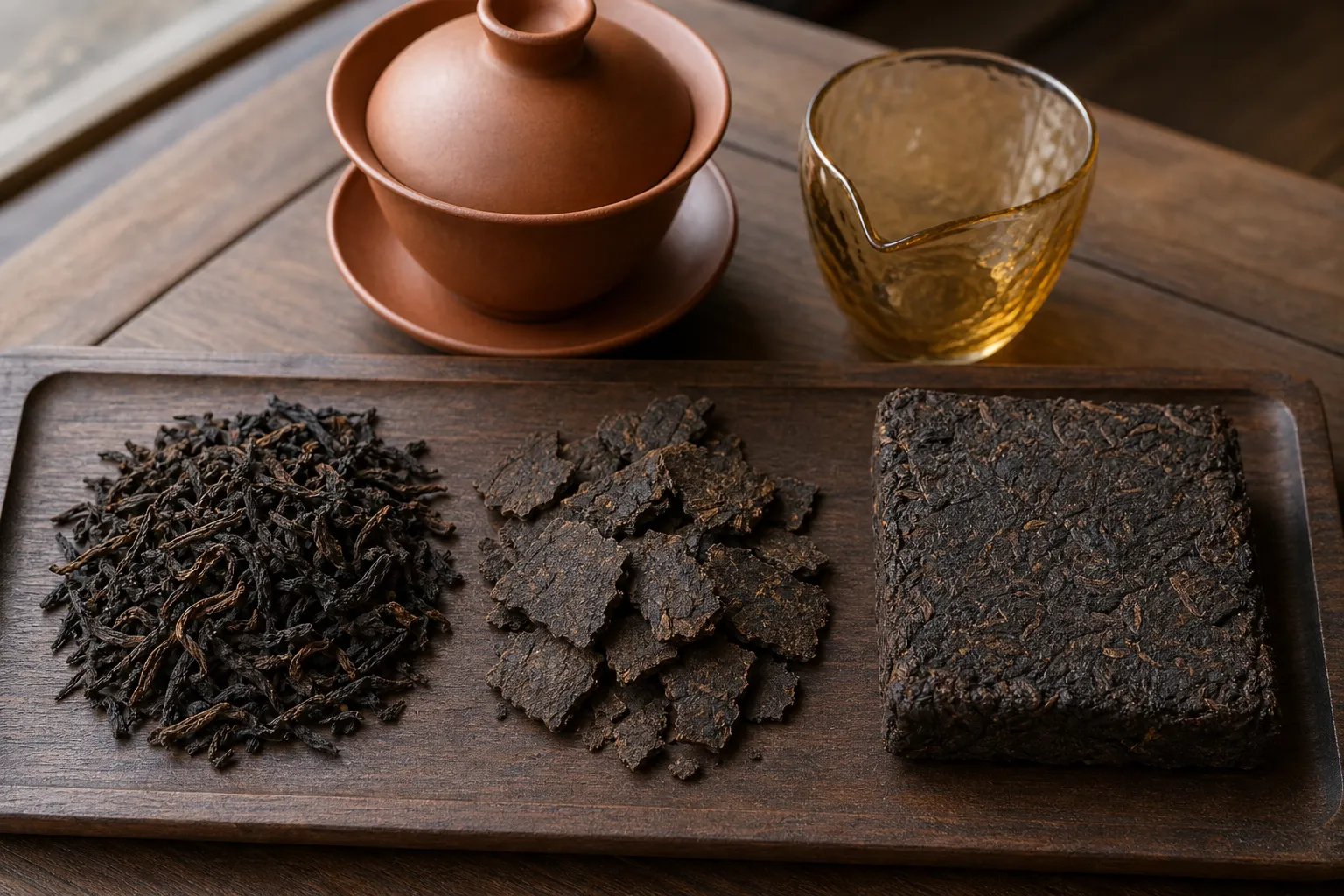
Loose dark tea often responds quickly because more leaf surface is exposed from the start. Broken brick tea pieces are less predictable. Small flakes can infuse fast once they separate, while dense compressed chunks may need the first pour simply to swell and loosen. Start with the form in the vessel, then adjust by liquor color, aroma, body, and whether the piece has opened.
upward
Start with the broader guide
Use the broader guide first if you need the full scope before this page.
The Timing Difference Comes From Contact, Not Just Form
Loose leaf dark tea timing usually feels more immediate because water can move around individual leaves right away. Even when the leaves are twisted, curled, or lightly clumped, hot water can usually reach more edges and surfaces. A short rinse or first infusion may wake the leaf quickly, and small timing changes can show up clearly in the cup.
Broken brick pieces behave differently because “broken” does not always mean “open.” A chip from a compressed brick may expose its outer surfaces while the center remains tight. During the first pour, the water works on the outside first; the inner layers may not contribute much until the piece swells, loosens, or separates.
That is why a compressed chunk first steep can taste thin even when the water is hot and the leaf amount looks generous. The tea is there, but not all of it is available to the water yet. If the brick has crumbled into small flakes, though, those flakes may behave more like fast-extracting loose material and become strong sooner than expected.
The useful rule is simple: judge the openness of the tea, not only the label. Loose leaves respond quickly. Small flakes infuse quickly. Dense compressed pieces often need more patience at the beginning.
A Useful Starting Point for Loose Leaf and Broken Brick Pieces
Exact timing depends on vessel size, leaf-to-water ratio, water temperature, tea age, storage condition, and personal taste. The available reference material supports the broader mechanism that tea extraction changes with surface area, contact time, temperature, ratio, water, and tea form. It does not provide a direct test of loose dark tea against broken compressed dark tea bricks, so the timing advice here should stay practical and sensory rather than absolute.
For many everyday hot-brewing setups, use these as starting cues:
Loose dark tea
The water reaches many exposed leaf surfaces first. Color and aroma appear quickly, so start short and extend only if the cup is thin.
Small broken brick flakes
The water reaches fresh broken edges. Flavor may arrive fast after separation, so treat the flakes like active loose material and avoid overloading.
Dense broken brick chunk
The water mostly reaches the outside of the piece. The first infusion may look light or uneven, so rinse, wait for opening, or lengthen early steeps slightly.
Mixed flakes and chunks
Fast flakes and slow centers can make the cup taste strong at the edge but hollow underneath. Even out the pieces before changing the timer.
If you brew gongfu-style with a small vessel and more leaf, the first several infusions may be adjusted by seconds rather than minutes. If you brew in a larger mug or pot with a lower leaf ratio, timing may stretch longer. The same broken brick tea pieces can therefore need different timing in different vessels.
A good first check is the rinse. If the rinse water darkens quickly and the leaf opens at the edges, the tea may not need a long first steep. If the rinse stays pale and the chunk still looks compact, the next infusion may need a little more time, hotter water where suitable, or simply another early infusion before the cup fills out.
What to Watch in the Cup
Dark tea extraction timing becomes easier when you stop asking only “How many minutes?” and start asking “What has changed in the cup?”
- Liquor color: Loose leaf dark tea may deepen steadily because water is already moving around the leaves. A dense brick piece may release color unevenly: a little color from the outside, then a stronger shift once the compressed part opens. Color is not a complete measure of taste, but it is a useful early signal.
- Wet leaf aroma: If the aroma is present but the body feels thin, the tea may need a little more contact time or a slightly higher leaf amount. If the aroma turns heavy while the mouthfeel becomes rough, muddy, or harsh, longer steeping is probably not the right correction.
- Cup body: A loose-leaf brew that tastes watery may need more leaf, hotter water, or a longer infusion. A broken brick brew that tastes watery in the first steep may simply be slow to open. Give it another infusion before deciding the tea itself is weak.
- Leaf opening: Opened leaves, separated flakes, and loosened edges show that water can reach more material. A compact center means the timer is still working mostly on the outside. When the piece finally opens, the same timing that felt safe in the first steep may suddenly produce a much heavier cup.
When Longer Steeping Is the Wrong Fix
A common misunderstanding is that stronger dark tea always comes from more time. Time matters, but it is only one control. Leaf amount, water volume, temperature, vessel shape, and piece size can change the result just as much.
If loose leaves taste thin, a modestly longer steep may help. But if the cup is thin because the leaf amount is low for the vessel, adding time can bring more roughness before it brings satisfying body. In that case, use a little more tea next time or reduce the water volume.
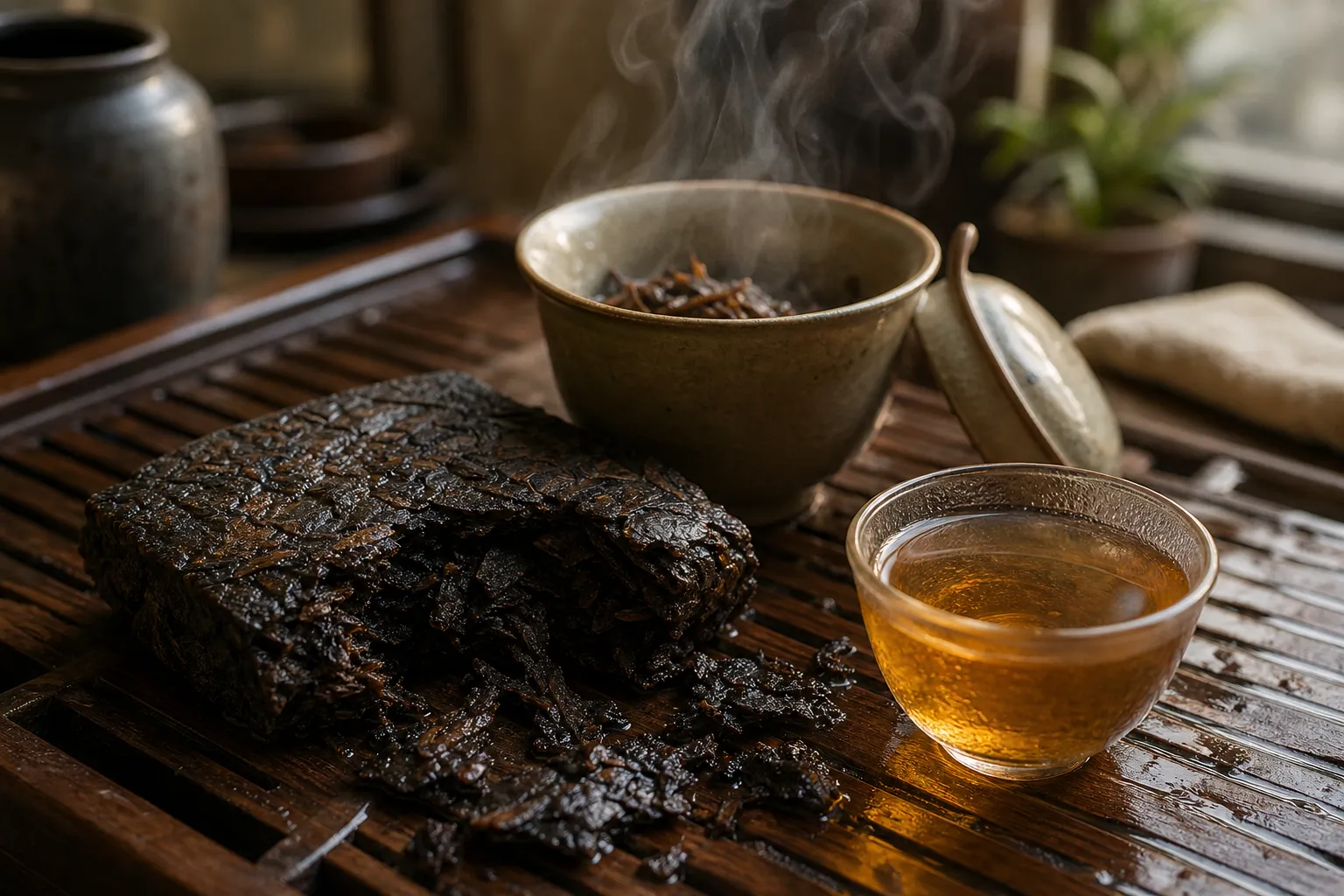
If broken brick tea pieces taste thin, check the compression before pushing the timer too far. A tight piece may need a rinse, a pause, or a few early infusions before the inner layers participate. Breaking the piece gently into smaller, more even parts can also help water reach the tea without filling the vessel with dust and tiny fragments.
If the cup is harsh, heavy, or muddy, shorten the next steep before changing everything else. For loose leaf, that may mean cutting the infusion sharply. For broken brick pieces, it may mean separating flakes from dense chunks, using less leaf, or avoiding an aggressive break that creates too many small particles.
Small fragments are not automatically a problem. They can add quick color and body. The issue is imbalance: fast flakes may extract quickly while the dense center is still waking up. Brick vs loose steeping is less about which form is better and more about how evenly the water can reach the tea.
A Simple Adjustment Path at the Tea Table
Use the first two infusions as a reading period. They tell you more than a printed timer.
For loose dark tea
Start with a short first steep if you are using a small vessel and a generous leaf amount. If the liquor is pale, the aroma is faint, and the body feels thin, add time in the next infusion. If the cup becomes drying, heavy, or flat, shorten the next pour or use slightly less leaf.
For dense broken brick tea pieces
Check whether the chunk has opened after the rinse. If it still looks tight, do not judge the tea too quickly. The broken tea brick brewing time may need a slightly longer early infusion, or it may need several short infusions before the center loosens. Once it opens, reduce timing if the cup suddenly deepens.
For small flakes from a brick
Do not assume they need the same timing as a compact piece. They have more exposed dark tea surface area, so they can release flavor quickly. Use shorter early steeps and watch for a cup that becomes dark but not rounded.
For mixed pieces
Sort lightly with a tea pick or your fingers before brewing if needed. You do not need perfect uniformity, but large dense chunks plus tiny crumbs can make timing harder. A more even piece size gives the water a clearer job.
Storage and Compression Can Change the First Steep
Storage is not the main subject here, but it can affect brewing behavior. A piece that has been stored dry and remains very compact may take longer to loosen. A piece with a noticeable storage aroma may need a rinse, not as a cleaning ritual, but as a way to read how the tea opens and how the aroma behaves in hot water.
Keep the boundary simple. This is not a guide to removing odors from tea or using household cleaning methods around tea. For steeping, the relevant questions are smaller: does the dry piece smell suitable to brew, does the rinse aroma seem pleasant, earthy, flat, or distracting, and does the compressed material loosen after hot water reaches it?
If the aroma makes you hesitate, do not try to fix the tea by steeping longer. Time can concentrate a problem rather than solve it. If the aroma is merely quiet or closed, early infusions may show whether the tea opens into a fuller cup.
The Evidence Limit Behind the Advice
The strongest available material for this question supports the mechanism, not a single dark-tea-specific timing chart. General tea extraction explanations describe the role of surface area, contact time, temperature, water, and leaf-to-water ratio. A black tea study supports the narrower point that tea form and infusion time can affect measured extraction, but it does not test loose dark tea against broken compressed brick pieces. General brewing references also support the idea that method, ratio, tea type, and temperature change timing.
So the most honest answer is not “loose tea takes exactly this long and brick pieces take exactly that long.” The better answer is: loose leaves and exposed flakes usually give water faster access, while dense compressed chunks may need time to open before their inner material extracts evenly.
Use the timer as a note-taking tool, not the authority. If the cup is thin, adjust time, ratio, temperature, or patience across the early infusions. If it is harsh or muddy, shorten the steep, reduce leaf, or make the broken pieces more even. The next useful decision is in the vessel: look at the leaf, taste the cup, and change only one variable at a time.
Sources
Sources and further reading
Reference links are limited to sources considered suitable for public citation in this page.