
Brewing guide
Dark Tea Steeping Time, Water Temperature, and Leaf Ratio
A dark tea brew usually goes off track for one of three simple reasons: the leaves sit too long, the water pulls too much or too little from them, or the pot holds more leaf than the vessel can balance. Dark tea steeping time is not a single number because it works alongside water temperature, leaf ratio, compression, leaf size, and the way the liquor feels in the cup.
Use the ranges here as starting points. A loose dark tea, a tight brick piece, a broken edge, and an older stored cake can behave differently. The useful question is not only “how long to steep dark tea?” but “what is this cup telling me after this steep?”
upward
Read the full overview first
Use the broader guide first if you need the full scope before this page.
A Practical Starting Range for Everyday Brewing
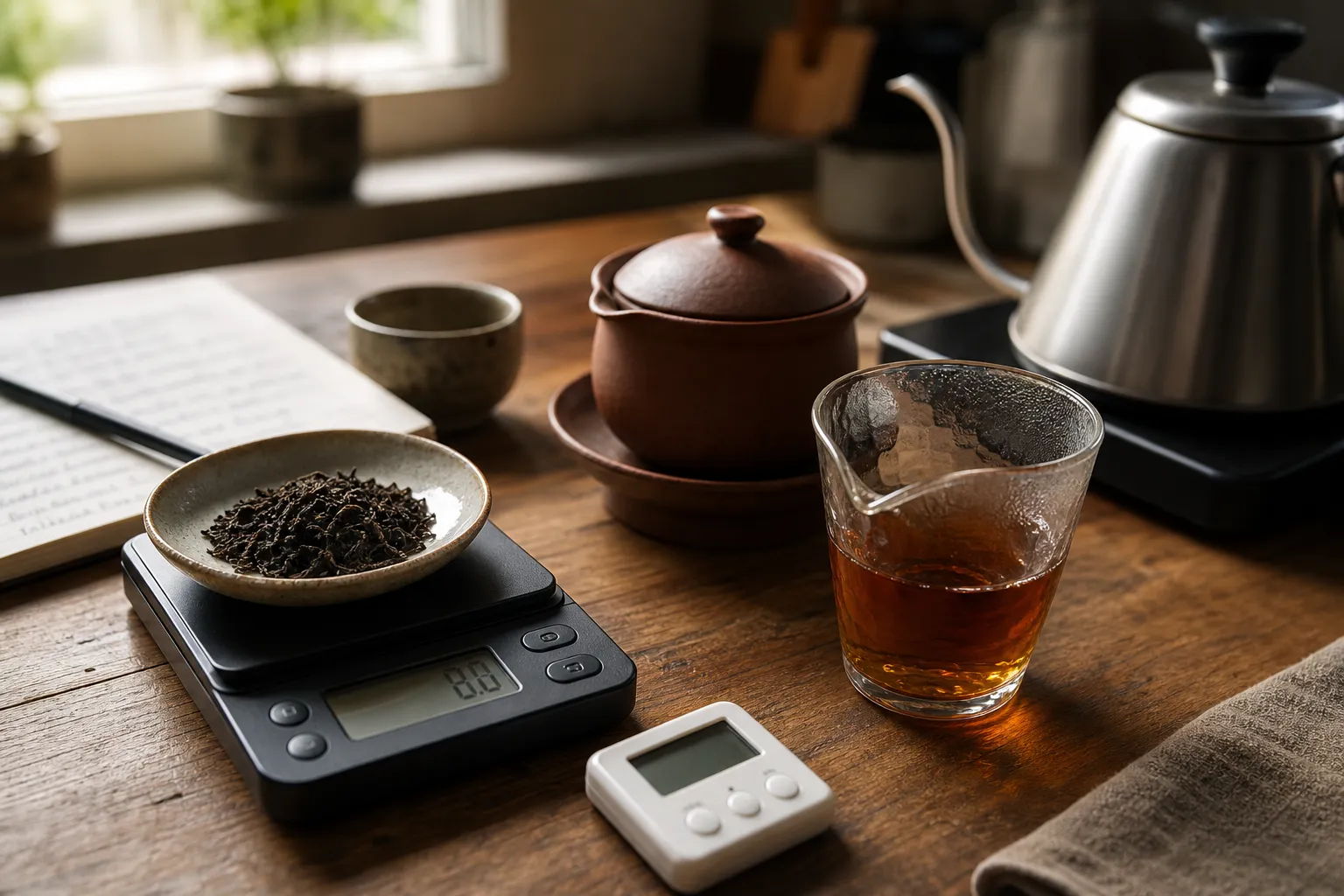
For many everyday setups, begin with three controls: leaf amount, water temperature, and first steep time.
Leaf for a mug or small pot
Start with about 2–3 g per 250 ml water. Watch thinness, heaviness, and aroma strength.
Leaf for small-vessel repeated brewing
Start with about 5–7 g per 100–120 ml vessel. Watch infusion speed, body, and aftertaste.
Water temperature
Use hot water near a boil, or slightly cooler water if the cup turns rough. Watch earthy depth, sweetness, and harshness.
First steep in a mug or pot
Start around 2–4 minutes. Watch color, body, bitterness, and flatness.
Short repeated steeps
Start around 10–30 seconds at first. Watch whether later infusions open gradually.
Dark tea leaf ratio sets the strength before the timer starts. Water temperature changes how quickly the leaves release color, aroma, and heavier taste. Steeping time decides how far that extraction goes.
For a casual mug, a lower leaf ratio and longer steep often make sense. For a small gaiwan or teapot with more leaf, shorter steeps give you more control. If the tea is compressed, rinsed, or broken into mixed fragments, the first steep may not represent the whole session.
A simple first attempt
- Measure the leaf instead of guessing by handful.
- Start with hot water.
- Pour the first drinkable steep earlier than you think you need to.
- Taste before changing the recipe.
- Adjust one variable at a time.
If you change leaf amount, water temperature, and steeping time together, the cup may improve, but you will not know which change helped.
Dark Tea Steeping Time: How Long to Brew Without Guessing
Dark tea brewing time depends on how quickly water reaches the leaf material and how much body you want in the cup. Loose leaves usually hydrate faster than a tight brick piece. Small fragments release strength faster than larger intact leaves. A dense chunk may seem quiet at first, then become stronger once it opens.
For a larger mug, thermos cup, or teapot, a first drinkable steep of about 2–4 minutes is a useful place to begin. If the liquor looks pale and tastes watery, extend the next steep or use slightly more leaf next time. If the cup turns heavy, rough, or dull, shorten the next steep before blaming the tea itself.
For small-vessel repeated brewing, the timing changes because the dark tea leaf amount is high for the water volume. After any rinse or wetting step, start around 10–30 seconds, then lengthen gradually as the leaves give less. This style makes it easier to notice stages: opening aroma, deeper body, softer later sweetness, and fading aftertaste.
The common mistake is treating the first steep as a verdict. With compressed dark tea, the first infusion may be partly about loosening the leaf. With very broken material, the first infusion may be the strongest. With loose leaf, the first cup may be closer to the tea’s normal behavior.
Use these cup signs
- If the tea tastes thin, add time first, then consider more leaf.
- If the aroma is present but the body is weak, add a little time or slightly more leaf.
- If the cup is dark but flat, shorten time and check whether the ratio is too high.
- If the taste is rough, reduce time before lowering temperature.
- If later steeps fade quickly, use more leaf next session or shorten the early steeps.
When dark tea steeps too long, the cup often moves from full into heavy, harsh, muddy, or tiring. It is not always ruined. You can dilute it, pour earlier next time, or switch to shorter repeated infusions.
What Water Temperature Should You Use for Dark Tea?
Dark tea water temperature is best understood as a speed control. Hotter water pulls more from the leaves sooner. Cooler water slows extraction and can make the cup feel lighter, but it may also leave compressed or older material under-opened.
In many everyday dark tea setups, water near a boil is a reasonable start, especially for compressed pieces or leaves that need help opening. Boiling water for dark tea can bring out deeper color, earthy aroma, and a fuller mouthfeel. It can also make small fragments or already strong tea feel dense if the steep runs long.
Cooler water is useful when the cup stays sharp, thick, or blunt even after you shorten the steep. It can also suit a lighter cup or broken material that releases quickly. The tradeoff is that the liquor may taste softer but less full.
Hotter water often gives
- Faster color and body
- More help for compressed pieces
- Stronger earthy depth
- More risk of roughness with long steeps
Slightly cooler water often gives
- Slower extraction
- A gentler first cup
- Lighter mouthfeel
- More risk of thinness with low leaf amount
Do not make temperature carry the whole brew. If the cup is too strong, shortening the steep often gives a cleaner result than dropping the temperature sharply. If the cup is weak, adding time is usually easier to read than making the water hotter and changing the whole extraction pattern.
A practical order
- Keep the water hot.
- Adjust steeping time.
- Adjust leaf ratio.
- Shift temperature only if the same problem repeats.
Temperature matters, but timing and ratio are usually easier to diagnose first.
Dark Tea Leaf Ratio: How Many Grams to Use per Cup or Pot
Dark tea grams per cup are not only about strength. Leaf ratio changes texture, aroma density, and the number of useful steeps. A low ratio can produce a soft cup but may seem hollow. A high ratio can create depth and repeated infusions, but it needs shorter timing.
For a western-style mug or pot, start around 2–3 g per 250 ml water. This suits longer steeping and casual drinking. If you prefer a lighter cup, begin closer to 2 g and keep the steep moderate. If the tea feels faint after several attempts, raise the amount before making the steep very long.
For a bigger teapot, scale the ratio by water volume, not by the visual size of the pot. A 500 ml teapot might start around 4–6 g, depending on how concentrated you want the brew. A 750 ml pot may need more, but avoid doubling blindly if the vessel holds heat strongly or the tea is broken and fast-releasing.
For small-vessel brewing, the ratio is intentionally higher: about 5–7 g for 100–120 ml. Because this creates a concentrated setup, the steeping time should stay short. If you use that much leaf and steep for several minutes, the cup may become too heavy for many drinkers.
The easiest way to repeat a good cup
- grams of leaf
- water volume
- first steep time
A note such as “5 g, 110 ml, hot water, 15 seconds, strong but clean” is enough to guide the next session.
Leaf amount also interacts with storage and compression. A dry, tight piece may open slowly. A loose, crumbly piece may flood the cup with color. A mixed scoop with dust, flakes, and larger pieces can taste stronger than the same weight of intact leaf. Weighing helps, but tasting still matters.
Loose Leaf, Brick Pieces, and Leaf Size Change the Timing
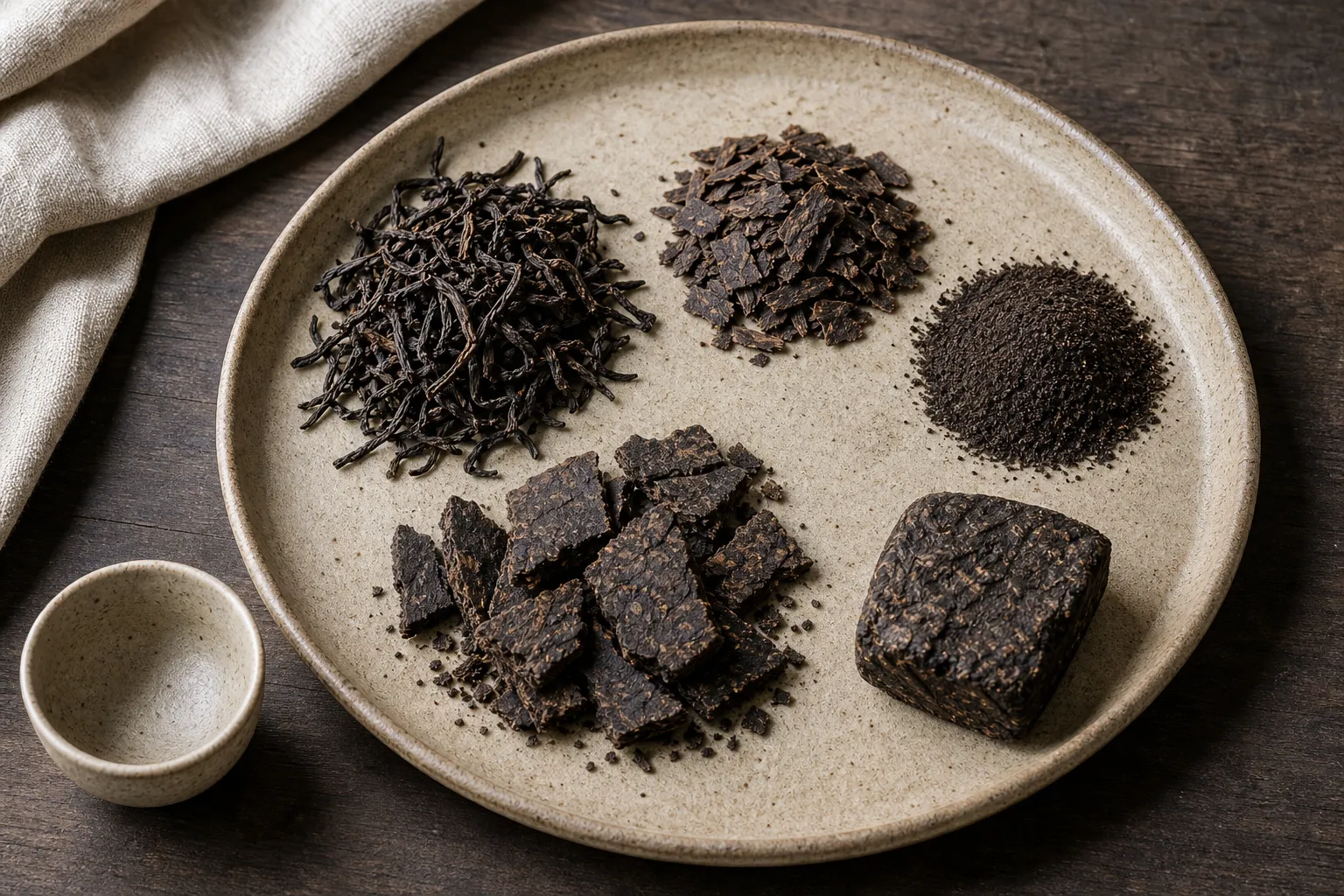
Dark tea loose leaf steeping is usually more direct. Water reaches the surface quickly, and the first steep often shows aroma and color without much delay. If the leaves are fairly even in size, the brew is easier to repeat.
Dark tea brick steeping time is less predictable. A compressed piece has inner layers that water reaches slowly. The outside may release flavor while the center remains tight. A rinse or brief wetting steep can help the piece loosen before the main cup, but the first full infusion may still be quieter than later ones.
Broken brick pieces create uneven extraction. Thin flakes and dust release quickly, while hard inner pieces lag behind. If the cup turns dark fast but tastes uneven, particle size may be the issue rather than total steeping time.
Leaf size changes the brew in a simple way
- Small fragments release quickly and can become heavy sooner.
- Larger loose leaves often allow a steadier steep.
- Tight chunks may need more time or repeated short infusions.
- Mixed pieces can make the first cup less predictable.
When brewing compressed dark tea, do not judge only by the outside color of the leaf piece. Watch the liquor and taste the cup. If the first steep is pale but the piece is still hard, give it another short infusion rather than jumping to a long steep. Once the piece opens, the tea may become stronger without any change in leaf amount.
For loose leaf, small adjustments are often enough: add 30 seconds in a mug, or 5–10 seconds in a small vessel. For a brick piece, the change may come later, after the tea physically loosens.
Should You Change Steeping Time or Leaf Amount First?
When a cup disappoints, change the variable that best matches the problem.
If the tea tastes thin but clean, increase steeping time first. The leaves may simply need more contact. If the next cup gains body without becoming rough, that is the easier fix.
If the tea tastes thin even after a longer steep, increase leaf amount next time. This often happens when the pot is larger than expected or when the leaf pieces are large and slow to release.
If the tea tastes strong but not pleasant, reduce time before reducing leaf. A high leaf ratio can work well with short steeps, but not with a long unattended brew. Shortening time may keep aroma while removing heaviness.
If the cup is dark, thick, and flat, the leaf amount may be too high for the vessel, or the steep may be too long. Make one clear change: either keep the ratio and pour earlier, or reduce the leaf and keep the timing similar.
Pale and watery
Steep longer first. If it still happens, add more leaf.
Aromatic but thin
Add a little time first. If it still happens, increase the ratio slightly.
Strong and rough
Shorten the steep first. If it still happens, try slightly cooler water.
Dark and flat
Use less time first. If it still happens, reduce leaf amount.
Fades too soon
Shorten early steeps first. If it still happens, add more leaf next session.
This approach keeps the brew readable and avoids the habit of blaming water temperature for every problem.
How to Read Dark Tea Liquor Color
Dark tea liquor color is useful, but it is not a complete instruction. A deeper cup often suggests more extraction, yet color can arrive before balance. Small fragments may darken the water quickly. A compressed piece may release color at the edges while the inner leaf is still opening. Some teas may look dark but taste soft; others may look moderate and still feel strong.
Use color together with aroma, mouthfeel, and aftertaste.
A pale cup that smells faint and tastes thin probably needs more time, more leaf, or a better-opened compressed piece. A reddish-brown or dark amber cup with clean aroma and rounded body may be in a comfortable range. A very dark cup that tastes muddy, rough, or tiring has likely gone past your preferred balance, even if the color looks attractive.
Do not chase darkness as the goal. The aim is a cup with enough body, clear aroma, and a finish you want to keep drinking. For some drinkers that means a lighter brew with a soft texture. For others it means a dense cup with more earthy depth. Both can be reasonable if the brew is intentional.
If you are unsure, split the test: pour one cup at two minutes and another at four minutes, then compare. That side-by-side tasting is more useful than memorizing a single number.
Keeping Dark Tea Consistent From One Brew to the Next
Consistency comes from repeatable decisions, not from forcing every dark tea into one formula. Keep the same vessel, measure the leaf, use a similar water temperature, and write down the first steep time. Then change only what the cup asks you to change.
A compact routine
- Weigh the tea once.
- Note the vessel size.
- Start with hot water.
- Choose a first steep: minutes for a mug, seconds for small repeated infusions.
- Taste for body, roughness, aroma, and finish.
- Adjust the next steep, not the whole method.
For a lighter cup, use less leaf or pour earlier. Reducing leaf amount is better when you want the whole session softer. Shortening time is better when the first cup is too heavy but you still want later infusions to have depth.
For a stronger cup, extend time first if the taste is clean. Add leaf next time if longer steeping only makes the cup flatter. For compressed tea, allow for opening time before deciding it is weak.
For a bigger teapot, scale the grams carefully and expect the vessel to hold heat longer. A large hot pot can keep extracting while the tea sits, so pour fully or decant when the steep is done. Leaving dark tea on the leaf for too long can make a balanced recipe taste heavier than intended.
The useful pattern
- Leaf ratio sets the potential strength.
- Water temperature sets the speed and style of extraction.
- Steeping time decides how far the cup goes.
- Leaf form changes how quickly the tea responds.
- Taste tells you which control to move next.
Start with a measured, modest brew. Let the first cup be information. Then adjust by what you can see, smell, and taste: liquor color, aroma strength, mouthfeel, heaviness, sweetness, roughness, and how the finish lingers. That is a more reliable way to handle dark tea steeping time than treating any single chart as the answer for every leaf.